
An absorption refrigeration system works by using a heat source to drive a cooling cycle instead of the mechanical compressor found in a standard fridge. This method relies on a chemical pair, usually ammonia and water, to move heat from the inside of the cabinet to the outside. Because it uses heat to create cold, it’s often found in places where electricity is expensive or unavailable, such as in recreational vehicles and remote off-grid cabins.
Parts of an absorption system
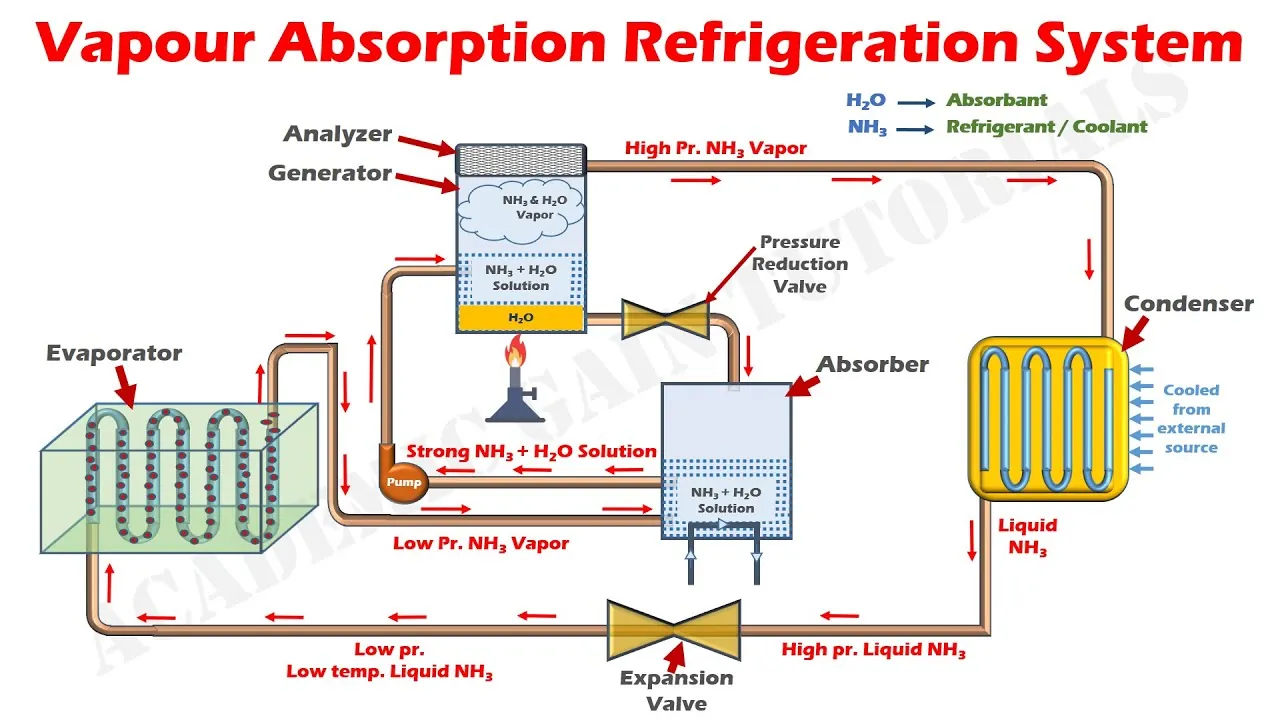
The system moves a refrigerant through a closed loop using heat and gravity. If you look at the back of the unit, you’ll see a network of metal pipes. When the system operates, these pipes get very hot in some spots and quite cold in others.
| Part or input | What it does | What you notice when it goes wrong |
|---|---|---|
| Generator | Uses heat to boil refrigerant | The unit fails to cool at all |
| Condenser | Turns vapor back into liquid | The back of the unit stays cold |
| Evaporator | Absorbs heat from the inside | Food inside the fridge stays warm |
| Absorber | Mixes vapor back into liquid | Frost builds up on the pipes |
| Heat source | Provides energy for the cycle | The fridge doesn’t run on gas |
If the unit is level, the refrigerant flows predictably. A tilt of more than a fraction of a degree can stop the liquid flow, causing the generator to overheat and fail. If you smell ammonia, the pipe integrity is compromised and the unit is beyond repair.
Most users mistake a clogged burner for a broken generator. If the flame is yellow instead of blue, clean the flue before replacing parts. A blue flame indicates efficient combustion, while a yellow flame suggests the system is starving for oxygen.
How an absorption refrigeration system runs
- The generator heats the mixture of ammonia and water, which forces the ammonia vapor to separate from the water. This process takes 30 to 60 minutes to start cooling.
- The hot ammonia vapor travels to the condenser, where it releases heat into the surrounding air. This turns the vapor into a pressurized, liquid state through natural cooling.
- The liquid ammonia flows into the evaporator, where it meets a stream of hydrogen gas. This lowers the pressure, allowing the ammonia to evaporate and absorb heat from the fridge.
- As the ammonia evaporates, it pulls heat away from the inside of the cabinet. This creates the cold environment needed to store food safely at 40°F or below.
- The hydrogen gas carries the ammonia vapor to the absorber. Here, the water that was left behind in the generator reunites with the ammonia to restart the cycle.
- The liquid mixture flows back to the generator by gravity to begin the loop again. This cycle continues as long as you provide a steady heat source to the generator.
Why this method matters for cooling
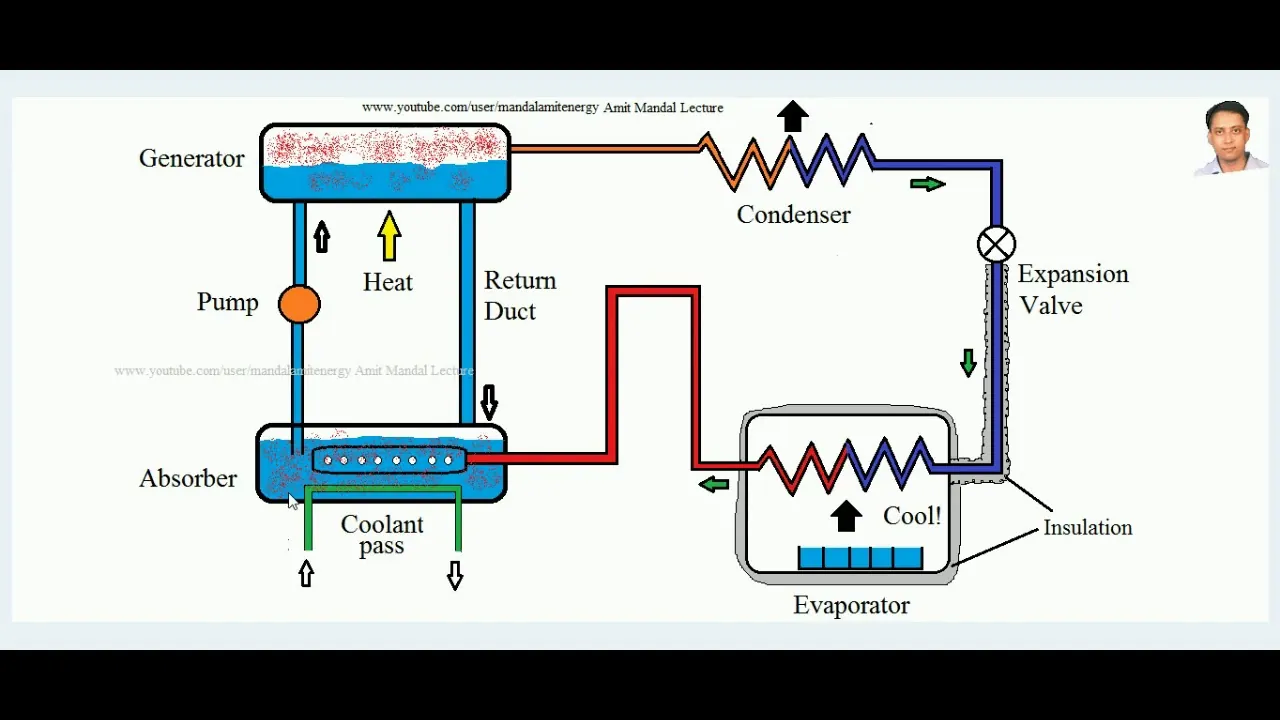
The cooling performance of an absorption system depends entirely on its ability to move heat through chemical reactions. Unlike a compressor fridge that uses an electric motor to pump refrigerant, an absorption unit relies on thermal energy to move the fluid.
If the unit isn’t perfectly level, the gravity-fed flow of the liquid mixture stops moving through the pipes. This is why you must check that the fridge is level before you turn it on. If the liquid can’t move, the cooling cycle breaks down, and the unit will lose its ability to keep food at a safe temperature.
Another factor is the heat source itself. Whether you use propane, kerosene, or a small electric heater, the generator must reach a specific temperature to boil the ammonia. If your heat source is too weak, the ammonia won’t separate, and the system won’t produce cold air.
If you notice the fridge isn’t cooling, check the flame or the heating element first. A blockage in the chimney or a dirty burner often prevents the system from getting hot enough to start the cycle. Proper airflow around the outside vents is also vital to let the heat escape.
Controls and design limits
Things you control
- Check that the floor is perfectly level before turning the unit on.
- Ensure the outside vents are clear of leaves, dust, or debris.
- Adjust the thermostat setting based on the current outside temperature.
- Verify the flame is blue and steady if you use propane gas.
Fixed design limits
- The cooling speed is much slower than a standard home fridge.
- You can’t change the internal pipe diameter or the chemical mix.
- Total cooling capacity depends on the ambient air temperature outside.
If the unit requires repairs to the sealed cooling loop, you must contact a professional technician. Attempting to open these pipes can release ammonia, which is a hazardous substance. Always check the manufacturer’s manual for the specific leveling requirements of your model, as some units have a tighter tolerance than others.
Habits for better performance

Keep the fridge parked on a level surface every time you stop. An absorption system relies on gravity to move liquid through the pipes, and even a small tilt can cause the system to stop cooling. Operating the unit while out of level can cause rapid, permanent damage to the internal tubing.
Keep the area behind the fridge clean and free of blockage. The condenser needs to release heat into the air to function, so never block the outside vents with storage items or covers. If the air can’t move, the cooling cycle will stall.
Monitor the internal temperature daily with a separate thermometer. Because these units don’t have the same power as compressor fridges, they take longer to recover if you leave the door open. Try to plan your meals so you open the door as little as possible. If the outside temperature is above 90°F, try to park in the shade to help the unit maintain its internal cold.
Related guides
Frequently asked questions
How long does it take to cool down?
An absorption fridge usually takes 6 to 12 hours to reach a safe temperature after you first turn it on. This time assumes the ambient air is moderate; if it’s extremely hot outside, you should allow up to 24 hours for the unit to stabilize before you load it with food.
Is it safe to run on gas while driving?
Check your local laws and the manufacturer’s manual, as many regions prohibit running an open flame while the vehicle is in motion. Most modern systems allow for electric operation while driving, but you must ensure the power source is sufficient to keep the generator hot enough to maintain the cooling cycle.
Why is my fridge not getting cold?
The most common reason is that the unit isn’t level or the heat source is failing to reach the required temperature. Use a bubble level on the floor of the fridge to confirm it’s flat, and ensure the burner is clean and the gas supply is flowing without any air in the lines.
Does it matter if the weather is hot?
Yes, high outside temperatures significantly reduce the efficiency of the cooling cycle because the condenser struggles to release heat. If the outside temperature exceeds 95°F, the unit may struggle to keep the internal temperature below 40°F, so you should keep the fridge in the shade and minimize how often you open the door.
Can I leave it on all the time?
You can safely leave the system running as long as you provide a consistent heat source and keep the unit level. Many people run these units for months at a time, provided the burner or electric element is maintained according to the schedule in the owner’s manual.
How do I know if the cooling unit is broken?
If the pipes behind the fridge are hot to the touch but the inside remains warm, the internal circulation of the ammonia mixture has likely failed. This is a sealed system, and you can’t fix it yourself; you must contact a certified technician to inspect the cooling unit for blockages or leaks.
Conclusion
If you’re considering this technology for your own setup, check your local energy guidelines first. These systems aren’t as common as standard electric models, so you’ll want to ensure you have a reliable heat source nearby. It’s a smart way to stay cool when you’re living off the beaten path.
