
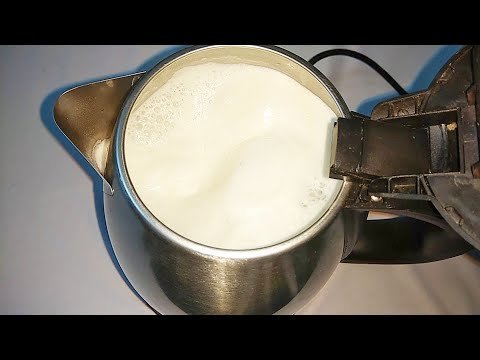
You can’t boil milk in an electric kettle safely because the high heat causes proteins to burn onto the internal heating element, leading to permanent damage and a burnt taste. While you might wonder if you can boil milk in an electric kettle, doing so will ruin the device and create a significant cleaning challenge.
Most electric kettles are designed specifically to heat water. Milk contains fats and sugars that react differently to intense, direct heat than water does.
Who should boil milk in their kettle
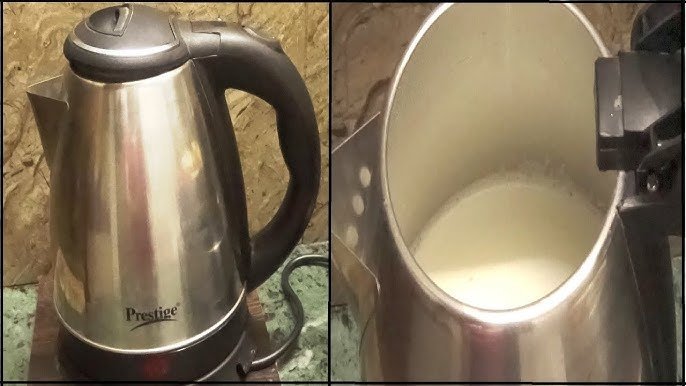
This information serves people who want to warm milk for coffee, tea, or cooking but only have an electric kettle available in their kitchen. It’s especially useful for students in dorms or travelers in hotel rooms who might assume a kettle is a universal heating tool. You likely have a standard plastic or stainless steel electric kettle and want to avoid buying a separate milk frother or saucepan.
The page assumes you’re using a standard, consumer-grade electric kettle with a hidden or exposed heating element at the bottom. If you’re using a high-end, programmable machine specifically marketed as a “multi-purpose brewer” or “milk warmer,” you should check the manufacturer’s manual first, as those devices use different temperature control logic. This advice isn’t for people who need to boil milk to reach specific pasteurization temperatures; if you’re processing raw milk, you must use a stovetop and a thermometer to ensure you reach the appropriate safety levels as outlined by FoodSafety.gov’s chart. If you’re looking for a way to foam milk for lattes, these instructions explain why you should look for tools designed for that specific purpose instead.
Why heating elements fail
The design of your kettle is the primary reason it fails when used for anything other than water. Most kettles use a resistive heating element that reaches very high temperatures almost instantly to bring water to a boil.
Water has a high specific heat capacity and evaporates cleanly, meaning it doesn’t leave residues on the element. Milk, however, is a complex mixture of water, proteins, fats, and lactose. When milk touches the hot surface of a kettle’s element, the proteins immediately denature and bond to the metal. This is known as “scorching.” Even if you catch it quickly, a thin film of burnt milk remains.
This residue acts as an insulator. The next time you use the kettle, the thermostat—which is often calibrated to detect steam from water—may fail to shut off because the heat can’t escape through the burnt layer. This can cause the internal thermal fuse to blow, effectively killing your kettle. People often make the mistake of thinking they can “just wash it out,” but once the milk proteins have baked onto the element, they become incredibly difficult to remove without abrasive scrubbing that voids the warranty.
Step by step
If you must heat milk, use these steps to do it without destroying your equipment or causing a fire hazard.
- Pour the required amount of milk into a small, clean stainless steel saucepan.
- Place the saucepan on a stovetop burner set to low or medium-low heat.
- Stir the milk constantly with a silicone spatula or whisk to prevent a skin from forming.
- Monitor the temperature; if you’re reheating leftovers, ensure the milk reaches an internal temperature of 165°F.
- Watch the edges of the milk; remove the pan from the heat as soon as you see small bubbles form at the perimeter.
- Pour the milk immediately into your mug or container.
- Soak the pan in cold water for 10 minutes to make cleaning easier.
- Wash the pan with warm, soapy water to remove all fat deposits.
The most important judgement call is heat control. Milk burns at the bottom of a pan very quickly if the heat is too high. If you don’t have a stove, use a microwave-safe glass container and heat in 30-second bursts, stirring between each interval.
The variations at a glance
Heating milk requires different tools depending on your goal. Using the wrong tool can lead to burnt flavors or damaged appliances.
| Situation | What to do | What it takes | What to watch for |
|---|---|---|---|
| Warming for coffee | Use a microwave | 30-second bursts | Milk overflowing |
| Heating for cocoa | Use a saucepan | 5 minutes | Burnt bottom layer |
| Frothing for latte | Use a whisk | 2 minutes | Splashing liquid |
| Reheating leftovers | Use a saucepan | 3 minutes | Reaching 165°F |
The primary mistake is using high heat to save time. Milk proteins denature rapidly above 180°F, creating a scorched, sulfurous taste that ruins the entire batch. If you smell a faint eggy aroma, you have already crossed the threshold of no return.
When using a microwave, the vessel shape matters. A wide-mouth glass measuring cup prevents the sudden boil-over common in narrow mugs. If you’re reheating leftovers, use a thermometer. You must reach 165°F to ensure food safety, but stop immediately once that number hits to preserve the texture.
For cocoa, choose a heavy-bottomed stainless steel pan. Thin aluminum pans create hot spots that burn the sugars before the milk is hot. If you’re making a delicate froth, keep the whisk submerged. Lifting it above the surface introduces large, unstable bubbles that collapse within seconds. If the foam looks like soap suds, your whisking angle is too shallow. Adjust your grip to keep the wire loops fully immersed in the liquid vortex.
Preventing damage and poor results
Maintaining surface integrity
The primary goal is to keep the heating surface clean. If you use a kettle for anything other than water, the residue buildup creates hot spots. These spots trick the sensors and cause the kettle to cycle on and off improperly. Once the internal sensor is coated in burnt milk, it loses the ability to detect the boiling point accurately. You’ll notice a strange, metallic, or burnt smell every time you boil water thereafter.
Managing temperature limits
Electric kettles are “all or nothing” devices. They’re programmed to run at full power until the water turns to steam. Milk doesn’t behave like water. It doesn’t have a clear “boiling” point that triggers the same steam-based shut-off mechanism as water. Consequently, the kettle will continue to heat the milk until it boils over or the thermal safety cut-off triggers. This error almost always leads to a burnt, unusable mess inside the chamber and a potential electrical failure.
What goes wrong, and what to do
When you ignore the warnings, you’ll notice several immediate issues with your machine. These problems often stem from neglecting the heating element or the sensitivity of the internal sensors.
| What you notice | What it usually means | What to do first | How to stop it |
|---|---|---|---|
| Burnt smell | Scorched proteins | Unplug the kettle | Use a saucepan |
| Sticky residue | Milk film buildup | Soak with vinegar | Don’t boil milk |
| Stuck sensor | Sensor is coated | Clean with soft cloth | Use only water |
| Kettle won’t start | Thermal fuse blown | Contact manufacturer | Use proper tools |
The most common mistake is using abrasive scrubbers to remove scale. This ruins the finish and creates microscopic grooves where bacteria thrive. If the interior feels rough after cleaning, you have already compromised the non-stick coating.
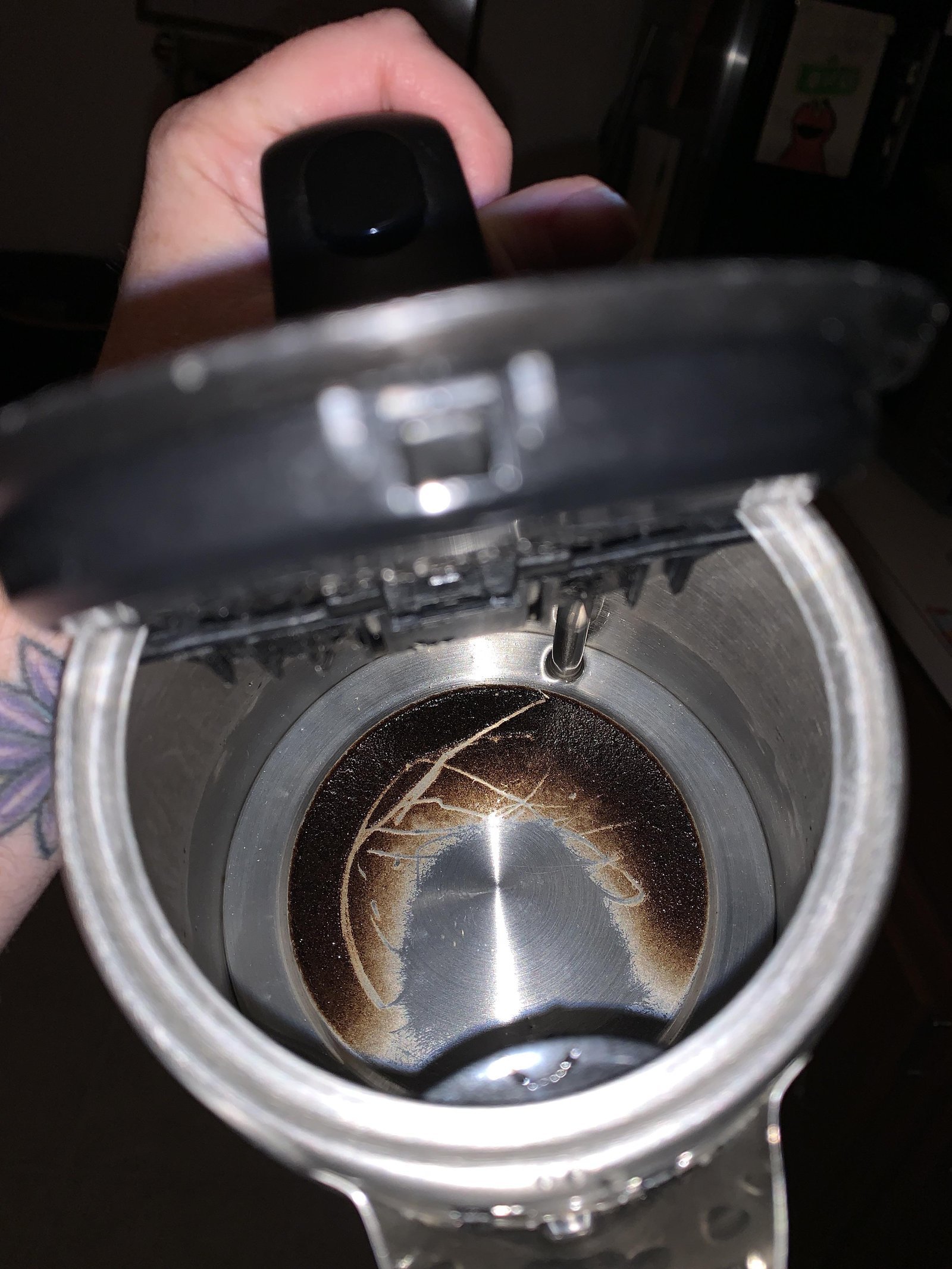
You can distinguish between mineral buildup and permanent damage by the color. White, flaky deposits are simply limescale. If the residue appears yellow or brown, you’re dealing with organic matter that has been baked onto the heating element. Limescale responds well to a diluted citric acid soak, but scorched proteins require a gentle wipe with a soft, damp cloth.
Follow this simple decision rule: if the kettle feels heavy or sluggish, descale it immediately. In that case, perform a deep cleaning cycle using only distilled water. Never submerge the base in water, as this can damage the electrical contacts and pose a shock hazard.
The regulations for safety
Electrical appliances carry strict certifications regarding their intended use. Under the standards set by Underwriters Laboratories (UL), kettles are tested specifically for water heating. Using a kettle for milk changes the operating environment, which violates the safety conditions of the device.
The primary risk involves the heating element’s surface temperature. Water boils at a consistent 212 degrees Fahrenheit, but milk contains proteins and sugars that scorch at much lower temperatures. When these solids bake onto the heating coil, they create an insulating layer. This forces the thermostat to remain active longer than designed, often causing the internal thermal fuse to trigger prematurely or, in worst-case scenarios, leading to a fire.
If you use a kettle for milk and it causes an electrical short, the manufacturer’s warranty will likely be voided because the failure resulted from improper use. A simple visual inspection of the base unit’s label confirms the intended liquid use. If the manual doesn’t explicitly state that it’s safe for milk, assume it’s not.
Distinguish your device by checking the heating element type. Exposed coil elements are almost never rated for milk, as the residue is impossible to sanitize fully. If your kettle features a concealed, flat-plate heating element, it may be technically capable of warming milk, but only if the manual provides a specific setting for viscous liquids. Without that explicit instruction, you’re operating outside the safety certification. Always prioritize the manufacturer’s specific documentation over the physical appearance of the appliance.
What it costs you
The cost of boiling milk in a kettle is rarely just the price of the milk you waste. A standard electric kettle is an affordable household appliance. When you burn milk onto the element, you effectively end the lifespan of that device. You lose the money spent on the appliance, the time spent trying to scrub the burnt material, and the money spent on the milk itself.
The primary error here is assuming that a quick rinse will suffice. Once milk proteins bake onto a heating element, they form a carbonized layer that acts as an insulator. This forces the kettle to run longer to reach its shut-off temperature, which eventually fries the thermal sensor.
Furthermore, if the burnt residue causes an electrical fault, you risk damaging your power outlet or tripping your home’s circuit breaker. Replacing a scorched wall socket can be an expensive repair requiring professional labor.
Use this decision rule: if you’re heating more than four ounces, use a heavy-bottomed saucepan on the stove. If you’re heating a single serving for coffee, use a microwave-safe mug. Reserve the kettle strictly for water. By keeping the heating element pristine, you avoid the hidden tax of frequent appliance replacement and the fire hazard of a compromised electrical connection. This is an unnecessary cost that’s easily avoided by choosing the right tool for the job.
Keeping it right afterwards
If you have accidentally put milk in your kettle, you must clean it thoroughly before attempting to use it for water again. Fill the kettle with a mixture of half water and half white vinegar. Let it sit for 30 minutes, then bring the solution to a boil. Pour it out and rinse the kettle at least three times with fresh water. If the burnt smell persists, repeat the process. Never use steel wool or metal scrapers inside the kettle, as these will scratch the heating element and make it even easier for food to stick in the future. If the smell of burnt milk remains after three cleaning cycles, the residue has likely penetrated the pores of the heating element or the sensor housing. At this point, the kettle is no longer sanitary and should be replaced.
When to use a different method
Boiling milk in a kettle is the wrong approach for almost every culinary application. The heating element in a kettle is designed for water, which lacks the proteins and sugars that cause milk to scorch instantly.
If you need to heat milk for baking, use a heavy-bottomed saucepan on the stove to ensure even heat distribution. A heavy base prevents hot spots that lead to the “skin” formation and burnt flavor profiles typical of thin-walled pots. If you need to foam milk for beverages, use a handheld battery-operated frother or a dedicated milk steamer. These tools are designed to handle the viscosity and sugar content of milk without burning.
If you’re preparing a large batch of hot chocolate or soup, the stove is the only safe option that allows you to control the temperature and prevent scorching. You should aim for a gentle simmer rather than a rolling boil. If the milk begins to foam rapidly, remove the pan from the heat immediately to prevent a boil-over.
Never try to force a single-use appliance to perform tasks it wasn’t engineered to handle. The risk of fire or permanent equipment failure is too high for a small convenience. If you have already scalded milk in your kettle, the residual proteins will act as an insulator, causing the thermostat to malfunction during future uses. If the kettle fails to shut off automatically, unplug it immediately and discontinue use. The cost of a new appliance is far lower than the risk of an electrical fire caused by a compromised sensor.
Frequently asked questions
Can I use a kettle to heat milk if I wash it immediately?
No, the high heat of the element causes milk to bond to the metal instantly, making it impossible to remove completely. Even a microscopic layer of milk will burn and create a permanent bad taste in your future cups of water.
Why does the kettle shut off before the milk is hot?
The kettle’s sensor is calibrated to detect the specific temperature and steam release of boiling water. Milk reaches a different consistency and temperature profile, which confuses the sensor and causes the kettle to shut off prematurely or not at all.
Is it safe to boil milk in a kettle if I am careful?
No, it isn’t safe because the rapid heat transfer creates a fire and electrical hazard. The milk will likely boil over, potentially causing a short circuit if liquid enters the electrical base, and the burnt residue creates a risk of overheating the element.
What happens if I boil milk in my kettle by mistake?
You’ll likely end up with a burnt, crusty layer on the heating element and a lingering smell that ruins the taste of your water. You must clean the unit immediately with a vinegar solution or risk the device failing during its next use.
How long does it take to clean a kettle after boiling milk?
Even with deep cleaning, there’s no guarantee that you’ll be able to remove the burnt protein smell from the internal sensors.
Does boiling milk in a kettle change its taste?
Yes, the direct, intense heat of the kettle element causes the milk to scorch, which imparts a bitter, burnt flavor. Milk intended for drinking or cooking should be heated slowly and gently to preserve its natural, sweet flavor profile.
Boil milk, in short
Place your milk in a saucepan on the stove to heat it safely and evenly. You’ll know the job is done when the milk is steaming and small bubbles appear at the edges of the pan. If the milk begins to smell burnt or sticks to the bottom of the pan, turn off the heat immediately and clean the pan before the residue hardens.
Related guides