
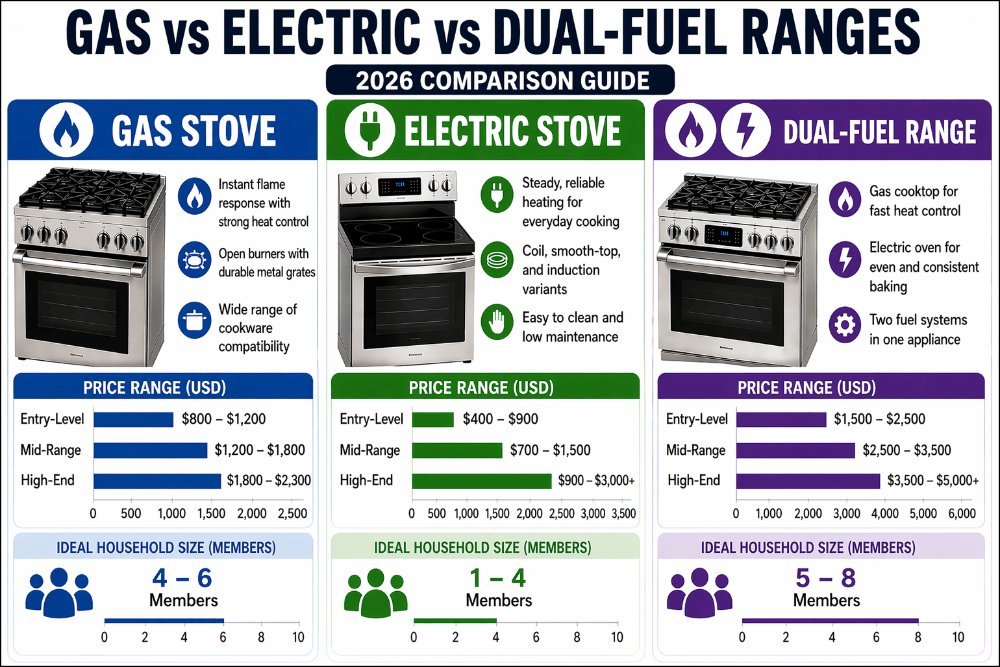
A basic freestanding gas or electric range typically costs between $600 and $1,200, while a professional-style model can reach $5,000 or more. Because the cost of a stove depends on the fuel type, the size of the unit, and the extra features included, you should check your kitchen’s existing gas lines or electrical outlets before buying. These factors, along with installation requirements, will dictate whether you need a simple replacement or a major kitchen renovation.
Choosing the right kitchen range
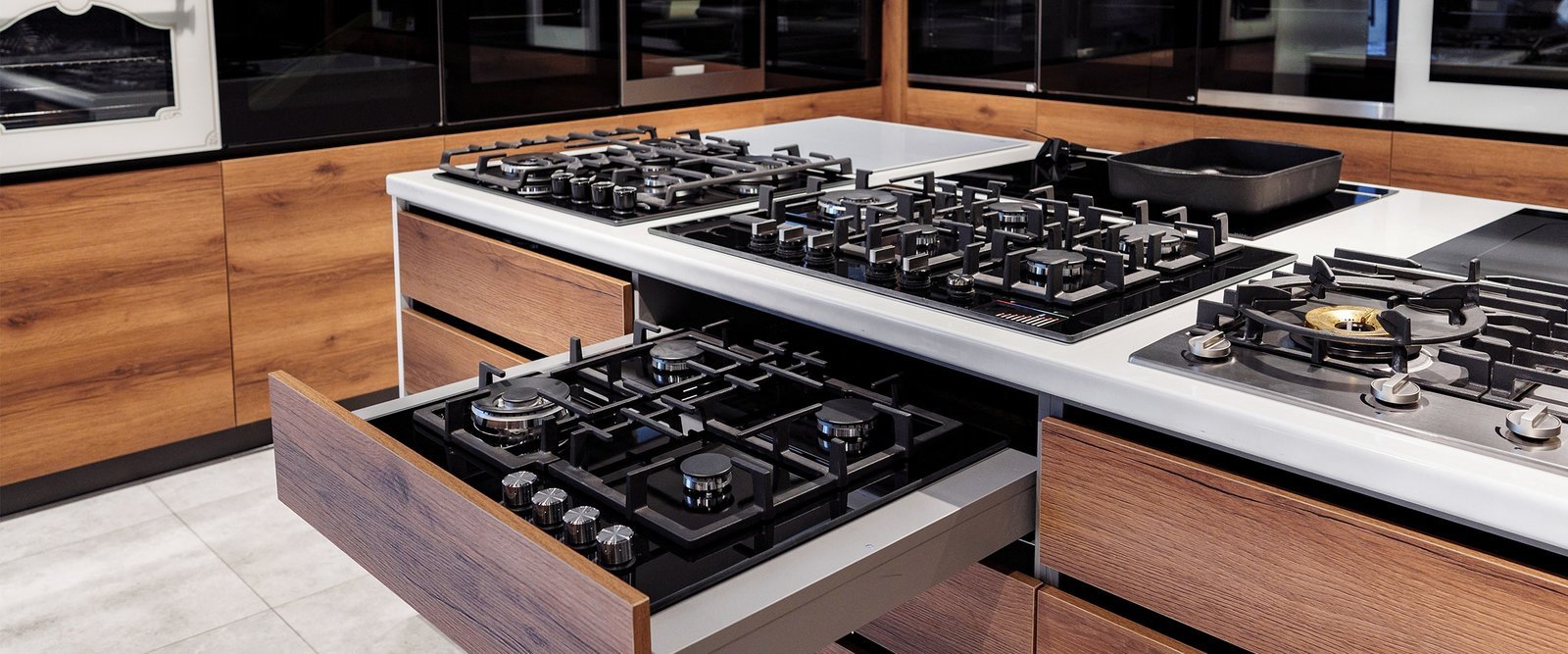
Homeowners looking for a new appliance usually fall into three categories. First, there’s the replacement buyer who needs a unit that fits into an existing 30-inch opening without requiring new plumbing or wiring. Second, the kitchen renovator plans a full layout change and has the budget to choose between gas, electric, or induction technologies. Third, the professional-style cook wants high-output burners and heavy-duty materials for frequent, high-volume meal preparation.
This guide serves the replacement buyer and the renovator best. If you’re looking for industrial-grade restaurant equipment, you should consult a commercial kitchen supplier instead. We assume you’re buying a standard residential unit for a home kitchen. The choice between gas and electric is often made for you by the utility lines already present in your home, as switching fuel sources requires expensive professional work.
Factors that change the price
The fuel type is the most influential factor. Electric coil stoves are the most affordable, while induction cooktops command a premium price because they use magnetic fields for faster, more energy-efficient cooking. You can verify your home’s current setup by checking your existing outlet; a 240-volt outlet indicates an electric range, while a gas valve indicates a gas range.
Size is the second major cost driver. Standard ranges are 30 inches wide, which is the most cost-effective size due to mass production. Moving to a 36-inch or 48-inch professional range significantly increases the price because these units require more raw materials and specialized shipping.
Features like convection fans, Wi-Fi connectivity, and self-cleaning cycles add to the total. While these features add convenience, they also introduce more parts that may eventually need repair. People often make the mistake of prioritizing smart features over build quality, which leads to higher maintenance costs over the lifespan of the appliance.
Installation complexity also moves the final number. If you buy a slide-in range that requires custom countertop cuts, your labor costs will be higher than if you swap a standard freestanding unit. Always check the installation manual for the exact electrical or gas requirements before finalizing your purchase.
Installation and setup
- Turn off the electricity at the breaker or close the gas shut-off valve behind the old unit.
- Pull the old range out slowly to avoid scratching your floor and disconnect the power cord or gas hose.
- Inspect the existing outlet or gas pipe; if the old connection is corroded or damaged, hire a professional to replace it.
- Measure the height, width, and depth of the opening to ensure the new unit fits with at least one inch of clearance on the sides.
- Level the new range by adjusting the feet at the bottom until the cooktop is perfectly horizontal.
- Connect the new gas hose or power cord, following the manufacturer’s specific torque or wiring instructions exactly.
- Push the unit into place and verify it doesn’t wobble; if it shifts, adjust the leveling feet again.
- Turn on the power or gas supply and test each burner and the oven to ensure they heat properly.
The single judgment call that separates a professional job from a DIY mistake is the leveling process. A unit that isn’t level will cause uneven cooking, as liquids will pool to one side of your pans. You must use a bubble level on the cooktop surface to confirm the alignment. Note that gas installations involving hard-piping must be performed by a licensed plumber to meet local safety codes.
Appliance price breakdown
The following table illustrates the typical price ranges for residential cooking equipment based on the technology and configuration of the unit.
| Situation | Typical Price Range | Effort Required | Watch For |
|---|---|---|---|
| Electric coil range | $600 – $900 | Low | Drip pan quality |
| Electric glass top | $800 – $1,400 | Low | Surface scratches |
| Standard gas range | $700 – $1,300 | Medium | Burner ignition reliability |
| Induction range | $1,500 – $3,000 | Low | Cookware compatibility |
| Pro-style range | $3,500 – $7,000 | High | Weight and ventilation |
Ensuring safe and efficient operation
Installation standards
You must adhere to the Energy Star efficiency guidelines when choosing a new unit, as these models often have better insulation and heat retention. Proper ventilation is also a legal requirement in many jurisdictions; you must ensure your range hood provides the cubic feet per minute (CFM) of airflow required by your local building code. If your kitchen lacks a ventilation system, you may need to add one, which can cost as much as the range itself.
Maintenance habits
Experienced cooks keep their appliances running well by cleaning the burners after every spill. If food debris clogs the burner ports, it causes uneven flames and potential gas buildup. Never use abrasive scrubbers on glass-top surfaces, as they cause micro-scratches that weaken the glass over time.
Common operational issues
| What you notice | What it means | What to do first | How to stop it |
|---|---|---|---|
| Uneven flame | Clogged burner port | Clean with a pin | Wipe spills immediately |
| Oven not heating | Broken igniter | Check for error code | Avoid heavy slamming |
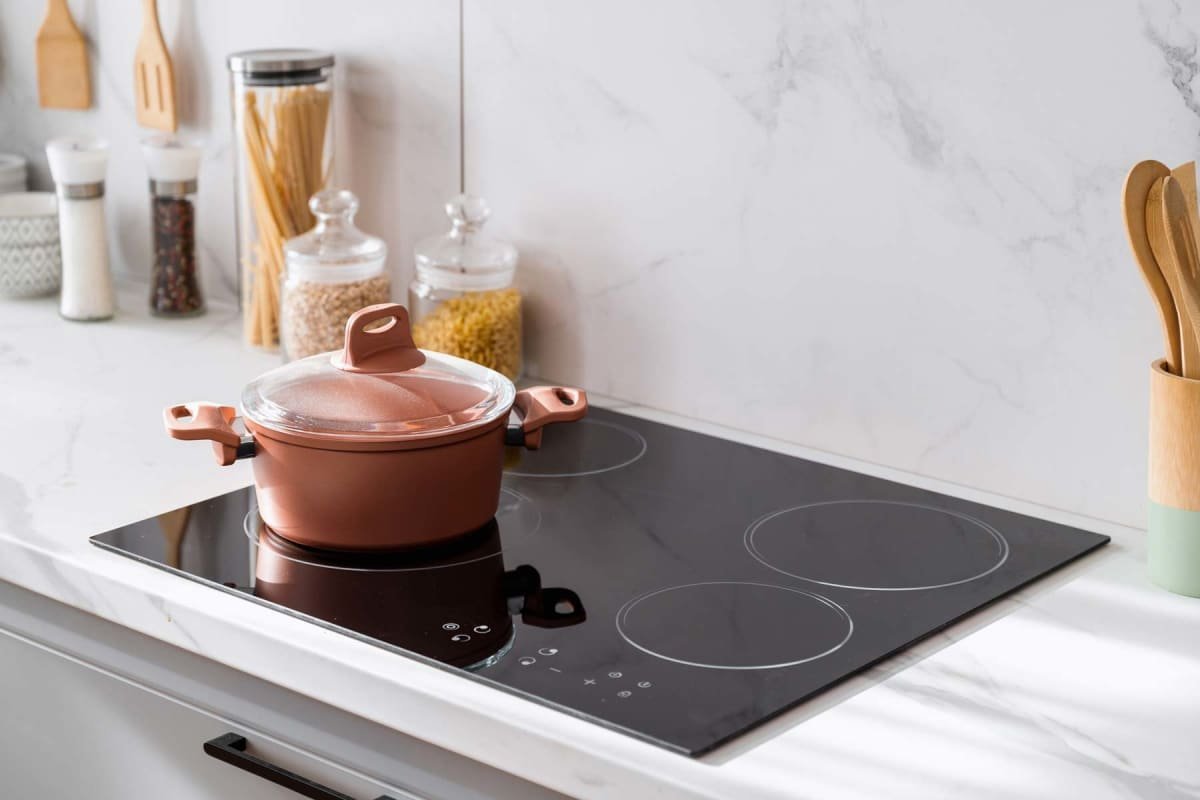
| Glass top cracked | Thermal shock | Stop using unit | Use correct pan size |
| Gas smell | Leak detected | Shut off gas | Call a professional |
When your flame flickers yellow instead of blue, carbon buildup is likely the culprit. Use a thin sewing needle to clear debris, but never use a toothpick, as the wood can snap and lodge permanently inside the port.
If your oven fails to reach the set temperature, watch the igniter closely for 60 seconds. A healthy igniter glows bright white-hot. If it glows dull orange or never lights at all, it has weakened and needs a replacement. People often mistake this for a thermostat issue, but replacing the sensor rarely solves the problem.
Thermal shock on glass tops usually occurs when a cold, heavy pot hits a hot surface. If your cookware base isn’t perfectly flat, the uneven contact creates localized stress points. Check your pans with a straightedge; if you see a gap of more than 1/16th of an inch, replace the pan to prevent cracks.
A faint gas odor near the range is a critical warning. If you smell rotten eggs, don’t flip any light switches or use a phone near the unit. Shut off the main gas valve immediately and evacuate the building. Never attempt to tighten gas fittings yourself, as a hairline fracture in the pipe can lead to a catastrophic leak. Call your utility provider or a licensed plumber to verify the line pressure before turning the gas back on.
Necessary safety compliance
All new gas ranges sold in the United States must comply with the ANSI Z21.1 standard for household cooking gas appliances. This standard ensures that the burner flame remains stable and the gas valves shut off correctly if the flame is extinguished.
Never attempt to modify the gas orifices or electrical wiring yourself. Doing so voids the manufacturer warranty and creates a significant fire risk. A common mistake is adjusting the air shutter to change the flame color; this can lead to incomplete combustion and dangerous carbon monoxide buildup. If you notice a yellow flame rather than a crisp blue one, call a certified technician immediately.
If you live in a region with specific seismic activity codes, you must install an anti-tip bracket. This device prevents the unit from falling forward when the oven door is open or when heavy pots are placed on the front burners.
Use this simple decision rule to verify your safety: if you can pull the range forward more than two inches without resistance, the bracket is either missing or improperly anchored. If you’re installing on a concrete slab, use masonry anchors rather than standard wood screws. For homes with hardwood floors, ensure the bracket is screwed directly into the subfloor joists to provide the necessary structural integrity. Always test the connection before sliding the appliance into its final position. A properly secured range will remain rock-steady under the weight of a fully loaded oven rack.
Hidden long-term costs
The purchase price is only the start of your investment. You must also consider the cost of compatible cookware; for example, induction stoves require magnetic-bottom pans, which can cost several hundred dollars to replace.
Test your existing pots with a simple kitchen magnet. If the magnet doesn’t stick firmly to the bottom, the pan won’t heat on an induction surface. Don’t assume your expensive stainless steel set is compatible, as many high-end brands use non-magnetic alloys.
Additionally, if you switch from electric to gas, you must pay for a gas line installation, which often ranges from $500 to $1,500 depending on the distance from your main line. This estimate excludes the cost of a licensed plumber, who may charge an additional $100 per hour for the connection.
Always set aside an extra 10 percent of your budget for unexpected electrical or plumbing adjustments discovered during the removal of your old appliance. Contractors often find corroded shut-off valves or outdated wiring that violates current local building codes.
If you find a frayed wire or a leaking valve, stop the installation immediately. Fixing these issues now prevents a potential fire hazard or water damage later.
Ignoring these hidden costs often leads to unfinished projects and stalled kitchen renovations.
Maintaining your purchase
Keep your appliance performing like new by checking the door seal every six months for gaps or cracks. Run a dollar bill along the perimeter of the closed door. If the bill slides out with zero resistance, the seal has lost its tension and requires immediate replacement. If the seal is loose, order a replacement from the manufacturer and snap it into the existing groove.
You should also check the leveling feet once a year. Vibrations from the floor can cause them to shift, leading to uneven cooking surfaces. Use a carpenter’s level placed directly on the center rack to confirm the unit is perfectly balanced. If the bubble is off-center, rotate the feet clockwise to raise or counter-clockwise to lower the unit until it sits flush.
Watch the flame color closely during operation. A healthy flame is crisp and blue. If you see the flame color turn from blue to yellow or orange, it indicates improper combustion. This is a sign that the burner ports are clogged with debris or the air shutter is misaligned. Don’t attempt to clear these ports with a toothpick, as wood fragments can break off and cause a fire hazard. Instead, schedule a professional cleaning. Ignoring this shift in color often leads to carbon monoxide buildup, which is a silent and dangerous consequence of poor maintenance.
When to choose a different path
If your kitchen layout requires moving gas pipes or upgrading your electrical panel from 100 amps to 200 amps, you should consult a licensed contractor before buying any appliance. These structural changes aren’t DIY projects and involve significant permit costs.
Most municipalities charge between $300 and $800 for electrical and plumbing permits alone. Beyond those fees, a panel upgrade often triggers a requirement to bring your entire home’s wiring up to current building codes. Failing to account for this can add $3,000 to $5,000 to your total project budget unexpectedly.
If you have limited space and can’t meet the minimum clearance requirements stated in the manufacturer’s manual, don’t force the installation. Ignoring these gaps is a common mistake that voids your warranty and creates a genuine fire hazard.
Use this decision rule: if your clearance is less than the manual requires, don’t force the fit. In such cases, a countertop induction unit or a smaller wall-mounted oven might be a safer and more practical choice than a standard full-sized range.
You can tell if you’re in this position by measuring the distance between the appliance and any combustible surface, such as wood cabinets. Choosing the wrong appliance size here costs you more than just a return fee; it risks your home insurance coverage. Always prioritize the manufacturer’s safety specifications over the aesthetic desire for a professional-grade range.
Frequently asked questions
How long does a stove last?
A standard range typically lasts 10 to 15 years with regular cleaning and proper use. The lifespan depends on the frequency of use and how well you maintain the burners and oven seals; checking the manufacturer’s maintenance schedule in your user manual will provide the specific expected life for your model.
Is it safe to install a gas stove myself?
No, you shouldn’t install a gas stove yourself unless you’re a licensed professional. Improper connections can lead to gas leaks, which pose a severe health and explosion risk; always hire a certified plumber to ensure the unit meets local safety codes and is properly sealed.
How much does it cost to fix a burner?
A simple repair for a burner igniter or switch usually costs between $100 and $250, including parts and labor. The final price depends on your local service rates and whether the unit is still under the manufacturer’s warranty; check your warranty documentation before calling for a professional repair technician.
Can I replace an electric stove with a gas one?
Yes, but you must have a natural gas line installed by a professional and ensure you have an appropriate electrical outlet for the igniter. This conversion involves significant plumbing and potentially electrical work, so you must verify the feasibility and total cost with a local contractor before purchasing your new unit.
Does a glass top stove break easily?
No, modern ceramic glass cooktops are designed to be durable, but they can crack if hit with heavy objects or subjected to extreme thermal shock. You should always use flat-bottomed pans that match the size of the burner to distribute heat evenly and prevent stress fractures on the glass surface.
What is the most reliable stove type?
Electric coil ranges are generally considered the most reliable because they have the fewest electronic components that can fail. While they lack the aesthetic appeal of glass-top or professional ranges, their simple mechanical switches and rugged heating elements are less prone to the complex electrical issues found in modern smart appliances.
Stove cost, in short
Measure your space carefully and confirm your existing power or gas supply before you head to the store. A correctly sized unit that matches your home’s infrastructure will save you time and money on installation. If you notice a persistent gas smell or an electrical burning scent at any point, stop using the appliance immediately and contact a qualified service professional.
Related guides