
A capacitor bank is a group of several capacitors of the same rating connected in series or parallel with each other to store electrical energy. These banks are used to increase the power factor of an electrical installation or to improve the quality of the electricity supply in large industrial systems.
Essential facts about capacitor banks
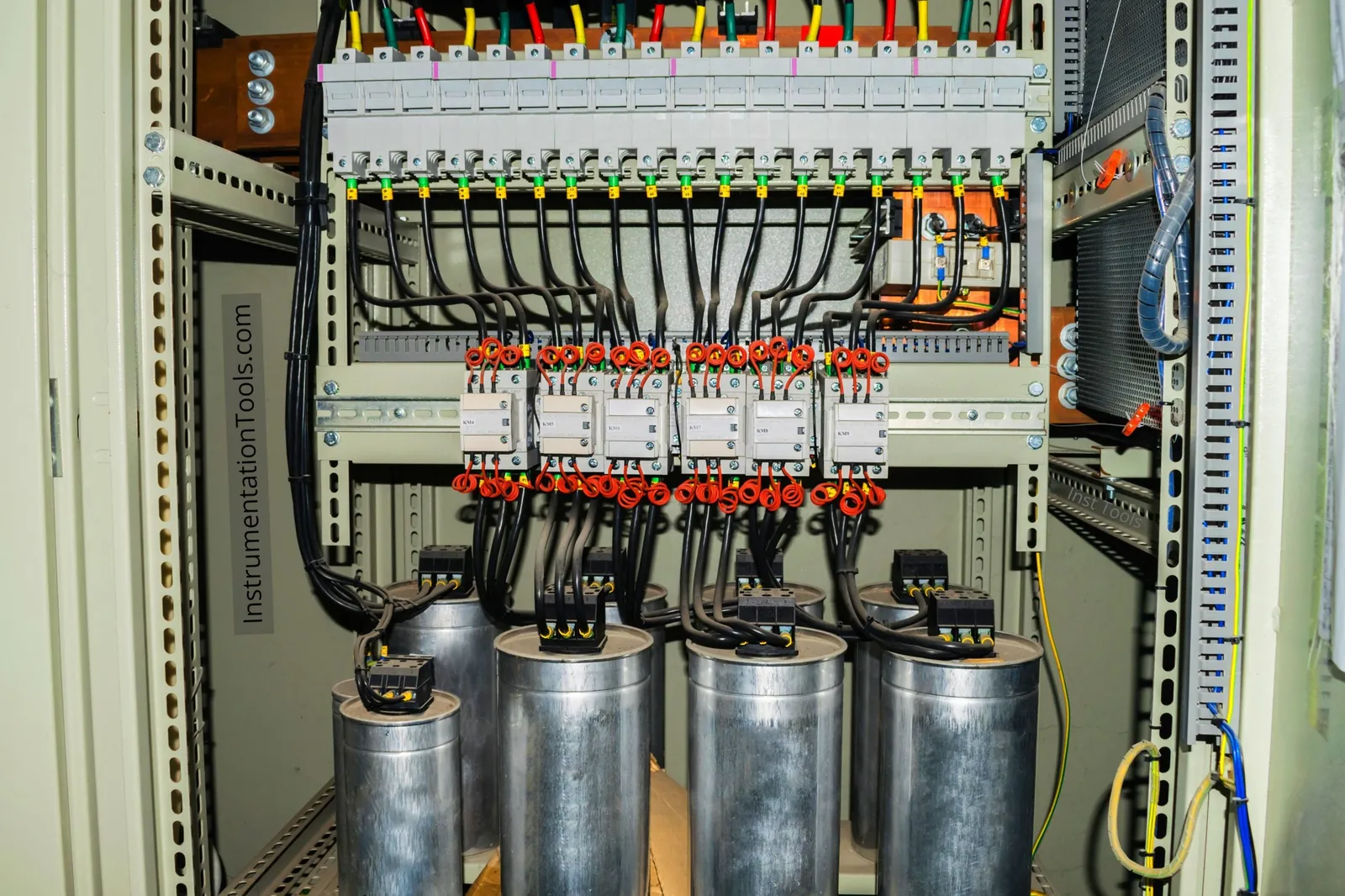
Capacitor banks supply reactive power to an electrical system, reducing the grid’s load. They’re primarily used in industrial settings to correct power factor issues, which directly lowers monthly utility bills.
When you add capacitors in parallel, the total capacitance increases, providing greater energy storage. If your power factor drops below 0.90, utility companies often levy significant reactive power penalties. Installing a bank eliminates these specific surcharges.
Avoid the common mistake of oversizing the bank. If you install more capacitance than your inductive load requires, the system can cause over-voltage conditions that damage sensitive equipment. Calculate your facility’s peak reactive power demand (kVAR) rather than relying on total connected load.
Maintenance is vital for safety. Check the National Electrical Code for specific installation requirements, including discharge resistors that bleed off stored voltage after power is cut. If the bank hums loudly or shows bulging on the capacitor cans, replace the unit immediately. These physical signs indicate internal dielectric breakdown, which risks a catastrophic short circuit if left unaddressed.
Why electrical systems use capacitor banks
The primary reason for using these banks is to manage reactive power, which is the energy that oscillates between the source and the load without doing useful work. In an industrial facility, motors and transformers require this reactive power to create magnetic fields. When a system consumes a large amount of reactive power, the power factor drops, which means the system is less efficient at converting electricity into mechanical or thermal output.
By installing a capacitor bank, you provide a local source of reactive power. Instead of drawing this energy from the power grid across long wires, the motors draw it from the nearby capacitors. This reduces the total current flowing through the plant’s wiring and the utility’s transmission lines. Because power loss in wires is proportional to the square of the current, reducing the current significantly lowers energy waste and heating in cables.
These banks also help maintain stable voltage levels across a factory. When large motors start, they often cause a temporary voltage dip that can affect sensitive electronic equipment. Because a capacitor bank stores energy and releases it quickly, it acts as a buffer to stabilize the voltage.
If the system isn’t properly balanced, however, it can lead to resonance, which is a dangerous condition where voltage spikes occur. You must ensure the bank is designed to match the specific inductive load of your facility to prevent these issues.
When the system needs adjustment
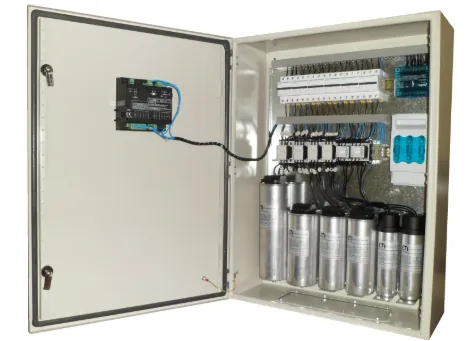
High harmonic distortion signals a resonance risk that can damage capacitors. Don’t simply increase capacity. Use detuned reactor banks to shift the resonant frequency away from dominant harmonics. This protects the system while maintaining correction efficiency.
Variable load levels make fixed capacity inefficient because it overcorrects during low demand. Install automatic switching banks that step capacitors in or out based on real-time reactive power needs. This prevents leading power factor penalties and reduces wear.
Sensitive electronics face voltage spikes from switching transients. Add transient voltage suppressors at the point of common coupling. These devices clamp voltage surges before they reach control circuits, preventing unexpected shutdowns or data loss in critical processes.
Small facility size means space becomes limited quickly. Use compact module banks that integrate reactors and capacitors into a single footprint. This saves floor space while maintaining thermal performance and ease of maintenance.
Old equipment present suggests insulation degradation is likely. Perform regular dielectric testing on cables and switchgear. Catching weak insulation early prevents catastrophic faults that could take down the entire distribution network during peak operation.
How to install and manage them
- Calculate the required reactive power in kVAR by subtracting the target power factor from the current measured power factor of your facility.
- Select a capacitor bank model that matches your system voltage and the calculated kVAR requirement, ensuring it fits within your electrical panel’s capacity.
- Mount the bank in a well-ventilated, dry area, keeping it away from sources of high heat to prevent the internal dielectric from failing early.
- Connect the bank to the main power bus using appropriately sized wiring, following the manufacturer’s terminal torque specifications to prevent loose connections and arcing.
- Install a dedicated circuit breaker or fuse disconnect that’s rated for the high inrush current that capacitors pull when they’re first energized.
- Verify the installation by measuring the power factor at the main meter while the load is active to ensure it’s within the desired range.
- Schedule quarterly inspections to check for bulging containers or leaking oil, which are physical signs that an individual capacitor unit is beginning to fail.
The mistakes that ruin performance

Failing to discharge the capacitors before touching the terminals can result in a lethal electric shock, even if the power is off. Always use a discharge resistor or a grounded probe to confirm zero potential before maintenance.
Installing a bank without checking the harmonic content of the grid can cause the capacitors to overheat and eventually explode. If your facility uses variable frequency drives or high-density LED lighting, you must install detuned reactors to prevent resonance.
Ignoring the manufacturer’s temperature limits will shorten the lifespan of the internal components by several years. Every 10°C rise above the rated ambient temperature effectively cuts the capacitor’s life in half.
Connecting a bank that’s too large for the load leads to over-correction, which causes voltage instability.
Frequently asked questions
Can a capacitor bank lower my electricity bill?
Yes, a capacitor bank can lower your bill by improving the power factor, which reduces the reactive power charges applied by many utility companies. This improvement makes your facility’s energy usage more efficient, meaning you draw less total current from the grid to do the same amount of actual work.
How often should a capacitor bank be serviced?
You should perform a visual and electrical inspection of your capacitor bank every three to six months to ensure all connections remain tight. Because these devices handle high energy, check the manufacturer’s documentation for the specific interval, as some high-load industrial environments require more frequent testing of the dielectric strength.
Is it safe to touch a capacitor bank?
No, you must never touch the terminals of a capacitor bank until you have confirmed they’re fully discharged using a voltmeter. Capacitors can store a dangerous electrical charge for a long time after the power is disconnected, so only qualified technicians should perform maintenance or internal repairs on these units.
What happens if a capacitor bank fails?
When a capacitor bank fails, it typically stops providing reactive power, which causes your power factor to drop and potentially triggers penalty fees from your utility provider. In severe cases of internal failure, the unit may bulge, leak, or experience a short circuit, which requires an immediate shutdown to prevent damage to other equipment.
Does it matter where I install the bank?
Yes, the location is critical because heat significantly reduces the lifespan of the capacitors and can lead to premature failure. You must install the bank in a clean, dry, and well-ventilated area that stays within the temperature range specified by the manufacturer to ensure reliable operation over the long term.
How long do capacitor banks last?
Most industrial capacitor banks are designed for a long service life, provided they operate within their rated temperature and voltage limits. If your facility has high harmonic levels, the lifespan will be much shorter, so check your power quality logs to see if your specific environment is causing faster degradation.
Conclusion
Regular maintenance and correct sizing are the two most important factors in keeping your power system efficient and safe. If you notice any unusual buzzing sounds or smell burning plastic near your equipment, contact a professional electrician immediately to prevent a fire or a total system failure.
