
Engineers design, build, and maintain ship hulls to meet strict safety and efficiency standards by balancing hydrodynamic stability with structural load requirements. The final shape and steel grade depend on the intended water type, cargo weight, and propulsion system.
These factors shift depending on whether the vessel is a commercial cargo ship or a small leisure craft. If you’re building for heavy ocean transit, you need high-tensile steel; if you’re designing for calm inland lakes, aluminum or fiberglass may suffice.
How ship hulls are designed

People who search for this topic are usually students, maritime enthusiasts, or industry professionals looking for the core principles of ship construction. This page serves those who need a high-level overview of the life cycle of a hull, from initial blueprints to long-term dry-docking. If you’re looking for specific CAD software tutorials or complex fluid dynamics calculations, you should consult specialized naval engineering textbooks instead. We assume you have a basic interest in physics and maritime history.
Factors influencing hull performance
Several variables change the final design, and failing to account for these during the early stages leads to costly retrofits later. The most important factor is the intended operating environment, as salt water requires different corrosion protection than fresh water.
Structural integrity often depends on the weight-to-buoyancy ratio, which engineers calculate using hydrostatic analysis. If the center of gravity is too high, the ship risks capsizing; if it’s too low, the vessel becomes very stable, which can lead to a quick, jerky motion in heavy seas.
Material choice is the second major variable. Steel is the standard for large commercial ships due to its strength, but it adds significant weight. Beginners often forget that adding thickness to a hull to prevent damage also increases fuel consumption, creating a trade-off between durability and efficiency.
Finally, the hull shape itself determines how the ship moves through water. A bulbous bow reduces wave resistance for large tankers, but it provides no benefit for smaller, slower vessels. You can check your vessel’s displacement and stability criteria in the International Maritime Organization’s stability code to see how these factors are regulated.
Steps for building a standard steel hull
- Drafting the Lines Plan: Engineers draw the hull’s curvature to optimize water flow.
- Cutting the Steel: Large CNC machines cut steel plates to precise measurements based on the 3D model.
- Fabricating Blocks: Workers weld steel sheets into large, manageable sections called blocks.
- Erecting the Hull: A crane lowers these blocks into a dry dock where they’re welded together.
- Installing Internals: Technicians fit engines, piping, and electrical systems before closing the interior compartments.
- Testing Watertightness: Inspectors perform vacuum or hose tests on all welds to ensure no leaks exist.
- Applying Coatings: A layer of anti-fouling paint is applied to the exterior to prevent sea growth.
The critical judgment call is the precision of the initial block alignment. If the blocks are misaligned by even a few millimeters, the entire structural stress distribution changes, potentially causing cracks later.
Hull construction methods by vessel type
| Vessel type | Primary material | Building method | Key concern |
|---|---|---|---|
| Cargo ship | High-tensile steel | Block assembly | Structural stress |
| Fishing boat | Aluminum | Plate welding | Corrosion control |
| Speed boat | Fiberglass | Mold casting | Osmotic blistering |
| Tug boat | Thick steel | Heavy plating | Impact resistance |
| Kayak | Plastic | Rotational molding | Material fatigue |
Secrets of professional hull maintenance
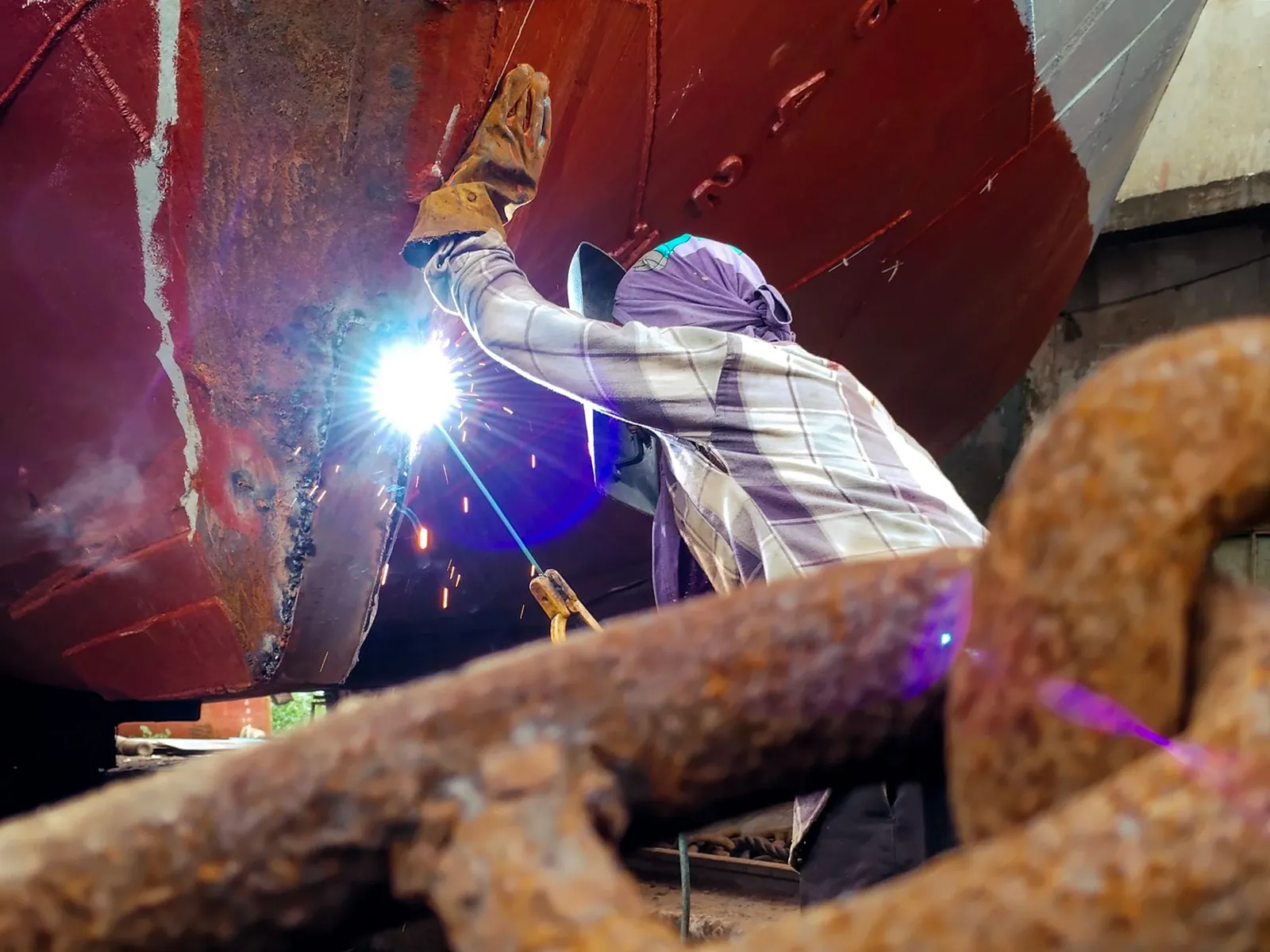
Pre-voyage inspections
Experienced crews check the hull’s exterior for signs of paint peeling or deep scratches during every port call. They know that a small break in the protective coating exposes the metal to the marine environment, which starts the electrochemical corrosion process. Beginners often ignore minor surface damage, but this mistake costs thousands in eventual steel replacement.
Dry-dock scheduling
Professionals follow a strict schedule for dry-docking, based on the ship’s age and class society rules. They use this time to blast away old paint, inspect the propeller shafts, and check the integrity of the sea chests. Leaving a ship in the water for too long beyond its recommended interval allows marine growth to significantly increase drag.
Troubleshooting common hull issues
| Issue noticed | Likely cause | Immediate fix | Long-term prevention |
|---|---|---|---|
| Rust streaks | Oxidation | Clean and prime | Better sealing |
| Excessive drag | Bio-fouling | Hull cleaning | Anti-fouling paint |
| Hull vibration | Bent propeller | Inspect shaft | Balance blade |
| Water seepage | Failed weld | Apply sealant | Structural repair |
| Paint cracking | UV exposure | Sand and repaint | UV-resistant coat |
Legal and safety standards
Construction must meet standards set by classification societies like the American Bureau of Shipping or Lloyd’s Register. These bodies define the thickness of plating and the required spacing of internal frames to ensure the ship can withstand extreme weather. If you’re building or modifying a boat, check your country’s maritime authority website for local registration rules. Operating a vessel with a modified hull without an official survey can void your insurance policy and may be illegal in international waters.
Costs of hull ownership
The true cost of a hull involves the initial material price, the ongoing labor for cleaning, and the fuel penalty for drag. Steel is relatively cheap per ton, but the labor to weld it’s expensive and requires certified professionals.
Maintenance costs rise exponentially as the ship ages because older hulls require more frequent inspections and thicker patches of steel. You should compare current steel market prices with the projected fuel savings of a more aerodynamic hull design to find your break-even point.
Long-term hull care
Keep your hull clean by scheduling regular underwater inspections to monitor for barnacle growth or paint degradation. If you see signs of blistering or deep rust, address these spots immediately before they spread to the structural frames. Record every inspection in your ship’s logbook, noting the specific area of the hull and the condition of the coating. This history helps you predict when the next major overhaul is needed, ensuring you never miss a critical maintenance window.
When to seek a professional

If you find structural cracks, deep buckling, or signs of water inside double-bottom tanks, stop all operations immediately. These issues indicate a failure in the ship’s primary skeleton, which requires an experienced naval architect or a certified shipyard engineer to assess. Don’t attempt to weld these cracks yourself, as improper repairs will compromise the vessel’s safety and legality. Professional shipyards have the equipment to perform ultrasonic thickness testing to determine if your hull still meets safety codes.
Frequently asked questions
How often should a hull be painted?
A hull typically needs a new layer of anti-fouling paint every 3 to 5 years, depending on the vessel’s activity and the specific paint type used.
Is it safe to patch a hull?
Patching is safe only if performed by a certified welder using materials that match the original hull specifications and approved by a maritime surveyor.
Why does a hull vibrate?
Vibration usually comes from a damaged propeller or a misaligned shaft, which transfers kinetic energy from the engine directly into the hull structure.
How long does a steel hull last?
A well-maintained steel hull can last for a long duration, provided the owner follows strict corrosion prevention and structural inspection schedules.
What happens if I ignore rust?
Ignoring rust leads to “pitting,” which thins the steel plate until it loses its structural strength and eventually develops a hole.
Does hull shape affect fuel?
Yes, a streamlined hull shape significantly reduces water resistance, which directly lowers the amount of fuel required to maintain a specific cruising speed.
Conclusion
Start your process by reviewing the design blueprints against the intended use of the vessel. You should expect a stable and efficient performance if the weight distribution matches the calculations. If you notice structural bending, stop and contact a professional engineer immediately.
