
Are you confused about whether to use shock or chlorine for your pool? You’re not alone.
Both play important roles in keeping your water clean, but they work in different ways. Choosing the right one can save you time, money, and frustration. You’ll discover exactly what makes shock and chlorine unique and when to use each.
By the end, you’ll feel confident managing your pool’s health like a pro. Keep reading to find out which option is best for your pool care routine!
Pool Sanitizers: Shock And Chlorine
Keeping pool water clean is key for safe swimming. Pool sanitizers help kill germs and keep water clear. Two common sanitizers are shock and chlorine. Both serve to protect swimmers, but they work in different ways. Understanding these differences helps maintain a healthy pool.
How Shock Works
Shock is a strong chemical treatment. It quickly raises the sanitizer level in the pool. This process kills bacteria, algae, and organic waste fast. Shock breaks down contaminants that regular chlorine cannot handle. It also clears cloudy water by removing buildup. Usually, shock is used after heavy pool use or rain. It gives the pool a fresh start.
How Chlorine Works
Chlorine is the main sanitizer for pools. It slowly releases chemicals to kill germs over time. Chlorine keeps water safe by stopping bacteria from growing. It works best when levels stay steady. Pool owners test and adjust chlorine daily. This prevents algae and harmful microbes from spreading. Chlorine also helps keep the water clear and fresh.
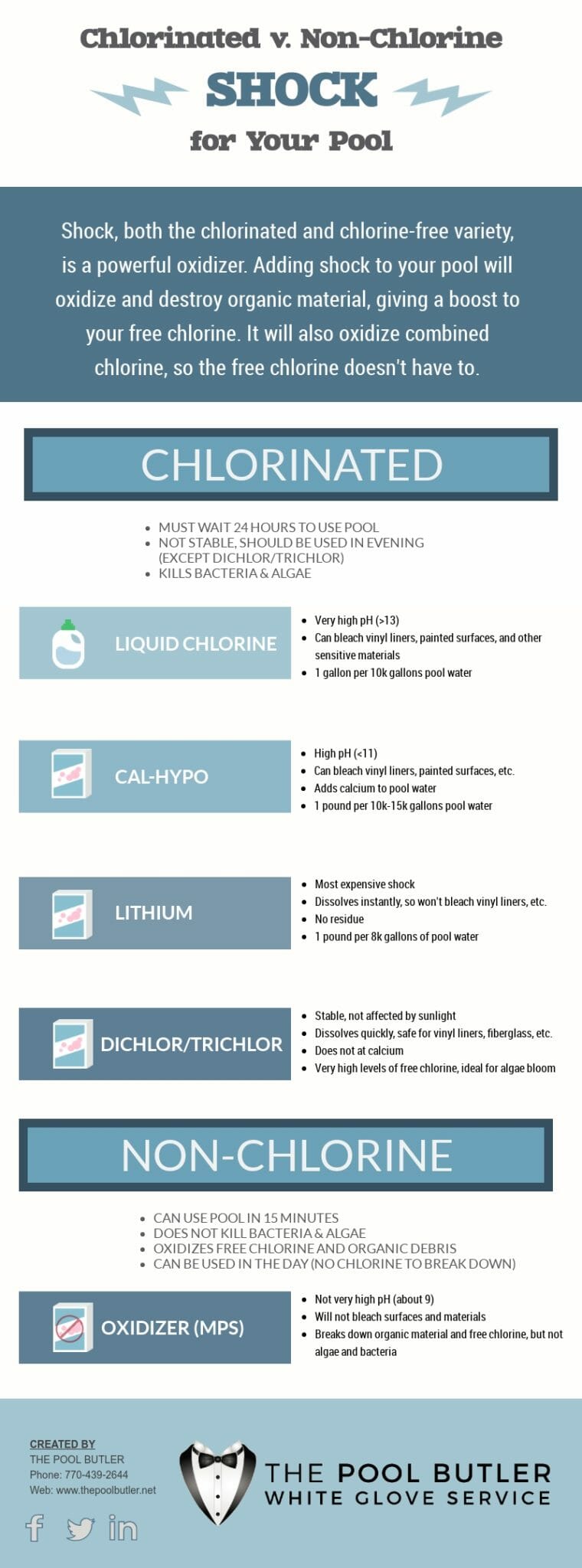
Credit: www.thepoolbutler.net
Types Of Pool Shock
Pool shock is a powerful chemical that cleans your pool water deeply. There are different types of pool shock. Each type works in a unique way. Knowing these helps keep your pool safe and clear.
Choosing the right shock depends on your pool type and needs. Here are the main types of pool shock you will find.
Calcium Hypochlorite Shock
Calcium hypochlorite is a popular pool shock. It contains a high level of chlorine. This type kills bacteria and algae fast. It works best in pools without high calcium levels. Use it carefully to avoid cloudy water.
Sodium Dichlor Shock
Sodium dichlor is a chlorine shock with a neutral pH. It dissolves quickly in water. This shock is gentle on pool surfaces. It adds some stabilizer to protect chlorine from sunlight. Good for regular pool maintenance.
Non-chlorine Shock
Non-chlorine shock uses different chemicals to clean pools. It does not contain chlorine. It works by breaking down organic waste. Safe for quick pool use after shocking. Best for pools with low chlorine levels.
Types Of Chlorine For Pools
Chlorine is key to keeping pool water clean and safe. Different types of chlorine work in different ways. Each type has its own use and benefits. Knowing these can help you maintain your pool better.
Choosing the right chlorine depends on your pool size, usage, and water conditions. Some chlorines act fast, while others last longer. Understanding these options makes pool care easier.
Liquid Chlorine
Liquid chlorine is a strong, fast-acting disinfectant. It is easy to add directly to the pool. It helps kill bacteria and algae quickly. Liquid chlorine starts working immediately after adding it.
This type is great for regular pool cleaning. It does not leave residue or cloudiness. However, it needs proper storage because it can lose strength over time.
Chlorine Tablets
Chlorine tablets dissolve slowly in the pool water. They provide a steady release of chlorine over time. Tablets are often used in floating dispensers or pool chlorinators.
They are convenient for long-lasting sanitation. Tablets help maintain consistent chlorine levels. They work well for regular pool maintenance without daily dosing.
Granular Chlorine
Granular chlorine dissolves quickly when added to water. It is easy to measure and control dosage. This type is useful for shock treatments and quick cleaning.
Granular chlorine works fast to clear cloudy water and kill bacteria. It is a good choice for occasional deep cleaning. Use it carefully to avoid over-chlorinating the pool.
Effectiveness In Killing Bacteria
Effectiveness in killing bacteria is crucial for pool safety. Both shock and chlorine play important roles. Understanding how each works helps keep water clean and safe.
Shock’s Rapid Disinfection
Shock works fast to kill bacteria. It releases a large burst of chemicals. This burst quickly destroys harmful germs and algae. Shock is ideal for sudden contamination or cloudy water. It cleans deeply and clears up the pool quickly. The effect is strong but short-lived.
Chlorine’s Continuous Protection
Chlorine provides ongoing defense against bacteria. It stays active in the water for a long time. This constant presence stops new germs from growing. Chlorine keeps the water safe during regular use. It works slowly but consistently. Chlorine is essential for daily pool care.
Impact On Pool Water Chemistry
Pool water chemistry changes with the use of shock and chlorine. Each affects the water in different ways. Understanding these effects helps keep your pool safe and clear.
Shock treatments quickly raise chlorine levels and target contaminants. Chlorine, used regularly, keeps bacteria and algae in check. Both influence pH and alkalinity, which are key to water balance.
Ph And Alkalinity Changes With Shock
Shock often raises the pH level in pool water. This can make the water more basic and less comfortable for swimmers. High pH reduces chlorine’s effectiveness against germs.
Alkalinity may also rise after shocking. This can cause scaling and cloudy water. It is important to test and adjust pH and alkalinity after using shock.
Maintaining Balance With Chlorine
Regular chlorine use helps keep pH and alkalinity more stable. Chlorine treatments maintain a steady disinfectant level in the pool. This prevents sudden shifts in water chemistry.
Balanced water means clearer water and a safer swim. Test pool water often to keep pH between 7.2 and 7.8. Keep alkalinity in the range of 80 to 120 ppm for best results.

Credit: www.youtube.com
Usage Frequency And Timing
Knowing how often and when to use shock and chlorine is key to a clean pool. Both products play different roles in pool care. Using them correctly keeps your water safe and clear. Timing affects their effectiveness and your pool’s health.
When To Shock Your Pool
Shock your pool after heavy use or rain. It clears out bacteria and contaminants fast. Use shock when water looks cloudy or smells bad. Shocking helps fix algae growth and removes chloramine build-up. Usually, shock the pool once a week or after major events. Avoid swimming for at least eight hours after shocking.
Daily Chlorine Maintenance
Chlorine keeps your pool clean every day. Test chlorine levels daily for best results. The ideal range is 1 to 3 parts per million. Add chlorine regularly to maintain this level. Daily dosing prevents germs and algae from growing. Use chlorine tablets or liquid for easy maintenance. Always add chlorine in the evening to avoid sun loss.
Safety And Handling Tips
Handling shock and chlorine requires caution to avoid accidents and injuries. Both chemicals can be dangerous if not stored or used correctly. Follow safety tips to protect yourself and others around you.
Proper Storage
Keep shock and chlorine in a cool, dry place. Store them away from direct sunlight and heat sources. Use tightly sealed containers to prevent moisture from entering. Store chemicals separately to avoid reactions. Keep them out of reach of children and pets.
Personal Protection
Wear gloves and safety goggles when handling these chemicals. Use a mask to avoid breathing in dust or fumes. Wear long sleeves and pants to protect your skin. Wash your hands thoroughly after use. Avoid touching your face or eyes during handling.
Mixing Precautions
Never mix shock with chlorine directly. Mixing can cause dangerous chemical reactions. Always add chemicals to water, not water to chemicals. Use clean tools and containers for mixing. Work in a well-ventilated area to avoid inhaling fumes.
Cost Comparison
Comparing the costs of shock and chlorine is important for pool owners. It helps decide the best choice for budget and maintenance. Both chemicals serve different purposes but are essential for clean water. Understanding their costs can save money and effort over time.
Upfront Costs
Shock treatments usually cost more per dose than regular chlorine. You buy shock less often because it is strong and works fast. Chlorine comes in various forms like tablets or liquid, which can be cheaper. The initial purchase of chlorine is generally lower than shock. But the amount needed depends on pool size and condition.
Long-term Expenses
Chlorine requires regular use, increasing total costs over time. You must add chlorine frequently to keep water safe. Shock treatments are used less often but cost more each time. Using shock too much can raise expenses quickly. Proper pool care balances both to keep costs manageable.
Environmental Considerations
Environmental considerations play a big role in choosing between shock and chlorine for water treatment. Both chemicals affect nature differently. Understanding their impact helps protect ecosystems and water quality.
Chemical Impact On Ecosystems
Shock treatments often contain strong oxidizers. These can harm fish and plants in nearby water bodies. Chlorine, while effective in killing bacteria, can form toxic compounds. These byproducts may linger in water and soil. High chlorine levels disrupt aquatic life and reduce biodiversity. Careful use and disposal are essential to limit damage.
Eco-friendly Alternatives
Natural options offer safer solutions for water care. Products based on oxygen or enzymes break down quickly without harmful residues. These alternatives protect wildlife and maintain water balance. Using eco-friendly methods reduces pollution risks. They support a healthier environment and sustainable water management.
Choosing Between Shock And Chlorine
Choosing between shock and chlorine is key for clean pool water. Both help keep your pool safe and clear. Each has its own role and benefits. Knowing when to use shock or chlorine can save time and effort.
Pool Type And Usage
Different pools need different care. Shock works well for outdoor pools with heavy use. Chlorine suits indoor pools with less dirt. Large pools may need more frequent shocking. Smaller pools can stay clean with regular chlorine. Think about how often people swim in your pool. More swimmers mean more germs and dirt.
Water Conditions
Water quality changes over time. Shock works best for cloudy or green water. It kills bacteria fast and clears algae. Chlorine keeps water clean day-to-day. It prevents bacteria growth and balances pH. Test your water often to see its condition. Use shock when water looks dirty or smells bad. Use chlorine to maintain clear water regularly.
User Preferences
Some prefer quick fixes; others choose steady care. Shock treats problems quickly but may cause strong odors. Chlorine is gentler and works slowly. Consider how much time you have for pool care. Some users dislike strong chemical smells. Others want fast, effective cleaning. Choose the option that fits your lifestyle and comfort.

Credit: www.youtube.com
Frequently Asked Questions
What Is The Difference Between Shock And Chlorine In Pools?
Shock is a strong chemical used to clean pools quickly. Chlorine is a regular sanitizer that keeps water safe daily. Shock treats problems fast; chlorine works slowly.
How Often Should You Shock A Chlorine-treated Pool?
Shocking is done once every 1 to 2 weeks or after heavy use. Chlorine is added more often to keep water clean daily. Shocking helps fix cloudy or dirty water fast.
Can You Use Shock And Chlorine Together Safely?
Yes, but not at the same time. Add shock first, wait for it to clear, then add chlorine. This keeps the pool safe and clean.
Why Does A Pool Need Shock If It Has Chlorine?
Chlorine works slowly and can lose power over time. Shock kills tough germs and removes buildup quickly. It keeps the pool fresh and clear.
How Long After Shocking Can I Swim In The Pool?
Wait at least 8 hours after shocking before swimming. This lets chemicals settle and water become safe. Always check the pool’s chemical levels first.
Conclusion
Shock and chlorine serve different roles in pool care. Shock treats heavy contamination quickly. Chlorine keeps the water clean daily. Both work best together for clear water. Test your pool often to know what it needs. Use shock when algae or cloudiness appear.
Add chlorine regularly to stop germs. Understanding their uses helps keep pools safe. Clear, healthy water makes swimming enjoyable. Choose the right product for your pool’s condition. Simple steps lead to a sparkling pool all season.