
Choosing the right pool filter can feel overwhelming. You want clean, clear water without spending too much time or money.
That’s why understanding the differences between sand, DE, and cartridge filters is so important. Each type works differently and has its own benefits and drawbacks. By knowing how they compare, you’ll be able to pick the best one for your pool and enjoy sparkling water all season long.
Keep reading to find out which filter suits your needs perfectly.
Credit: crediblepools.com
Types Of Pool Filters
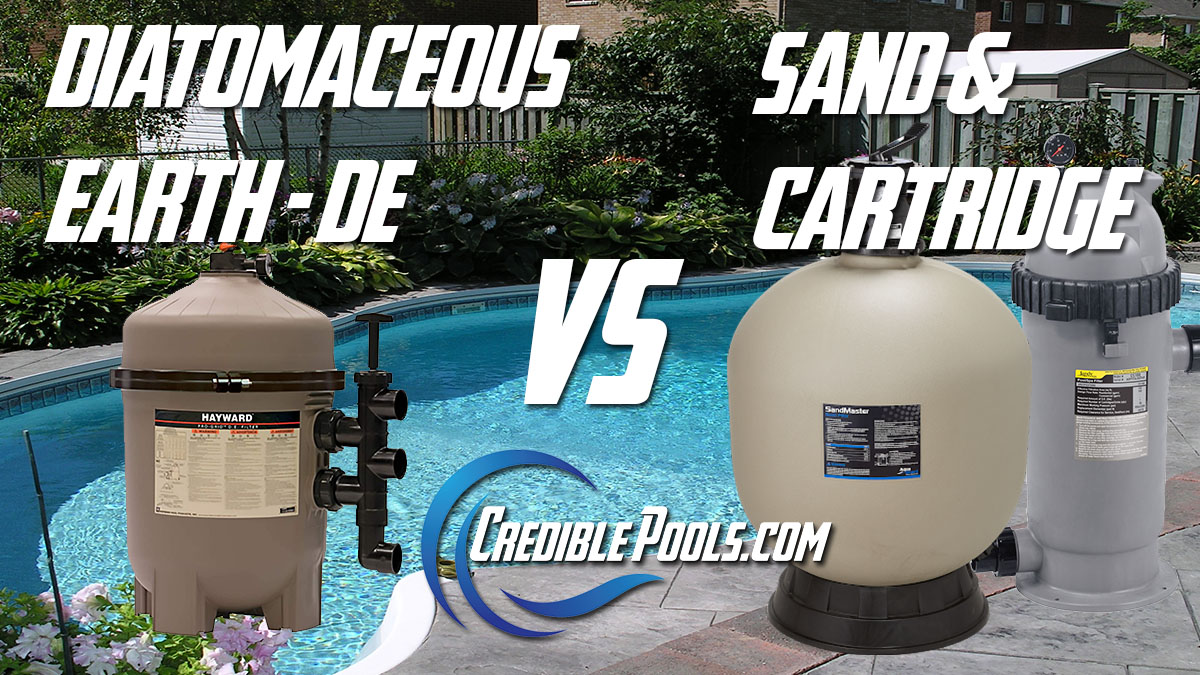
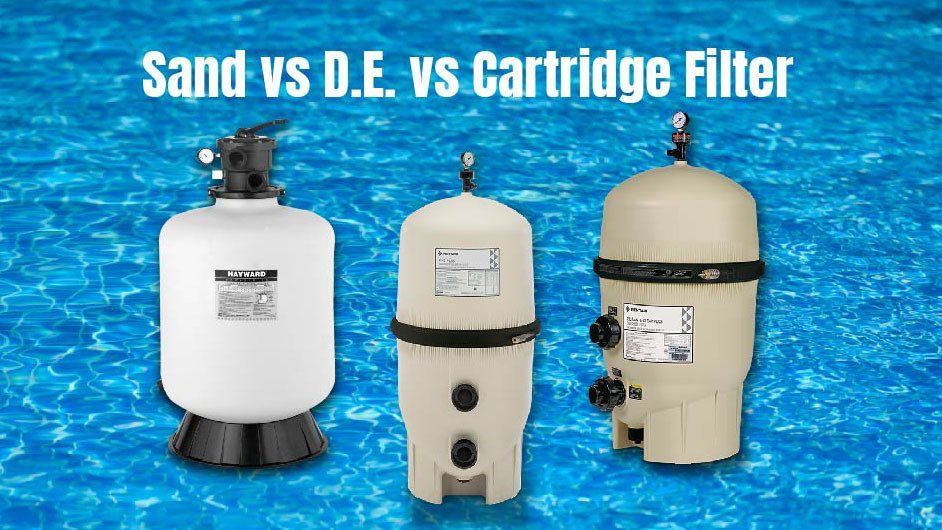
Pool filters clean your pool water by removing dirt and debris. They keep the water clear and safe to swim in. Choosing the right filter helps maintain your pool easily. There are three main types of pool filters. Each type works differently and has its own benefits and drawbacks.
Sand Filters
Sand filters use sand to trap dirt and particles. Water passes through the sand, which catches impurities. These filters are easy to use and need less cleaning. They work well for large pools and filter particles down to about 20-40 microns. Sand filters are durable and low maintenance. But they may not catch very small particles.
Diatomaceous Earth Filters
Diatomaceous Earth (DE) filters use a fine powder made from fossilized algae. This powder coats a grid inside the filter. DE filters trap very small particles, around 2-5 microns. They provide the cleanest water among pool filters. These filters require more care and regular cleaning. DE filters are best for pools needing very clear water.
Cartridge Filters
Cartridge filters use a pleated fabric cartridge to trap debris. Water flows through the cartridge, catching dirt and particles. They filter particles as small as 10-15 microns. Cartridge filters are easy to clean and use less water for backwashing. These filters are compact and ideal for small to medium pools. They need regular cleaning to work well.
Credit: netpositivepools.com
How Each Filter Works
Each pool filter type uses a different method to clean water. Understanding how sand, DE, and cartridge filters work helps you choose the right one. Each filter traps dirt and debris but in unique ways.
Filtration Process In Sand Filters
Sand filters use a bed of sand to catch dirt. Water flows through the sand, which traps particles. Clean water then flows back into the pool. The sand grains are large enough to allow water flow but small enough to catch debris. Over time, dirt builds up in the sand, requiring backwashing to clean it.
Filtration Process In De Filters
DE filters use a powder called diatomaceous earth as a filter medium. Water passes through grids coated with DE powder. The powder traps very small particles, even finer than sand filters can catch. DE filters offer very clear water. After some use, the DE powder washes away and must be replaced.
Filtration Process In Cartridge Filters
Cartridge filters use a pleated fabric cartridge to trap dirt. Water flows through the fabric, which catches particles. The pleats provide a large surface area for filtering. These filters clean water well and need less water for cleaning. You remove the cartridge and rinse it to clean dirt off.
Performance Comparison
Comparing the performance of sand, DE, and cartridge filters helps choose the best pool filter. Each filter type works differently. The way they clean water affects pool maintenance and water quality. Understanding their strengths and limits guides a smart choice.
Filtration Efficiency
DE filters capture the smallest dirt particles. They filter down to 2-5 microns. Sand filters catch bigger dirt, around 20-40 microns. Cartridge filters fall between, trapping particles about 10-15 microns. DE filters offer the best cleaning power. Sand filters need more frequent cleaning. Cartridge filters provide moderate efficiency with easy upkeep.
Flow Rate And Pressure
Sand filters handle high flow rates well. They work best with strong pumps. Cartridge filters allow good flow with lower pressure. They are energy efficient. DE filters have slower flow rates due to dense filtering. This can cause higher pressure in the system. Lower pressure means less pump strain and lower power use.
Water Clarity Results
DE filters deliver the clearest water. They remove fine dirt and algae effectively. Cartridge filters keep water clear but need regular cleaning. Sand filters provide decent clarity but may leave some fine debris. Water clarity depends on filter type and maintenance. Consistent care improves all filter results.
Maintenance And Upkeep
Maintaining pool filters keeps water clean and clear. Each type—sand, DE, and cartridge—needs different care. Proper upkeep extends filter life and improves performance. Regular checks prevent costly repairs and keep pools safe.
Cleaning Procedures
Sand filters require backwashing to flush out dirt. Turn off the pump before backwashing. Run water backward through the filter to clean the sand. Repeat until water runs clear. Cartridge filters need removal and rinsing with a hose. Avoid using harsh chemicals on cartridges. DE filters also use backwashing but need extra care. Remove and soak the grids in a cleaning solution. Rinse thoroughly before reinstalling.
Filter Media Replacement
Sand usually lasts 3-5 years before replacement. Old sand clumps and loses effectiveness. Replace it by dumping old sand and refilling with new. Cartridge filters last about 1-2 years, depending on use. Replace cartridges when damaged or very dirty. DE grids can last 1-2 years, but damage happens easily. Replace grids if torn or clogged beyond cleaning.
Frequency Of Maintenance
Sand filters need backwashing every 1-2 weeks. Check pressure gauges weekly to know when to clean. Cartridge filters require rinsing every 2-4 weeks. Replace cartridges twice a year or if damaged. DE filters backwash every 1-2 weeks, plus deep cleaning monthly. Monitor pressure gauges regularly for peak performance.
Cost Factors
Choosing the right pool filter depends a lot on cost factors. These costs include the price to buy the filter, the money spent to run it, and the value over time. Understanding these costs helps make a smart choice for your pool.
Initial Purchase Price
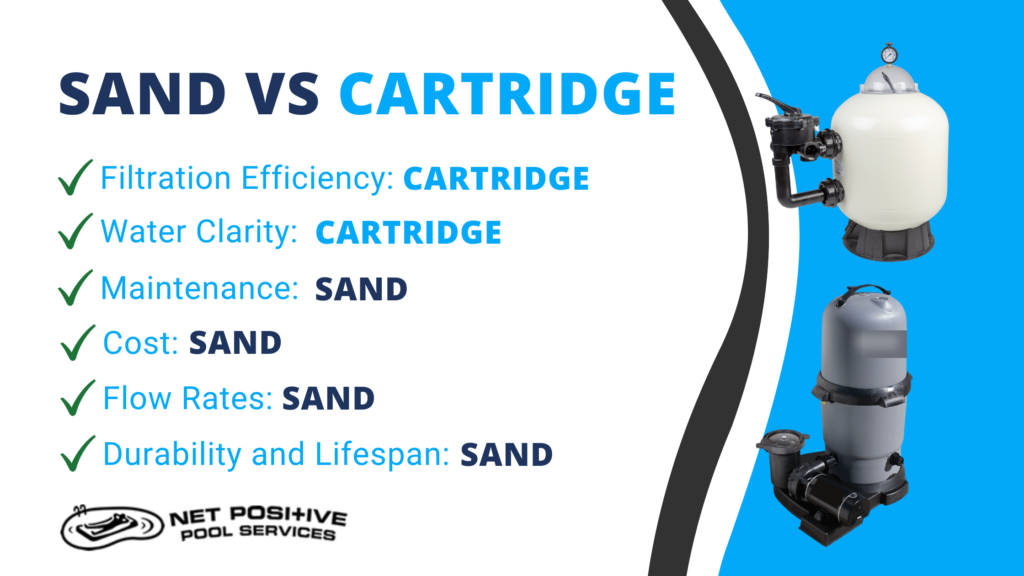
Sand filters usually have the lowest starting price. They are simple and easy to buy. DE filters cost more because of their complex design. Cartridge filters often fall in the middle but can be pricey for bigger models.
The price depends on size and brand too. Cheaper filters might save money now but may not last long.
Operating Expenses
Sand filters use more water and energy to clean. They need backwashing that wastes water. DE filters use less water but require special powder to work well. Cartridge filters use the least water and energy, saving money on bills.
Filter media replacement also adds to costs. Sand needs change every 5 years. DE powder must be replaced often. Cartridges last 1 to 3 years but cost more to buy.
Long-term Investment
Think about how long each filter lasts and total costs. Sand filters are cheap first but cost more to run. DE filters have high upfront cost but clean very well, saving repair costs. Cartridge filters save water and power, lowering bills over time.
Choosing the right filter means balancing all these costs. This helps keep your pool clean without wasting money.
Installation Considerations
Choosing the right pool filter means thinking about how easy it is to install. Installation affects how soon your pool will be ready and how much space you will need. Each filter type—sand, DE, and cartridge—has different needs and fits differently into your pool system.
Space Requirements
Sand filters often require more space because of their size. They need room for the tank and the backwash system. DE filters also need space for the filter tank and a separate place to handle backwashing. Cartridge filters are usually compact and take up less space. This makes them ideal for smaller pool areas or tight installations.
Ease Of Setup
Cartridge filters are the simplest to set up. They come with fewer parts and do not need backwashing. Sand filters need careful setup of the sand bed and valves. DE filters require more steps, including adding and handling the DE powder. A simple setup can save time and reduce errors during installation.
Compatibility With Pool Systems
Sand filters work well with many pool pump sizes and are very common. DE filters need pumps that can handle higher pressure. Cartridge filters fit well with low to medium flow pumps. Make sure the filter matches your pump and plumbing size for best performance. Check if your pool system supports the filter type before buying.
Environmental Impact
Choosing the right pool filter affects the environment in many ways. Sand, DE, and cartridge filters all use different resources and produce different types of waste. Understanding their environmental impact helps make a better choice for your pool and the planet.
Water Usage
Sand filters need backwashing to clean the sand. This process uses a large amount of water each time. DE filters also require backwashing, but they use slightly more water because of the fine DE powder. Cartridge filters do not need backwashing. Instead, they require rinsing, which uses much less water. Cartridge filters are the best choice for saving water.
Waste Disposal
Sand filters produce old sand that must be replaced every few years. This sand can often be recycled or used in landscaping. DE filters create waste powder that is not always easy to dispose of safely. It may require special handling to avoid environmental harm. Cartridge filters generate filter cartridges that need regular replacement. These cartridges are usually made of synthetic materials and are not biodegradable. Proper disposal or recycling is important to reduce waste impact.
Energy Consumption
Sand filters usually need a strong pump for backwashing and filtering. This means higher energy use over time. DE filters require even more energy because they filter finer particles. Cartridge filters use less energy since they rely on lower water pressure. Lower energy use means less pollution and lower electricity bills. Cartridge filters are the most energy-efficient option for pools.
Choosing The Right Filter
Choosing the right filter for your pool is important. The filter keeps water clean and clear. Different filters suit different needs. Knowing what matters most helps pick the best one.
Think about your pool size, budget, and the water quality you want. Each filter type works better in certain situations. Understanding these factors will guide your choice.
Pool Size And Usage
Large pools need filters that can handle more water. Sand and DE filters are good for big pools. Smaller pools can use cartridge filters. Pools with heavy use require filters with higher capacity. Choose a filter that matches how often you swim.
Budget Constraints
Sand filters usually cost less upfront. Cartridge filters have moderate costs. DE filters tend to be pricier. Think about long-term costs, like cleaning and replacing parts. A cheap filter might cost more over time. Balance price with maintenance needs.
Desired Water Quality
DE filters trap the smallest dirt particles. This results in the clearest water. Cartridge filters catch fine particles too but need regular cleaning. Sand filters work well but don’t filter as finely. Choose a filter based on how clear you want the water.
Credit: www.familypoolsnorth.com
Frequently Asked Questions
What Are The Main Differences Between Sand, De, And Cartridge Filters?
Sand filters use sand to trap dirt, DE filters use a powder coating, and cartridge filters use a pleated fabric. Each filters water differently and has unique cleaning needs.
Which Filter Type Is Best For Small Pools?
Cartridge filters are great for small pools because they are compact and easy to maintain. They filter fine particles well and save water during cleaning.
How Often Should I Clean Each Filter Type?
Sand filters need backwashing every few weeks. DE filters require backwashing and adding new powder regularly. Cartridge filters should be rinsed monthly and replaced yearly.
Are De Filters More Expensive Than Sand And Cartridge Filters?
Yes, DE filters usually cost more upfront and need more maintenance supplies. Sand filters are the cheapest, and cartridge filters fall in between.
Can I Switch From One Filter Type To Another Easily?
Switching filters may need changes to your pool’s plumbing and setup. It’s not always simple but can improve water quality depending on your needs.
Conclusion
Choosing the right filter depends on your pool needs and budget. Sand filters work well for large pools and are easy to maintain. DE filters offer the best cleaning but cost more and need careful handling. Cartridge filters use less water and save energy but may clog faster.
Think about how often you want to clean and how clear you want your water. Each filter type has its pros and cons. Pick the one that fits your lifestyle and pool size best. Clean water makes swimming safe and fun.