
Are you thinking about upgrading your pool but feeling stuck between a mineral system and a saltwater system? Choosing the right option can make a huge difference in how your pool looks, feels, and even how much work it takes to maintain.
You want clear water that’s gentle on your skin and easy on your budget. But which system truly delivers that? Keep reading, and you’ll discover the key differences that will help you pick the perfect pool setup for your needs.
This simple guide will make the choice easier than ever.

Credit: www.magnapool.com
Mineral Pool Systems
Mineral pool systems offer a unique alternative to traditional saltwater pools by using natural minerals to keep your water clean and healthy. These systems blend minerals with a smaller amount of chlorine to create a gentler swimming experience. If you’re looking for a pool that feels softer on your skin and eyes, mineral pools might be the answer.
How Mineral Systems Work
Mineral systems introduce specific minerals directly into your pool water. These minerals work alongside a reduced chlorine level to fight bacteria and algae. The minerals help stabilize the water chemistry, which means fewer harsh chemicals and a more balanced pool environment.
Instead of relying solely on chlorine, mineral systems use elements like magnesium and potassium to improve water quality. This combination helps reduce the chlorine smell and irritation often associated with traditional pools. Have you ever wondered why some pools feel smoother and more refreshing?
Common Minerals Used
- Magnesium: Known for its skin-soothing properties, magnesium softens water and reduces dryness.
- Potassium: Helps maintain water balance and boosts the effectiveness of chlorine.
- Calcium: Supports water hardness and prevents corrosion of pool surfaces.
- Sodium bicarbonate: Acts as a pH buffer to keep water stable and comfortable.
These minerals work together to create a healthier swimming environment. You might notice less eye redness and softer skin after swimming in a mineral pool.
Benefits Of Mineral Pools
Mineral pools offer several perks that make them worth considering. They reduce chlorine use by up to 50%, which means less chemical odor and irritation. This makes swimming more enjoyable, especially for people with sensitive skin or allergies.
Another benefit is easier water maintenance. Mineral pools tend to stay balanced longer, so you don’t have to test and adjust chemicals as frequently. Plus, the water feels naturally smoother, giving you a refreshing swim every time.
Have you experienced the difference in water feel between a mineral pool and a traditional one? Many swimmers say it’s like night and day.
Maintenance Requirements
Maintaining a mineral pool is simpler but still requires regular attention. You’ll need to monitor mineral levels and chlorine to keep the water balanced. Typically, mineral cartridges or tablets are added every few weeks depending on pool size and usage.
While you use less chlorine, it’s important not to skip water testing. Minerals can build up over time, so occasional dilution or partial water changes might be necessary. Cleaning the pool filter regularly also helps maintain water clarity.
Are you ready to spend less time adjusting chemicals and more time enjoying your pool? Mineral systems can offer that balance if you stay consistent with maintenance.
Saltwater Pool Systems
Saltwater pool systems are a popular alternative to traditional chlorine pools. They use salt to create chlorine naturally. This method keeps the water clean and clear without strong chemical smells.
Many pool owners prefer saltwater systems for their gentle feel and easier maintenance. Saltwater pools offer a more comfortable swim experience. They also reduce skin and eye irritation compared to regular chlorine pools.
Saltwater Chlorination Process
Saltwater pools use a salt chlorine generator. This device changes salt into chlorine through electrolysis. It kills bacteria and keeps the water safe. The process happens continuously while the pool pump runs.
This system produces chlorine at a steady rate. It avoids the spikes and drops found in manual chlorine dosing. The salt level in the pool stays balanced for proper chlorination.
Advantages Of Saltwater Pools
Saltwater pools feel softer on the skin. They do not have the strong smell of chlorine. The water is less harsh on swimsuits and pool equipment. Saltwater systems also lower long-term chemical costs.
These pools require less frequent chemical additions. They help prevent algae growth naturally. Saltwater systems provide a more stable and comfortable swimming environment.
Typical Upkeep Tasks
Regular salt level checks are important. The salt chlorine generator needs cleaning to remove buildup. Pool water balance must be monitored for pH and alkalinity. This keeps the chlorination process effective.
Occasional inspection of the pool equipment is necessary. Salt cells may need replacement every few years. Routine cleaning of the pool still applies to keep water clear.
Water Quality And Comfort
Water quality affects how comfortable your pool feels. It also changes how safe and clean the water is. Mineral and saltwater systems offer different experiences in water quality and comfort. Understanding these differences helps you pick the right system for your pool.
Skin And Eye Sensitivity
Mineral systems tend to cause less skin irritation. They keep the water softer and gentler. Saltwater pools may cause dryness or redness for some people. Salt can sting the eyes more than minerals. People with sensitive skin prefer mineral systems.
Water Clarity And Feel
Mineral pools often have clearer water. They reduce algae growth naturally. Saltwater pools feel smoother but can be a bit salty. Minerals give a fresh, clean feel to the water. Both systems keep water clean but feel different.
Impact On Pool Equipment
Saltwater systems can cause more wear on pool parts. Salt is corrosive to metal and some surfaces. Mineral systems are gentler on equipment. They help extend the life of pumps and heaters. Proper maintenance is still needed for both systems.
Cost Considerations
Cost plays a big role in choosing between mineral and saltwater pool systems. Knowing the expenses helps plan your budget better. Costs include setup, maintenance, and energy use. Each system has its own price points.
Initial Setup Expenses
Saltwater systems usually cost more to install. They need special generators to create chlorine. Mineral systems use minerals added to the water, so the setup is simpler. Mineral systems often require less equipment upfront. Installation fees can vary depending on pool size and location.
Ongoing Maintenance Costs
Saltwater pools need regular checks on salt levels. The salt cells require cleaning or replacement every few years. Mineral pools need minerals added regularly but less often than salt. Mineral systems usually have lower chemical costs overall. Both systems require some maintenance but mineral pools can cost less over time.
Energy Consumption
Saltwater systems use energy to power chlorine generators. This adds to electricity bills. Mineral systems do not need this extra energy. Pumps and filters run the same for both systems. Mineral pools generally use less energy overall. Choosing a system with lower energy use saves money long term.
Environmental Impact
Choosing between a mineral and saltwater system affects the environment differently. Understanding these differences helps protect nature while enjoying clean water. Each system uses chemicals and resources in unique ways that matter for sustainability and local ecosystems.
Chemical Usage And Disposal
Saltwater systems rely on salt to create chlorine for water cleaning. They use fewer harsh chemicals but still produce chlorine byproducts. Mineral systems often need added chemicals to balance water minerals. Disposal of these chemicals can harm soil and water if not handled properly. Proper treatment and disposal reduce risks to the environment.
Sustainability Factors
Mineral systems use natural minerals, which can be more eco-friendly if sourced responsibly. Saltwater systems require salt, which must be mined and transported, adding to carbon emissions. Mineral systems may last longer with less frequent chemical use. Energy consumption is similar, but maintenance needs can vary. Sustainable choices reduce waste and conserve resources over time.
Effect On Surrounding Ecosystem
Saltwater systems can release salty water that affects plants and animals nearby. High salt levels can damage freshwater habitats. Mineral systems tend to have less impact on soil and water quality. Both systems must avoid leaks and spills to protect wildlife. Careful management helps keep local ecosystems healthy and balanced.
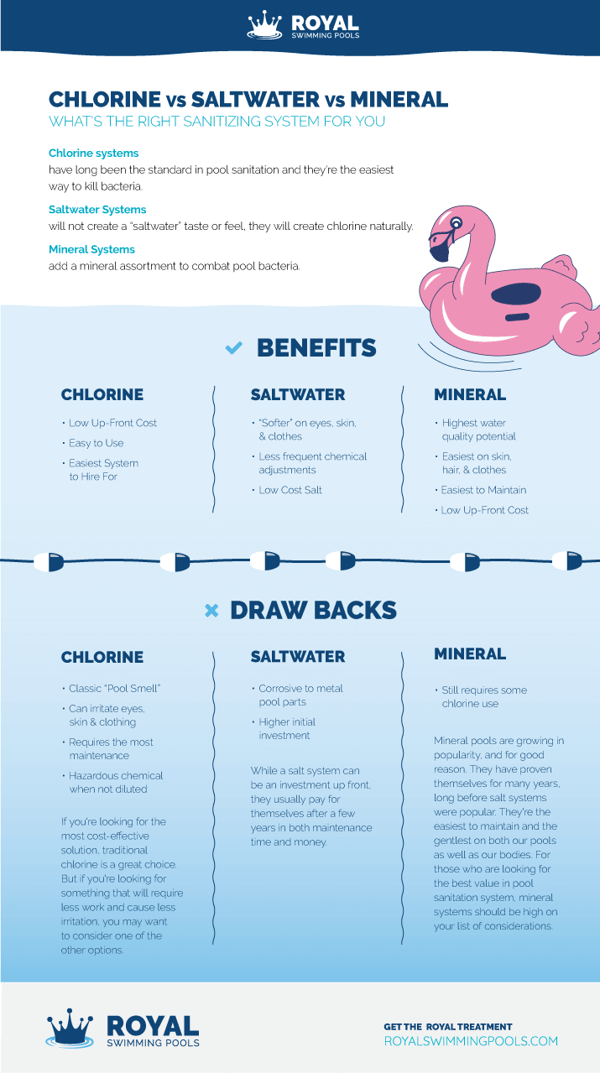
Credit: blog.royalswimmingpools.com
Choosing The Right System
Choosing the right pool system affects your pool’s care and your swimming experience. Both mineral and saltwater systems offer unique benefits. Knowing your needs helps you pick the best option. Consider your pool size, climate, and personal habits. These points guide you to the right choice.
Pool Size And Usage
Small pools may benefit from mineral systems for gentle water care. Larger pools often suit saltwater systems better. Saltwater systems keep water balanced longer in big volumes. Frequent swimmers need consistent water quality. Saltwater systems provide steady chlorine levels. Mineral systems may require more adjustments with heavy use.
Climate And Location
Hot, sunny climates speed up chlorine loss. Saltwater systems regenerate chlorine, fitting warm areas well. Cooler climates may work fine with mineral systems. Hard water areas can affect mineral balance. Saltwater systems handle mineral buildup better. Local weather and water quality impact your choice.
Personal Preferences And Lifestyle
Some prefer softer water feel from mineral systems. Others like saltwater’s low maintenance and mild chlorine. Allergy sensitivity may influence the choice. Mineral systems often have fewer irritants. Saltwater pools need less chemical handling. Time spent on pool care is a factor. Choose what fits your lifestyle and comfort best.

Credit: www.reddit.com
Frequently Asked Questions
What Is The Main Difference Between Mineral And Saltwater Systems?
Mineral systems use natural minerals to clean water, while saltwater systems use salt and electricity. Both keep pools clean but in different ways.
Which System Is Easier To Maintain For Pool Owners?
Saltwater systems need less frequent chemical adding but require checking salt levels. Mineral systems need regular mineral cartridge changes but fewer chemicals overall.
Are Mineral Systems Safer For Sensitive Skin Than Saltwater?
Yes, mineral systems often cause less skin and eye irritation. Saltwater can sometimes feel harsh due to salt concentration.
How Do Operating Costs Compare Between Mineral And Saltwater Pools?
Mineral systems usually cost more upfront but less in chemicals later. Saltwater systems cost less initially but may need more salt and maintenance parts.
Can Saltwater Systems Damage Pool Equipment More Than Mineral Systems?
Saltwater can cause corrosion to some metal pool parts over time. Mineral systems are generally gentler on pool equipment and surfaces.
Conclusion
Choosing between mineral and saltwater systems depends on your pool needs. Mineral systems use natural elements to keep water clean. Saltwater systems create chlorine from salt for sanitation. Both have benefits and costs to consider. Think about maintenance, comfort, and budget before deciding.
A clear, healthy pool is possible with either system. Your choice shapes your pool’s care and feel. Take time to weigh what suits you best.