
You can resolve most cooling or noise issues by performing basic maytag refrigerator troubleshooting to ensure the unit has proper airflow and power. Most problems stem from blocked vents, dirty condenser coils, or a door that doesn’t seal tightly. If your fridge isn’t cooling, check that the thermostat is set correctly and the condenser coils are free of dust. These simple steps often fix the issue without needing a professional technician.
Troubleshooting your Maytag refrigerator cooling issues

When your appliance stops working, the first step is to check for simple blockages. Air must circulate freely inside both the fridge and the freezer compartments to keep temperatures stable. If you pack food against the back wall or near the air vents, the cold air can’t reach your food, which leads to uneven cooling. Always leave a few inches of space around your items to ensure proper airflow.
Another common cause is a dirty condenser coil. These coils are usually located behind a kick plate at the bottom of the fridge. Over time, they collect dust and pet hair, which makes the motor work harder and prevents heat from escaping.
If the coils are covered in debris, the fridge will run constantly but fail to keep the internal temperature low. You should clean these coils based on your usage and the owner’s manual recommendations to keep the unit running efficiently.
The door seal, or gasket, is also a frequent culprit for temperature swings. If the seal is cracked or loose, cold air escapes and warm air enters, forcing the compressor to run nonstop. You can test this by closing the door on a piece of paper; if it slides out easily, the seal isn’t tight enough. If the seal is damaged, you’ll need to replace the gasket to maintain the correct internal temperature.
Safety: Inside a mains-powered machine, the parts behind the outer cover can hold a dangerous electrical charge even after it has been unplugged — that’s why they sit behind a cover. Opening the housing, or testing or replacing anything behind it, is a job for a qualified technician, never a home repair.
Adjusting the temperature and airflow settings
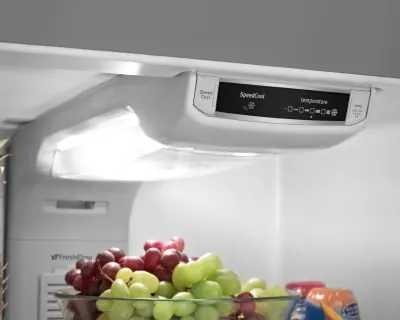
If your fridge is warm, start by checking the control panel to ensure the temperature settings haven’t been changed. Most models should be set between 37°F and 40°F for the refrigerator and 0°F for the freezer. If you recently loaded the fridge with a large amount of room-temperature food, the temperature will rise temporarily. Wait 24 hours for the unit to stabilize before you assume there’s a mechanical failure.
Ensure that the air vents inside the freezer and fridge aren’t blocked by ice or food packaging. If you see a thick layer of frost, it might indicate that the door was left open or the seal is failing.
You can view official maintenance guidelines from the manufacturer to keep the seals clean and the vents clear. If the vents are clear but the unit still feels warm, listen for the sound of the fan. If the fan isn’t running, it may be obstructed by ice or debris.
This fix is for users who have confirmed the unit is plugged into a working outlet. If the display is completely dark and there’s no sound, check your home circuit breaker first. If the breaker is tripped, reset it and wait to see if the fridge restarts. Don’t attempt to open the rear panel to inspect the compressor or electrical components, as this requires a qualified technician.
Cleaning the coils and condenser area
If the appliance is running but the interior isn’t cold, cleaning the condenser coils is the most effective DIY solution. Unplug the refrigerator before you begin any cleaning task to ensure your safety. Locate the kick plate at the bottom front of the unit and remove it by unscrewing the fasteners or pulling it off, depending on your specific model. Use a vacuum with a soft brush attachment to remove dust from the coils.
Be careful not to bend the delicate metal fins on the coils while you’re vacuuming. If you see thick, matted dust, a long-handled coil brush can reach into tighter spaces to pull the debris out. Once the coils are clean, replace the kick plate and plug the fridge back in. You’ll likely hear the compressor start up shortly after, which is a sign that the unit is beginning to cycle properly.
This task isn’t for you if you’re uncomfortable moving the appliance or working near electrical outlets. If you find that the coils are free of dust but the unit is still struggling, the problem might be a faulty evaporator fan or a failing compressor. These parts are internal and require specialized tools to test. If you suspect a mechanical failure, contact a professional service provider to avoid damaging the unit further.
Solving common noise and drainage problems
Strange noises often originate from small issues that are easy to address. A rattling sound frequently comes from a loose kick plate or the unit being unlevel. Use a bubble level on top of the fridge and adjust the leveling legs at the bottom until the unit sits firmly on the floor. If the fridge tilts forward, the doors may not close automatically, which leads to frost buildup and cooling loss.
Water pooling on the floor or inside the crisper drawers usually points to a clogged defrost drain. This drain allows melted frost to travel to a pan where it evaporates. If food particles or ice block the drain tube, water will overflow into the interior or leak out the bottom. You can often clear this by carefully flushing the drain line with warm water using a small turkey baster.
If you hear a loud grinding noise, it may be the evaporator fan hitting ice buildup. This happens if the automatic defrost cycle isn’t working correctly. If you see significant ice in the freezer, unplug the unit and allow it to defrost completely with the doors open until all ice has melted. If the noise returns after the unit cools down, the fan motor or the defrost timer likely needs professional replacement.
Avoiding common refrigerator maintenance mistakes
Many people believe that keeping a fridge completely full helps it stay cold, but this is only true if the contents are already frozen. Overloading a fridge with warm items prevents air circulation and stresses the compressor. Conversely, an empty fridge loses cold air quickly every time you open the door. Keep the fridge about two-thirds full to balance these needs.
- Don’t leave the door open for long periods while deciding what to eat. This forces the compressor to work extra hard to recover the lost cold air.
- Avoid using sharp objects to scrape ice from the interior walls or freezer. You can easily puncture the refrigerant lines, which makes the unit impossible to repair.
- Don’t turn the thermostat to the coldest setting hoping to fix a cooling issue. This just puts unnecessary strain on the cooling system and may freeze your fresh produce.
- Never block the air intake vents with boxes or large containers. If air can’t return to the evaporator, the cooling cycle will be inefficient.
Maintaining your appliance for long-term use

To keep your unit running well, you must compare your current habits with the manufacturer’s recommended care. If you’re doing the standard maintenance steps, you’ll extend the life of your appliance and prevent costly repairs.
| If you’re doing this | Do this instead | Why |
|---|---|---|
| Leaving the door open | Close it immediately | Keeps internal temperature stable |
| Pushing food against the back | Leave a 2-inch gap | Allows cold air to circulate |
| Ignoring dust on the coils | Vacuum every 6 months | Prevents the motor from overheating |
| Scraping ice with a knife | Use a warm cloth | Protects the sealed cooling system |
| Ignoring a wobbly fridge | Adjust the leveling legs | Ensures the door seals properly |
Frequently asked questions
How long does a refrigerator take to cool down after troubleshooting?
A refrigerator typically takes 24 hours to reach a stable temperature after repairs or being plugged in. During this time, the compressor runs frequently to pull heat from the interior. Avoid opening the doors during this window to prevent delaying the cooling process.
Is it safe to use a refrigerator with a damaged door seal?
Using a refrigerator with a damaged door seal isn’t recommended because it forces the compressor to run constantly. This leads to excessive energy consumption and potential compressor failure. Replace the gasket as soon as you notice cracks or gaps.
Why is my refrigerator making a loud clicking sound?
A loud clicking sound often indicates that the compressor is failing to start due to a faulty relay. This component provides the power needed to begin the cooling cycle. Because this involves electrical parts, contact a qualified technician for testing and replacement.
How often should I clean my refrigerator coils?
You should clean your condenser coils regularly to ensure the refrigerator operates at peak efficiency. Dust and pet hair can clog airflow and increase the load on your compressor. Use a vacuum cleaner with a brush attachment to gently remove debris.
What should I do if the refrigerator is leaking water?
Water inside the fridge usually indicates a clogged defrost drain, while water underneath often points to a leaking supply line. You can clear a blocked drain with warm water. If the supply line is leaking, turn off the water valve immediately to prevent damage.
Can I fix a refrigerator that isn’t cooling by turning the dial?
Turning the dial to a colder setting won’t fix a mechanical issue if the fridge isn’t cooling properly. If the unit is already set to the recommended range, the problem is likely an airflow issue or a failing part. Focus on checking vents and cleaning coils instead.
Conclusion
Regular maintenance is the best way to avoid the most common problems with your appliance. By keeping the coils clean and ensuring the door seals tightly, you can often fix cooling issues yourself. If these steps don’t solve the problem, or if you hear grinding noises from the motor, it’s time to call a professional technician to prevent further damage.
