
You usually add water to your pool once a week during hot summer months, but you might only need it every two weeks in cooler weather. The exact timing depends on how fast evaporation happens and how much water you lose from splashing or backwashing.
Your local climate and pool type change this schedule for you. A windy area will dry out your water faster than a shaded backyard. You also lose more water if you use a saltwater system or run your filter often. This guide tells you exactly when to check your level and how much to add safely.
Who needs to add water to their pool
This page helps homeowners with standard residential swimming pools who want to maintain their water levels without guessing. You might be new to pool care and worried about damaging your equipment by letting the water get too low. Or perhaps you have managed a pool before but noticed your chemicals acting strange lately.
We serve readers who own vinyl, fiberglass, or concrete pools that sit above ground or in the ground. If you manage a public pool or a large commercial facility, this advice doesn’t fit your needs because those systems follow strict legal codes. This article assumes you have a standard residential setup with a basic filtration system and no complex automation.
If you’re looking for help with filling a brand-new pool from scratch, you should read a different guide. That process requires specific steps to avoid structural damage that we don’t cover here. We focus on routine top-ups to replace lost water, not the initial fill. Our advice works for anyone who checks their pool at least once a week.
What decides the water loss rate
Evaporation is the biggest reason your pool loses water, and it speeds up when the air is hot and dry. High temperatures pull moisture from the surface quickly, while wind blows that moisture away even faster. In some places, you can lose an inch of water in just one day during a heatwave. You can tell if this is happening by checking the water line early in the morning versus late at night.
Splash-out from swimmers and pets adds up over time, especially in smaller pools where people jump in frequently. Every time someone dives or runs along the edge, they push water over the coping into the surrounding yard. This loss is harder to predict than evaporation because it depends on how many people use the pool. If you host parties often, you’ll need to add water more frequently than a quiet household.
Backwashing your filter sends a lot of clean water down the drain to clean the sand or DE inside. Each time you reverse the flow, you might lose 100 to 300 gallons depending on your filter size. You should track how often you backwash to understand its impact on your total volume.
Leaks are the most common mistake people make when diagnosing low water, assuming it’s always evaporation. A small crack in the liner or a loose pipe fitting can drain your pool slowly over days. If you notice the water dropping even when there’s no wind and no swimming, you likely have a leak. The best way to check is to mark the water level, stop using the pool for 24 hours, and see if the mark moves.
Steps to add water correctly
- Turn off your pool pump and skimmer before adding any water to prevent debris from entering the system. Wait until the water is completely still so you can see the true level clearly.
- Place a hose with a slow-flow nozzle into the deep end of the pool, aiming it at the floor to avoid disturbing the bottom. Don’t let the stream hit the walls directly, as this can cause erosion or cracks in older liners.
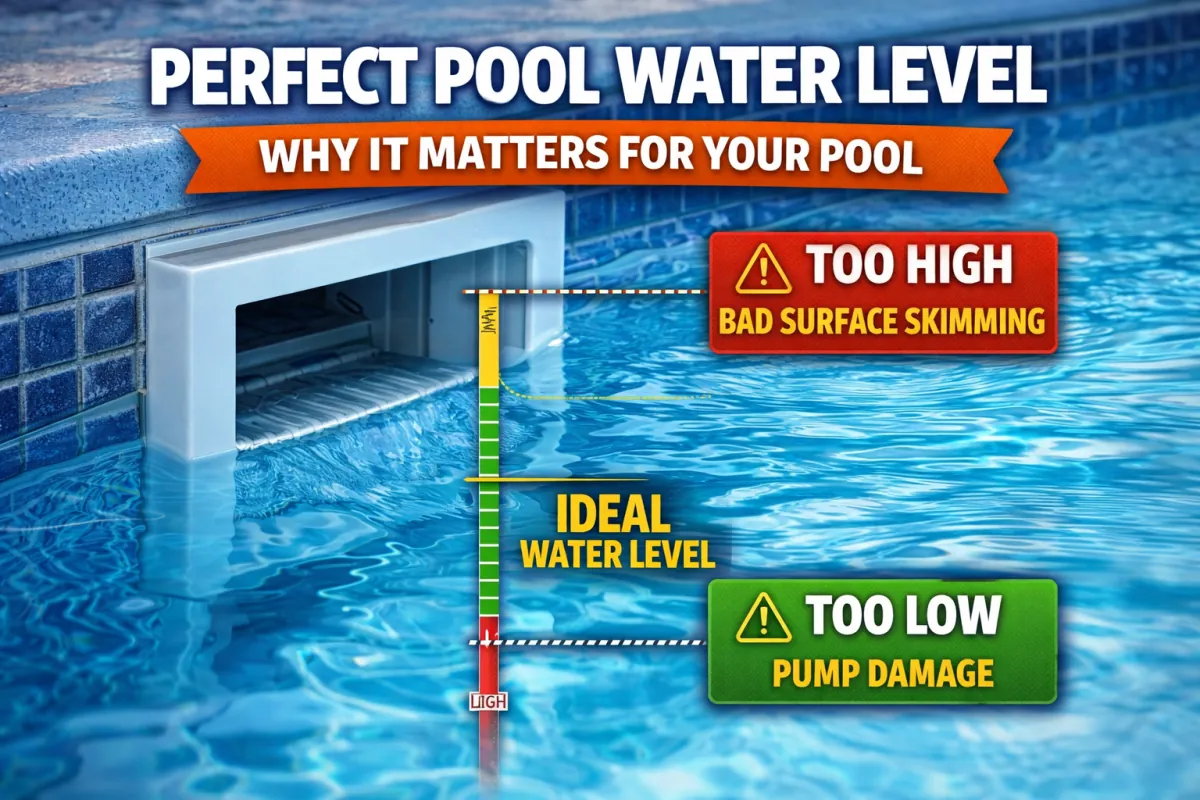
- Fill the pool until the water reaches the middle of the skimmer opening, which is usually about halfway up the tile line. Stop immediately once the water hits this mark to avoid overflowing onto your deck.
- Check the water level again after turning the pump back on to ensure the suction pulls the water evenly across the surface. If the level looks uneven, wait a few minutes for it to settle before making adjustments.
- Test your water chemistry within 24 hours of adding fresh water to rebalance pH and chlorine levels. New tap water often has different mineral content that can throw off your current balance.
- Run your filtration system for at least four hours after refilling to circulate the new water and mix it thoroughly with the old. This step ensures that chemicals distribute evenly throughout the entire volume.
The single judgment call here is knowing when to stop filling if your skimmer has a weir door that sticks. If the door gets stuck open, water can spill over the edge even if the level looks correct. Watch the skimmer closely while filling; if you see water flowing out of the throat, turn off the hose immediately. This prevents wasting water and keeps your deck safe from slippery spots.
Quick guide to water loss scenarios
| Situation | Action needed | Time/Effort required | What to watch for |
|---|---|---|---|
| Hot, windy summer day | Add water weekly | 15–30 minutes per fill | Evaporation rate spikes |
| Cool, cloudy spring | Add water bi-weekly | 15 minutes per fill | Less frequent topping up |
| Heavy swimmer usage | Add water after events | 20–40 minutes per fill | Splash-out accumulation |
| Recent filter backwash | Top up immediately | 10–20 minutes per fill | Sudden drop in level |
| Suspected leak | Stop filling, test first | 1 hour diagnostic | Continuous drop without cause |
| Saltwater system active | Monitor twice weekly | 10 minutes per check | Higher evaporation rates |
| Pool cover removed | Add water daily if needed | 10–15 minutes per fill | Rapid surface drying |
Don’t simply top off a pool that drops an inch overnight. That speed usually signals a leak, not weather. If you fill it and the level stays steady for two days, the loss was likely splash-out or wind. But if the water vanishes again within hours of refilling, shut off the pump and mark the line on the wall.
Wait four hours with no one swimming. If the mark is still visible above the new water line, you have a structural breach. Filling a leaking pool wastes thousands of gallons and can crack your foundation as soil erodes beneath the shell.
Saltwater pools lose water faster than fresh ones because the salt lowers the water’s surface tension, accelerating evaporation. Don’t treat them like standard systems. Check levels every other day during heat waves instead of waiting a full week. If water levels drop significantly without topping up, the increased salinity concentration can eventually affect equipment longevity or chemical efficiency, but this requires substantial volume loss over time.
When using a pool cover, remove it only when you plan to swim. Leaving it off for just an hour on a breezy afternoon can evaporate as much water as a full day of normal use. Replace the cover immediately after swimming ends to lock in moisture and keep debris out.
Details pros get right
Preparation before filling
Experienced pool owners check the weather forecast for at least 48 hours before starting. They wait if heavy rain is predicted, letting nature fill the basin and saving hundreds of gallons of municipal water. They also inspect the skimmer basket and pump strainer to ensure nothing blocks the flow once new water enters.
Beginners often skip this step, assuming a quick fill is safe, only to clog their filters with debris washed in by the hose. If you see clouds gathering, delay the fill; if the sky is clear, verify your backwash valve is closed first.
Monitoring during the process
Professionals never leave the hose running unattended while filling the pool. They stand nearby to watch the water rise and adjust the flow if it starts to overflow past the skimmer lip. They also listen for unusual sounds from the pump or pipes that might indicate a pressure issue before it becomes a leak.
Novices often walk away to grab tools or answer phones, risking an overflow that damages their deck or landscaping. If the water level reaches the bottom of the skimmer opening, pause immediately to let the system equalize. Never assume the auto-shutoff will catch a burst pipe.
Common problems and fixes
| What you notice | What it usually means | What to do first | How to stop it happening again |
|---|---|---|---|
| Water level drops fast | Leak in plumbing or liner | Mark level and wait 24h | Fix leak before refilling |
| Skimmer overflows | Filled too high | Drain excess water | Fill only to mid-skimmer |
| Cloudy water after fill | Chemical imbalance | Test and adjust pH/chlorine | Pre-treat tap water if needed |
| Hose kinks or bursts | Poor hose quality | Replace with heavy-duty hose | Use reinforced garden hose |
| Pump stops working | Air sucked in | Prime pump manually | Keep water above skimmer |
| Debris floating everywhere | No pre-filtering | Vacuum pool thoroughly | Clean skimmer before filling |
| Water stains on deck | Overflow occurred | Wipe deck immediately | Set auto-shutoff timer |
Rules and limits to follow
Local water authorities often set rules on how much water you can use for non-essential purposes like filling pools. Some regions ban outdoor watering during droughts, which includes topping off your pool unless you have a special permit. You must check your city’s official website or call the local utility department to find these restrictions. Ignoring these rules can lead to fines that cost far more than the water itself.
The EPA recommends testing your water regularly to ensure it meets safety standards for swimming. While they don’t specify a frequency for adding water, they stress maintaining proper chemical levels to prevent algae growth. Your state health department may have additional guidelines for private pools, especially if you rent them out. Always verify these requirements on the official government site for your area.
If you suspect a major leak or structural issue, stop trying to fix it yourself. Call a licensed pool professional who has the tools to detect hidden cracks or broken pipes. Attempting repairs without training can void your warranty or cause further damage to your pool shell. Safety comes first, and some jobs simply require expert hands.
Real costs of maintaining water levels
The main cost here is money spent on water bills, which vary widely by location and season. In areas with high water rates, adding several hundred gallons each week can become expensive monthly. However, this cost is usually lower than repairing a pump damaged by running dry or fixing a cracked liner. The price changes based on your local utility fees and how much water you actually lose.
Time is another factor, as filling a pool takes effort and attention. A typical fill might take 30 to 60 minutes depending on your hose flow rate and distance from the spigot. If you have to haul water in buckets or use a delivery truck, the labor increases significantly. Most homeowners find that setting aside a short window once a week fits easily into their routine.
Risk is minimal if you follow the steps carefully, but ignoring low water levels can lead to expensive repairs. Running a pump without enough water can burn out the motor, costing hundreds to replace. Cracks in the pool structure from uneven pressure can run into thousands. Preventive maintenance saves money in the long run compared to emergency fixes.
Keeping levels stable over time
Once you have filled your pool to the right level, you need to monitor it consistently to avoid surprises. Check the water line every morning or evening, especially after hot days or heavy use. Look for signs like exposed tiles or a skimmer that isn’t pulling water well, which means the level has dropped too low.
To keep things stable, consider using a pool cover when the pool isn’t in use. Covers reduce evaporation by up to 95%, meaning you’ll add water much less often. They also keep leaves and dirt out, reducing the need for cleaning and backwashing. Make sure the cover fits snugly and is secured properly to prevent wind from blowing it away.
If you notice the water dropping faster than expected, investigate the cause immediately. Small leaks can grow into big problems if left unchecked. Regular inspections of your pool equipment and surrounding area help catch issues early. Remember that consistent care today prevents costly repairs tomorrow.
When not to add water yourself
Don’t try to add water if your pool has a known structural crack or hole in the liner. Adding water in this situation can worsen the damage and cause the pool to collapse under pressure. Instead, call a professional to assess and repair the issue before refilling. Trying to patch it yourself often leads to bigger expenses later.
Avoid filling your pool during a severe drought if your local laws prohibit it. Even if you think you need the water, breaking regulations can result in heavy fines. Contact your water authority first to see if exceptions exist for essential uses. Following the law protects you from unnecessary penalties and supports community resources.
If your pump or filtration system is broken, don’t add water until it’s fixed. Running a pool without proper circulation allows bacteria and algae to grow rapidly. Hire a technician to restore the system before introducing new water. This ensures your pool remains safe and healthy for swimmers.
Related guides
Frequently asked questions
How much water should I add at once?
Add just enough to reach the middle of the skimmer opening, typically 1 to 2 inches depending on your pool size. Overfilling causes overflow, while underfilling risks pump damage. Measure carefully before stopping the hose.
Can I add water every day?
Yes, if your pool loses water daily due to heat or splash-out, adding small amounts each day is fine. Just ensure you don’t exceed the skimmer level. Frequent small top-ups are better than one large fill.
Why does my water level drop so fast?
Fast drops usually mean a leak or extreme evaporation from heat and wind. Check for visible cracks or wet spots around the pool. If unsure, perform a bucket test to confirm the cause.
Is it safe to add tap water?
Tap water is generally safe, but it may alter your pool’s chemical balance. Test your water afterward and adjust pH or chlorine as needed. Some areas have hard water that requires treatment.
What happens if I don’t add water?
Running the pump with low water can destroy the motor and damage seals. Algae blooms may occur if circulation stops. Always keep the water above the skimmer intake.
Does it matter if I fill at night?
Filling at night reduces evaporation loss since temperatures are cooler. It also lets you see the water level better under artificial light. Either time works if you monitor closely.
How long does it take to fill a pool?
It depends on your hose flow rate and pool size, but expect 1 to 3 hours for a standard residential pool. Larger pools or weak water pressure will take longer. Plan accordingly.
What to do next
Check your pool’s water level today and mark the skimmer midpoint with a waterproof marker. If the water drops below the skimmer without obvious reasons, perform a bucket test to confirm whether you have a leak before calling a professional.