
Fixed guide vanes direct airflow at a set angle to improve turbine efficiency, while variable guide vanes adjust their angle during operation to maintain performance across changing loads. Learning the mechanical differences between these systems requires looking at how fluid dynamics change as the machine speed or flow rate shifts. This guide explains the mechanical differences and the operational impact of these systems.
The mechanical purpose of flow direction
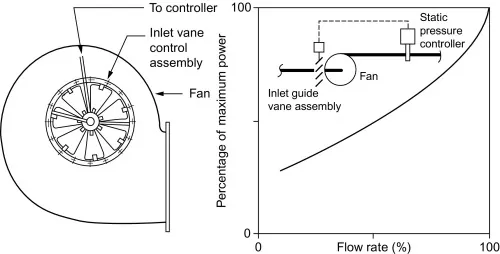
Guide vanes are stationary blades located inside turbines, pumps, or compressors. Their primary job is to guide fluid into the rotor at the optimal angle. By controlling the direction of the flow, these vanes ensure the fluid hits the rotating blades in a way that maximizes energy transfer. This prevents turbulence and energy loss that would otherwise occur if the fluid entered the rotor at an inefficient angle.
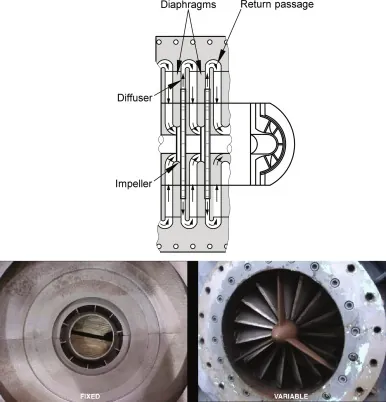
In a system with fixed vanes, the geometry is permanent. This is ideal for machines that run at a constant speed and load, such as large base-load power plants. However, if the flow rate drops, fixed vanes can’t adapt. This leads to a mismatch between the fluid angle and the blade angle. Variable guide vanes solve this by using an actuator to rotate the blades, allowing the system to maintain peak efficiency even when the turbine intake flow changes significantly.
How fixed and variable guide vanes work for performance
Variable guide vanes allow for precise control over the velocity and direction of fluid entering a rotor. Operators can adjust the angle of these vanes to match the specific needs of the system at any given moment.
- Monitor the load: Check the power output or flow rate requirement of the machine.
- Calculate the angle: Use the control system to determine the ideal vane pitch for current conditions.
- Engage the actuator: Send a signal to the hydraulic or electric motor connected to the vane ring.
- Rotate the vanes: Move the blades to the new position while the machine is running.
- Verify the flow: Observe pressure sensors to ensure the fluid is hitting the rotor at the correct angle.
A successful adjustment depends on the speed of the actuator. If the vanes move too slowly, the machine may experience a surge or stall before reaching the new setting. If you lack the specialized training to calibrate these electronic control systems, you must contact the manufacturer’s technical support team to avoid damaging the internal components.
Performance metrics for vane systems
| Situation | Vane Type | Operational Goal | Performance Result |
|---|---|---|---|
| Constant load | Fixed | Minimize costs | High efficiency at one point |
| Variable load | Variable | Maintain output | High efficiency across ranges |
| Low flow state | Fixed | Maintain structure | Potential turbulence and stall |
| High flow state | Variable | Prevent overload | Stable energy conversion |
| Startup phase | Variable | Smooth acceleration | Controlled torque buildup |
These settings assume a standard industrial turbine setup. If you’re using a micro-turbine or a specialized pump, you must consult your specific equipment manual for the correct operating ranges. The values provided here are typical for large-scale energy production equipment.
Precision in fluid control
Experienced engineers know that the transition from fixed to variable systems is about managing the angle of attack. In a fixed system, you’re limited to the design point. If the fluid velocity increases, the angle of attack becomes too steep, causing the flow to detach from the blade surface. This separation creates a wake that ruins efficiency and can vibrate the entire machine.
Variable vanes prevent this by tilting to follow the flow. This keeps the fluid attached to the blade surface, which keeps the energy transfer smooth. Beginners often make the mistake of adjusting these vanes too rapidly during a load change. This causes a pressure spike that can damage the seals or the rotor itself. Always use the built-in ramp functions in your control software to move the vanes in small, incremental steps.
Troubleshooting vane operation
| What you notice | What it means | What to do first |
|---|---|---|
| High vibration | Vane misalignment | Check actuator feedback loop |
| Low power output | Incorrect blade pitch | Recalibrate the sensor |
| Unusual noise | Flow separation | Reduce vane angle slightly |
| Sticking vanes | Mechanical debris | Inspect the vane housing |
If you notice these issues, ensure that your control system isn’t reporting a fault code. If the mechanical linkage is physically stuck, don’t force the vanes manually, as this can break the internal gears. Always use a professional technician for physical inspections of the vane linkage system.
Regulatory standards for mechanical systems
Safety and performance standards for these systems are set by organizations like the International Electrotechnical Commission. These rules ensure that rotating machinery components can handle the stresses of variable operation without failing under pressure.
If you’re operating a turbine, you must follow the maintenance intervals defined by the manufacturer to comply with local safety laws. Any modifications to the vane control logic must be documented and verified by a licensed engineer to ensure the machine remains within its certified operating limits.
Maintaining vane system health
To keep your system running, you must perform regular inspections of the vane linkage and the actuator seals. Over time, dust or debris can build up in the housing, causing the vanes to bind or move unevenly. If the vanes become stiff, you may need to clean the housing with a mild solvent, but only after the machine has been fully powered down and locked out.
When to avoid variable vanes
Variable guide vanes aren’t always the best choice for every project. If your facility runs at a steady, unchanging load 24 hours a day, the added complexity of variable vanes adds unnecessary maintenance costs.
In these cases, fixed vanes are more reliable because they have fewer moving parts to break. If you have a small-scale system with a limited budget, the cost of the actuators and the control hardware may not provide a fast enough return on investment to justify the purchase.
Related guides
Frequently asked questions
Can I replace fixed vanes with variable ones?
No, you can’t typically replace fixed vanes with variable ones. The internal casing and the control systems are built specifically for one type of design, and retrofitting would require a complete rebuild of the turbine or compressor housing.
Why do variable vanes make noise?
Variable vanes make noise when the fluid angle doesn’t match the blade position, causing air or liquid to hit the blade edge. This turbulence creates a hum or vibration that indicates the vanes need a small angle adjustment.
How often should I calibrate the actuators?
Always refer to your specific manufacturer’s service schedule, as the exact interval depends on the environment and the intensity of the machine’s daily usage.
Is it safe to adjust vanes manually?
No, it isn’t safe to adjust vanes manually while the machine is active. Doing so creates a high risk of mechanical failure or injury, as the internal pressures are often extreme and the components move with significant force.
What happens if a vane gets stuck?
A stuck vane creates an uneven flow distribution, which leads to increased vibration and potential damage to the rotor. If you detect a stuck vane, you must shut down the machine immediately to prevent further damage to the internal blades.
How long do guide vanes last?
Guide vanes typically last for the entire lifespan of the turbine with proper maintenance. The exact duration depends on the material quality and whether the system is kept free of debris and corrosion.
Conclusion
Properly maintaining your guide vanes ensures your system delivers the best possible energy conversion. By checking the alignment and keeping the linkage clean, you protect your equipment from the high costs of unplanned repairs. Always follow the guidelines in your machine’s manual to ensure your settings remain within safe operating parameters.
