
Choosing the best home generator depends on whether you need massive power for a whole house or a portable option for electronics. For full-home power, consider the Westinghouse 14500 Dual Fuel or DuroMax XP13000EH; for a quiet power station, look at the EcoFlow DELTA Pro or Jackery HomePower 3600 Plus.
As an Amazon Associate, we earn from qualifying purchases. This post contains affiliate links – if you buy through them, we may earn a commission at no extra cost to you.
1. Westinghouse 14500 Peak Watt Dual Fuel Home Backup Portable Generator
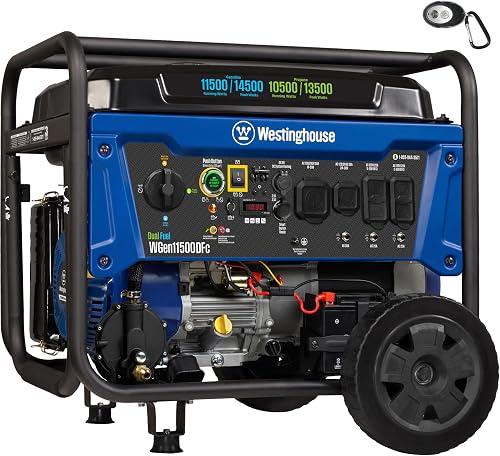
Best for: A homeowner wanting a single, robust backup for a large house.
This generator is built for heavy-duty needs, offering 14,500 peak watts on gasoline. Its dual-fuel capability lets you switch to propane, which is helpful if you want to store fuel for long periods without it degrading. The copper windings and 550cc engine are designed for durability, providing a reliable power source during extended outages.
It’s safe for sensitive electronics thanks to its low total harmonic distortion (THD). However, this is a large, heavy machine that requires dedicated space and maintenance. It isn’t for someone living in a small apartment or those who can’t manage a heavy, gas-powered frame.
Good if:
- You have a large home with many appliances.
- You prefer the flexibility of using gasoline or propane.
- You need to run sensitive items like computers and TVs.
Skip it if:
- You have limited storage space.
- You want a completely silent power solution.
2. DuroMax XP13000EH 13

Best for: Someone who needs maximum power output for their entire home.
The DuroMax XP13000EH is engineered to keep a whole household running during a major storm. With 13,000 watts of power and a 50-amp outlet, it’s ready to connect to a transfer switch. The all-metal frame and power panel construction are designed to handle heavy wear-and-tear over many years.
The push-button start makes it easy to fire up when the power goes out. Because it uses a robust gas engine, you must be prepared for the noise and exhaust emissions associated with traditional generators. It isn’t for users who prioritize quiet operation or who don’t have the space to store a large, heavy-duty unit.
Good if:
- You need to power high-demand items like central air or pumps.
- You want a transfer switch-ready setup.
- You value a durable, all-metal construction.
Skip it if:
- You need a portable unit for frequent travel.
- You live in a quiet residential area where noise is a concern.
3. EF ECOFLOW Portable Power Station 3600Wh DELTA Pro

Best for: Someone seeking a quiet, clean, and expandable power station.
The DELTA Pro is a massive battery system that provides 3600W of AC output without any engine noise or fuel storage requirements. It’s excellent for those who want a “plug-and-play” experience for home backup. You can monitor everything through the app, which gives you control over your energy usage.
The system is highly flexible and can be expanded to 25kWh with extra batteries. It isn’t for someone who needs to power an entire house for weeks without a way to recharge the battery via solar or grid power. It’s a sophisticated piece of technology that doesn’t offer the same raw, continuous power as a fuel-burning engine.
Good if:
- You want a silent, indoor-friendly power backup.
- You’re interested in solar charging capabilities.
- You want to monitor and manage your power usage via a phone app.
Skip it if:
- You need unlimited power during a multi-week outage without any recharging source.
- You prefer traditional gasoline-powered systems.
4. WEN DF1100T
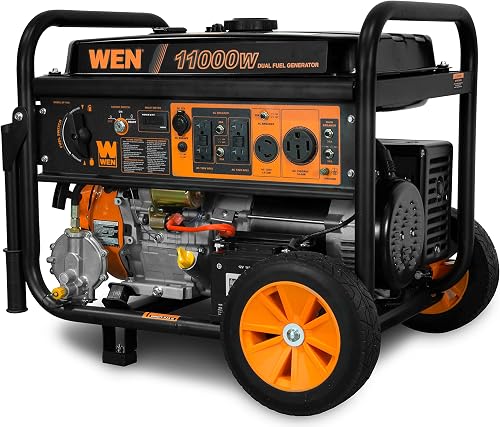
Best for: Someone wanting a high-capacity, dual-fuel generator at a mid-range size.
The WEN DF1100T offers a great balance between power and fuel choice. With 11,000 surge watts on gas, it can handle most large appliances. The ability to switch between gasoline and propane with a simple dial is very convenient during an emergency when fuel availability might be limited.
It includes a wide variety of outlets, including a 50A plug for transfer switches. This model is a traditional engine-based generator, so it requires regular oil changes and maintenance. It isn’t for the user who wants a maintenance-free or silent power solution.
Good if:
- You need a reliable, dual-fuel backup for home essentials.
- You want a variety of outlet options for different appliances.
- You prefer the security of a two-year warranty.
Skip it if:
- You aren’t comfortable with engine maintenance.
- You require the lowest possible noise levels.
5. Jackery HomePower 3600 Plus Power Station

Best for: A household looking for a modular, long-lasting battery backup system.
The Jackery HomePower 3600 Plus is a high-capacity power station that’s surprisingly portable thanks to its luggage-style wheels. It’s built with ceramic membrane battery cells that are designed to withstand extreme temperatures, making it a reliable option for year-round use. It can expand to 21kWh, which is enough to support a small home for an extended period.
The plug-and-play design makes it easy to use even if you aren’t tech-savvy. However, like other power stations, it’s limited by its battery capacity and requires a plan for recharging. It isn’t for users who need the continuous, high-wattage output that only a large gas engine can provide.
Good if:
- You need an expandable system for long-term outages.
- You want a portable design that’s easy to move.
- You live in an area with very cold or hot weather.
Skip it if:
- You can’t easily recharge the unit during a long outage.
- You need to run high-draw appliances for many days straight.
6. Genkins 11000‑Watt Dual‑Fuel Portable Generator

Best for: A homeowner who needs a dependable, mid-range dual-fuel generator.
The Genkins 11000 provides 8,000 running watts on gas, which is sufficient for most household essentials during an emergency. It’s a straightforward, rugged machine built with a steel frame and weather-protected outlets. The inclusion of both electric and recoil start ensures you have a way to power up even if the battery is low.
This generator is designed for non-sensitive equipment like pumps and tools. If you have very sensitive electronics, you might need extra protection or a different type of generator. It isn’t for those who need to power complex, sensitive medical equipment or high-end smart home systems.
Good if:
- You want a reliable backup for basic home and RV loads.
- You appreciate the backup security of a recoil start.
- You need a rugged unit for outdoor or jobsite use.
Skip it if:
- You have highly sensitive electronic devices.
- You’re looking for a silent, indoor-compatible unit.
7. WEN DF475T

Best for: Someone wanting a compact, dual-fuel generator for light home backup.
The WEN DF475T is a smaller, more manageable option for those who don’t need the massive power of the larger models. It offers 4,750 surge watts, which is perfect for running a refrigerator, lights, and a few small fans. The dual-fuel option allows you to use propane for easier storage.
It’s easy to move and takes up less space than the larger 10,000+ watt models. It isn’t for a large household that needs to power a central air conditioning unit or multiple heavy appliances simultaneously.
Good if:
- You have limited storage space.
- You only need to power essential items.
- You want the flexibility of dual fuel in a compact frame.
Skip it if:
- You have a large home with high power demands.
- You need to power multiple 240V appliances at the same time.
8. Westinghouse 6600 Peak Watt Home Backup Portable Generator

Best for: Someone looking for a solid, essential backup generator.
The Westinghouse 6600 Peak is a no-frills, reliable generator that provides 5,300 running watts. It’s designed to be ready right out of the box with minimal assembly. The inclusion of a CO sensor is a key safety feature for any gas-powered unit used near a home.
It’s a great choice for keeping your main home essentials running without the weight of a much larger unit. Because it’s a gas-only generator, you’ll need to manage fuel storage and stabilization. It isn’t for someone who wants to switch between fuel types or who needs the highest wattage available.
Good if:
- You want a simple, reliable backup for essential appliances.
- You prioritize safety features like CO shutdown.
- You need a unit that’s ready to go with minimal setup.
Skip it if:
- You want the versatility of dual-fuel options.
- You need to power an entire large home.
9. Oxseryn 5000-Watts Portable Inverter Generator

Best for: Someone who needs a portable, quiet generator for sensitive electronics.
The Oxseryn 5000-Watts Inverter produces clean power, which is essential for protecting sensitive devices like laptops and modern appliances. Its open-frame inverter design keeps the weight down to 60 lbs, making it one of the most portable options here. The ECO mode helps improve fuel efficiency by adjusting the engine speed.
While it’s more portable, it has a lower power ceiling than the large frame generators. It isn’t for someone who needs to power an entire house or multiple high-draw appliances like heavy-duty pumps or heaters.
Good if:
- You need clean power for sensitive electronics.
- You want a portable, lightweight generator.
- You appreciate fuel-saving features like ECO mode.
Skip it if:
- You need to run high-wattage home appliances.
- You prefer a heavy-duty, traditional generator frame.
10. Anker SOLIX S2000 Portable Power Station
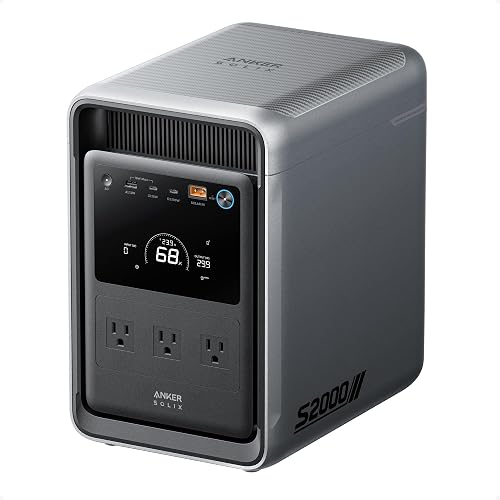
Best for: Someone who needs a highly efficient, compact power station for essentials.
The Anker SOLIX S2000 is an impressive, lightweight power station that is 25% lighter than the average for its class. It’s designed for longevity, with an LFP battery that offers a 15-year lifespan. It’s perfect for keeping a fridge running for over a day, making it a great emergency backup for the kitchen.
It’s a clean, silent solution that works well for indoor use or quick power needs. However, it doesn’t provide the continuous, high-wattage output needed to run an entire home for long periods. It isn’t for someone who needs to power heavy-duty appliances like dryers or central heaters.
Good if:
- You need a lightweight, portable power station.
- You prioritize a long battery lifespan.
- You want a clean, silent backup for your fridge.
Skip it if:
- You need to power high-wattage appliances for many hours.
- You require an expandable system for a whole house.
Where These Overlap
Many of these generators overlap in their core purpose: providing emergency power to keep your home functional during an outage. The dual-fuel models from WEN, Westinghouse, and Genkins are quite similar in their utility, often differing mostly in power output and specific outlet configurations. If you’re choosing between two mid-range dual-fuel units, look closely at the outlets provided to ensure they match your specific transfer switch or appliance plugs. The power stations from EcoFlow, Jackery, and Anker also occupy a similar space, prioritizing silence and ease of use over the raw, continuous power provided by the fuel-burning models.
Still Not Sure?
How often will I really use it?
If you live in an area with frequent, long-lasting outages, a fuel-burning generator like the Westinghouse 14500 Dual Fuel is a better choice for its continuous power. If you only experience rare, short-term outages, a battery power station like the Anker SOLIX S2000 might be easier to maintain.
What do I already own that this has to work with?
Check your home’s transfer switch or the plugs on your critical appliances. If you have a 50-amp transfer switch, you need a high-output generator like the DuroMax XP13000EH. If you only plan to run individual appliances, a smaller model or a power station will likely suffice.
What am I most likely to regret choosing?
Many users regret buying a generator that’s too heavy to move or too loud for their neighborhood. If you have limited space and live in a quiet area, you may regret a large gas-powered unit. In that case, the EcoFlow DELTA Pro offers a quieter, more modern alternative.
Safe operation of any generator requires strict adherence to manufacturer guidelines, especially regarding placement and ventilation to avoid carbon monoxide poisoning, as outlined by the Environmental Protection Agency.
Closing
The choice between these generators comes down to your need for raw power versus convenience and silence. For large homes requiring heavy-duty, continuous power, the Westinghouse generator is a strong choice. For those prioritizing a silent, portable, and clean solution for essential devices, the EcoFlow DELTA Pro is the next step to consider.
Related guides
- 10 Best Rechargeable Light Bulbs for Reliable Power Outages in 2026
- 10 Best Wattage for Bathroom Lighting Options for Your Home in 2026
Frequently Asked Questions
What does it ask of its owner week to week?
Most fuel-burning generators require you to monitor fuel levels and perform regular oil changes to keep the engine running smoothly. If you opt for a power station, you simply need to keep the battery charged periodically to ensure it’s ready for an emergency.
What has to be replaced, refilled or renewed to keep it working?
Gasoline-powered units require you to keep fresh fuel on hand and use a fuel stabilizer to prevent the gas from degrading. Power stations don’t require fuel, but their internal batteries have a finite cycle life that determines how many years they will remain effective.
What happens when it’s outgrown or used up?
If you outgrow a smaller generator, you may need to upgrade to a unit with higher wattage or a system that supports parallel operation. For power stations, you can often add extra battery modules to expand capacity, which is a modular way to handle increased power demands.
Would the more capable one on this list have suited me better?
If you find that your chosen generator can’t run your refrigerator, air conditioner, and lights at the same time, you have likely outgrown your unit’s wattage capacity. A more capable generator with higher running watts would have prevented this, though it would also be larger and louder.
Final Thoughts
Before the next storm hits, take a moment to check your fuel levels or charge your battery station. It’s a smart move that’ll save you plenty of stress when the lights flicker. Preparing today means you won’t be left in the dark when you really need to keep things running smoothly.