
Finding the best double sleeping pad for backpacking depends on your specific priorities. You must choose between weight, insulation, and the level of cushion you need for a restful night. These products differ primarily in their R-value, packed size, and the materials used for internal support. If you want a balance of comfort and packability, the NEMO Roamer Double is often the target, while those facing harsh temperatures might prefer the Big Agnes Rapide SL.
1. NEMO Equipment Roamer Sleeping Pad
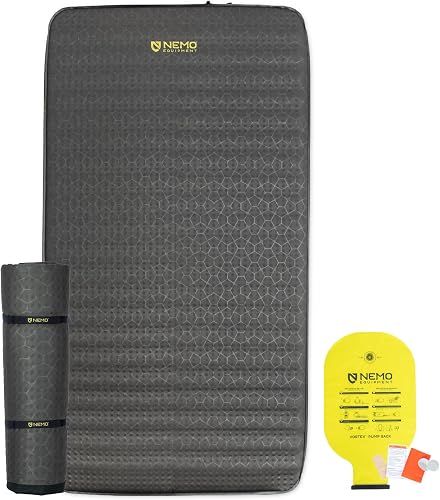
Best for: Couples who want the most comfortable surface without sacrificing packability.
The Flow Core construction uses high-volume air channels to help the pad inflate and deflate quickly. Its 4-inch thickness provides a smooth surface that helps you ignore rocks and roots underneath. The one-way dump valve allows you to fine-tune the firmness to your exact preference.
This pad is designed to pack down smaller and lighter than many other double pads. If you use the single sizes, you can even connect them using built-in toggles. It’s a solid choice for those who value a quick setup and a plush feel.
Good if:
- You want a very thick cushion for uneven ground.
- You need a fast setup and teardown process.
- You prefer a pad that minimizes its size when packed.
Skip it if:
- You’re looking for the absolute lowest weight possible.
- You need extreme insulation for winter camping.
2. Big Agnes Rapide SL

Best for: Backpackers who need reliable warmth during three-season adventures.
This pad uses two layers of heat-reflective film to provide insulation, reaching an R-value of 4.8. The offset I-Beam construction keeps the pad stable while reducing overall weight. At 3.5 inches thick, it offers a cushioned surface that avoids the bouncy feel of standard air mattresses.
The included pumphouse sack lets you inflate the pad in seconds without adding moisture from your breath. Big Agnes tests every pad at their factory, and they offer a lifetime quality guarantee against defects. It’s built with durable, superlight nylon to handle backcountry use.
Good if:
- You camp in temperatures that drop significantly at night.
- You want a proven, tested design with a warranty.
- You prefer using an inflation sack to keep the interior dry.
Skip it if:
- You don’t plan on doing any three-season or cold-weather trips.
- You want the thickest pad available regardless of weight.
3. Hikenture Camping Sleeping Pad with 6.2 R-Value
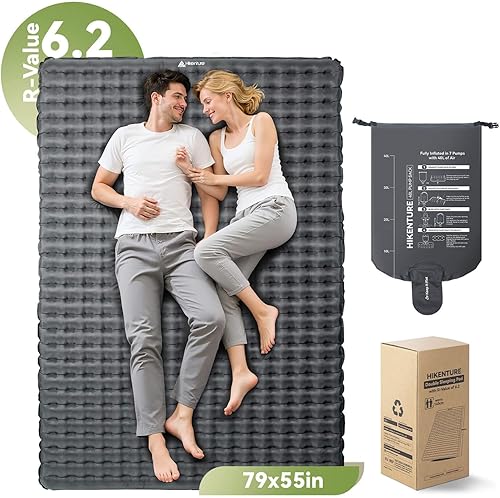
Best for: Campers who need a compact, highly insulated option for colder nights.
This pad features an ASTM-rated R-value of 6.2, which is excellent for blocking ground chill during frosty nights. It uses three reflective aluminum layers to retain body heat. The wave chamber design helps distribute weight evenly so you don’t sag, even if you sit in one spot for a long time.
Despite its generous 79-inch length, it packs down to a small size and weighs under 5 pounds. The storage bag doubles as a 40-liter pump sack, so you can fill it up with just a few pumps. The material is a TPU liner that’s designed to be more environmentally friendly.
Good if:
- You need the highest R-value for cold weather.
- You want a large sleep surface that still packs small.
- You care about using materials with less environmental impact.
Skip it if:
- You prefer a thicker cushion than 3.2 inches.
- You’re only camping in warm, summer conditions.
4. KLYMIT Double V Inflatable Sleeping Pad

Best for: Hikers who prioritize low weight and a small packed footprint.
The V-Chamber design is meant to limit air movement, keeping you stable while you sleep. Side rails are included to cradle your body and keep you centered on the pad. It uses a 75D polyester fabric that’s treated to prevent the growth of odor-causing microbes inside.
This pad is quite simple to manage, as it requires only 8 to 10 pumps from the stuff sack to inflate. It’s one of the more lightweight options on the list, making it easy to carry on long trails. The design works well for back, side, and stomach sleepers alike.
Good if:
- You’re counting every ounce in your backpack.
- You want a pad that’s easy to inflate quickly.
- You prefer a design that keeps you centered while sleeping.
Skip it if:
- You need high insulation for cold-weather camping.
- You want a very thick pad for extra cushioning.
5. Lost Horizon Option3 Self-Inflating Foam Camping Mattress

Best for: Car campers who prioritize maximum comfort above all else.
This pad uses a combination of foam and air to provide a stable, 4.5-inch thick sleeping surface. It’s designed to support up to 440 pounds and effectively reduces pressure points. Because it uses foam, it’s much quieter than standard air-only pads that can squeak during the night.
You can adjust the firmness by changing the air-to-foam ratio. While it’s easy to inflate, it’s bulky and heavy, so the manufacturer specifically notes it isn’t recommended for backpacking. It offers a very high R-value of 13 for year-round warmth.
Good if:
- You’re camping near your vehicle and weight isn’t a concern.
- You want the most comfortable, stable surface possible.
- You need maximum insulation for winter use.
Skip it if:
- You intend to carry this pad on a hiking trip.
- You want a lightweight, compact piece of gear.
Where These Overlap
Most of these pads use air-based technology to save weight, with the exception of the Lost Horizon Option3, which relies on foam. The Klymit Double V and the Big Agnes Rapide SL both focus on stability through internal chamber designs. If you’re a backpacker, the NEMO Roamer Double, Big Agnes Rapide SL, Hikenture Insulated Double, and Klymit Double V are all viable, but they differ significantly in their thermal ratings. The Hikenture and Big Agnes models are better suited for colder trips, while the Klymit model is built specifically for those who need to keep their pack weight to an absolute minimum.
Still Not Sure?
How often will I really use it?
If you only go out once or twice a year in warm weather, the Klymit Double V is a simple, lightweight choice that does the job without extra bulk. However, if you plan to head out every month regardless of the season, you should look at the Hikenture Insulated Double for its thermal protection.
What do I already own that this has to work with?
Think about your current tent floor space. The Hikenture Insulated Double is quite large at 79 inches long, so ensure your tent can accommodate those dimensions. If you’re looking for something that fits easily into a standard two-person backpacking setup, the Klymit Double V is a more compact, streamlined option.
What am I most likely to regret choosing?
The most common regret is choosing a pad that’s too heavy or too cold. For backpackers, the Lost Horizon Option3 will likely cause regret due to its weight, even if it’s the most comfortable. If you plan to hike long distances, stick to the NEMO Roamer Double or the Big Agnes Rapide SL.
As an Amazon Associate, we earn from qualifying purchases. This post contains affiliate links – if you buy through them, we may earn a commission at no extra cost to you.
Closing
Choosing the right pad comes down to balancing warmth and weight for your specific trips. If you’re a dedicated backpacker, the NEMO Roamer Double is a great all-around choice for comfort, while the Big Agnes Rapide SL is better for those facing colder nights. Check your tent size and expected weather before you decide.
Frequently Asked Questions
What does it ask of its owner week to week?
Most of these pads require very little maintenance other than keeping them clean and dry. It’s essential to ensure they’re fully dry before storage to prevent mold or odors from developing inside the chambers, as noted by the ASTM International standards for testing camping equipment.
What has to be replaced, refilled or renewed?
These pads don’t require refills, but you should keep the provided repair kits in your pack. If you notice a slow leak, you’ll need to use the patches to seal the puncture.
What happens when it’s outgrown or used up?
If you find that your camping habits have changed, such as moving from summer backpacking to winter expeditions, a pad with a low R-value like the Klymit Double V may no longer be sufficient. You might then need to upgrade to a higher-rated insulated pad like the Hikenture Insulated Double.
Would the more capable one on this list have suited me better?
The more capable pads, like the Lost Horizon Option3, offer significantly more comfort but at a much higher weight. If you find your current backpacking pad leaves you feeling sore, you might be tempted by the thicker foam options, but remember that those aren’t designed for the rigors of long-distance hiking.
Final Thoughts
Choosing the right gear shouldn’t feel like a chore, so take a moment to consider where you’ll be camping most often. Once you’ve picked your favorite, don’t wait until your trip to inflate it. You’ll be glad you tested it at home first, ensuring you’re ready for a truly cozy night under the stars.