
To fix a garage door that won’t open or close, you should first check the safety sensors for obstructions and ensure the power supply is active before you chamberlain garage door opener troubleshoot the system further. Most issues stem from misaligned sensors or a simple loss of power. If the door moves a few inches and then reverses, the safety eyes are almost certainly blocked or misaligned. You can resolve most of these common problems by cleaning the lenses or checking the wall outlet for a tripped breaker.
Steps to troubleshoot Chamberlain garage door opener issues
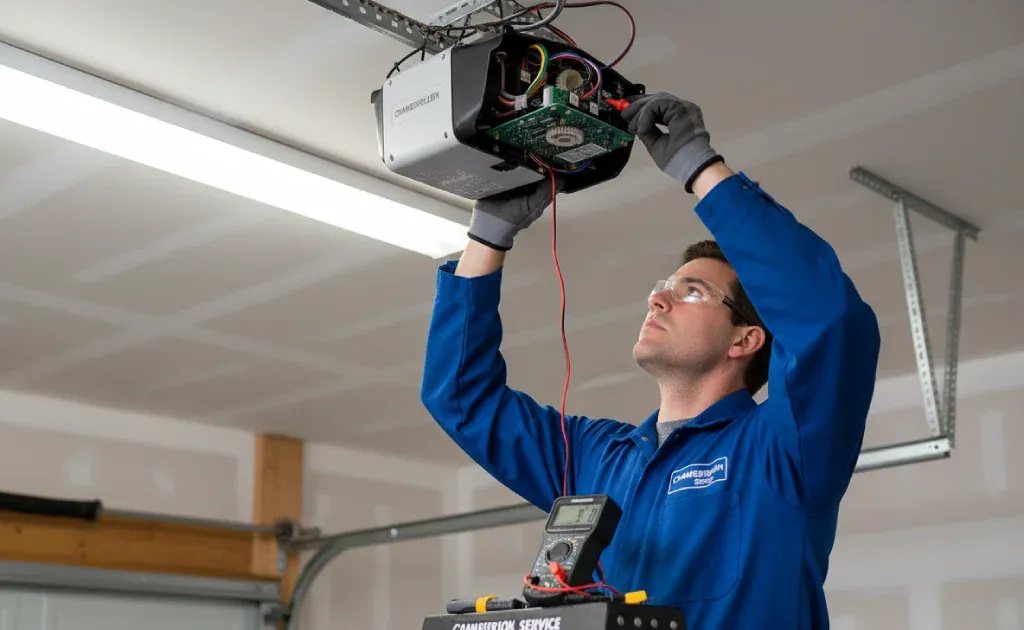
The most common reason for a garage door failure is a safety sensor misalignment. These sensors use an invisible infrared beam that must stay connected at all times. If something bumps the sensors, or if the mounting brackets become loose, the beam breaks. The system detects this as a safety hazard and prevents the door from closing to protect people or objects in the path.
Another frequent cause is a simple power disruption. Your opener might have lost connection to the home’s electrical circuit, or the wall control panel could be locked. Many modern units have a lock feature that prevents remotes from working, which is often activated by accident. If the light on your opener is flashing, it’s trying to tell you exactly where the fault lies. You can find the specific error codes for your model by checking the official Chamberlain support documentation.
Finally, the travel limits or force settings may need an adjustment. These settings tell the motor exactly how far to go down and how much pressure it should apply. If the door hits the floor too hard or stops too early, the motor senses resistance and reverses automatically. This happens most often as the seasons change, because the metal rails and hardware expand or contract with the outdoor temperature.
Clean and align the safety sensors
If your garage door reverses immediately when you try to close it, the safety sensors are the first place to look. These two small units sit near the floor on either side of the door tracks. One sensor usually has an amber light, and the other has a green light. If either light is off or flickering, the sensors aren’t communicating, and the door won’t close until you fix the connection.
Take a soft, dry cloth and gently wipe the lenses of both sensors to remove dust, spiderwebs, or debris. Once clean, check the brackets to ensure they’re tight and pointing directly at each other. If the green light isn’t solid, manually nudge the sensor until the beam locks in and the light stays steady. You don’t need tools for this adjustment, but you should move slowly to avoid breaking the plastic housing.
If the sensors seem aligned but the lights remain dark, check the wires running from the sensors to the motor unit. Look for any cuts, frays, or loose connections along the wall. If you find damaged wires, you must stop and contact a professional technician to replace them, as working with electrical wiring carries a risk of shock or permanent damage to the motor board.
Check the power and wall controls
When the opener is completely unresponsive and the lights don’t turn on, the problem is likely a lack of electricity. Start by checking the wall outlet where the opener is plugged in. If you have a grounded outlet, look for a small “reset” button on the face of the outlet itself. If that button is popped out, press it firmly to restore power to the unit.
If the outlet is working, head to your home’s main electrical panel to see if the circuit breaker for the garage has tripped. A tripped breaker will be in the middle position rather than the “on” or “off” side. Toggle it fully to “off” and then back to “on” to reset the circuit. If the breaker trips again immediately after you try to open the door, call a licensed electrician.
You should also check the wall control panel inside your garage. Look for a button labeled “lock” or a light that indicates the system is locked. If the lock mode is active, the opener will ignore your remote controls for security reasons. Press and hold the lock button for a few seconds to disable this feature and regain full control of your door.
Reset the travel and force settings
If your door opens and closes but doesn’t reach the floor or stops mid-way, you need to adjust the travel limits. These settings tell the motor where the floor is and where the top of the opening is. If the door is too sensitive, it will reverse because it thinks it hit an obstacle, even if the path is clear. This is a common issue during extreme temperature changes.
Locate the adjustment screws or buttons on the side or back of your motor unit. Most modern openers have two buttons or dials labeled “up” and “down.”
You’ll need to move the door to the fully closed position using the wall button, then adjust the “down” limit until the door seals perfectly against the floor without putting too much pressure on the frame. If the door continues to reverse after you set the limits, the force setting might be too low.
Slowly increase the force dial—usually by a small increment like an eighth of a turn—and test the door again. Don’t turn the adjustment dials too far, as this can cause the motor to ignore real obstructions. If you’re unsure about the specific adjustment process for your exact model, consult your owner’s manual before making changes. If the door hardware is bent or the springs look loose, don’t attempt to adjust these settings yourself; contact a garage door service professional.
Avoid these common troubleshooting mistakes
Don’t spray lubricant into the motor housing. The internal gears are often made of plastic, and the wrong chemicals cause the material to degrade or crack. Use only silicone-based sprays if you must lubricate, as petroleum-based products dissolve the housing seals.
Never tighten the chain or belt until it’s perfectly flat. A small amount of sag, typically half an inch below the rail, is normal. Making it too tight puts unnecessary stress on the motor and the pulley system, which often leads to stripped gears within six months.
Avoid using force to manually pull the emergency release cord while the door is moving. This can cause the door to drop suddenly or damage the release mechanism, making it difficult to re-engage the trolley later. If the door is stuck, stop the motor entirely before attempting a manual override.
Don’t attempt to adjust the spring tension yourself. These springs are under extreme tension and can cause severe injury if they snap. If the door doesn’t balance when disconnected from the opener, call a trained technician immediately. Don’t mistake a loose cable for a spring issue; check the pulleys first.
Prevent future garage door problems
Regular maintenance keeps the system running smoothly and helps you catch small issues before they become expensive repairs. If you notice the door is noisy or jerky, it usually means the tracks or rollers need attention. The following table helps you identify what to change in your daily routine to keep the system healthy.
| If you’re doing this | Do this instead | Why |
|---|---|---|
| Ignoring unusual grinding noises | Inspect rollers for wear | Worn rollers cause track damage |
| Leaving the door half-open | Close the door fully | Prevents pests and improves security |
| Using remotes with old batteries | Change batteries every 12 months | Weak batteries cause intermittent signals |
| Forcing the door when stuck | Check for blocked sensors | Prevents motor strain and overheating |
Related guides
- Maytag Centennial Washer Stuck on Sensing: How to Fix It
- Coax Outlet Not Working Apartment: How to Fix Your Connection
Frequently asked questions
How long should a garage door opener last?
Most garage door openers last between 10 and 15 years with regular maintenance. This lifespan depends heavily on your daily usage frequency. If you use the garage as your primary home entrance, expect the motor to reach its limit closer to the 10-year mark.
Is it safe to operate the door with a broken spring?
No, you should never operate a garage door opener if a spring is broken. The springs provide the lifting power, while the motor only guides the door. Attempting to use the system with a broken spring will likely burn out your motor or snap the drive belt.
Why does my garage door open by itself?
Your garage door likely opens on its own due to signal interference or a short in the wall button. Check your remotes to ensure no buttons are stuck or being pressed by objects. If the issue persists, clear all programmed remotes from the opener’s memory using the learn button.
How do I know if my garage door is balanced?
You can check the balance by pulling the manual release cord while the door is closed. Lift the door halfway by hand and let go; a balanced door will stay in place. If the door slams shut or flies open, the springs require professional tension adjustment.
Can I fix a garage door that reverses for no reason?
You can usually fix a door that reverses for no reason by cleaning the safety sensors or increasing the motor’s force setting. The system often reverses because it incorrectly detects an obstacle. If cleaning the lenses fails, try increasing the force setting by a small amount.
What happens if I unplug my garage door opener?
Unplugging your garage door opener stops the motor, but the door remains in its last position. You can still open and close the door manually by pulling the emergency release cord. Note that the automatic locking feature won’t function while the power is disconnected.
