
If you want a quiet home, a belt driven garage door opener is the better choice because it uses a rubber belt to move the door smoothly, while a chain driven garage door opener vs chain driven models is a comparison where the chain version is louder but often more affordable. Choose the belt version for rooms near the garage, but pick the chain version if you want the lowest price and don’t mind some noise during the opening cycle.
Comparing belt vs chain garage door openers
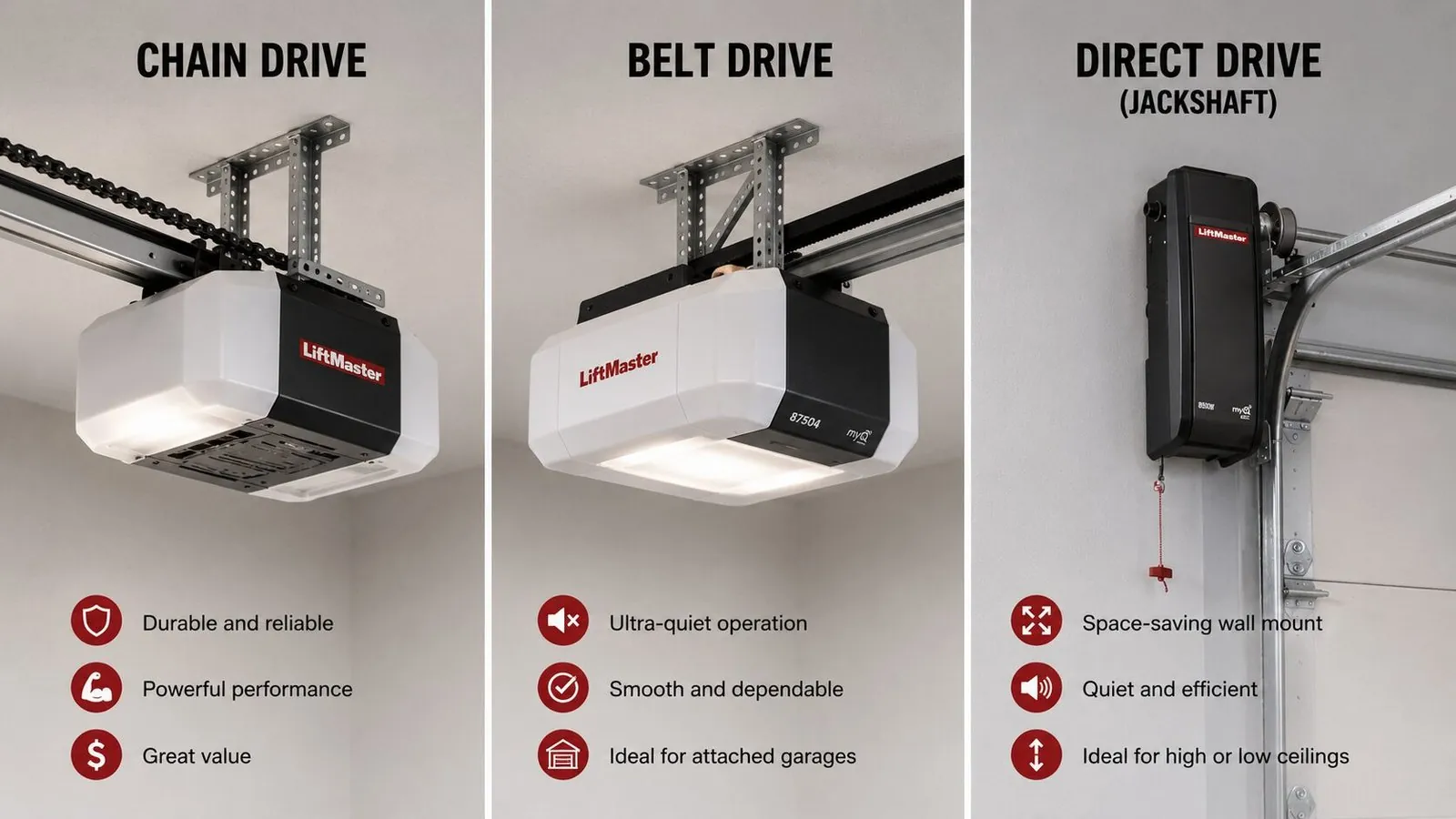
Selecting a drive type impacts the noise level and maintenance needs of your home’s entrance. The following table shows how these systems differ in daily operation and long-term upkeep.
| Method | How long | Effort | Cost | Best for |
|---|---|---|---|---|
| Belt drive | 10-15 years | Low | High | Quiet homes |
| Chain drive | 10-15 years | Medium | Low | Budget buyers |
| Screw drive | 12-18 years | High | Medium | Heavy doors |
The cost column reflects the initial purchase price, not the long-term value. Belt systems are quieter because they use reinforced rubber rather than metal-on-metal parts. Choose these if your garage sits directly beneath a bedroom to avoid waking the house during early departures.
Chain systems are rugged but require white lithium grease based on usage and your owner’s manual to prevent rust and grinding. If you hear a metallic snapping sound, the chain has likely lost its tension and needs immediate adjustment to prevent gear damage.
Screw drives rely on a threaded steel rod that requires annual lubrication with specialized low-temperature grease. These are ideal for heavy, solid-wood doors where a chain might sag under the weight. However, skip this system if your garage experiences wild temperature swings, as the metal rod expands and contracts, leading to inconsistent door travel and frequent sensor recalibration.
Installing a belt drive system
Belt drives use a reinforced rubber belt that glides silently inside the rail. This is the top pick for attached garages located under bedrooms.
- Mount the motor unit to the ceiling using the provided steel brackets and hardware.
- Assemble the rail segments and thread the rubber belt through the trolley assembly.
- Attach the rail to the header bracket above the door and secure the motor to the ceiling.
- Connect the belt to the door arm and tighten the tension until it meets the manufacturer’s manual.
- Program the travel limits and safety sensors to ensure the door stops at the correct floor height.
These systems excel at keeping your home quiet during early morning departures. If you have a room above the garage, the lack of metal clanking makes a huge difference. However, the rubber belt can stretch over many years of heavy use, which might require a tension adjustment. If you aren’t comfortable working with electrical wiring or heavy overhead hardware, contact a professional installer to avoid injury or damage.
Installing a chain drive system
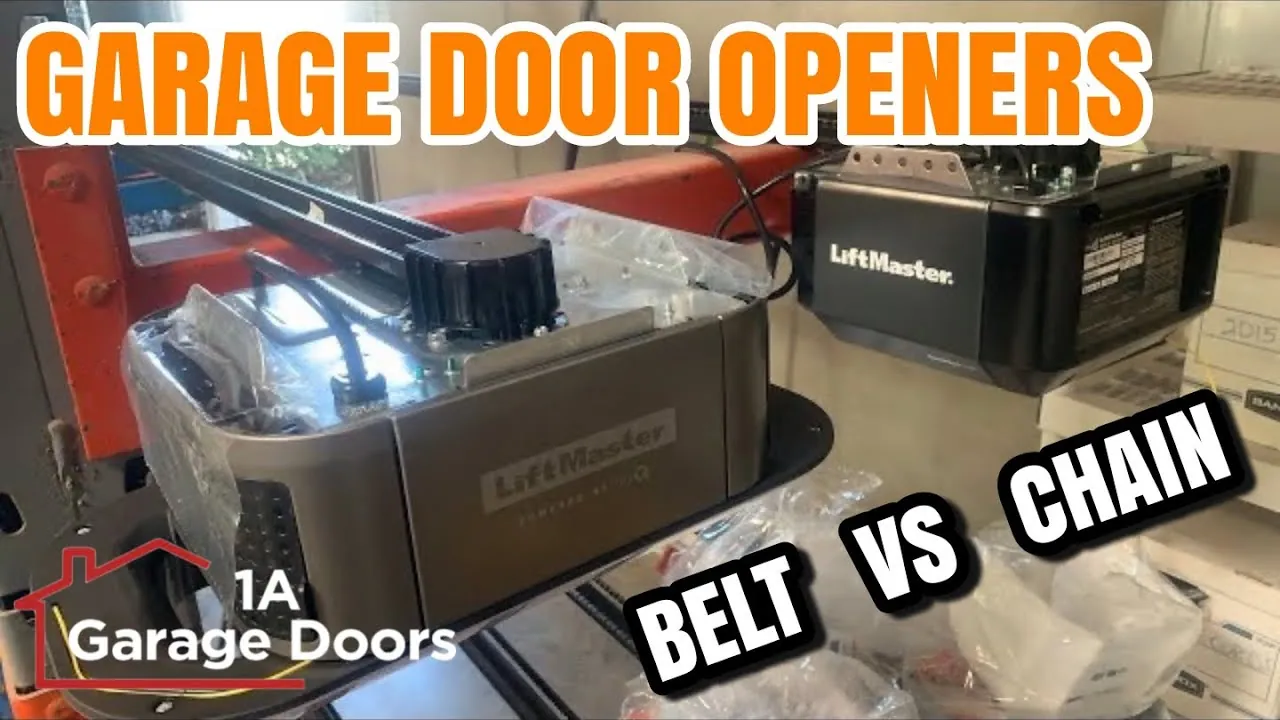
Chain drives use a metal bicycle-style chain to pull the door along the track. They’re built for strength and remain the most common choice for detached garages.
Bolt the rail segments together and slide the chain around the sprocket gear. Ensure the chain isn’t twisted before securing the master link.
Mount the motor unit to the ceiling joists using heavy-duty steel angle iron. If your ceiling joists run parallel to the rail, span the gap with two perpendicular pieces of angle iron to create a stable mounting platform.
Secure the header bracket to the wall and attach the rail assembly to the bracket.
Set the force sensitivity and travel limits according to the specific model’s instructions. Test the safety reverse by placing a two-by-four board on the floor; the door must retract immediately upon contact.
Chain drives handle heavy doors with ease. The main weakness is the noise, as the metal chain creates a metallic rattling sound with every cycle. This vibration travels through house framing. If you have living spaces directly above the garage, choose a belt drive instead to avoid the constant disturbance of shifting metal components.
Installing a screw drive system
Screw drives operate using a long threaded steel rod that rotates to move the trolley. They have very few moving parts, which makes them quite durable.
Assemble the long, one-piece or multi-piece steel screw rod inside the center rail. If you have a multi-piece rod, ensure the couplings are tightened to the manufacturer’s torque specification. Loose couplings will cause the trolley to bind during travel.
Attach the motor housing to the end of the rail and mount the assembly to the garage ceiling. Secure the header bracket to the wall above the door center line. Connect the trolley to the door arm and ensure the screw is properly lubricated using only the manufacturer-recommended lithium grease.
Test the safety reverse feature to ensure it complies with Underwriters Laboratories safety standards for automatic garage door operators. Place a two-by-four board on the floor in the path of the door; the door must reverse upon contact.
These systems are excellent for heavy or oversized doors because they provide a steady, consistent pull. They’re also easier to maintain than chain drives because there’s no chain to tighten. If your garage lacks climate control, expect slower operation during extreme weather. The metal rod expands in high heat and contracts in deep cold, which increases friction against the trolley. If the door stalls, check the rail alignment before adjusting the motor’s force settings.
Selecting the right system for your home
When you’re in a hurry to finish the project, the chain drive is the easiest to find and install quickly. If you’re doing this for the first time, a belt drive is often simpler to adjust because the rubber belt is lighter and easier to handle than a heavy metal chain. If you want the best possible result regardless of the price, the belt drive wins because it offers a premium, silent experience that lasts for years.
The main trade-off is between the low cost of a noisy chain and the higher price of a quiet belt. If your garage is detached from your living space, the extra cost of a belt is usually unnecessary. For attached garages, the silence of a belt is worth the investment.
Always check your door weight before buying, as some smaller motors can’t lift heavy, insulated doors regardless of the drive type. If your door weighs more than 250 pounds, skip the base-model motors entirely. Look for a unit with a minimum 3/4 horsepower rating to prevent premature gear stripping.
If your ceiling height is limited, a wall-mount jackshaft system is superior to both belts and chains. It clears the overhead space, allowing for taller vehicles. Use this if you have less than 12 inches of clearance above the door.
Rules for all drive types
Regardless of the system you choose, safety is the most important part of the installation. You must test the automatic reversal system monthly to ensure it detects obstacles. If the door doesn’t reverse when it hits a soft object, the motor force is set too high and needs immediate adjustment. Always check the manual for the specific weight limits of your chosen opener model.
Installation requires working with electricity and high-tension springs, which can be dangerous. If you don’t have experience with electrical work or garage door hardware, it’s safer to hire a licensed professional. Improper installation can void your warranty and lead to serious injury. Always ensure the mounting hardware is bolted securely into the ceiling joists, as a loose motor can fall and cause significant damage to your vehicle or property.
Related guides
- LiftMaster vs Chamberlain: Which Garage Door Opener Is Best
- 1/2 vs 3/4 Horsepower Garage Door Opener: Which One to Choose
- Chamberlain Garage Door Opener Troubleshooting: Easy Fixes
Frequently Asked Questions
Can I replace a chain drive with a belt drive?
Yes, you can usually replace a chain drive with a belt drive if you use the same mounting points. You’ll likely need to replace the entire rail and motor unit, as the internal components aren’t interchangeable. Check your existing ceiling brackets to see if they can support the new motor weight. Most modern kits include universal mounting hardware that fits into the holes left by your previous opener.
How often do I need to lubricate a chain drive?
You should lubricate the chain according to your usage and the owner’s manual to keep it running smoothly. Use a white lithium grease spray, as it stays on the metal and doesn’t drip as easily as oil. Avoid using heavy grease that attracts dirt and dust, which can clog the sprocket. If you hear a grinding noise, it’s time to clean the old debris off the chain before applying fresh lubricant.
Is it safe to install a garage door opener myself?
Yes, it’s safe if you follow the manufacturer’s instructions and have basic tools. You must never attempt to adjust the torsion springs, as these are under extreme tension and can cause severe injury. If you have any doubts about your ability to handle the electrical wiring or the heavy lifting, contact a professional. Always verify that your local building codes allow homeowners to perform this type of electrical work.
What happens if the power goes out?
All modern garage door openers come with a manual release cord that lets you open the door by hand. You should pull the red handle to disconnect the trolley from the drive system. Once disconnected, you can lift the door manually, but be careful because the door will be heavy. If you live in an area with frequent outages, look for a model that includes a battery backup feature.
How much do these openers usually cost?
The cost varies based on the brand, the motor power, and the included smart features. Chain drives are generally the most affordable, while belt drives carry a premium price for their quiet operation. You can find the current prices for specific models on the websites of major home improvement retailers. Remember to account for the cost of professional installation if you decide not to do the work yourself.
How long does a typical opener last?
Most openers last for a significant period with regular maintenance. The motor lifespan depends on how many times you open and close the door each day. If you use your garage as the main entrance to your home, expect to replace the unit sooner. Keep the tracks clean and the chain or belt properly tensioned to ensure you get the full life out of your machine.
Conclusion
Maintaining your garage door opener is a simple task that saves you money. By keeping the track clear of debris and ensuring the safety sensors are aligned, you prevent unnecessary wear on the motor. Test the sensors every time you perform seasonal maintenance to keep your family and property safe.
