
Stop using the door immediately because a garage door cable snapped and the system is now dangerous. You must disconnect the opener and secure the door to prevent it from falling unexpectedly. Don’t attempt to lift the door by hand, as the lack of tension can cause it to shift off the tracks or crash down. Call a professional service technician to handle the repair, as the springs and cables are under high tension that can cause severe injury.
Preventing more garage door cable damage
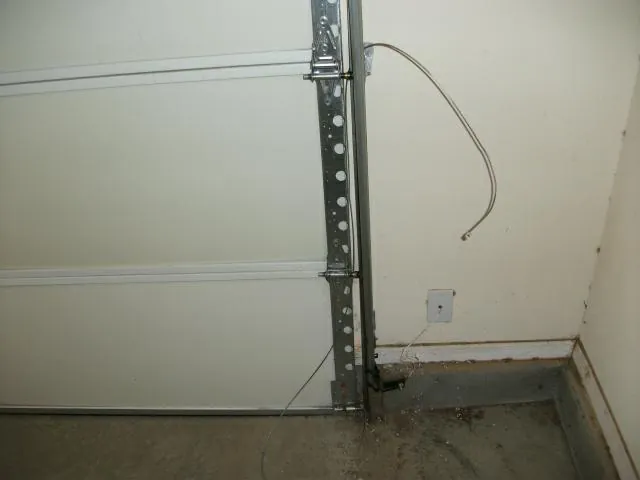
Pull the emergency release cord—usually a red handle—to disconnect the door from the opener. This simple step prevents the motor from attempting to lift a damaged, unbalanced door, which often strips the drive gear or burns out the capacitor.
Place a C-clamp or a pair of locking pliers on the track just above one of the rollers. This creates a physical stop that prevents the door from sliding down if it’s partially open. Don’t rely on the opener’s internal tension to hold the weight.
Clear the area under and around the door to ensure no person or object is at risk if the remaining cable fails or the door slips. If the door is stuck at an angle, assume the springs are under uneven tension and stay clear of the torsion assembly.
Keep the door in its current position. Don’t try to force it open or closed, as this will likely bend the tracks or permanently crease the door panels.
How the lift system works
A garage door operates as a counterweight system where the spring provides the lifting force and the cables act as the connection points. When a garage door cable snaps, the connection between the spring and the door is lost on one side. This causes the door to become severely unbalanced. The weight of the door is no longer held up evenly, which forces the door to tilt.
The mechanism relies on high-tension torsion or extension springs. When one cable fails, the remaining cable and spring take on the entire load. This extra stress often causes the second cable to fray or snap shortly after the first one.
Because the door is now crooked, it will bind against the vertical tracks. If you try to operate the motor, the opener will pull against this resistance. This often strips the gears inside the motor unit or bends the metal track mounting brackets. The system is designed to move as a single, level unit. Once that physical connection is broken, the geometry of the door changes.
If the door hangs more than two inches off-level, stop using the opener immediately. Forcing the motor to compensate for a lopsided load will burn out the capacitor or shear the drive gear within minutes. It isn’t possible to “reset” the cable by hand because the spring tension must be precisely adjusted to match the weight of the door panels.
Attempting to move the door manually while it’s off-balance is the most common way people suffer crush injuries or cause permanent damage to the door frame and track hardware. Always treat a snapped cable as a structural failure that requires professional tensioning equipment to resolve safely.
Quick checks before calling for help
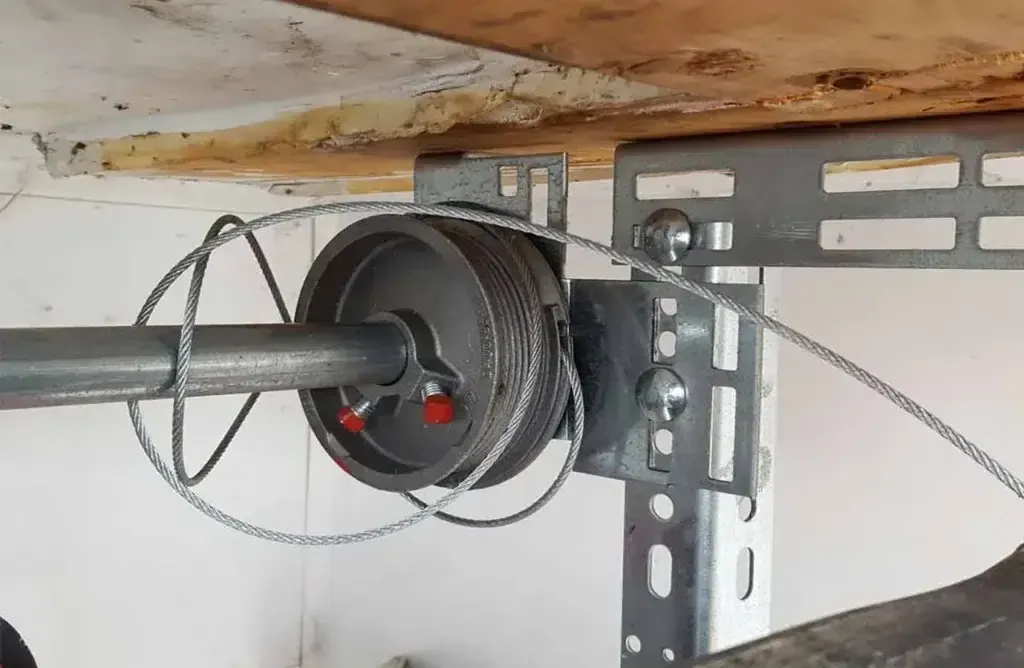
Always look at the cables and springs before you make any decisions about the door’s condition.
Inspect the frayed cable
Look at the point where the cable broke. If the end looks like a frayed brush, it was likely caused by normal metal fatigue. If the cable is cut cleanly, it might have been rubbing against a bolt or a misaligned pulley.
Check the second cable
Look at the cable on the opposite side of the door. If it looks loose or shows broken strands, it’s close to failing. Don’t touch it.
Examine the spring tension
Check if the spring looks stretched or has a visible gap between the coils. If the spring is damaged, the door is effectively dead weight.
Verify track alignment
Look for any bends or gaps between the rollers and the track. If the track is bent, the door won’t move smoothly even after the cable is replaced.
Check the bottom bracket
Look at the bottom corner where the cable attaches. If the bracket is bent or pulled away from the wood, the repair will require more than just a new cable.
Replacing the damaged cable
The repair process involves relieving the tension from the spring system to safely remove the broken cable and install a new one of the exact same length and thickness. A technician will first secure the torsion shaft with winding bars to hold the spring in place. They then unwind the spring to remove all stored energy before detaching the old cable from the bottom bracket and the cable drum.
After removing the old hardware, the technician attaches the new cable to the bottom fixture and threads it through the pulleys or onto the drum. The system must then be re-tensioned using specific turns based on the door’s weight and spring size. If you have a standard 7-foot tall residential door, the spring usually requires a specific number of quarter-turns to balance the door’s weight.
Most novices fail by ignoring the drum’s alignment during this step. If the cable isn’t seated firmly in the grooves, it will fray within a month, costing you the price of a second replacement. Always ensure the cable is taut against the drum before releasing the winding bars.
Once the tension is set, the technician tests the door by hand to ensure it stays in place when lifted halfway. If the door drifts down, the spring needs more tension; if it flies upward, it has too much.
A successful fix results in a door that moves smoothly without binding and stays open on its own at any height. If the problem returns within a week, it usually means the cable wasn’t wound correctly on the drum or the underlying spring is failing.
Professional repair requirements
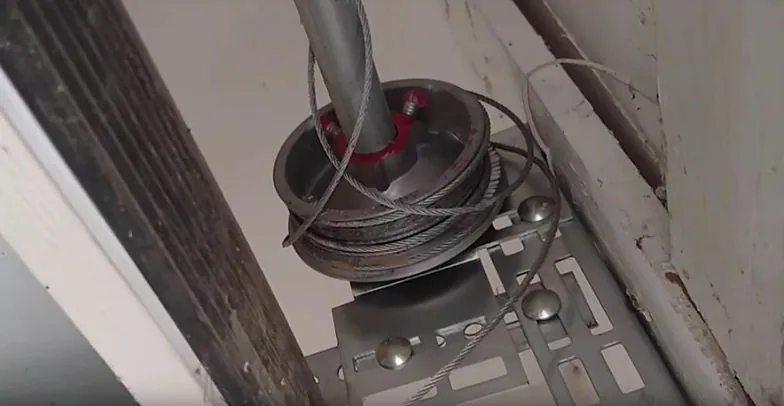
This task requires specialized equipment and training, so it isn’t a project for a homeowner. The torsion springs are under extreme tension and can release with enough force to cause fatal injuries if the spring snaps or a winding bar slips. Professionals use specific tools to lock the shaft and wind the spring safely, which aren’t available in standard tool kits.
If you call a technician, they will first inspect the entire door assembly, including the springs, drums, and hinges. They will look for signs of wear that caused the initial break to ensure that replacing the cable alone will actually solve the problem.
Most technicians will insist on replacing both cables at once, even if only one has snapped. This is because the second cable has been subjected to the same age and environment as the first one and is likely near its own breaking point. Don’t ask a professional to perform a partial repair, as the risk of a secondary failure is high.
If your door makes a loud popping sound or hangs unevenly, stop using the opener immediately. Forcing the motor to lift a door with a compromised cable will strip the internal gears of the opener within three to five cycles. If you see visible fraying or rust on the strands, the cable is compromised and requires an immediate replacement.
Related guides
- Garage Door Cable Came Off Drum: How to Fix It Safely
- Chamberlain Garage Door Opener Troubleshooting: Easy Fixes
- LiftMaster vs Chamberlain: Which Garage Door Opener Is Best
Frequently asked questions
Can I fix this myself?
No, you shouldn’t attempt this repair yourself due to the high risk of injury from pressurized spring systems. The tension in these springs can cause them to snap or release suddenly, leading to serious bodily harm or damage to your property. Professional technicians have the training and safety equipment required to manage this tension. Always prioritize your personal safety over the cost of the repair.
How much does a cable repair cost?
The cost is generally inexpensive relative to the alternative, depending on your location and the complexity of your door system. This price typically includes the cost of two new heavy-duty cables and the labor to balance the door properly. You should ask for a quote that includes both cables, as replacing only one isn’t considered a complete or safe repair.
How long does the repair take?
A professional technician can usually complete the cable replacement in about 60 to 90 minutes. This time includes securing the door, removing the old cables, installing the new ones, and adjusting the spring tension to ensure the door is balanced. If the technician finds other worn parts, such as pulleys or hinges, the time required may increase slightly.
Is it safe to leave the door open?
No, don’t leave a garage door with a broken cable in an open or partially open position. The door isn’t supported by the spring system and can fall unexpectedly if the remaining cable slips or snaps. If the door is currently open, contact a professional immediately to have it safely closed and secured until they can perform the full repair.
Does the brand of the door matter?
Yes, the specific model and weight of your door determine which cables and springs are required for a safe repair. Different manufacturers use different cable thicknesses and drum sizes to support the door panels. A technician will need to identify your specific door model to ensure they use the correct parts, as using the wrong size will prevent the door from balancing correctly.
Can I still use the garage if I disconnect the opener?
No, disconnecting the opener only stops the motor from pulling on the broken system; it doesn’t make the door safe to operate. The door remains heavy and unbalanced, posing a significant risk of falling or pinching fingers if moved manually. Keep the door closed and locked until a qualified technician has inspected the hardware and verified that it’s safe to operate again.
Why did the cable snap?
The most common reason for a cable to snap is metal fatigue caused by thousands of cycles of bending and straightening over many years. Environmental factors like humidity or salt air can also accelerate this process by causing rust, which weakens the metal strands. Regular inspections can help you identify fraying before a full snap occurs, allowing you to replace the cables as part of routine maintenance.
Conclusion
The life of a garage door cable depends heavily on how often the door is used and the quality of the maintenance it receives. You can check the manufacturer’s manual or the label on your door’s spring assembly to see the expected cycle life, which is the number of times the door can open and close before the hardware requires replacement.
