
Interchangeable screwdriver sets come in five main shapes: multi-bit screwdrivers, bit-holding handles, precision bit kits, ratcheting drivers and T-handle systems. They all share a single handle that accepts different tips so you don’t carry a full toolbox for every fastener. The thing that separates them is how the bit locks in and whether the handle turns freely or clicks forward. Picking the best interchangeable screwdriver sets means matching that lock style to the screws you actually face.
Types of interchangeable screwdriver sets
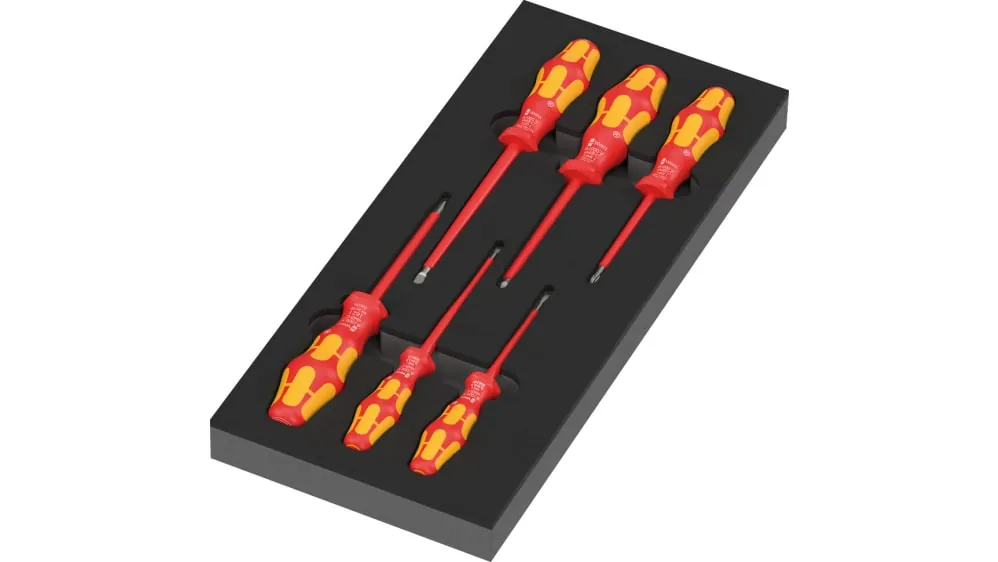
Every set below uses one handle and swaps the tip, but they aren’t built for the same work. Here’s what each one does and where you’ll see it used.
| Set type | Best for | Real example |
|---|---|---|
| Multi-bit screwdriver | General home repairs | Megapro 211R2-36 |
| Bit-holding handle | Power drill compatibility | Wera Kraftform Kompakt |
| Precision bit kit | Electronics and small devices | iFixit Mako Driver Kit |
| Ratcheting driver | Fast repeated turning | Stanley FatMax Ratcheting |
| T-handle system | High torque without slipping | Wiha 32095 |
Multi-bit screwdriver
A multi-bit screwdriver stores its bits inside the handle and uses a twist collar to hold whichever one you pull out. It suits someone who needs six or twelve common drive sizes ready without opening a separate case. You won’t find yourself digging through a tray when a screw head changes mid-job.
- Keeps every bit you need inside one closed tube.
- Locks the tip with a twist ring instead of magnets.
- Fits into tight spaces because the shaft stays slim.
- Drops a new bit in under two seconds flat.
This design trades off maximum torque for speed, so if you’re driving long lag bolts into framing lumber, pick a T-handle instead. A bare magnetic holder drops bits inside hollow cabinet frames, costing you twenty minutes and a scratched finish fishing them out; the twist collar prevents that entirely. Grab a Megapro 211R2-36 to hang a shelf using its stored Phillips #2 bit on standard 8 x 1.5-inch wood screws.
Bit-holding handle
A bit-holding handle takes any standard 1/4-inch hex shank bit, including the ones already sitting in your power drill case. It suits anyone who owns a cordless driver but still needs to turn screws by hand near delicate surfaces where a motor strips threads. That shared size is what separates it from the fixed-shaft options above.
- Accepts hundreds of third-party bits you already own.
- Lets you switch between hand turning and power driving instantly.
- Holds the bit with a strong magnet or a quick-release ring.
- Costs less because you only buy the bare handle once.
The trade-off is length. These handles add about 3 inches to whatever bit you insert, which blocks access inside shallow electrical boxes. If your workspace is under 4 inches deep, use a multi-bit screwdriver instead; if you have room and want drill compatibility, this is the one. Slide a Wera Kraftform Kompakt handle onto a Torx T15 bit to tighten the hinge screws on a laptop stand without hunting for a dedicated driver.
Precision bit kit
A precision bit kit shrinks the whole system down to fit watch backs, phone cases and circuit boards. It suits repair work on anything smaller than a household appliance, where a standard handle covers the screw completely and hides your angle. You’ll find 4 mm or smaller hex shanks here rather than the 1/4-inch size everything else uses.
- Reaches recessed screws inside phones and laptops safely.
- Organizes sixty-plus tiny bits in one labeled case.
- Spins freely at the tail cap for steady one-handed control.
- Uses hardened steel tips that won’t round off micro fasteners.
The catch is torque: these handles are too thin to break loose a seized screw larger than an M4 bolt, and forcing one bends the shaft. Read the fastener diameter stamped on your device’s service manual before picking a bit. The iFixit Mako Driver Kit includes a 4 mm Phillips #00 bit sized exactly for the pentalobe screws holding an iPhone display assembly shut.
Ratcheting screwdriver
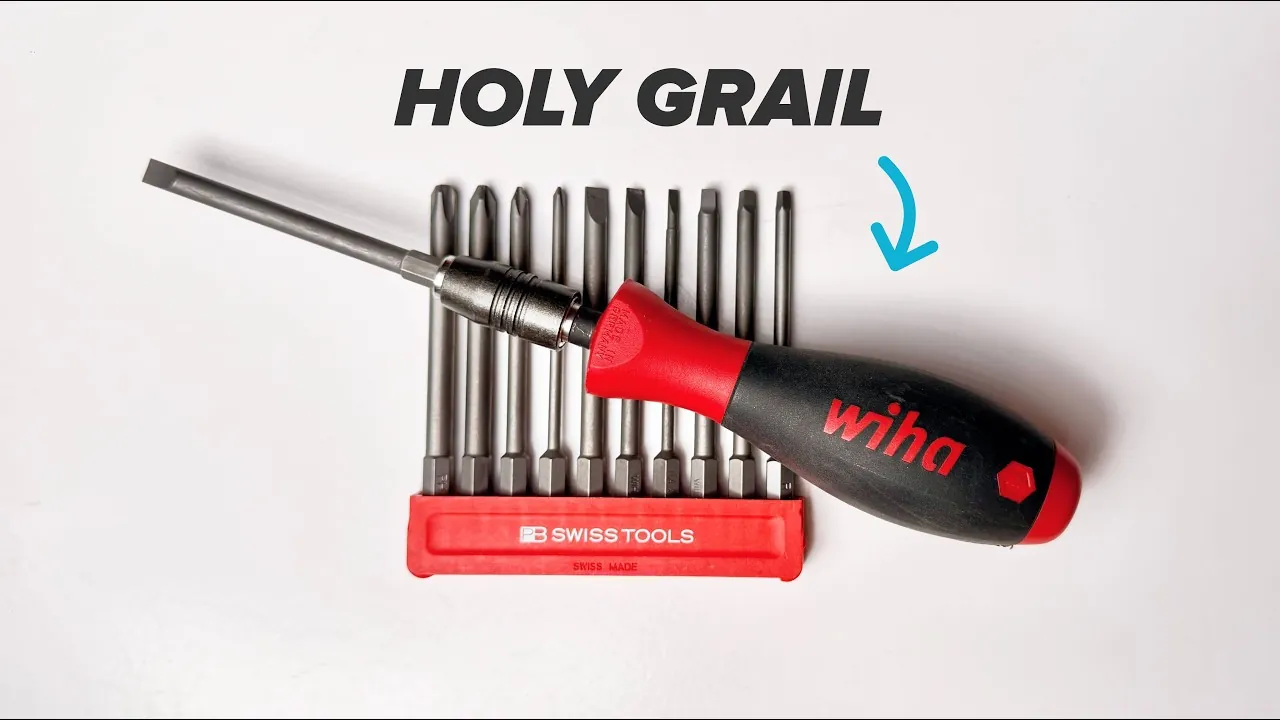
A ratcheting screwdriver has a gear inside the handle that lets you turn the screw without lifting your hand off the grip. It suits assembly work where you’re driving dozens of identical screws into flat-pack furniture or outlet covers. The mechanism saves your wrist from twisting back and forth fifty times an hour.
- Drives screws three times faster than a fixed shaft.
- Switches between forward, reverse and locked modes easily.
- Stores common bits in the handle base or a flip-top.
- Reduces wrist strain during long repetitive jobs.
If you only need to tighten one loose hinge once a month, the added weight and bulk of the gear housing isn’t worth carrying around the house. Pick a basic multi-bit for occasional tasks; keep the ratchet for projects taking over thirty minutes. Push a Stanley FatMax Ratcheting driver set to “forward” and sink ten 1.5-inch drywall screws into a stud without resetting your grip once.
T-handle interchangeable system
A T-handle system puts a crossbar at the top of the shaft so you can push down and twist with your whole palm. It suits heavy mechanical work—bicycle cassettes, automotive interior panels or machinery guards—where a straight handle just spins in your sweaty grip. This shape delivers more force per turn than any other option on this list.
- Transfers full hand strength directly into stubborn fasteners.
- Prevents the tip from camming out under heavy pressure.
- Accepts long extension shafts for deep-reach engine bays.
- Stands upright on a bench so you never lose it.
It won’t fit inside a narrow wall cavity or behind a tight switch plate. If clearance is under 2 inches across, leave the T-handle in the box and grab a slim multi-bit instead. Use a Wiha 32095 T-handle with a 5 mm hex bit to loosen a bicycle crank bolt torqued to 35 Newton-meters.
Other interchangeable screwdriver formats
- Insulated multi-bit drivers protect against live circuits; a qualified technician must verify this protection, and electricians working inside open panels need these instead of standard metal shafts.
- Stubby bit holders measure under 3 inches total, fitting inside cramped junction boxes where full-size handles physically can’t enter at all.
- Nut-driver sets swap hex sockets instead of screwdriver tips, meant for HVAC technicians tightening sheet-metal screws on ductwork flanges daily.
- Magnetic pickup drivers combine a telescoping magnet with a bit holder, built for mechanics dropping fasteners deep into engine blocks regularly.
Choosing the right set for your work
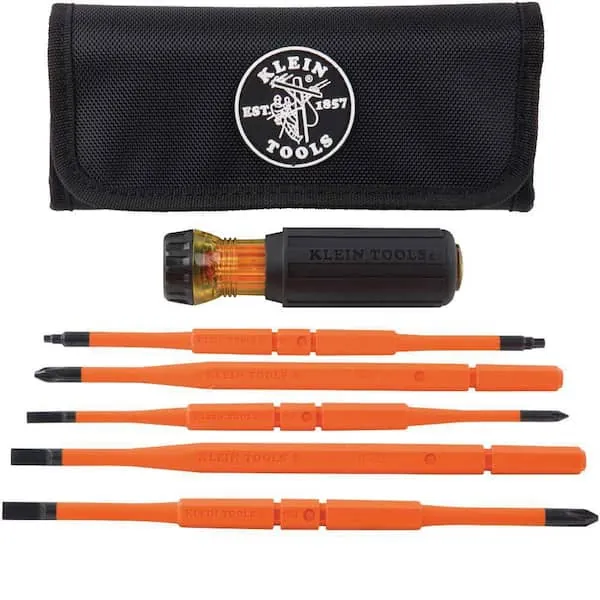
The set you need depends on three things: the size of your screws, how many you’re turning, and where they sit. Look at the fastener first. If the screw head is smaller than a pencil eraser, reach for a precision bit kit. Standard hardware store screws—like the ones holding your door hinges—fit a multi-bit screwdriver or a bit-holding handle perfectly.
Next, count the screws. If you’re assembling a bookshelf with forty identical bolts, a ratcheting driver saves your wrist. For one or two loose screws around the house, a simple multi-bit screwdriver is lighter and cheaper to keep in a drawer.
Finally, check the space. If the screw sits deep inside a narrow hole, a stubby format or a precision kit works. Wide-open surfaces let you use a T-handle system for maximum force.
You can combine a bit-holding handle with your existing drill bits, but picking a dedicated multi-bit means leaving the hex-shank ecosystem behind. Don’t buy both unless you genuinely face both kinds of jobs.
Related guides
- What are the different types of branch connections
- How Curtain Walls Work: Materials and Types Explained
- How to Choose a Standing Desk: Features and Frame Types
Frequently asked questions
Can I use drill bits in a regular screwdriver?
Only if the handle has a 1/4-inch hex socket. Standard multi-bit screwdrivers use proprietary round or slotted shafts that won’t accept drill bits. Check the handle’s opening width before trying to force a power-tool bit inside.
Why does my screwdriver strip the screw head?
The bit size is wrong. A Phillips #2 bit in a Phillips #1 screw rides up and destroys the cross. Match the bit exactly to the fastener stamp, and press firmly while turning slowly.
How long do interchangeable bits last?
Bits made from S2 steel survive thousands of drives; cheaper CR-V steel rounds off much sooner. The lifespan depends entirely on the torque you apply and whether the bit fits the screw tightly.
Is it safe to use these on live electronics?
No, unless the set carries a specific voltage rating printed on the handle. Standard bits conduct electricity straight to your hand.
What happens if the magnet stops holding bits?
Dirt or metal shavings block the contact point. Wipe the magnet clean with a dry cloth. If it still drops bits after cleaning, the magnet has lost its charge and the handle needs replacing.
Does the handle shape really matter?
Yes. A straight handle slips when your hands are oily. A T-handle or contoured grip transfers force better. Pick the shape that matches the highest torque you expect to apply regularly.
How many bits do I actually need?
Six cover most homes: Phillips #1 and #2, slotted 3/16 and 1/4 inch, plus Torx T15 and T20. Buying a 60-piece kit means paying for sizes you might never touch.
Can I sharpen a worn screwdriver bit?
Don’t try. Grinding changes the factory angles and ruins the fit, guaranteeing stripped screws next time. Replace worn bits individually instead of risking damage to your hardware.
Starting with your new driver set
Pick the set that matches your smallest screw and your tightest space first. When you use it, the sign that it’s working is a clean turn with no clicking sound and no metal dust falling from the screw head. If the bit slips twice on the same fastener, stop immediately. Take the part to a local hardware store or a repair shop before you destroy the threads completely.
