
A star delta starter circuit y δ how to wire pros and cons is a method used to reduce the high starting current of large three-phase induction motors. By starting in a star configuration, the motor draws only one-third of the current it would take in a delta connection, which reduces the starting current to one-third of the direct-on-line (DOL) value.
How the star delta starter circuit works
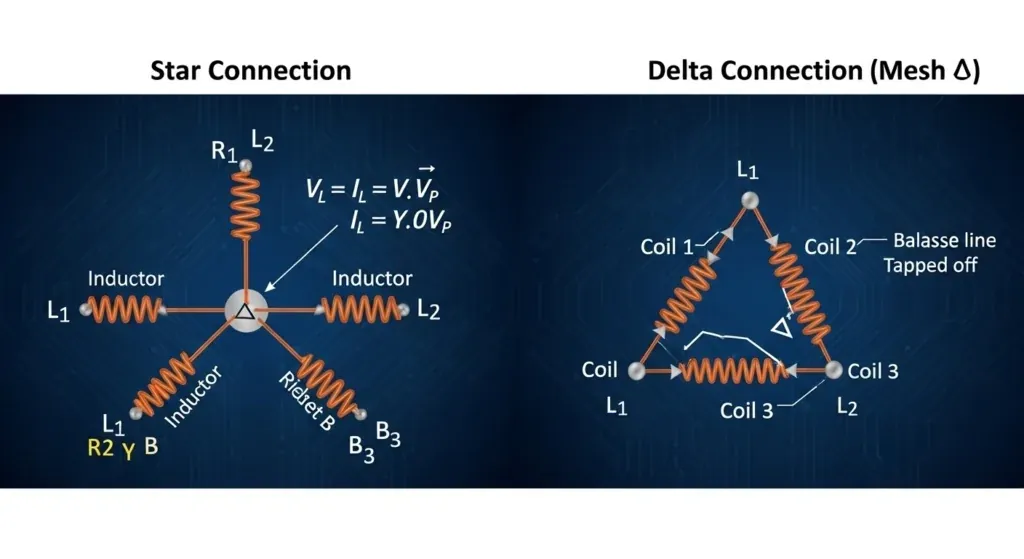
This configuration is a common choice for industrial machines that need to limit current spikes during startup. It works by using a contactor logic system to change the winding connections from star (Y) to delta (Δ) once the motor reaches about 80% of its rated speed. The primary purpose is to protect the electrical installation from the heavy surge of current that occurs when a motor starts under light load.
People often assume that this method increases the starting torque, but the opposite is true. Because the voltage across each phase is reduced by a factor of the square root of three, the starting torque drops to about one-third of the value of a direct-on-line start. This is why it’s best suited for fans, pumps, or conveyors that don’t require heavy torque to begin moving.
Wiring the motor for soft startup
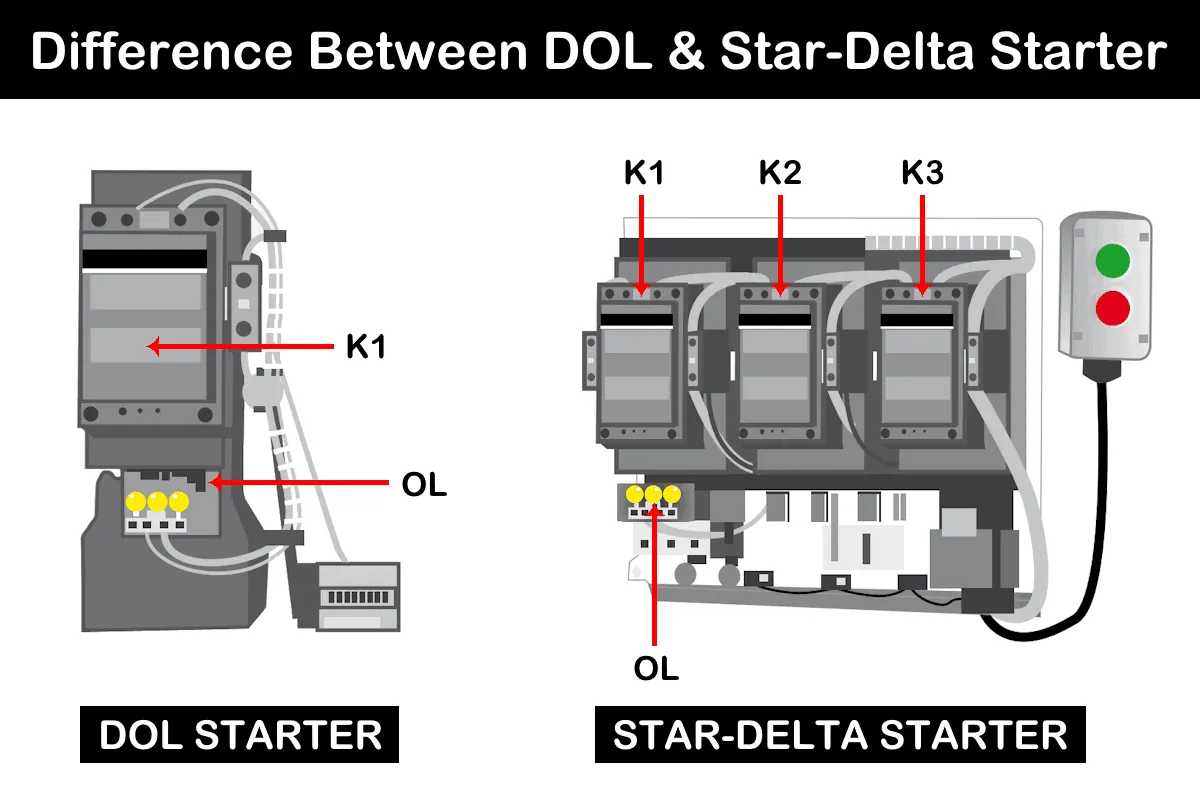
To connect the starter properly, you must use three contactors: a main contactor, a star contactor, and a delta contactor. Always ensure the motor is rated for delta operation at the supply voltage.
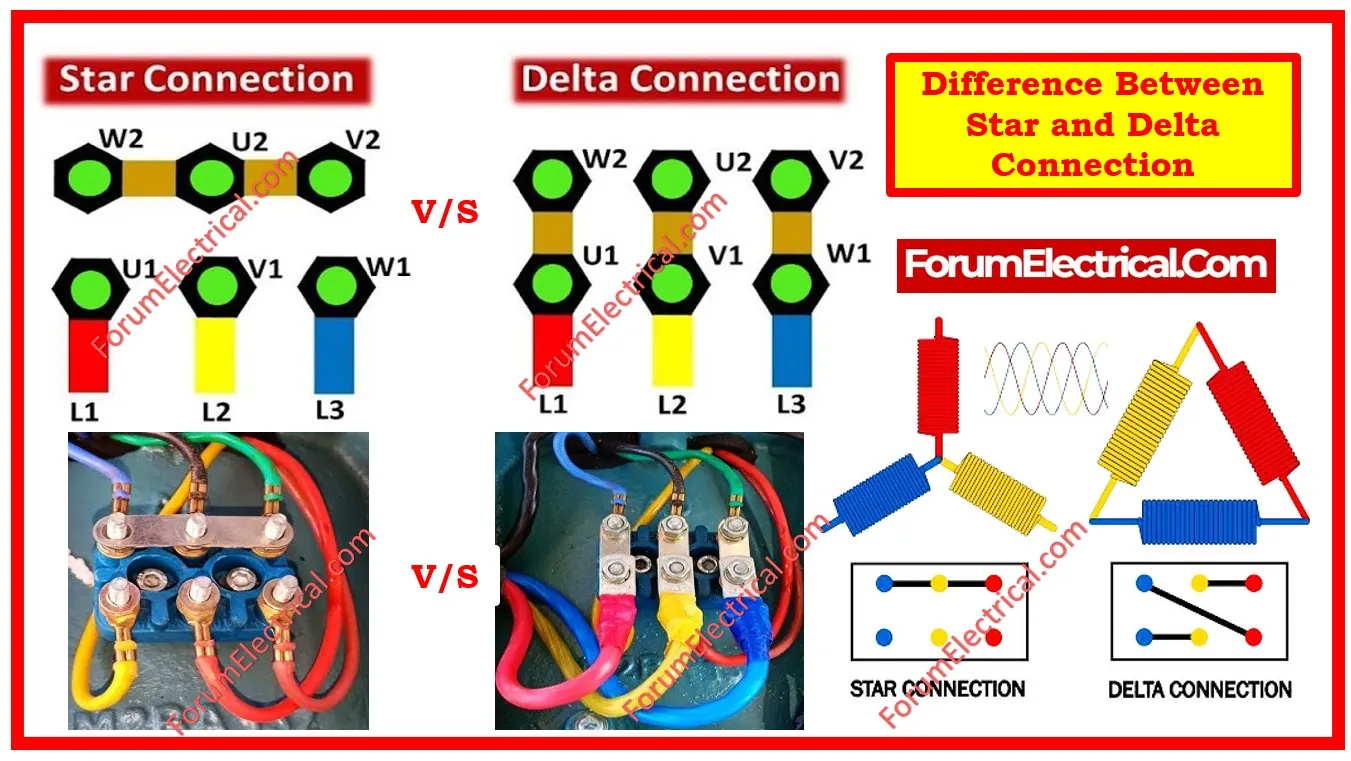
- Connect the U1, V1, and W1 terminals of the motor to the main contactor outputs.
- Connect the U2, V2, and W2 terminals to the star contactor, which shorts these ends together to form the star point.
- Wire the delta contactor so that it connects the start of one winding to the end of the next (U1 to W2, V1 to U2, W1 to V2).
- Install an electrical and mechanical interlock between the star and delta contactors to prevent them from closing at the same time.
- Set the thermal overload relay to the motor’s full-load current if it’s positioned in the line, or to 58% of the full-load current if it’s positioned inside the delta loop.
- Program the timer relay to switch from star to delta after 5 to 10 seconds, depending on the load inertia.
If the motor fails to reach speed before the timer switches, the current spike will be unnecessarily high; if you’re using a very heavy load, consider a soft starter instead.
Any work on high-voltage systems carries the risk of arc flash, so ensure all power is locked out before touching terminals. Per the Occupational Safety and Health Administration, all electrical installations must be performed by qualified personnel who have the training to recognize and avoid the hazards associated with live parts.
Common configurations and settings
| Situation | Connection | Timer Setting | Typical Application |
|---|---|---|---|
| Low inertia start | Star (Y) | 5 Seconds | Small exhaust fans |
| Medium load | Star (Y) | 8 Seconds | Centrifugal pumps |
| High inertia start | Star (Y) | 12 Seconds | Large conveyors |
| Running mode | Delta (Δ) | Continuous | Normal operation |
| Overload protection | Series | N/A | Circuit safety |
Achieving reliable motor performance
Reliable operation depends on the precision of the timing and the quality of the contactor switching. Experienced technicians always verify the phase sequence before finalizing the delta connection to ensure the motor rotates in the correct direction. If the sequence is reversed, the motor will attempt to run backward the moment the delta contactor engages, which often causes a massive current surge and potential mechanical damage.
Another detail that separates a professional setup from a amateur one is the use of proper mechanical interlocks. Relying solely on software or electrical interlocks in the controller is a mistake, as a welded contactor could cause a short circuit between phases.
Always install a hardware-based interlock that physically prevents both the star and delta contactors from being engaged simultaneously. This simple physical barrier protects your equipment from catastrophic failure if a relay sticks or a control signal fails during the transition.
Troubleshooting startup and running issues
| What you notice | What it usually means | What to do first |
|---|---|---|
| Motor hums but won’t turn | Open phase in star | Check contactor tips |
| High noise during transition | Timer set too short | Increase timer duration |
| Overload trips immediately | Incorrect relay setting | Verify full-load amps |
| Motor rotates backwards | Reversed phase wiring | Swap two input lines |
If the motor hums but fails to rotate, inspect the contactor tips for pitting or carbon buildup. Pitted contacts often prevent a full phase from closing, leaving the motor single-phased. If the overload trips instantly on startup, compare your relay dial against the motor nameplate’s full-load amperage. A common mistake is setting the relay to the service factor current rather than the nameplate rating, which causes nuisance tripping under normal loads.
When the motor rotates in the wrong direction, swap any two of the three incoming power leads at the disconnect. Never swap the motor leads at the terminal box, as this complicates future maintenance. If you hear a mechanical grind during the star-delta transition, increase your timer by half-second increments. A transition that occurs before the motor reaches 80% of its rated speed will cause a severe current spike.
Compliance and safety requirements
Adhering to local electrical codes is mandatory whenever you modify motor control systems. In many regions, the National Electrical Code or equivalent local standards dictate that all motor control enclosures must be properly grounded to prevent chassis electrification.
You must also ensure that the branch circuit protection is sized correctly for the motor’s full-load current, not just the reduced starting current. If you’re unsure about the specific sizing rules for your region, consult with a licensed electrician or your local building authority before connecting the system to the mains.
Maintenance and long-term care
Once the system is installed, regular maintenance focuses on the contactor contacts. Because these contactors switch under load, the surfaces will eventually wear down or pit. Inspect the contactor tips every 6 to 12 months, or sooner if the motor starts and stops frequently.
If you notice heavy blackening or pitting, replace the contactor tips to prevent high resistance, which leads to overheating. Keep the control panel clean and dry, as dust can interfere with the operation of the timer relay and cause erratic switching times.
When to avoid this method
This approach isn’t suitable for applications that require high starting torque, such as crushers or loaded compressors. In these cases, the motor may stall in the star configuration and fail to reach the speed required to switch to delta.
If your machine requires more than 50% of its rated torque to start, a star delta starter will likely fail to get the motor running. For these demanding tasks, a variable frequency drive or a soft starter is a much better choice, as they provide controlled torque without the mechanical stress of a sudden switch.
Frequently Asked Questions
Can I use this for a single-phase motor?
No, this method is strictly for three-phase induction motors. Single-phase motors don’t have the three separate windings required to create a star or delta configuration, and attempting to wire one this way will result in immediate failure or fire.
Is it safe to leave the motor in star mode?
No, leaving a motor in star mode for extended periods will cause it to overheat if the load is high. The motor is designed to run at full power in the delta configuration, and star is only for the short starting duration.
How do I know if my motor supports this?
Check the motor nameplate for voltage ratings like 400V/690V. If the nameplate only lists one voltage, such as 400V, it can’t be connected in delta for a 400V supply, and you shouldn’t attempt to use this starter type.
What happens if the timer fails?
If the timer fails and stays in star mode, the motor will likely overheat and trip the thermal overload. If it fails and stays in delta, the motor will start with a massive current surge, which could trip the main circuit breaker.
How long should the transition take?
The transition should take only a few milliseconds, which is the time it takes for the star contactor to open and the delta contactor to close. Any delay in this switching process can lead to power arcs and damage to the motor windings.
Conclusion
Proper installation of a star delta starter requires careful attention to the motor’s nameplate data and the timing of the transition. If you aren’t comfortable working with high-voltage industrial equipment, always hire a certified professional to handle the wiring and safety testing.
