
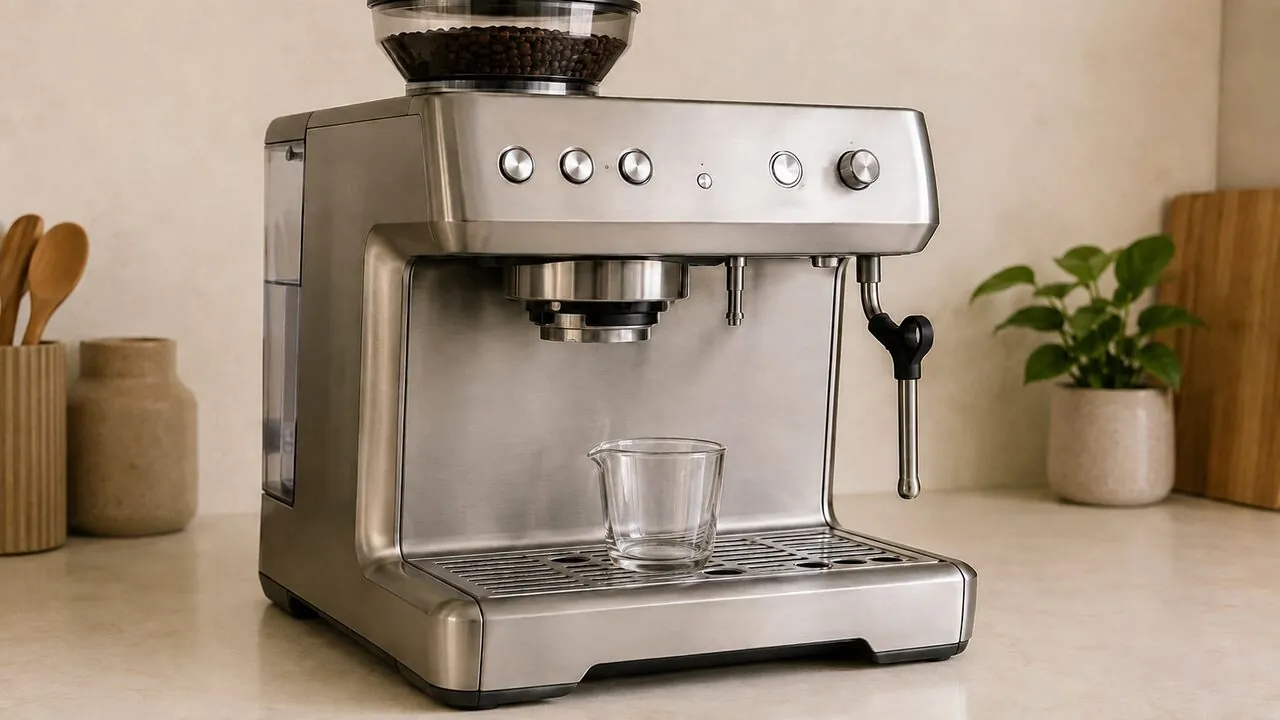
Air in the pump or a clogged water filter is the most common reason for a breville espresso machine not pumping water. This issue usually happens because the system can’t create enough pressure to draw water from the reservoir into the internal lines. If you have recently changed the water filter or let the tank run completely dry, air bubbles are likely trapped inside the pump. You can often clear this blockage by priming the pump manually or by removing the filter to test for flow.
Why your Breville machine stopped pumping water
| Cause | How common | How to confirm it | Fix it yourself? |
|---|---|---|---|
| Air lock in pump | Very common | Pump runs but no sound | Yes |
| Clogged water filter | Common | Slow or no water flow | Yes |
| Empty water reservoir | Frequent | Visible air in line | Yes |
| Scale buildup | Occasional | Machine sounds strained | Yes |
| Faulty solenoid valve | Rare | Clicking but no flow | No |
| Failed internal pump | Rare | No sound at all | No |
Air locks often occur after a machine sits idle for weeks or following a deep cleaning. If the pump hums loudly without moving water, prime it by injecting water directly into the intake line using a syringe.
Scale buildup is the silent killer of flow. If your machine takes more than 40 seconds to pull a standard shot, mineral deposits have likely narrowed the internal tubing. Use a dedicated descaling solution rather than vinegar, which can corrode internal brass fittings over time.
Distinguish between a solenoid failure and a pump failure by listening closely. A solenoid clicks once when activated; if you hear that click but nothing follows, the valve is jammed shut. If the machine remains completely silent, the pump motor has likely burned out. Never attempt to bypass a solenoid valve, as this can cause a pressure spike that ruptures your boiler seals.
Clearing an air lock in the pump
An air lock occurs when air pockets prevent the mechanical pump from creating the vacuum needed to pull water. This typically happens after the machine sits unused for a long time or if the reservoir runs empty during a brewing cycle. You’ll notice the machine makes a loud, buzzing noise without any water exiting the group head or steam wand.
To fix this, first ensure the water tank is filled to the max line with fresh, cold water. Remove the water filter from the tank entirely, as these often restrict flow if they aren’t properly saturated. Place a large container under the steam wand and open the steam valve fully. Press the hot water button or the manual brew button to engage the pump.
If the pump struggles to catch, try using a turkey baster or a large syringe to force a small amount of water directly into the intake valve at the bottom of the tank. This provides the initial pressure needed to move the air bubble through the system.
You should hear the sound of the pump change from a high-pitched buzz to a steady, rhythmic thumping as water begins to flow. This process usually takes about 30 to 60 seconds of continuous running. If the machine remains silent after two minutes of effort, stop to prevent the motor from overheating.
Resolving water filter blockages
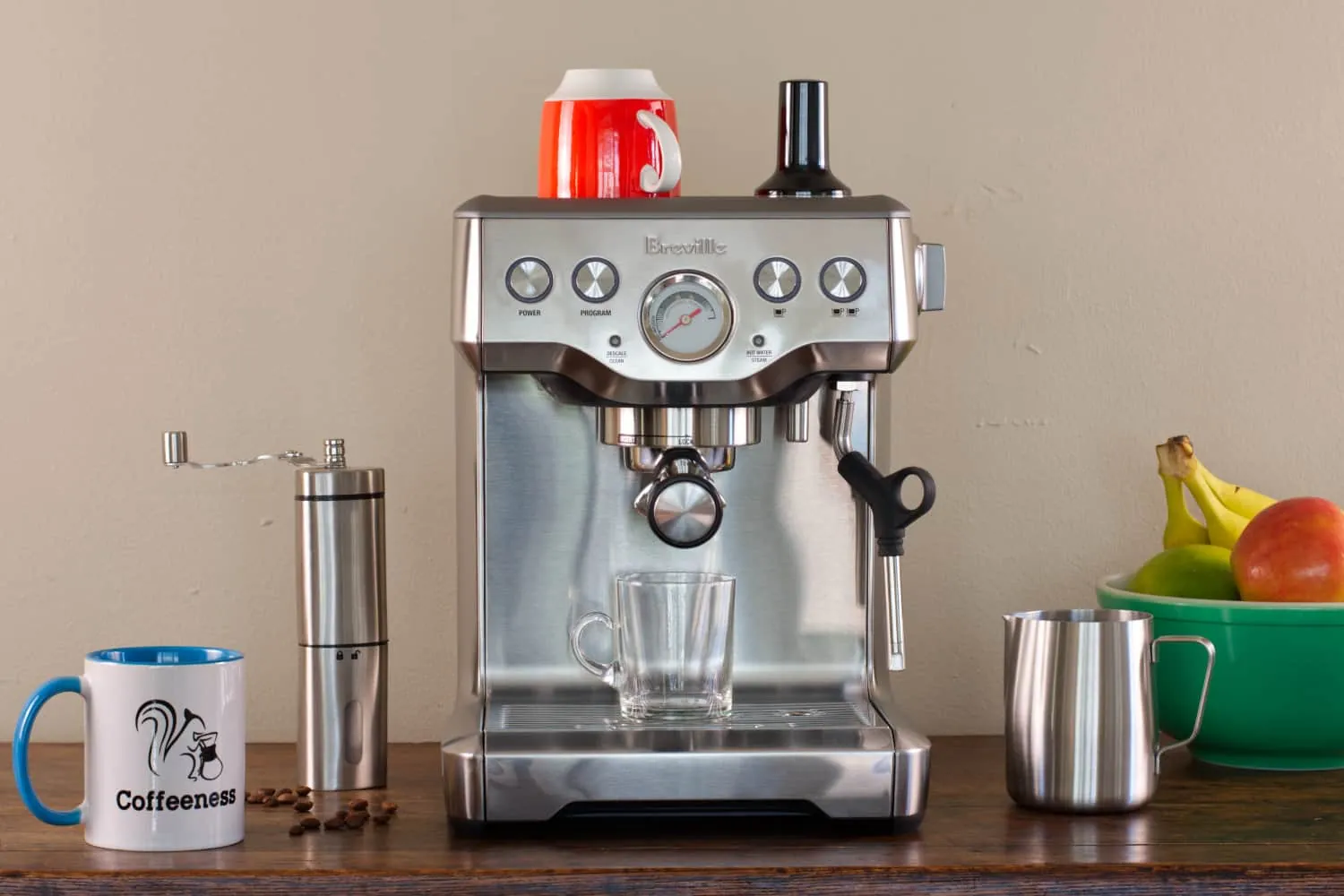
A clogged or dry water filter acts as a physical barrier to the water supply. If the filter wasn’t soaked in water for at least five minutes before installation, it can trap air that effectively seals the intake. This symptom is distinct from an air lock because the pump might sound normal, yet no water moves through the lines.
Remove the filter from the water tank and inspect the mesh for debris or signs of hardening. If the machine pumps water perfectly without the filter installed, you have identified the culprit. You should replace the filter every two to three months, depending on your local water hardness. Official Breville filter maintenance guidelines suggest that using a fresh, pre-soaked filter prevents mineral deposits from reaching the sensitive internal pump components.
If you find that the machine still fails to pump after removing the filter, check the seating of the tank. The tank must be pushed firmly into the base of the machine to engage the valve.
A small spring-loaded pin at the bottom of the tank housing must depress correctly for water to flow. If this pin is stuck or misaligned, the machine will act as if the tank is empty even when it’s full. Gently press the pin with a non-metal object to ensure it moves freely.
Addressing mineral scale buildup
Mineral scale accumulates over time, especially in areas with “hard” water that contains high levels of calcium and magnesium. This buildup creates a crust inside the narrow tubing and the solenoid valves, which restricts or completely blocks the flow of water. You’ll likely notice this problem developing gradually, with the flow rate slowing down over several weeks before it stops entirely.
Descaling the machine is the primary way to remove these deposits and restore normal operation. Use a commercial descaling powder or a solution of white vinegar and water, following the specific ratio recommended in your machine’s user manual. Most models require you to run the solution through the steam wand and the group head separately to ensure all internal circuits are cleaned.
If you live in an area with very hard water, you may need to descale based on your usage and the manufacturer’s recommendations to prevent permanent damage to the pump. Note that if the machine is completely blocked, descaling solution can’t circulate, and a professional repair is required.
If the pump makes a straining, muffled sound despite a full tank and no filter, the scale has likely hardened beyond what a home solution can remove. In these cases, contact a certified service center, as attempting to dismantle the internal boiler or pump housing is a task for trained technicians only.
Rare mechanical failures
Solenoid valve failure occurs when the internal plunger becomes calcified. If you hear a rapid, rhythmic clicking but no water flows, the valve is likely stuck. Tap the solenoid housing gently with a screwdriver handle to dislodge minor mineral buildup.
If your machine is completely dead, check the fuse for continuity with a multimeter. If the fuse shows no connection, replace it immediately, but verify that the thermostat isn’t also faulty; otherwise, the new fuse will blow within minutes.
Worn pump seals manifest as a gradual decline in pressure rather than a sudden stop. If your extraction time has crept upward by more than ten seconds over a month, the pump is losing its vacuum.
Internal leaks often originate at the braided hose crimps. If you detect moisture, unplug the unit and inspect the hose clamps. Tighten loose connections, but never overtighten.
What a professional repair involves
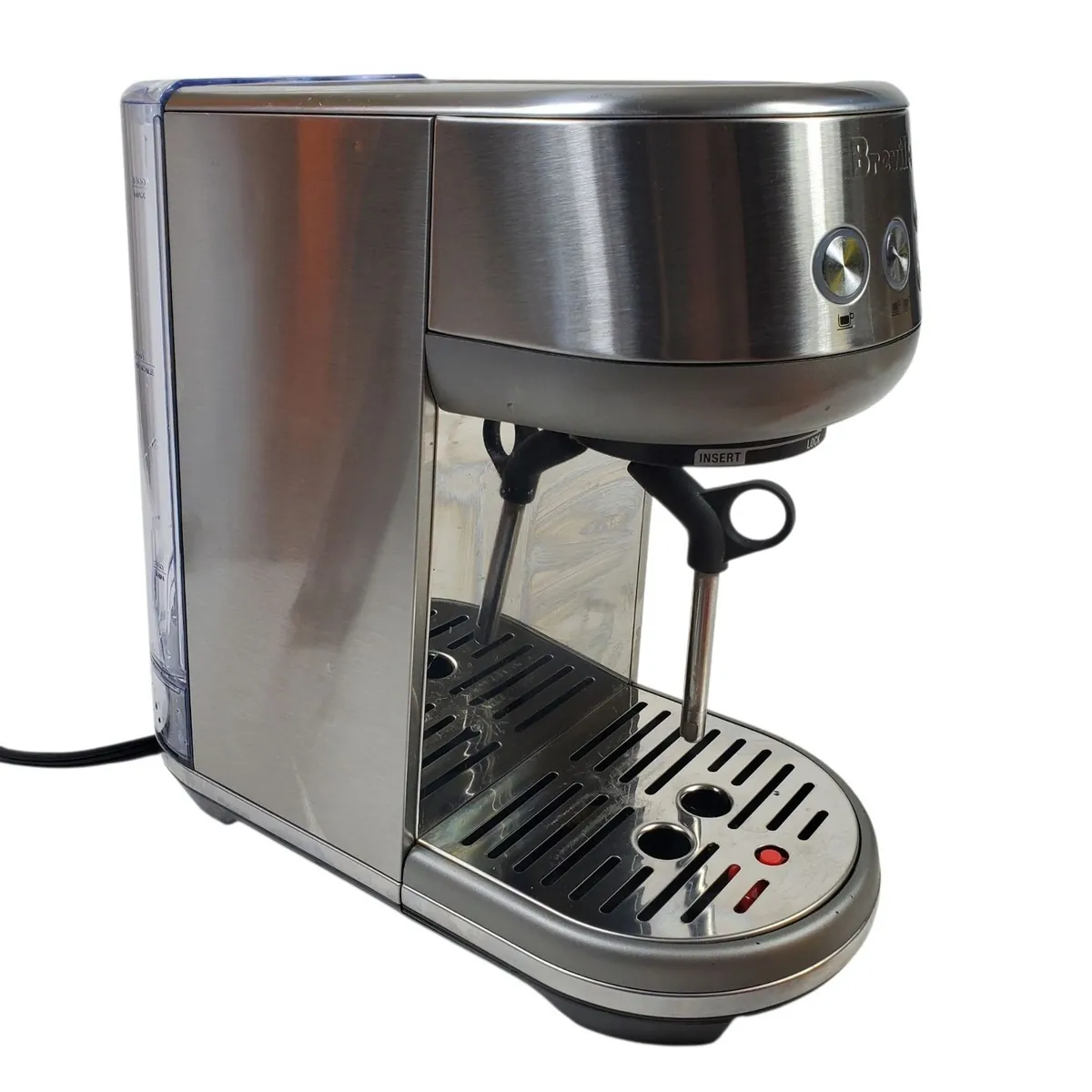
Fixing a persistent pump issue requires either time for deep cleaning or access to specific replacement parts. If the problem is caused by severe scale buildup, a technician will perform a high-pressure chemical flush that exceeds the power of standard home kits. This process is time-intensive and often requires the machine to be disassembled to reach the primary heating block.
When the pump itself has failed, the repair involves replacing the internal vibration pump unit. This component is specific to your machine’s model number, and you can find the correct part by checking the label on the bottom of your unit. A replacement pump is a moderate expense compared to buying a new machine, but it demands technical skill to install safely.
Never attempt to open the outer casing, as the internal capacitors can hold a lethal electric charge even when the machine is unplugged. Always ask for a quote from an authorized service center before committing to a repair; this cost depends on the age of the machine and the availability of parts in your region.
Related guides
Frequently asked questions
How long does a pump usually last?
A typical espresso machine pump has a finite lifespan under normal home use. This lifespan depends heavily on your descaling frequency and the hardness of your water. You can find the expected maintenance schedule in your machine’s manual, which often lists the exact number of months between descaling cycles for different water quality levels.
Is it safe to use vinegar for descaling?
It’s safe to use a white vinegar solution, provided you follow the ratio of one part vinegar to one part water. You must perform several rinse cycles with fresh water afterward to remove the lingering smell and taste. Check your manual first, as some manufacturers specify that only proprietary descaling powder should be used to avoid voiding the warranty.
Why does my machine make a loud noise but no water comes out?
This loud, vibrating noise indicates the pump is running but can’t prime because of an air block or a total blockage in the lines. The sound is the motor working without resistance from the water. You should turn the machine off immediately to prevent the pump from overheating and causing permanent internal damage.
Can I fix a broken solenoid valve myself?
You can’t safely fix a broken solenoid valve because it requires opening the machine’s electrical housing. This work involves high-voltage components that are dangerous to handle without specialized training and equipment. If you suspect the solenoid is the issue, take the machine to a professional repair shop to avoid the risk of electric shock.
How do I know if my water tank is seated correctly?
The water tank is seated correctly when you hear a soft click and the base of the tank sits flush against the machine’s frame. If you notice a small puddle forming under the machine, the tank is likely misaligned or the valve gasket is damaged. Always verify the tank is pushed all the way in before you attempt to brew.
Does it matter if I use filtered water?
Using filtered water is the single most effective way to prevent pump failure caused by scale buildup. It reduces the frequency of necessary descaling and keeps the internal lines clear of debris. Check your local water utility report to see if your tap water is classified as “hard,” which is the main factor determining how quickly your machine will clog.
Conclusion
If you have tried priming the pump and replacing the filter but the machine still refuses to draw water, the issue is likely a mechanical failure that requires professional inspection. Avoid forcing the machine to run for more than a few minutes, as repeated attempts with a dry pump will cause the motor to burn out. Contact the manufacturer’s support line or a local appliance repair technician to diagnose the specific component that has failed.
