
The best water pressure booster pumps are centrifugal models that match your flow rate and total dynamic head requirements to increase low pressure. These units force water through an impeller to provide a steady stream for your home. Choosing the correct size ensures you don’t overwhelm your pipes or cause the motor to cycle too frequently.
Water pressure booster pump types
| Pump Type | Best For | Concrete Example |
|---|---|---|
| Centrifugal | General residential supply | Grundfos Scala2 |
| Multistage | High-rise or multi-story | Goulds e-HM series |
| In-line | Specific appliance boost | Watts Instant Hot |
| Variable speed | Consistent pressure needs | Franklin Electric SubDrive |
Centrifugal pumps are the workhorses for standard homes with low municipal pressure. They rely on a single impeller to move water, making them affordable and easy to repair. If your home has fewer than three bathrooms, this is your baseline choice.
Multistage pumps feature a series of impellers stacked in a single housing. Each stage adds pressure to the water as it passes through. Use these if you have a three-story home or a long pipe run from a well, as they provide the head pressure required to overcome gravity.
In-line pumps install directly onto your existing plumbing lines. They’re ideal for fixing a weak shower head or a sluggish kitchen faucet without modifying the entire house system. Don’t install these on a main line, as they lack the flow volume to support multiple fixtures simultaneously.
Variable speed pumps use a drive to adjust motor RPM based on real-time demand. If you have a large family where multiple showers run at once, this is the only way to avoid pressure drops.
Mistakenly installing a constant-speed pump in a large home often leads to “cycling,” where the pump turns on and off rapidly. This shortens the motor lifespan by years and creates annoying water hammer in your pipes. If your household demand fluctuates wildly throughout the day, pay the premium for a variable speed drive to ensure steady flow and lower energy consumption.
Centrifugal booster pumps
Centrifugal pumps are the most common choice for residential homes suffering from low utility pressure. These units use a rotating impeller to move water, creating the necessary force to push it through your home’s existing pipe network. They suit homeowners who have a consistent, low-pressure issue across all faucets rather than a problem isolated to a single appliance.
If your pressure drops only when you run the dishwasher, the issue is likely a localized clog or a restricted shut-off valve rather than a supply problem. In that case, a pump will only mask the symptom while the underlying plumbing bottleneck remains. You only need a booster pump if your static pressure—measured when no taps are open—is consistently below 40 PSI.
Provides a steady increase in pressure for the entire house.
Operates quietly compared to older piston-style systems.
Maintains a constant flow rate during peak usage times.
If you have a 3/4-inch main service line, a pump with a 1-inch inlet and outlet is usually recommended to prevent flow restriction. For example, a standard 1/2-horsepower centrifugal pump can often lift water pressure by 20 to 30 PSI, though the exact increase depends on your household’s current demand and the distance from the pump to the furthest fixture.
Many installers make the mistake of sizing a pump based solely on the number of bathrooms. Instead, calculate the total flow rate by adding the gallon-per-minute requirement of every fixture you expect to use simultaneously. If your calculation exceeds the pump’s rated capacity, the system will cavitate, causing the impeller to vibrate and eventually shred the internal seals.
Check your utility meter before buying. If the meter itself is the bottleneck, the pump will create a vacuum that can collapse older, brittle pipes. If you see the meter dial spinning rapidly but the pressure remains low, the pump will successfully boost your flow. If the meter barely moves while the pressure is low, the problem is a supply-side restriction that a pump can’t fix.
Multistage booster pumps
Multistage pumps feature multiple impellers arranged in a series, which allows them to build higher pressure than single-stage models. These are the standard choice for larger homes or buildings where water must be pushed to higher floors or across long horizontal distances. They work well for people who find that their upstairs bathrooms lose pressure whenever a downstairs tap is opened.
If your home has three or more levels, a multistage unit is necessary to ensure the top floor receives adequate flow. You must verify that your home’s plumbing materials are rated for the increased pressure, as older galvanized pipes may leak under higher stress. For instance, a 1-horsepower multistage pump can comfortably maintain 50 PSI in a two-story home, provided the total demand doesn’t exceed the pump’s rated gallons-per-minute capacity.
A common mistake is selecting a pump based solely on the total number of floors rather than peak demand. If you have four bathrooms and a high-flow irrigation system, a standard residential unit will cycle too frequently and burn out its motor. Calculate your peak demand by adding the flow rate of every fixture that might run simultaneously. If that number exceeds 15 gallons per minute, move to a commercial-grade multistage pump to prevent premature mechanical failure.
Distinguish your needs by checking your static pressure at the highest fixture. If you have less than 30 PSI at the top floor, a multistage pump is the correct solution. If you have adequate pressure but experience drops only when multiple faucets open, the issue is likely your pipe diameter, not the pump. In that specific case, a booster pump will only stress your aging joints and increase the risk of a major leak.
Always install a pressure-reducing valve after the booster if your static pressure exceeds 80 PSI. Exceeding this limit will damage your water heater and shorten the lifespan of every faucet cartridge in the house. When in doubt, choose a variable-frequency drive model. It adjusts the motor speed to match your current demand, which can reduce electricity consumption compared to a fixed-speed unit.
In-line booster pumps
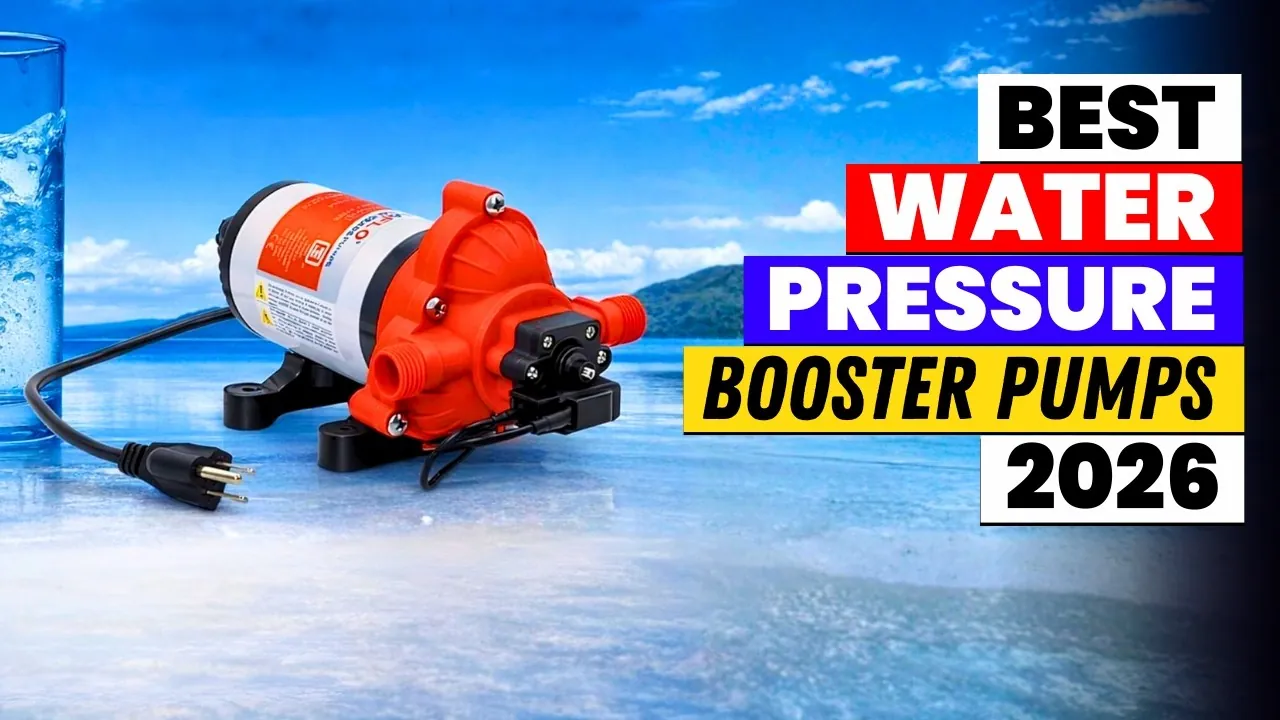
In-line booster pumps are compact units designed to be installed directly into a specific pipe leading to a single appliance or bathroom. They suit people who have perfect water pressure everywhere except for one specific shower or a tankless water heater that requires a minimum flow rate to ignite. These pumps are much smaller than whole-house systems and often lack the power to supply an entire residence.
- Solves pressure problems for one specific fixture or appliance.
- Installs easily in tight spaces under sinks or behind panels.
- Activates only when the specific fixture is turned on.
You should choose an in-line model if your main house pressure is adequate but you have a localized bottleneck. If you use one for a shower, ensure it’s rated for the flow rate of your showerhead, which is typically 2.5 gallons per minute in the US. A small 1/6-horsepower in-line pump can effectively raise the pressure for that single shower without needing to modify your entire main water line.
Variable speed booster pumps
Variable speed pumps adjust their motor frequency to match the exact demand of your home at any given moment. They suit homeowners who want a constant, rock-solid pressure regardless of how many taps are open at once. Unlike traditional pumps that switch fully on or off, these modulate their speed to save electricity and reduce mechanical noise.
Eliminates pressure fluctuations when multiple faucets are used. Reduces overall electricity consumption by running at lower speeds. Extends the lifespan of the pump by avoiding frequent start-stop cycles.
If you have a large family and often use the washing machine, dishwasher, and shower simultaneously, this type prevents the pressure drops that usually occur during these events. A common mistake is installing a pump that’s too powerful for a small home, which can cause pipes to rattle or “water hammer.” If your home is under 2,000 square feet, a smaller 0.5-horsepower variable speed unit is usually sufficient for residential needs.
You can determine if your system is undersized by checking the pressure gauge during a peak demand period. If the needle drops below 30 PSI while two showers run, your current pump lacks the necessary flow rate. In this case, a variable speed upgrade will restore consistent flow without requiring a complete replumb of your main supply lines.
However, avoid these pumps if your home relies on a low-yield well. A variable speed pump may draw water faster than your well can replenish its supply, leading to a dry run that destroys the motor. If your well produces fewer than five gallons per minute, stick to a traditional pump paired with a large pressure tank. The tank acts as a buffer, allowing the pump to rest while you use stored water.
When sizing your unit, follow the rule of thumb for total dynamic head. If your home sits more than 50 feet above the water source, add a 10% safety margin to your horsepower requirement to compensate for gravity. Otherwise, you risk premature motor burnout from constant overexertion.
Other booster pump options
Submersible booster pumps sit directly inside your cistern or water tank. They’re ideal for homes relying on rainwater harvesting or gravity-fed storage rather than municipal lines. Because these units operate underwater, they’re naturally quieter than surface-mounted models. If your tank is located within 50 feet of the home, choose a submersible pump to eliminate the need for a dedicated pump house or external enclosure.
Jet booster pumps use a venturi effect to pull water from deep or difficult sources. Use these if your water source sits at a lower elevation than your home or requires a suction lift of more than 20 feet.
Many homeowners make the mistake of choosing a standard centrifugal pump for these deep-well applications. This error forces the pump to cavitate, which destroys the internal impeller and leads to total system failure within a single season. Always verify your total dynamic head before selecting a jet model.
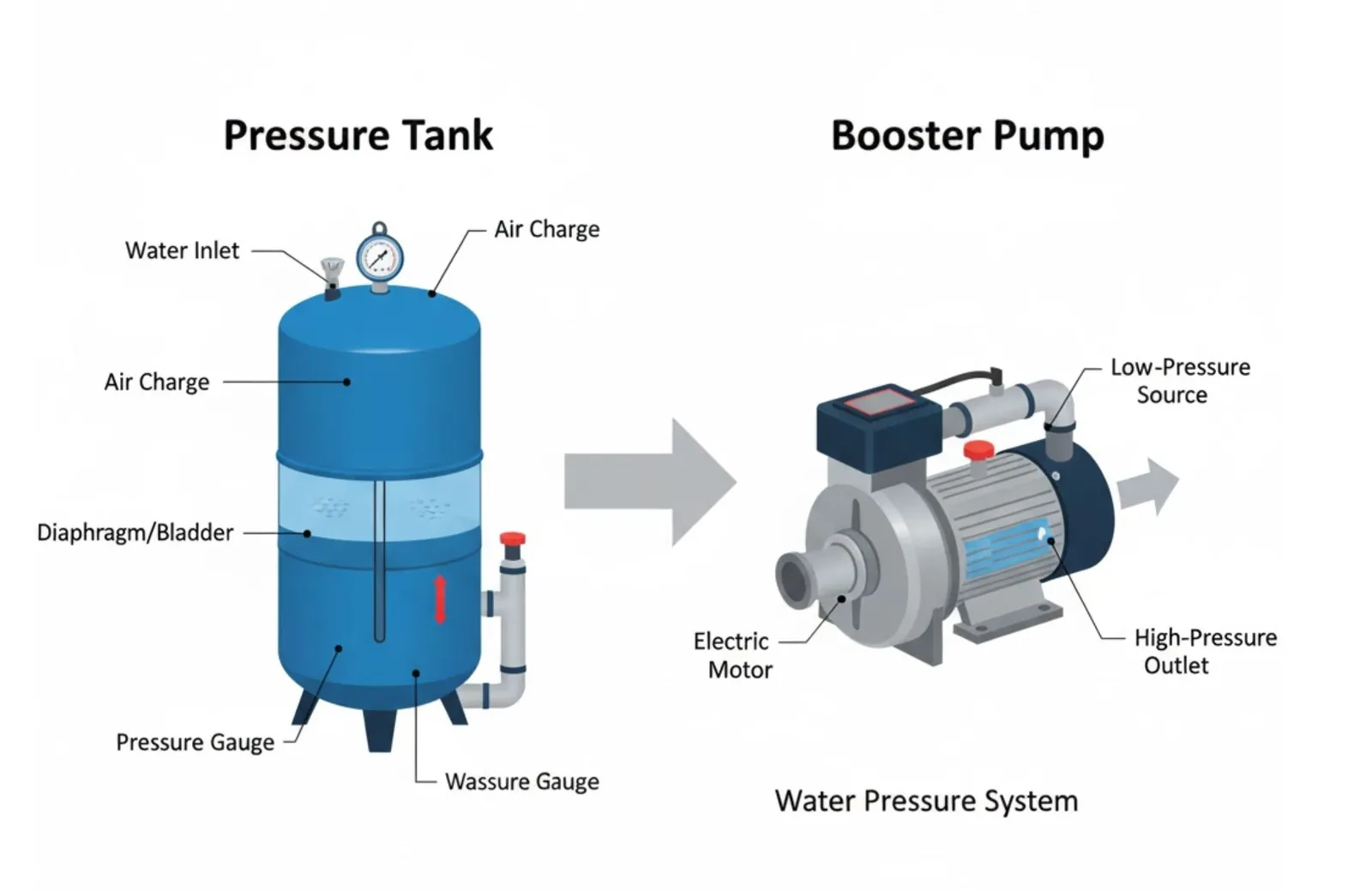
Pressure tank systems include a bladder tank that stores a reserve of pressurized water. These are best for households that want to reduce pump cycling by keeping a volume of water ready for immediate use.
If your pump kicks on every time someone flushes a toilet or washes their hands, you’re burning out your motor prematurely. A 20-gallon tank is usually sufficient for a standard three-bedroom home. If your system pressure drops below 30 PSI, check the air pre-charge in your tank before calling a technician.
How to choose between them
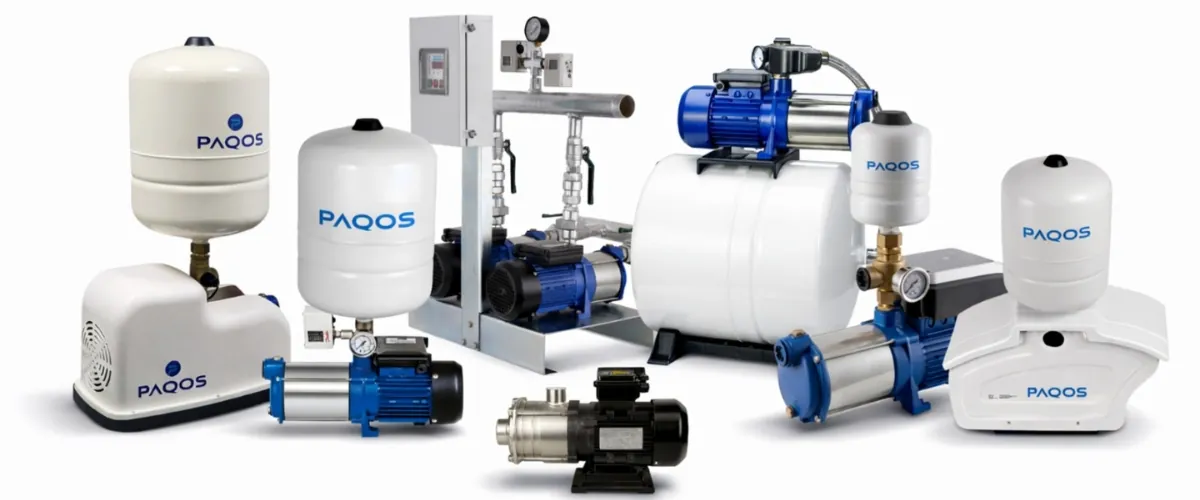
Deciding which pump is yours requires looking at your home’s current plumbing and your daily usage patterns. If you need a boost for the whole house, choose a centrifugal or variable speed model based on how much you value constant, steady pressure versus a lower upfront cost.
If your issue is localized to one shower or a single appliance, an in-line pump is the most efficient choice because it avoids unnecessary plumbing work. If you’re dealing with a multi-story house or a storage tank, you must look at multistage or submersible options to ensure the water reaches the highest point in your home.
You can combine an in-line pump with a whole-house unit if you have one very difficult fixture, but generally, picking one high-quality whole-house pump is cleaner and easier to maintain. Most systems are designed to operate independently, so you don’t need to worry about them conflicting unless you have multiple pumps trying to draw from the same small-diameter pipe.
Frequently asked questions
Can I install a water pressure booster pump myself?
You can install a pump yourself if you’re comfortable with basic plumbing and follow local building codes. Most units require shutting off the water supply and installing the pump using threaded unions. You should hire a licensed plumber if you aren’t confident in creating a watertight seal.
How long do water pressure booster pumps last?
Most booster pumps last between 7 and 10 years when properly maintained in a clean, dry location. Lifespan depends on your water quality, as hard water or high sediment can clog impellers and ruin seals. Check your manufacturer’s documentation for the recommended maintenance schedule, including cleaning the intake screen.
Is it safe to use a pump on old galvanized pipes?
It’s generally not safe to increase pressure on old galvanized pipes because the force can cause corroded joints to burst. Inspect your pipes for rust or thinning before installation, especially at connections. If your home has iron piping from before the 1960s, have a plumber verify system integrity first.
What happens if the pump runs dry?
A pump will suffer permanent motor or seal damage if it runs without water. Most modern pumps include “dry-run protection” to automatically shut the motor off if water flow stops. If your model lacks this feature, you must install a separate flow switch or low-pressure cutoff valve.
Does it matter if I have a tankless water heater?
Yes, a pump is necessary because tankless water heaters require a specific minimum flow rate to activate the heating element. Low pressure causes the heater to cycle, leading to inconsistent water temperatures. Match your pump’s output to exceed the minimum flow rate listed in your water heater’s manual.
How much electricity does a booster pump use?
Electricity consumption typically ranges from 0.5 to 1.5 kilowatts while the pump is actively running. Since most residential pumps only run when a tap is open, daily usage depends on your household water consumption. Variable speed pumps are most efficient, as they only use power required for current demand.
Conclusion
Start by checking your home’s current water pressure at the outdoor spigot using a simple pressure gauge to determine your baseline. If your reading is below 40 PSI, a booster pump will likely provide a noticeable improvement in your daily water flow.