
The Nusselt number is defined as the ratio of convective to conductive heat transfer across a fluid boundary. Engineers apply this dimensionless value to characterize the efficiency of heat transfer in systems like industrial heat exchangers or engine cooling channels. By comparing the heat transfer coefficient to the fluid’s thermal conductivity, the formula provides a way to predict how well a fluid moves heat away from a surface.
Key Takeaways
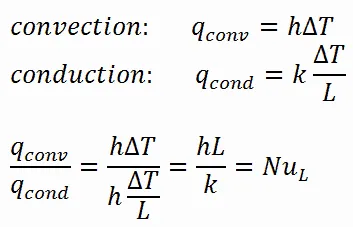
- The Nusselt number serves as a critical measure of convective heat transfer intensity in fluid mechanics.
- A value of one indicates that heat transfer is dominated by pure conduction through the fluid layer.
- Higher values signify that fluid motion, such as turbulence, is significantly enhancing the heat exchange process.
- You must determine the characteristic length and fluid properties accurately to ensure your calculations remain valid.
- Use the Nusselt number as a primary design parameter when selecting materials or optimizing cooling systems for thermal management efficiency.
Understanding Nusselt Number Definition and Formula
At its core, the Nusselt number expresses the enhancement of heat transfer due to convection relative to conduction across a fluid layer of a specific thickness. It’s defined mathematically as the product of the convective heat transfer coefficient and a characteristic length, divided by the thermal conductivity of the fluid. This relationship allows for the non-dimensionalization of complex heat transfer problems, enabling engineers to compare systems of different scales.
The standard formula for the Nusselt number is expressed as: Nu = (h * L) / k
In this equation, h represents the convective heat transfer coefficient, L is the characteristic length of the geometry, and k stands for the thermal conductivity of the fluid. Because this number is dimensionless, it remains consistent regardless of the unit system used, provided all variables are converted into a coherent set of units. The National Institute of Standards and Technology provides extensive data on the thermal properties of various fluids, which are essential for calculating the denominator in this equation.
Variables in the Equation
To calculate the Nusselt number effectively, you must define each variable based on the physical constraints of your system. Errors often arise from misidentifying the characteristic length or using the thermal conductivity of the solid surface instead of the fluid.
| Variable | Definition | Typical Unit (SI) |
|---|---|---|
| Nu | Nusselt Number | Dimensionless |
| h | Heat Transfer Coefficient | W / (m²·K) |
| L | Characteristic Length | m |
| k | Fluid Thermal Conductivity | W / (m·K) |
When selecting the characteristic length, consider the geometry of the flow path. For a pipe, the diameter is the standard length. For a flat plate, the distance from the leading edge to the point of interest is typically used. Ensuring these values are precise is vital for obtaining a reliable dimensionless heat transfer coefficient.
How Is the Formula Used?
Engineers use the Nusselt number primarily to solve for the unknown convective heat transfer coefficient. Once you establish the Nusselt number through empirical correlations or experimental data, you can rearrange the formula to find the heat transfer rate. This is particularly useful when designing systems where you need to calculate the total heat load that a specific cooling fluid must dissipate to prevent overheating.
Pro Tip: Always verify the flow regime—laminar or turbulent—before selecting your correlation, as the Nusselt number behavior changes drastically based on the Reynolds number of the fluid flow.
What Are the Common Empirical Correlations?
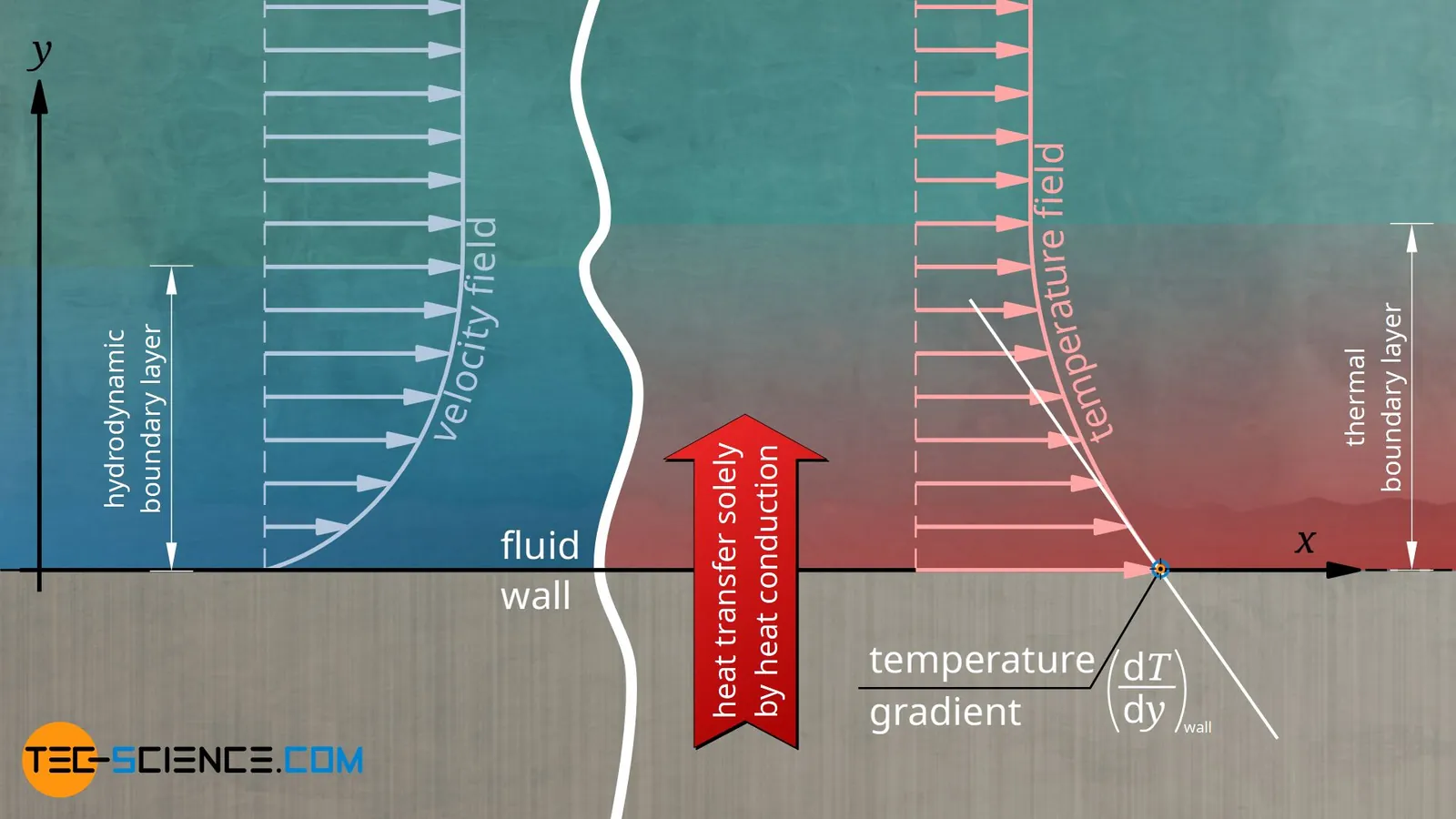
Because calculating the Nusselt number from first principles requires solving complex boundary layer equations, practitioners rely on established empirical correlations. These correlations relate the Nusselt number to other dimensionless groups like the Reynolds number and the Prandtl number.
- Dittus-Boelter Equation: Used for turbulent flow in pipes.
- Sieder-Tate Equation: Accounts for viscosity variations in liquids.
- Churchill-Bernstein Equation: Applicable for flow over a cylinder.
- Gnielinski Correlation: An improved model for pipe flow heat transfer.
Using these standardized empirical models allows for rapid iteration during the design phase of thermal systems. Always check the range of validity for these correlations, as they’re often restricted to specific ranges of Reynolds and Prandtl numbers.
Does Geometry Affect the Result?
Geometry plays a fundamental role in determining both the characteristic length and the flow behavior. A fluid flowing through a narrow circular tube will experience different boundary layer development compared to a fluid passing over a sphere or a flat plate. Consequently, the correlation you choose must match the physical configuration of your system.
Warning: Applying a correlation designed for internal pipe flow to external flow over an object will result in significant calculation errors and potentially dangerous thermal design outcomes.
Factors Influencing Heat Transfer Efficiency
Several physical factors influence the magnitude of the Nusselt number. When the fluid velocity increases, the boundary layer thickness typically decreases, which enhances the heat transfer rate and raises the Nusselt number. Similarly, the physical properties of the fluid, such as its viscosity and specific heat capacity, dictate how effectively it can transport thermal energy.
- Fluid Velocity: Higher flow rates generally increase turbulence and convective intensity.
- Surface Roughness: Irregular surfaces can induce localized turbulence, boosting heat transfer.
- Temperature Gradients: Large differences between the surface and the fluid can change fluid properties like viscosity.
- Flow Configuration: Internal flow versus external cross-flow dictates the development of thermal boundary layers.
Focusing on these thermal design variables allows engineers to maximize cooling potential without unnecessarily increasing pumping power.
How to Troubleshoot Calculation Errors
If your experimental results don’t match your theoretical predictions, start by checking your unit consistency. In many cases, the fluid properties are taken at the wrong temperature, such as the bulk temperature instead of the film temperature. The film temperature is typically the average of the surface temperature and the bulk fluid temperature, and it’s the standard reference point for evaluating fluid properties.
- Verify property values against current standards.
- Confirm the characteristic length matches the physical geometry exactly.
- Ensure the correlation applied is appropriate for your flow regime.
- Double-check that the flow is indeed fully developed.
Maintaining data integrity throughout your analysis is the only way to ensure the safety and performance of your thermal system.
Comparison of Flow Regimes
The behavior of the Nusselt number changes significantly as the flow transitions from laminar to turbulent. In laminar flow, heat transfer is more dependent on conduction, whereas turbulent flow relies on the mixing of fluid particles to transport heat.
| Flow Regime | Nusselt Number Trend | Driving Mechanism |
|---|---|---|
| Laminar Flow | Lower values | Molecular conduction |
| Transition Flow | Rapidly changing | Mixed mechanisms |
| Turbulent Flow | Higher values | Turbulent eddy mixing |
Understanding these flow regime characteristics is essential for selecting the right equipment, such as pumps or heat sinks, to meet your cooling requirements.
Why Are Dimensionless Numbers Important?
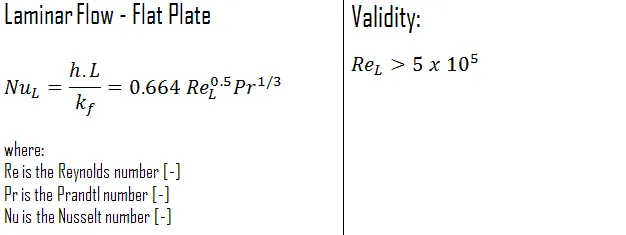
Dimensionless numbers allow for the scaling of experiments. If you perform a test on a small-scale model, you can often predict the performance of a full-scale industrial component by ensuring the dimensionless numbers, such as the Nusselt, Reynolds, and Prandtl numbers, remain consistent. This practice is known as dynamic similarity and is a cornerstone of modern fluid dynamics and heat transfer engineering.
Pro Tip: When documenting your findings, always list the dimensionless groups used, as they provide a universal language that other engineers can interpret regardless of the specific hardware or location.
Related guides
- Foosball Glossary: Key Terms and Definitions Explained in 2026
- 5 Best Glue for Floating Engineered Wood Flooring Picks in 2026
Frequently Asked Questions
What is the difference between Nusselt and Biot numbers?
The Nusselt number describes heat transfer from a fluid to a solid surface, focusing on the fluid side. The Biot number compares the internal thermal resistance of a solid to the external convective resistance at its surface. While they appear similar, they serve different purposes in thermal analysis.
Why is the Nusselt number always positive?
Because the Nusselt number represents the ratio of convective heat transfer to conductive heat transfer, both of which are treated as positive magnitudes in this context, the result must be positive. A negative value would imply a reversal of the fundamental physical definitions of heat flow and thermal conductivity used in the dimensionless ratio.
How does the Prandtl number affect the Nusselt number?
The Prandtl number represents the ratio of momentum diffusivity to thermal diffusivity. It acts as a bridge between the velocity profile and the temperature profile in a fluid. Most correlations for the Nusselt number include the Prandtl number to account for how fluid properties influence the thickness of the thermal boundary layer relative to the momentum boundary layer.
Can the Nusselt number be less than one?
In theory, the Nusselt number can’t be less than one for a surface in contact with a fluid. A value of one represents the limit where the heat transfer occurs solely by conduction through a stagnant layer of fluid of thickness L. Any fluid motion, however slight, typically increases the heat transfer rate, pushing the value above one.
Does the Nusselt number depend on the temperature?
Yes, it depends on temperature indirectly. The properties of the fluid—such as thermal conductivity, viscosity, and density—are temperature-dependent. Since these properties are used to calculate the Nusselt number, changes in the operating temperature will alter the values of these properties, thereby changing the calculated Nusselt number for a given flow condition.
Conclusion
To continue improving your thermal engineering capabilities, identify the specific flow regime of your current project and select the most appropriate correlation for your geometry. Consult standard handbooks or verified technical databases to ensure the fluid properties you use are accurate for your operating temperature. By consistently applying these dimensionless methods, you’ll significantly enhance the precision of your heat transfer analysis and system design.
