
A cone crusher is a machine used to reduce the size of rocks and minerals by squeezing material between an eccentric rotating head and a bowl liner. If you’re feeding hard, abrasive ore, use a coarse crushing chamber; if you need finer output, select a chamber with a tighter gap setting.
Quick Facts for Rock Crushing
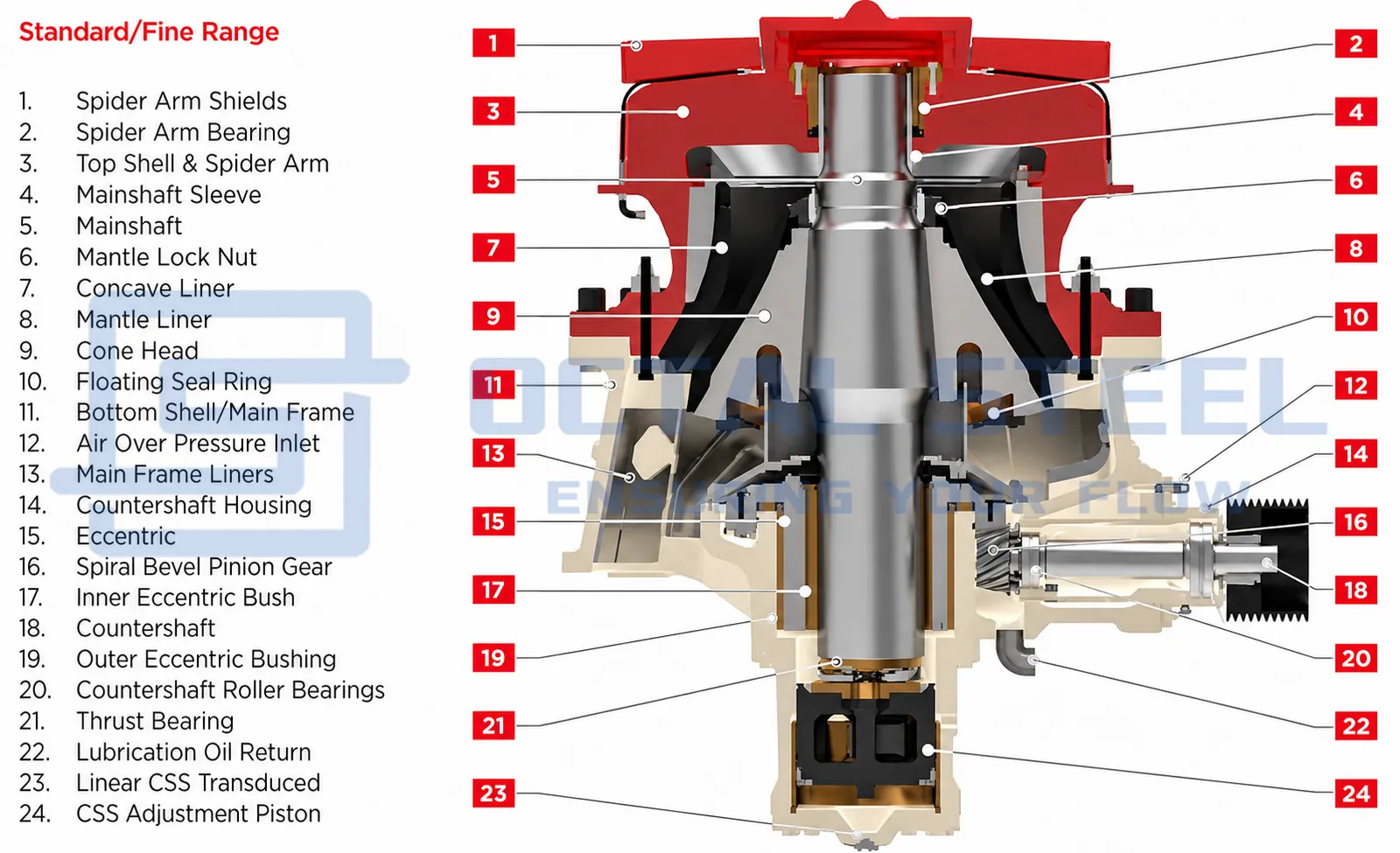
The gap between the mantle and the bowl liner is called the closed side setting. Adjust this setting based on your target product size; a tighter gap produces finer material but increases the risk of stalling the motor under heavy loads.
Hard materials like granite require a slower eccentric speed to avoid excessive wear on the manganese liners. If you’re processing abrasive river rock, drop your speed by 10% to extend the life of your wear parts by roughly three months.
Always check the feed size to ensure it matches your specific chamber design. If the rock is larger than the feed opening, it will bridge across the top, forcing you to stop production to clear the jam manually.
Lubrication oil must be cooled to maintain viscosity. If the temperature exceeds 160°F, the machine will trigger an automatic emergency shutdown to prevent catastrophic bearing failure.
Why the Crushing Mechanism Works
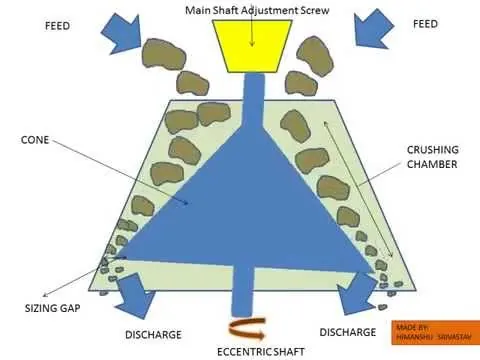
A cone crusher reduces rock size through the principle of inter-particle compression. The machine features a central vertical shaft that supports a mantle, which rotates inside a stationary bowl lined with manganese steel. As the mantle moves in an eccentric orbit, it alternately approaches and retreats from the bowl wall. This creates a crushing action that breaks stones as they fall through the opening.
The material enters from the top and travels downward through the chamber, becoming smaller with each cycle. Because the crushing occurs through compression rather than impact, the process generates less dust and produces a cubical product shape. This is critical for aggregate production where particle geometry determines the strength of the final concrete or asphalt mix.
You must adjust the discharge setting based on the hardness of the rock. If the material is brittle, the machine operates efficiently at higher speeds; if the rock is ductile or tough, you must reduce the speed to prevent stalling.
Watch the feed rate closely. If you see the motor amperage spiking, the chamber is likely overfilled, which forces the mantle to work against a packed bed rather than individual stones. This inefficiency consumes excess power and risks a mechanical trip.
If your final product shows too many flat or elongated particles, your closed-side setting is likely too wide. Tighten the gap by three-millimeter increments until the discharge reaches the desired cubical ratio. Conversely, if you notice excessive fines or dust, your setting is too tight, causing the rock to be crushed repeatedly. Back the setting off until the particle distribution stabilizes.
When the Crushing Results Change
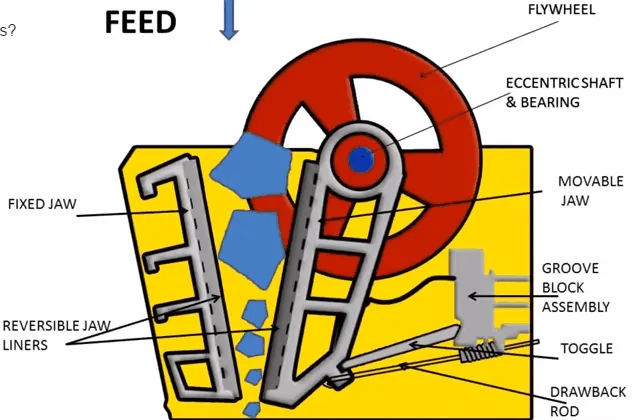
The output size and machine efficiency fluctuate based on material properties and mechanical setup. You must adjust your parameters whenever the feed composition shifts to prevent catastrophic equipment failure.
If your feed moisture exceeds 4%, reduce the feed speed by 15% to prevent internal bridging. Failing to throttle the input in these conditions forces the motor to draw excess current, which often triggers an emergency shutdown.
When processing abrasive, high-silica rock, monitor the manganese liner wear daily. If the profile loses its teeth, the crushing force dissipates, leading to an inconsistent product size that fails downstream specifications.
If you’re aiming for a finer product, tighten the discharge gap in 2mm increments while checking the motor load. Never close the gap beyond the manufacturer’s minimum recommended setting to avoid internal contact.
Sticky clay requires pre-screening before the material enters the primary chamber. If you skip this step, the clay will pack the crushing cavity, costing you hours of manual labor to clear the blockage.
How to Operate a Cone Crusher
Verify the lubrication oil level and temperature before starting the main motor to prevent bearing damage. If the oil temperature is below 60 degrees Fahrenheit, run the oil heater for fifteen minutes to ensure proper viscosity.
Start the crusher while the chamber is empty to ensure the eccentric assembly moves freely without resistance. Starting under load can trip the motor or shear the drive pins.
Begin feeding material slowly, checking the motor current to confirm the load stays within the rated limits. If the amperage spikes, reduce the feed rate immediately to prevent a stall.
Adjust the closed side setting by moving the bowl or mantle until the desired product size is achieved. Perform this adjustment only while the machine is running to avoid binding the threads.
Monitor the rock level in the feed hopper, keeping it full to maintain a choke-fed condition for uniform crushing. If the hopper runs empty, the product shape will degrade and liners will wear unevenly.
Inspect the discharge conveyor for oversized stones. If you see large pieces, the setting has drifted or liners are worn.
Common Mistakes That Ruin Crushing
Feeding non-crushable metal into the chamber triggers the hydraulic relief system or damages internal components. You must install a tramp iron magnet over the feed conveyor to catch stray bolts or teeth before they enter the machine. If you hear a metallic clatter, shut down the feed immediately rather than waiting for the relief system to trip.
Running the machine without a full hopper leads to uneven wear and poor product shape. Maintain a constant choke-fed level, covering the mantle by at least twelve inches. This ensures the rock crushes against itself rather than the steel liners.
Ignoring the oil pressure gauge causes main shaft bearings to seize within minutes. If the pressure drops below the manufacturer’s minimum, cut the power instantly.
Using the wrong liner profile for your rock hardness causes the crusher to work harder than necessary. Match the profile to the material’s silica content.
Frequently Asked Questions
How long do cone crusher liners last?
Liners typically last between 500 and 2,000 operating hours, depending on the silica content of the rock. You can check the remaining thickness by looking at the wear patterns on the mantle face during routine maintenance. If the material is highly abrasive, expect the lower end of that range.
Is it safe to crush wet material?
It’s generally unsafe to process wet, sticky material because it causes the crushing chamber to plug up. This blockage forces the hydraulic system to work under extreme pressure, which can damage the main seals. Always dry or screen out fine clay before it enters the machine.
What happens if the crusher stops under load?
The machine won’t restart until the crushing chamber is completely emptied by hand. Trying to force a start while full puts massive strain on the electric motor and drive belts. Use a hydraulic relief valve or a manual clean-out process to clear the rocks first.
Does the feed size matter?
The feed size must be smaller than the feed opening of your specific chamber model to prevent bridging. If the rocks are too large, they will sit on top of the mantle instead of entering the crushing zone. Check your equipment manual for the maximum allowable feed dimension.
How often should I change the oil?
Oil changes are required every 500 to 1,000 hours of operation to remove metal particles and moisture. Check the condition of the oil using an analysis kit at each interval. If the oil appears dark or contains metallic flakes, change it immediately to protect the internal bearings.
Can I change the product size while running?
You can adjust the discharge setting while the machine is running, provided it’s equipped with a hydraulic adjustment system. This allows for small changes to compensate for liner wear without stopping production. Never attempt to adjust the setting manually while the machine is in operation.
Conclusion
Proper maintenance of the crushing chamber and consistent monitoring of the feed rate are the most effective ways to ensure the longevity of your equipment. By keeping the machine choke-fed and the lubrication system clean, you maintain both the quality of your product and the mechanical health of the crusher.
