
The most effective devices for stopping pipe noise are water hammer arrestors installed near high-speed valves, which use a pressurized air chamber to absorb shock waves. These units prevent pipe movement and mechanical stress by cushioning the impact of sudden water flow stops.
Common types of water hammer arrestors
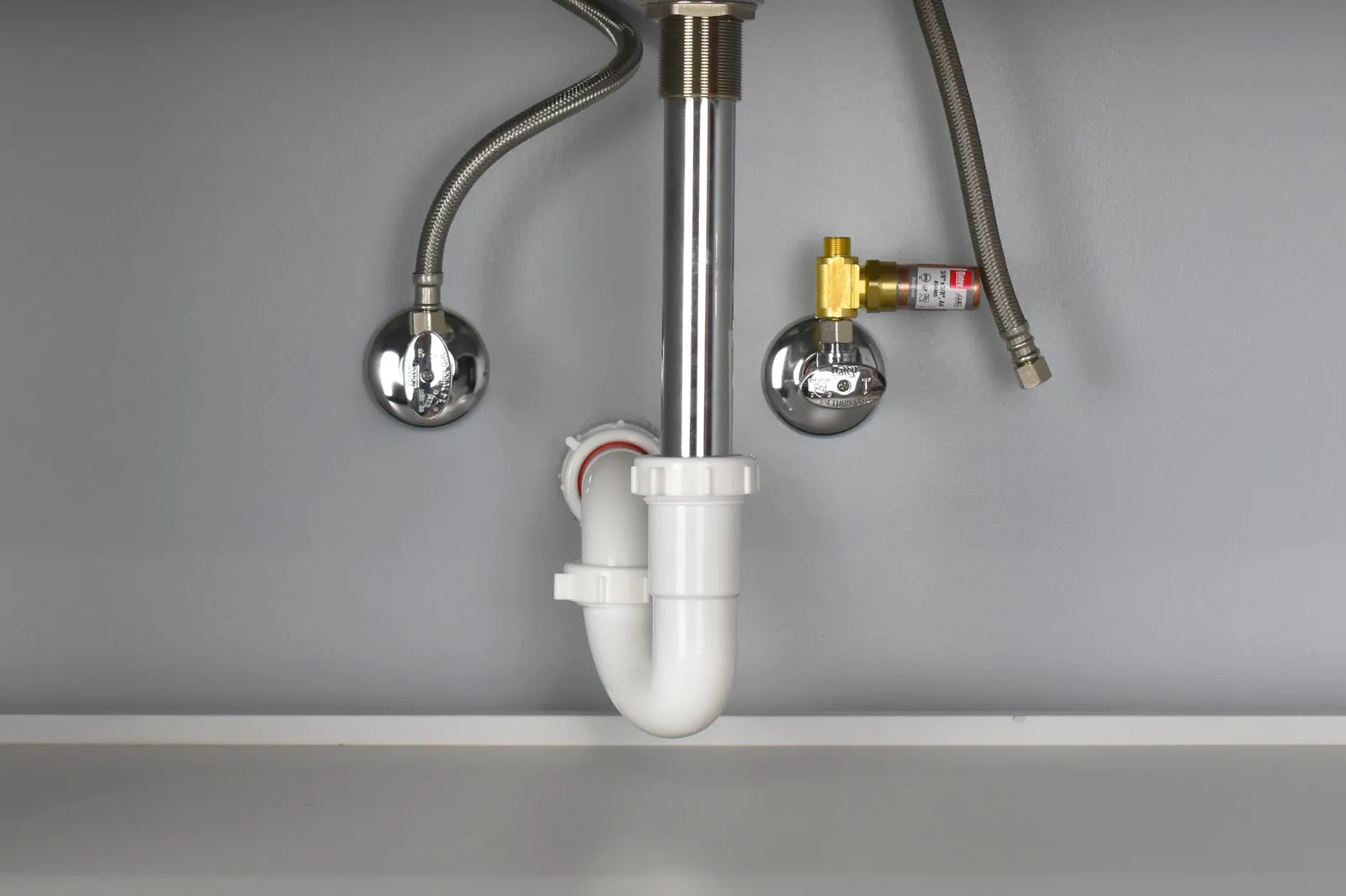
| Name | Best for | Example |
|---|---|---|
| Tee-style arrestor | Washing machines | Threaded hose connection |
| In-line arrestor | Tight spaces | Compression fitting |
| Multi-fixture arrestor | Whole branch lines | Large capacity canister |
| Solder-type arrestor | New installations | Copper pipe fitting |
| PEX-style arrestor | Modern PEX systems | PEX crimp connection |
Choose a tee-style arrestor when you hear a sharp bang immediately after a washing machine solenoid valve closes. These screw directly onto the existing faucet threads, providing an instant cushion for the localized pressure spike. If you lack the room for a tee, an in-line arrestor fits into the supply line itself. Use these only when the pipe run is short and accessible for future maintenance.
Select a multi-fixture arrestor if you notice pipe rattling across multiple rooms. These canisters are sized by the total number of fixture units they serve. A single unit rated for six fixtures can protect an entire bathroom group, provided it’s installed at the end of the main branch line.
Solder-type units are the gold standard for longevity in copper systems. Because they become a permanent part of the plumbing, they eliminate the risk of O-ring leaks common in threaded models. However, you must wrap the arrestor body in a wet rag during soldering to prevent heat damage to the internal piston seal.
If your home uses PEX tubing, stick to PEX-style arrestors with integrated crimp rings. Mixing materials often creates galvanic corrosion at the connection point. If you’re unsure which type to buy, check the diameter of your supply line.
A 1/2-inch pipe requires a standard arrestor, while anything feeding a main trunk line typically demands a 3/4-inch unit. Installing a unit that’s too small for the pipe diameter will fail to absorb the energy, leaving your joints vulnerable to slow, hidden leaks.
Tee-style arrestor
A tee-style arrestor attaches directly to the hose bib or the shut-off valve of a washing machine or dishwasher. It’s the most common choice for homeowners because it requires no special tools to install. You simply screw it onto the existing threaded outlet and then attach your supply hose to the top of the device.
Absorbs shock at the source of the most common household water hammer events.
Uses a standard garden hose thread that fits almost all residential washing machines.
Allows for easy inspection or replacement without cutting into the wall or pipes.
If you have a washing machine that makes a loud bang when it stops filling, this device is your primary solution. You would typically screw it onto the cold water valve, then attach your supply hose to the unit’s threaded top. This setup assumes standard 3/4-inch hose threads; if your machine uses a different size, you must use a brass adapter to match the connections.
Most homeowners make the mistake of installing the arrestor only on the cold water line. While the cold side sees the most frequent use, the hot water solenoid valve closes just as abruptly. If you hear the bang during both wash and rinse cycles, you must install an arrestor on both the hot and cold valves to fully neutralize the pressure spike.
Check your valve orientation before purchasing. If your supply valve is recessed deep within a wall box, the added length of the arrestor might prevent the cabinet door from closing or kink your supply hose. In these tight spaces, a 90-degree elbow adapter is necessary to redirect the flow.
You can identify this need by measuring the clearance from the valve outlet to the front edge of your wall box; if you have less than four inches of space, the straight-through design will fail to fit.
The internal piston of these devices relies on a rubber O-ring to maintain the air charge. Over five to seven years, this seal can degrade, causing the arrestor to lose its cushioning effect. If the banging noise returns after several years of silence, the device has likely become waterlogged.
You don’t need to replace the entire valve assembly, only the arrestor unit itself. Simply unscrew the old device and thread on a new one. This routine maintenance takes less than three minutes and prevents the long-term stress that eventually cracks pipe fittings inside your walls.
In-line arrestor
An in-line arrestor fits directly into the water supply line, usually hidden behind a wall or under a sink. It’s designed for tight spaces where a bulky tee-style unit won’t fit or would look unsightly. These units are compact and work by using a piston-and-chamber design to dampen the pressure spike within the pipe itself.
- Fits into confined spaces like vanity cabinets or behind drywall access panels.
- Maintains a clean aesthetic since the device remains hidden from view.
- Works effectively on branch lines serving multiple fixtures like a bathroom group.
You should choose this if you’re comfortable working with pipe fittings and have access to the plumbing behind the wall. For a standard 1/2-inch copper line, you would cut the pipe and install a tee fitting to hold the arrestor. This assumes the pipe material is compatible with the fitting; always check the manufacturer’s guide to see if you need a specific adapter for CPVC or PEX.
Multi-fixture arrestor
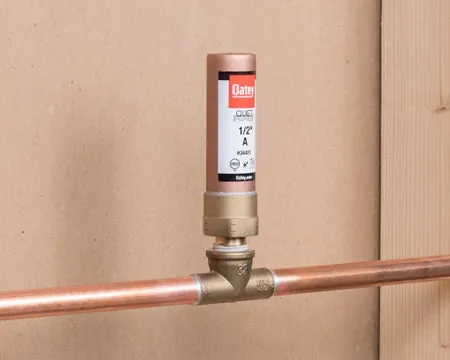
A multi-fixture arrestor is a larger unit designed to handle the pressure spikes from several valves closing at once. These are typically installed on the main water branch that feeds a full bathroom or a kitchen area. Because they have a larger internal volume, they can absorb more energy than smaller, single-point devices.
- Provides protection for multiple fixtures on a single branch line.
- Reduces the need to install individual units at every single faucet.
- Handles higher water volumes common in large residential plumbing systems.
This device requires more space and often needs a permanent, secure mounting point. Unlike smaller units, this one is often installed using plumbing standards for pressure systems to ensure the connection doesn’t fail under constant pressure. If you’re adding this to a main line, ensure your plumbing system is turned off at the main meter before you begin any work. This isn’t for a beginner; if you lack experience with pipe sweating or heavy-duty fittings, hire a licensed plumber.
Solder-type arrestor
A solder-type arrestor is a permanent, professional-grade solution for new construction or major plumbing renovations. These units are made from copper and are soldered directly into the pipework, creating a leak-proof connection that lasts as long as the pipes themselves. They’re the most reliable option for long-term protection in homes with rigid copper plumbing.
If you’re working with PEX or CPVC, skip the solder-type arrestor entirely. These units require the high heat of a propane torch, which will instantly melt plastic lines and cause a catastrophic failure. Instead, use a compression-style arrestor or a dedicated plastic-compatible fitting.
The primary mistake DIYers make is failing to account for the heat sink effect. Because the arrestor body acts as a massive heat sink, you must use a wet rag to protect the internal piston seal while heating the joint. If you skip this, the internal O-ring will warp, causing the arrestor to fail silently inside the wall before you even turn the water back on.
You should place these units as close to the source of the noise as possible. If the banging occurs only when the dishwasher runs, install the arrestor on the supply line immediately behind the unit. If the entire house rattles when a faucet shuts off, place the arrestor on the main cold water line near the water heater.
You would use these when you’re already cutting into walls or installing new piping. For example, a plumber might solder one onto the supply line feeding a shower valve during a bathroom remodel. This assumes you have the tools and skill to safely solder copper pipe; if you have never used a propane torch on plumbing, don’t attempt this.
The cost of a failed solder joint behind a finished wall is significant, often requiring you to tear out tile or drywall to fix a slow, hidden drip.
Other types of arrestors
PEX-style arrestors integrate directly into flexible plumbing lines using standard crimp rings or push-to-connect fittings. These units eliminate the need for torches or solder, which is vital because direct heat exposure can degrade PEX tubing and cause catastrophic leaks. Use these if your manifold is already plastic, as they maintain the material integrity of the entire loop.
Expansion tanks serve as a specialized buffer for thermal pressure rather than mechanical water hammer. You need one if your pipes bang exclusively when the water heater is cycling. If you hear noise every time a faucet closes, an expansion tank will do nothing to solve the problem.
Install an expansion tank if your home has a pressure-reducing valve or a check valve on the main line. These devices create a closed plumbing system that traps expanding water, forcing pressure to spike above 150 PSI. Without a tank, this excess pressure will eventually rupture your water heater’s internal lining or cause the temperature and pressure relief valve to weep constantly.
Most residential systems require a two-gallon tank to handle the volume of a standard 50-gallon water heater. If your heater is larger, or if your incoming water pressure exceeds 80 PSI, step up to a five-gallon model. Failing to size the tank correctly means the bladder will reach its limit too quickly, leaving your pipes vulnerable to the same pressure spikes you hoped to prevent.
Always verify the tank’s pre-charge pressure before installation. It must match your home’s static water pressure exactly. If the tank pressure is too low, the bladder will collapse; if it’s too high, the tank will remain empty and provide zero protection. Use a standard tire gauge to check this setting annually, as the air charge will naturally bleed off over time.
How to choose between them
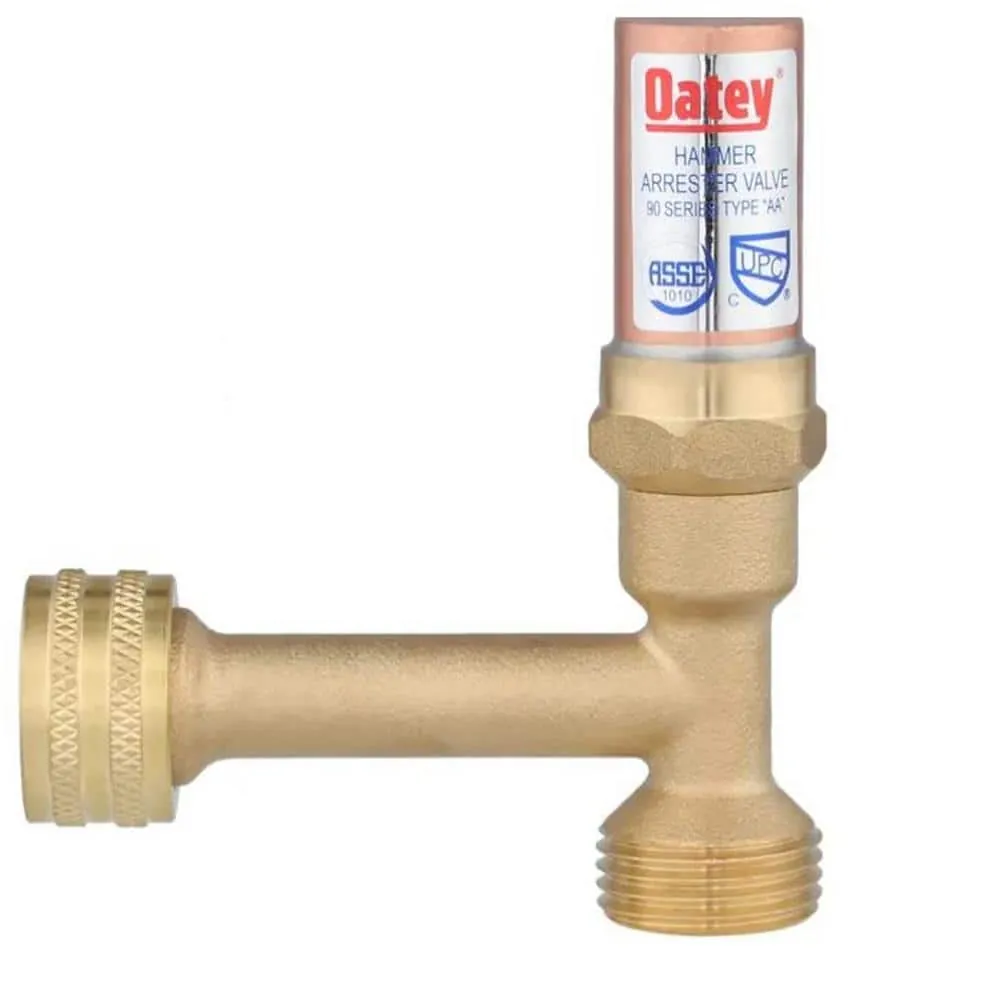
Your choice depends primarily on your existing pipe material and the location of the noise. If your banging is localized to the laundry area, a tee-style arrestor is the easiest and most effective choice. If you hear noise throughout the entire bathroom, an in-line unit hidden behind the vanity is more practical.
If you’re working with copper, use solder-type or compression-style units; if you have PEX, buy the specific PEX-compatible version to avoid leaks. These items can’t be combined in a way that provides double the protection, but you can use multiple units if you have multiple problem areas in your home. Picking one usually means solving a specific noise issue at its source, while choosing the wrong material for your pipe type will lead to a failed connection.
Check the diameter of your supply lines before visiting the hardware store. Most residential systems require a standard 1/2-inch arrestor, but older homes with galvanized piping often feature 3/4-inch lines. Installing an undersized unit creates a flow restriction that drops your water pressure significantly during peak usage.
If your pipes rattle only when the washing machine fills, prioritize a unit with a threaded hose connection. This allows you to screw the device directly onto the faucet behind the unit. It takes less than five minutes to install and requires no specialized plumbing tools.
Conversely, if the sound occurs whenever you shut off a faucet, the pressure wave is traveling through the entire branch. You must install the arrestor as close to the fixture as possible to intercept the shockwave before it hits the pipe walls.
Avoid the common mistake of mounting these units horizontally. Gravity eventually causes the internal piston to stick, which stops the air cushion from absorbing the surge.
Related guides
Frequently asked questions
Can I install a water hammer arrestor myself?
You can install most tee-style or compression-style arrestors yourself using basic tools. These units attach directly to existing threaded valves or pipe sections. If you must solder copper or cut into main supply lines, contact a professional plumber to prevent leaks.
How long do water hammer arrestors last?
Most arrestors have a limited lifespan that depends on your local water quality and the frequency of pressure spikes. Check the manufacturer’s documentation for the expected durability of your specific model. If the banging sound returns, the internal air bladder has likely failed and requires replacement.
Is it safe to ignore water hammer?
No, you shouldn’t ignore water hammer because it can cause pipe joints to loosen and eventually burst over time. The repeated physical shock wears down the connections and can lead to slow leaks inside your walls. While a single bang might not cause immediate damage, the cumulative stress on your plumbing system will lead to costly repairs if left unaddressed.
What happens if I use the wrong size arrestor?
If you use an arrestor that’s too small for your plumbing system, it won’t absorb enough energy to stop the noise. A unit designed for a single faucet will fail to quiet a large branch line or a heavy-duty appliance. Always check the manufacturer’s sizing chart to ensure the device capacity matches the diameter and flow rate of your specific water pipe.
How many arrestors do I need in my house?
You generally need one arrestor for every high-speed valve that causes a bang, such as your washing machine or dishwasher. If you have noise in multiple rooms, you might need an in-line unit for each affected bathroom group. There’s no set number for every house; you should place them exactly where the noise occurs to achieve the best results.
Does water pressure affect which arrestor I buy?
Yes, your home’s water pressure determines which arrestor you buy, as every unit has a maximum PSI rating. You can verify your pressure using a gauge attached to an outdoor spigot before purchasing. Ensure the device is rated for your home’s specific stress levels.
Conclusion
Installing these simple cushions will keep your plumbing quiet for years to come. If you’re still hearing loud banging behind the walls, it’s a good idea to check your home’s water pressure next. Don’t hesitate to call a local plumber if you aren’t comfortable working with your pipes; it’s worth the peace of mind.