
The best tongue and groove pliers feature a secure undercut design, providing a reliable grip that won’t slip under high pressure. These versatile tools use a sliding pivot to adjust jaw width for gripping pipes and nuts. Choosing models with hardened teeth and robust pivots ensures they handle heavy-duty tasks without failing.
How tongue and groove pliers compare
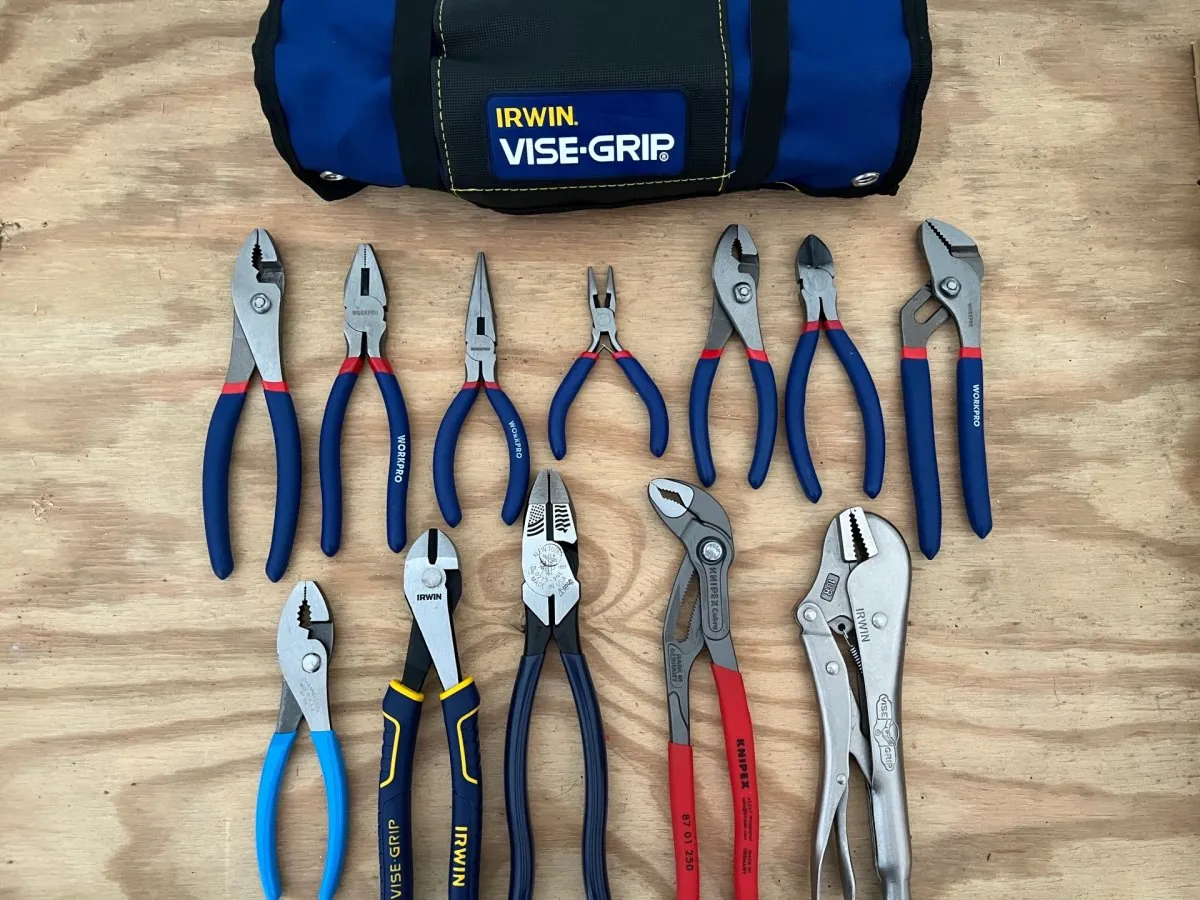
Selecting the right tool depends on your specific task, as some designs prioritize raw grip while others focus on precision or reach. The following table highlights the common variations you’ll encounter when looking for a reliable tool for your workshop or home maintenance kit.
| Name | Best for | Example |
|---|---|---|
| Standard Tongue and Groove | General plumbing and gripping | 10-inch straight jaw pliers |
| V-Jaw Pliers | Round pipes and fittings | 12-inch V-jaw pipe pliers |
| Quick-Adjust Pliers | Rapid size changes | Push-button locking pliers |
| Thin-Profile Pliers | Tight, cramped spaces | Narrow-nose groove pliers |
If you’re working on a hexagonal nut, choose straight jaws. They provide four points of contact to prevent rounding the corners. If you’re turning a round pipe, use V-jaws instead. The V-shape bites into the curved surface to prevent slipping under torque.
Most beginners make the mistake of using standard pliers for high-torque plumbing jobs. This often results in stripped threads or damaged fittings. If you find yourself applying significant force, switch to a tool with a locking mechanism. This allows you to maintain pressure without constant hand strain.
When navigating an engine bay or a crowded junction box, reach for thin-profile tools. These models feature a slender head that fits into gaps under two inches wide. If the tool head is too thick, you’ll lose your leverage angle and risk slipping.
Always ensure the tool length matches your clearance. A 10-inch handle is standard, but a 7-inch version is better for tight boxes where you lack the room to swing the tool. If you can fit your hand in the space, stick to the longer handle for maximum mechanical advantage.
Standard straight jaw pliers
Standard straight jaw pliers are the most common choice for general household tasks, offering a simple, durable design that has been a staple in toolboxes for decades. They’re best suited for users who need a versatile, no-frills tool for grabbing flat or slightly rounded objects.
- The straight teeth provide a predictable, even bite across the entire surface of the jaw.
- The wide opening range allows you to grip objects from 0.5 inches up to 2 inches in diameter.
- The simple pivot design is easy to clean if the tool becomes covered in grease or debris.
When using these, you should place the pivot in the position that keeps the handles nearly parallel to each other. This creates the most mechanical advantage. If the handles are too wide apart, you’ll struggle to squeeze them shut with one hand, which often leads to hand fatigue during long jobs. For example, when tightening a 1-inch sink nut, set your tool to the second or third groove to ensure your grip remains solid and controlled.
V-jaw pipe pliers
V-jaw pipe pliers are specifically designed to surround round objects, providing four points of contact instead of the two points found on flat-jaw models. These are the preferred choice for plumbers or anyone working extensively with circular steel or copper piping.
The deep V-shape prevents the pipe from sliding out of the jaws while you apply torque. The aggressive, self-gripping teeth bite into metal surfaces to prevent rotation during turning. The extended jaw length provides better leverage when working on larger pipe diameters.
Always match your tool size to the pipe diameter. If the pipe occupies less than 25 percent of the jaw’s total depth, you lack the necessary surface area for a stable bite. In this case, switch to a smaller wrench to ensure the V-shape properly cradles the cylinder.
This tool isn’t for delicate finished surfaces, as the sharp teeth will leave permanent marks on soft materials like brass or chrome. If you’re working on decorative plumbing, always wrap the pipe in a thick rag or use plastic jaw covers to protect the finish.
A common mistake is applying too much force before the teeth have seated. If you squeeze the handles with maximum effort before the jaw is fully engaged, you risk deforming thin-walled copper tubing. Apply firm, steady pressure until you feel the teeth bite, then rotate.
If you find the pipe is still slipping, check the teeth for buildup. Metal shavings and pipe dope can fill the gaps, making the grip ineffective. Use a stiff wire brush to clear the debris after every heavy job.
If you’re working in a tight crawlspace, prioritize a model with a thin-profile head. These allow for a 45-degree swing rather than a full rotation. If your workspace allows for less than 30 degrees of movement, abandon the V-jaw pliers entirely in favor of a chain wrench. The chain wrench uses a pivot-link system that secures the pipe without needing the clearance required for a swinging handle.
Push-button quick-adjust pliers
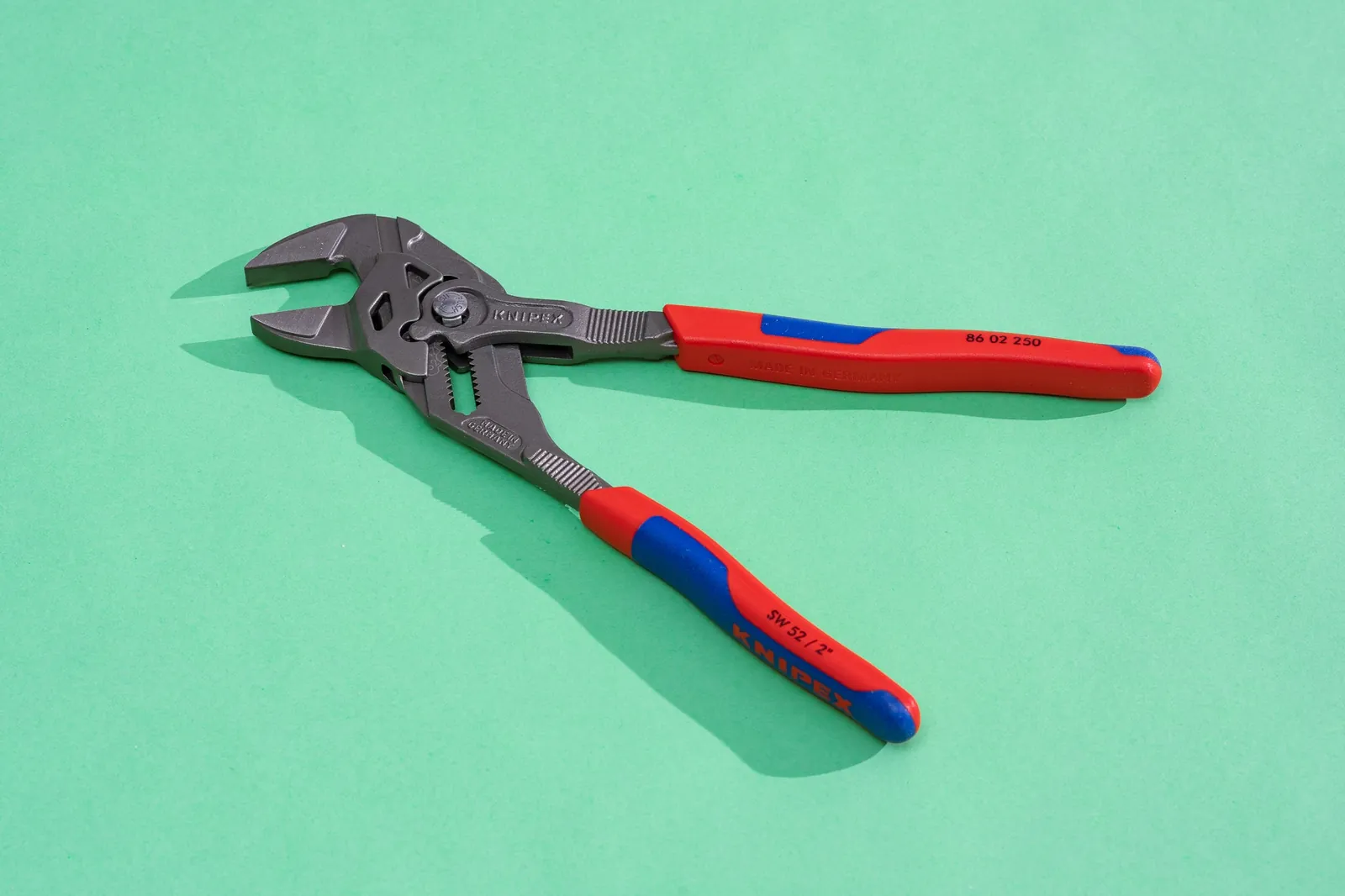
Push-button quick-adjust pliers replace the traditional sliding groove with a spring-loaded button that locks the pivot into place instantly. These are ideal for professionals who switch between different fastener sizes constantly, as they remove the need to open the tool fully to reset the jaw width.
- The locking mechanism ensures the jaw width stays set even if you put the tool down.
- The fine-tuned adjustment increments allow for a precise fit on non-standard bolt sizes.
- The ergonomic handle shapes reduce pressure points in the palm during heavy turning.
These tools often require a higher initial investment compared to traditional pliers, and they contain more moving parts that can eventually wear out. If you’re a casual user who only needs a tool once or twice a year, the extra cost for the push-button feature may not be justified. Always keep the adjustment button area free of heavy grit or sand, as this can prevent the locking pin from seating correctly.
Thin-profile narrow-nose pliers
Thin-profile narrow-nose pliers are built for tight, cramped spaces where a standard, bulky head simply won’t fit. They’re best for reaching into engine bays or deep behind appliance panels where you have limited room to swing the handles.
The slim head design allows for entry into gaps as narrow as 0.75 inches. This clearance is the difference between completing a repair in place and having to dismantle an entire housing just to reach one fastener.
The offset jaw angle provides better visibility of the fastener while you work. When you’re working blind inside a cabinet, this geometry allows you to maintain a line of sight to the work surface without contorting your wrist.
The compact size makes them lighter and easier to carry in a tool belt. You can keep them on your person for hours without the fatigue associated with heavy-duty linesman pliers.
These pliers aren’t designed for high-torque applications because the thinner metal is more prone to flexing under extreme force. If you need to turn a heavily rusted or seized bolt, reach for a standard-duty set instead to avoid bending the jaws.
If you feel the tool flex while applying pressure, stop immediately. Continued force will permanently deform the jaw alignment, rendering the gripping teeth useless for smaller wires or thin pins.
Check your specific model’s rating for the maximum bolt size. Exceeding this can warp the pivot pin, which makes the tool difficult to open and close smoothly. If the pliers require two hands to open after a job, you have likely exceeded the metal’s elastic limit.
Use these tools only for pulling, positioning, or light twisting. If you’re using them to pry or hammer, you’re misusing the leverage point. A pry bar is designed for lateral force, whereas these pliers are engineered for axial grip. Using them to force a stuck component will snap the tip, which is the most common point of failure for thin-profile designs.
Other common gripping tools
Long-reach groove pliers utilize an elongated jaw-to-handle ratio to multiply your input force. Use these when a standard ten-inch pair fails to budge a rusted pipe fitting in a crawlspace. If you can’t fit both hands into the opening to exert pressure, the extra length provides the necessary mechanical advantage to compensate for your limited reach.
Insulated groove pliers require a certified 1,000-volt rating stamped into the handle material. Never assume a rubber-dipped grip offers protection; if the coating is thin or cracked, the tool is a liability rather than a safety feature. Always verify the voltage rating before touching a live panel, as a standard pair provides zero protection against an arc flash.
Offset-head pliers solve the problem of limited swing room. When a nut is recessed inside a tight housing, a straight tool will force your knuckles into the surrounding metal, causing injury or preventing a full turn. If you have less than three inches of clearance, switch to an offset design. This allows you to maintain a firm grip while your hand remains in the open air.
Many beginners make the mistake of using these tools as hammers or pry bars. This habit ruins the precision alignment of the jaw teeth, which prevents the pliers from locking onto smooth surfaces. If the teeth are rounded or flattened, the tool will slip under pressure.
To test your pair, lock onto a bolt head and apply firm side pressure; if the jaw shifts or loses its bite, the pliers are worn out and dangerous. Replace them immediately to prevent stripped fasteners and hand lacerations.
Choosing the right pair for your needs
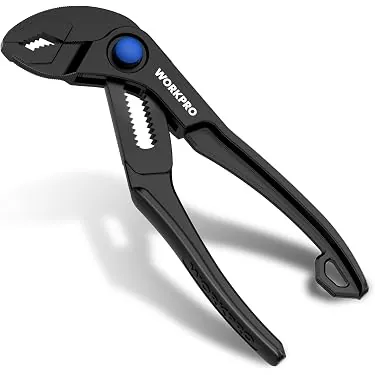
Deciding which tool to buy comes down to three factors: the space you have, the size of the objects you work on, and how often you use them. If your workspace is crowded with pipes or wires, choose the thin-profile model to ensure you can reach the target.
If you’re performing plumbing repairs on standard pipes, the V-jaw design is your best bet for a secure, non-slip grip. For general home maintenance, a standard 10-inch straight jaw set is usually enough to cover most jobs.
Measure the diameter of the largest nut or pipe you expect to encounter. If your target exceeds two inches, a 10-inch tool will force your hands too far apart, causing you to lose leverage and control. In this case, upgrade to a 12-inch or 16-inch model to keep your grip within a comfortable, ergonomic range.
If you’re working on soft metals like brass or decorative chrome, avoid aggressive teeth. They will mar the finish instantly. Instead, use a model with smooth, parallel jaws that apply pressure evenly across the surface.
Keep in mind that these tools are rarely interchangeable for heavy-duty tasks; picking one that’s too small for the job will result in rounded bolt heads and potential injury. If you have a wide variety of tasks, buying a kit with two different sizes is better than relying on a single pair. These tools are designed to be used individually, and combining them with a pipe wrench or another set of pliers usually creates a hazard.
Most beginners make the mistake of buying the largest pair available, thinking it provides the most versatility. This is a costly error. A heavy 16-inch tool is fatiguing for light tasks and often too bulky to fit into tight electrical boxes or under modern kitchen sinks. You’ll find yourself reaching for a smaller, more nimble set 90 percent of the time.
If you find your hand cramping after five minutes of use, your tool is likely too heavy or the handle grips are too thin. Look for tools with dipped, textured plastic handles rather than bare steel. The added friction allows you to apply less squeeze force while maintaining the same torque. If the task requires sustained force, the extra cost of a cushioned grip pays for itself in reduced fatigue.
Frequently asked questions
How long should tongue and groove pliers last?
A high-quality pair of pliers will last for many years if you keep the pivot point lubricated and avoid using them as a hammer. If you notice the jaws are no longer parallel when closed, or if the adjustment teeth are flattened, it’s time to replace the tool. Most manufacturers don’t provide a specific year count, but you can check the tool’s documentation for the expected material hardness ratings.
Is it safe to use these on electrical wires?
It isn’t safe to use standard metal pliers on electrical wires, as they can conduct electricity and cause a shock. You must use pliers that are specifically rated for electrical work and feature insulated handles tested to withstand high voltage. Always turn off the power at the main breaker before working on any electrical system, regardless of the tools you’re using.
What happens if I use pliers on a nut that’s too big?
Using pliers on a nut that’s too big will cause the jaws to splay outward, which can round off the corners of the fastener and cause the tool to slip suddenly. This sudden slip often leads to hand injuries or damage to the surrounding area.
Can I use these for turning bolts?
You can use them for turning bolts, but they aren’t as effective as a dedicated wrench or socket. Pliers may round off the corners of the bolt head if the fit isn’t tight or if you apply too much pressure at an angle. Use these only for temporary adjustment or when you can’t fit a standard wrench onto the fastener head.
Why do my pliers keep slipping off the pipe?
Your pliers are likely slipping because the teeth have become clogged with debris or because the pivot setting is too wide for the pipe diameter. Clean the teeth with a stiff wire brush to remove any metal shavings or pipe grease, and then adjust the pivot to a tighter setting. If the teeth are worn down until they’re smooth, the tool has reached the end of its life.
Does it matter which brand I buy?
High-end brands use superior steel alloys and precise manufacturing to keep jaws aligned under pressure. Cheaper tools often use softer metals that bend or break under force. Always check the manufacturer’s steel grade specifications to ensure the tool meets industry standards for durability.
Conclusion
Investing in a quality pair will make your future repair projects much easier to manage. You shouldn’t settle for cheap tools that slip or wear down quickly. Once you’ve picked your favorite set, keep them in your toolbox so you’re always ready to tackle that next leaky pipe with total confidence.