
A pool turns cloudy for 8 common causes, including off chemical balance, a blocked filter, or dirt entering the system. Low chlorine or a dirty filter is usually the main trouble. Quick fixes like shocking the water and cleaning the filter media can clear it within 24 hours if you act fast.
The result changes based on your filter type, how much rain has fallen recently, and whether you have algae growing under the surface. This page covers the checks you can do safely at home and tells you when to call a pro.
Who this pool cloudy guide helps

This page serves homeowners with standard in-ground or above-ground pools who see cloudiness but no green slime yet. You likely have a sand, cartridge, or DE filter and want to know which chemical or part failed.
A common mistake here is treating cloudy water like an algae bloom. If your water is milky white rather than green, adding algaecide wastes money and can foam the surface. Cloudiness usually points to filtration failure or unbalanced pH instead. Test your free chlorine before you buy anything else.
This guide doesn’t serve commercial pool managers dealing with complex salt systems or those needing to repair broken pumps. It also isn’t for people whose water is already bright green with thick algae mats. That condition needs a full algaecide treatment plan. We assume you have basic test strips and access to your pump basket.
If your pool is covered by a warranty or managed by an HOA, check their rules before adding shock. Some warranties require professional service for chemical adjustments. If you’re unsure about your equipment’s age or model, look at the label on the pump motor housing.
What decides if water clears
Chlorine level is the biggest factor in clearing cloudy water. If free chlorine drops below 1.0 ppm, bacteria and organic waste multiply fast, turning water milky. You must test this first; without enough sanitizer, no other fix will work long term.
Filter condition comes second in importance. A clogged filter can’t trap tiny particles, so they stay suspended in the water. Sand filters lose efficiency after years of use, while cartridge filters get gunked up with oils and lotions. Check your pressure gauge; if it is 8-10 psi higher than the clean starting pressure, the filter needs to be cleaned or backwashed.
Water chemistry balance affects how well chlorine works. If pH is too high (above 7.6), chlorine becomes weak and can’t kill contaminants. Total Alkalinity that’s too low makes pH swing wildly, confusing your dosing. You need to check these numbers before adding more chemicals, or you’ll just waste money.
Many people get the order wrong by adding clarifier before fixing pH. Clarifiers only clump particles together for the filter to catch; they do nothing if the filter is already full or the chemistry is off. Always balance pH and alkalinity first, then shock, then clean the filter.
Steps to clear cloudy water
- Test the water using fresh strips to find your current free chlorine, pH, and total alkalinity levels. Wait 30 seconds for the color to settle before comparing to the chart.
- Adjust total alkalinity first if it’s below 80 ppm or above 120 ppm, using sodium bicarbonate or muriatic acid as directed on the bottle. Retest after 4 hours to ensure it stays in range.
- Bring pH down to between 7.2 and 7.6 using pH decreaser if needed, waiting another hour before testing again. This ensures your next chemical addition works correctly.
- Add liquid shock or calcium hypochlorite to raise free chlorine to 10 ppm, following the package directions for your specific pool size. Run the pump continuously for at least 24 hours.
- Backwash your sand or DE filter until the sight glass shows clear water, or rinse your cartridge filter with a hose until the flow looks strong. Don’t skip this step if pressure was high.
- Turn off the pump and let the water sit undisturbed for 2 hours, then turn it back on and check clarity. If it’s still hazy, repeat the shock dose once more.
The single judgement call here is knowing when to stop adding chemicals. If you keep shocking without checking the filter or pH, you risk damaging your liner or equipment. Stop if the water clears or if you reach three days of treatment without improvement. At that point, the issue may be a hidden leak or a broken valve requiring a licensed technician.
Common situations and solutions
Different starting conditions need different actions to get clear water quickly. The table below matches your specific situation to the right fix and time needed.
| Situation | Action to take | Time or effort needed | What to watch for |
|---|---|---|---|
| Cloudy after heavy rain | Shock and brush walls | 24 hours run time | Rain dilutes chemicals fast |
| High pressure gauge reading | Backwash or clean filter | 15 minutes manual work | Pressure must drop 8-10 psi |
| Low chlorine reading | Add shock immediately | 1 hour to dissolve | Don’t swim for 24 hours |
| pH above 7.8 | Lower pH with acid | 4 hours to stabilize | Acid burns skin on contact |
| Old sand filter media | Replace sand or upgrade | One weekend project | Sand lasts 5-7 years max |
| Floating debris visible | Vacuum to waste mode | 30 minutes vacuuming | Skim basket must be empty |
| Green tint appearing | Add algaecide and shock | 48 hours continuous run | Brush walls daily during fix |
| No pump running | Check breaker and power | Immediate safety check | Never touch wet electrical parts |
Details pros get right
Checking before adding chemicals
Experienced users always test pH and alkalinity before adding any shock. They know that high pH reduces chlorine’s effectiveness, making the shock work poorly. Beginners often dump shock into bad water and wonder why it fails. Pros wait for the pH to hit 7.4 before dosing anything else.
They also check the filter pressure gauge before starting the pump. A high reading means the filter is clogged, and pushing more water through won’t help. They backwash or clean the media first to restore flow. Without this step, particles stay trapped in the water loop forever.
Running the pump correctly
Pros run the pump longer than most owners think is necessary. They keep it on for 24 hours straight after shocking to circulate the chemicals evenly. Beginners often turn it off at night, letting the water sit stagnant. Stagnant water allows clouds to reform quickly.
They also adjust skimmer baskets and return jets to maximize circulation. Moving water helps the filter catch particles faster. They avoid running the pump on “recirculate” mode unless specifically treating a stain. Recirculating skips the filter entirely, leaving dirt in the pool.
Troubleshooting cloudy water issues
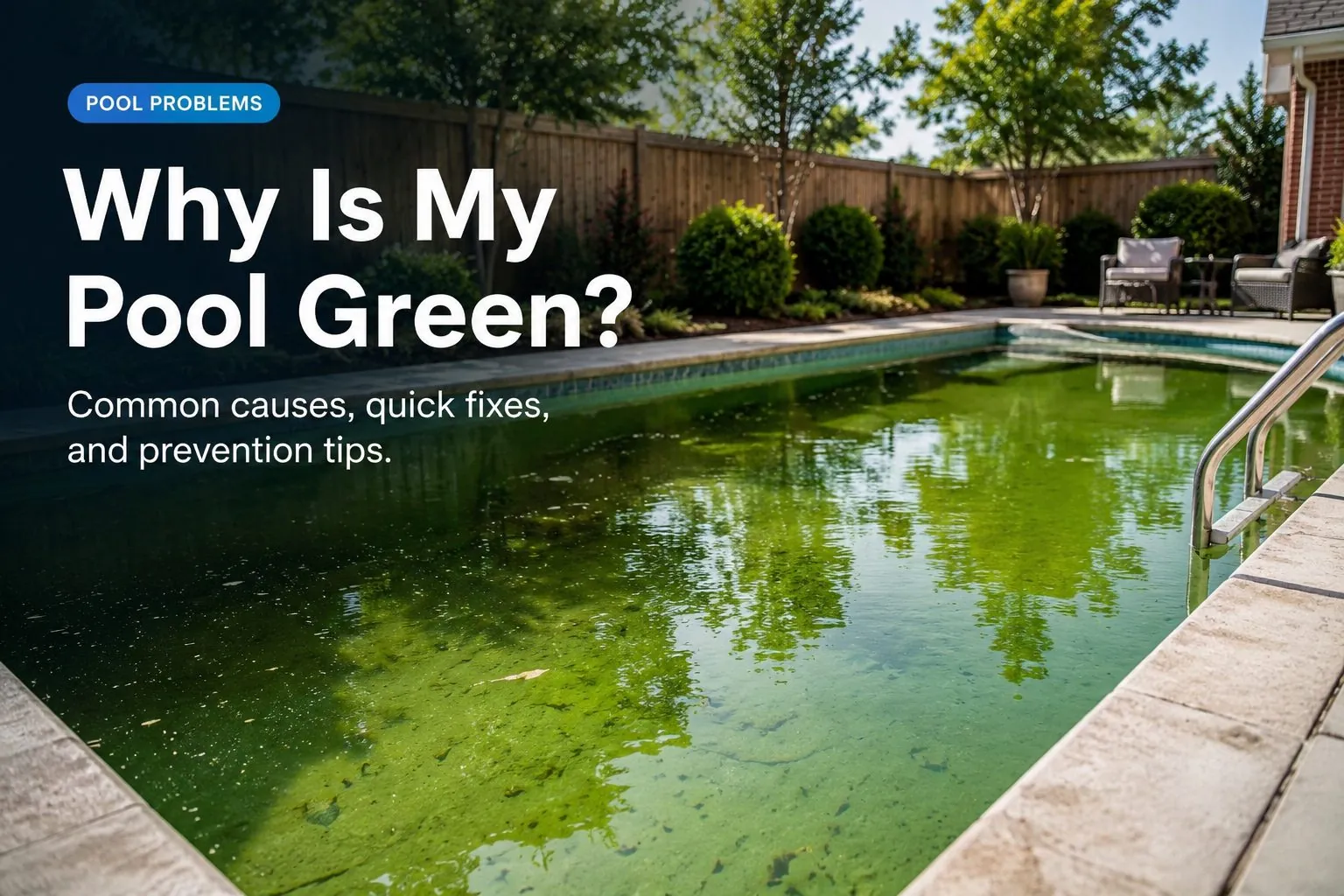
When water stays cloudy, match what you see to the likely cause and fix below. This table helps you decide your next move without guessing.
| What you notice | What it usually means | What to do first | How to stop it happening again |
|---|---|---|---|
| White haze in morning | Calcium scaling or dust | Lower pH and shock | Balance hardness regularly |
| Greenish tint | Early algae growth | Shock and brush walls | Maintain chlorine 1-3 ppm |
| Milky white water | Bacteria bloom or organics | Raise chlorine to 10 ppm | Clean filter weekly |
| Spots on walls | Low pH or high metals | Check pH and sequester metals | Use metal control products |
| Cloudy bottom only | Poor circulation | Clean pump basket and jets | Run pump 8 hours daily |
| Smell like bleach | Chloramine buildup | Super shock the water | Keep bather load low |
| Filter pressure spikes | Clogged filter media | Backwash or replace media | Monitor gauge weekly |
Rules for safe chemical use
Chemical handling follows strict safety rules set by manufacturers and health agencies. Always wear gloves and eye protection when mixing acids or shock. Never mix chlorine with acid directly, as this creates toxic gas. Manufacturers and local health departments set safety standards for pool chemical handling.
You must store chemicals in a cool, dry place away from direct sunlight. Containers should remain tightly sealed to prevent moisture absorption. Check the expiration date on every bottle before use; old chemicals lose strength. Follow the dosage instructions on the label exactly; doubling the dose doesn’t clear water faster and can damage your pool.
Local regulations may require specific record keeping for chemical usage. In some areas, you must log additions of acid or shock. Check your city or county health department website for local rules. If you’re unsure about a rule, contact your local health inspector before proceeding.
Real costs to clear water
Clearing cloudy water costs money in chemicals, time, and potential equipment wear. A basic shock treatment is inexpensive relative to the alternative depending on pool size. Adding pH adjusters is also inexpensive relative to the alternative per bottle. These prices change by region and brand, so check local stores.
Time is the bigger cost. You need to spend several hours testing and adjusting daily for a few days. Running the pump continuously increases electricity bills noticeably that week. If the filter needs new media, expect to pay an amount that’s inexpensive relative to the alternative for sand or cartridges.
Hidden costs appear if you ignore the problem. Damaged liners or corroded heaters can cost thousands to fix. Regular maintenance prevents these expensive repairs. Always compare the cost of DIY chemicals against a professional service call, which is significantly more expensive than doing it yourself.
The biggest mistake homeowners make is adding more chlorine without checking alkalinity first. This wastes money because high alkalinity locks pH, preventing the shock from working. If your total alkalinity is above 120 parts per million, stop buying chlorine immediately. Instead, buy acid to lower it, then retest before shocking again. Skipping this step often doubles your chemical bill while leaving the water green.
Another hidden expense is backwashing too frequently. Every time you reverse the flow to clean the filter, you lose a significant amount of treated water. If you do this multiple times a day during a cloudiness crisis, you waste a large volume and the chemicals dissolved inside them.
Only backwash when pressure rises noticeably above normal, not just because the water looks murky. If you’re unsure, run a manual vacuum to waste instead; it cleans the surface without flushing your entire filtration system.
Maintaining clear water
Once your water is clear, keep it that way with simple habits. Test your water twice a week to catch small shifts before they become clouds. Add chlorine daily if you swim often or after heavy rain. If the pool sits uncovered for more than two days, test and adjust the chlorine level immediately to prevent algae from taking hold while you’re away.
Clean your skimmer and pump baskets regularly to keep flow strong. Backwash your filter when the pressure rises noticeably above normal, as the frequency depends on use and the owner’s manual is the authority.
For cartridge filters, remove and hose them down as needed based on use and the owner’s manual. If the hoses can’t dislodge the grime, soak the cartridges in a dedicated cleaning solution overnight; skipping this step forces the pump to work harder and shortens the filter’s life.
Watch for signs that attention is needed again. If the water looks slightly hazy or the pressure gauge climbs slowly, act immediately. Don’t wait until it turns green. Small corrections save time and money later.
A common mistake is adding shock only when the water looks bad; by then, the chemical load required to fix it’s triple what a weekly maintenance dose would have been. Check the pH first, because if it’s above 7.6, your chlorine will vanish within hours regardless of how much you add.
When to call a pro
Call a professional if the water stays cloudy after three days of correct treatment. This suggests a deeper issue like a broken valve, cracked pipe, or failing pump seal. DIY fixes can’t solve mechanical failures. If you have already checked your filter pressure and backwashed without success, stop adding clarifiers immediately. Pouring more chemicals into a system with a hidden leak only wastes money and clouds the water further.
Also call a pro if you smell strong chemical fumes or see corrosion on metal parts. These signs mean dangerous leaks or improper chemical storage. Your safety is more important than saving a service fee. A sharp chlorine odor often indicates that pH levels are dangerously low, which can burn skin and damage pool liners within hours.
Finally, hire an expert if your pool uses a saltwater generator or automated chemical feeder. These systems need special calibration. Trying to adjust them yourself can void warranties or break the unit. Most manufacturers require certified technicians for any internal repairs to keep the warranty valid. If your error code flashes “cell fault” or the flow switch trips repeatedly, the problem is likely in the plumbing alignment, not the settings.
Frequently asked questions
Can I swim in cloudy water?
No, you shouldn’t swim in cloudy water because you can’t see underwater hazards or people in distress. Cloudiness often means bacteria or algae are present, which can cause skin and eye infections. Wait until the water is clear and chlorine levels are normal, usually 24 hours after shocking.
Why did my pool turn cloudy overnight?
Sudden cloudiness usually happens due to a sudden drop in pH, heavy rain diluting chemicals, or a large influx of dirt. Check your test strips immediately to see which number shifted out of range. Correcting the balance quickly will clear the water faster.
How long does it take to clear cloudy water?
Most cloudy water clears within 24 to 48 hours if you shock properly and run the pump continuously. Severe cases with algae or very high dirt loads may take up to 3 days. Consistent circulation and correct chemical doses are key to speed.
Is it safe to add shock every day?
No, adding shock daily is unnecessary and can damage your pool equipment or liner. Only shock when free chlorine drops below 1.0 ppm or after heavy use. Over-shocking wastes money and creates harsh chemical environments that irritate swimmers.
What happens if I don’t clean the filter?
If you don’t clean the filter, particles stay suspended in the water, causing permanent cloudiness and reduced flow. Eventually, the pump may overheat or fail due to strain. Clean or backwash your filter whenever pressure rises 8-10 psi above normal.
Does temperature affect cloudiness?
Yes, warmer water promotes faster bacterial growth and algae blooms, leading to quicker cloudiness. Cold water slows these processes but can make chemicals less effective. Adjust your chemical schedule based on seasonal temperature changes.
Can rain make my pool cloudy?
Rain can dilute chlorine and introduce dirt, pollen, and acidic runoff that upset water balance. After a storm, test and adjust pH and chlorine levels immediately. Run the pump longer to circulate the diluted chemicals throughout the pool.
What to do next
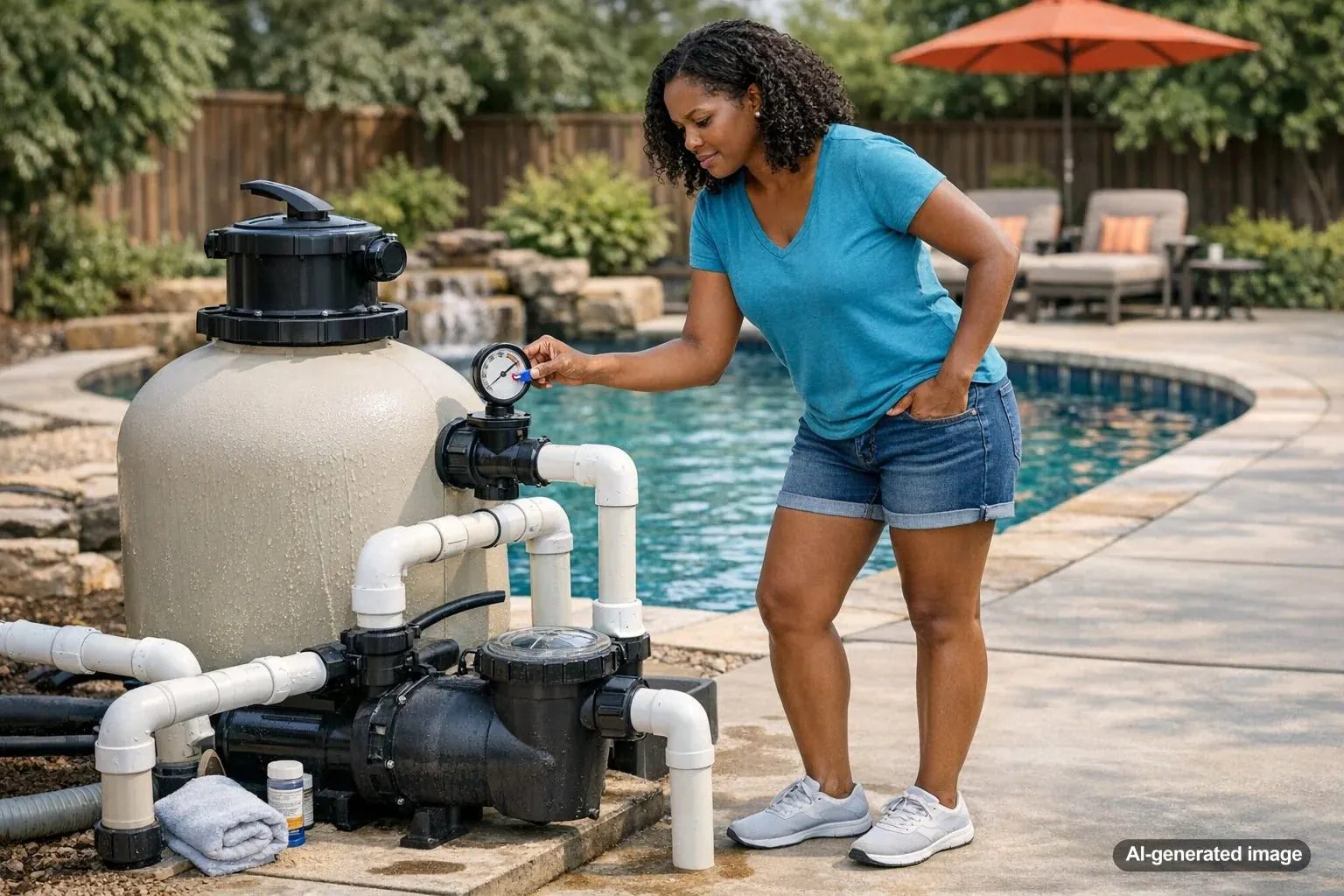
Start by testing your water today to confirm the chlorine and pH levels. Use a digital tester or fresh test strips, as old strips often give false readings that waste chemicals. Expect the water to clear within 24 hours if you follow the steps and run the pump non-stop.
If the cloudiness persists after three days of treatment, stop adding chemicals immediately and call a professional. Adding more shock now will only damage your equipment and create a chemical imbalance that’s harder to fix later.
Conclusion
Don’t let cloudy water ruin your summer fun. Test your levels daily and keep an eye on that filter to stop trouble before it starts. With a little care, you’ll have crystal-clear water ready for a refreshing dip in no time at all.