
Foosball rules and regulations govern how you play this table game fairly. The standard setup uses three rows of players per side: two forwards, three midfielders, and two goalkeepers. You control the rods by rotating them to kick a small plastic ball into the opponent’s net.
This guide covers the core laws, scoring methods, and common disputes so you can stop arguing and start playing. We’ll look at the official specs from major associations like the USFPA and BPA. You’ll learn how to set up the table, how points count, and what happens when things go wrong during a match.
What foosball rules and regulations mean
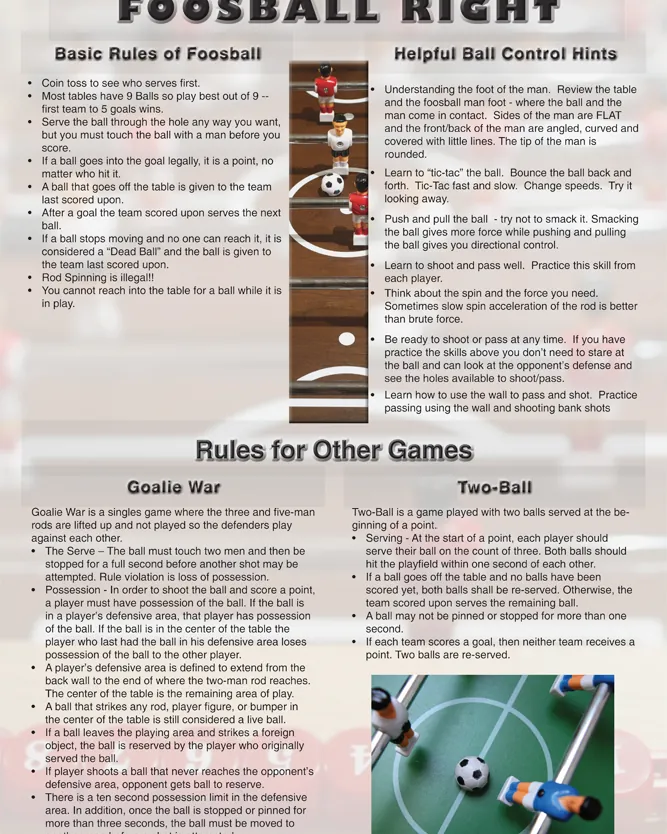
Foosball is a tabletop sport played on a rectangular table with rotating rods holding miniature figures. It blends strategy with reflexes, requiring you to control your team while blocking your opponent’s shots. Many people think it’s just about spinning the rods fast, but that’s a myth. Good play relies on positioning, passing, and reading the ball’s movement rather than brute force.
The game is for anyone who wants quick competition without leaving their house or bar. It works well for casual fun or serious tournaments. The misconception that skill doesn’t matter comes from watching beginners spin wildly. In reality, top players use subtle wrist movements and strategic placement to win.
How to play the basic method
Playing correctly means following a clear sequence of actions. Start by ensuring the table is level and the ball is in good condition. Then follow these steps to begin a match.
- Place the ball in the center circle. Both players stand on opposite sides.
- One player tosses the ball up gently. The other player starts play by kicking it.
- Rotate rods smoothly to pass or shoot. Avoid snapping the rod violently.
- If the ball hits the wall or goes out, retrieve it and place it back in play.
- Score by getting the ball into the opponent’s goal. Each goal counts as one point.
- After a goal, reset the ball to the center for the next kickoff.
- Play continues until a set number of goals is reached, usually 11 or 21.
The single judgement call that separates good play from bad is rod control. Beginners often grip too tightly, which slows down their reaction time. Experienced players keep a loose grip, allowing for quick adjustments. This simple change makes a huge difference in your ability to block shots and make precise passes.
Key numbers and settings at a glance
Here are the main variations you might face depending on where you play or who you play against. Keep these numbers handy for quick reference.
| Situation | What to use | How long | What to watch for |
|---|---|---|---|
| Casual Bar Game | Standard 5-a-side table | First to 11 goals | Ball going under the table |
| Official Tournament | Certified BPA/USFPA table | First to 21 goals | Time limits (usually 15 mins) |
| Speed Match | Any regulation table | First to 5 goals | Quick resets between goals |
| Youth Play | Lower height tables | First to 9 goals | Smaller hands, slower rods |
| Professional League | High-end tournament tables | First to 11 goals | Strict foul enforcement |
These settings help you adapt to different environments. A bar game might be more relaxed, while a tournament requires strict adherence to timing and fouls. Knowing the target score helps you pace your energy. Always check the specific rules of the venue before starting.
What separates good results from bad ones
Good players don’t just kick harder; they prepare better. They inspect the table surface for debris before every match. Even a small piece of dust can change the ball’s path significantly. This attention to detail prevents unexpected bounces that lead to lost points.
Experienced players also master the order of operations. They position their defenders first, then move their attackers. This creates a solid defense before launching an attack. Beginners often rush to shoot, leaving their own goal open. By prioritizing defense, you reduce the chances of giving away easy goals.
Another key habit is checking the ball halfway through. If it gets scuffed or loses pressure, it won’t roll true. Swapping it out maintains fairness. Also, experienced players leave certain rods alone. They don’t touch the goalie rod unless necessary, keeping it ready for last-second saves. This restraint shows discipline and respect for the game’s flow.
Common problems and quick fixes
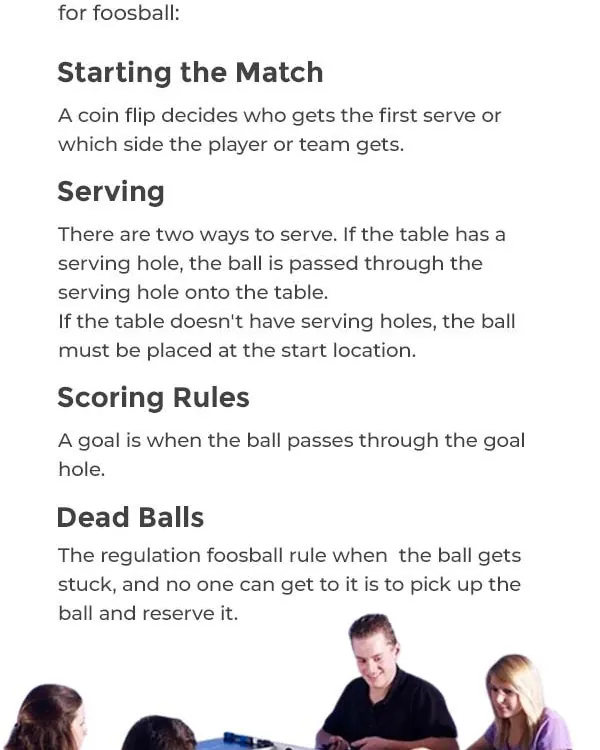
Even with good rules, equipment malfunctions can occur. Here’s how to handle the most frequent issues you might encounter during a game.
| What you notice | What it usually means | What to do first |
|---|---|---|
| Ball sticks to rod | Plastic buildup or humidity | Wipe rod with dry cloth |
| Rod feels stiff | Lack of lubrication | Apply silicone spray lightly |
| Table wobbles | Uneven floor surface | Adjust feet or move table |
| Ball flies off table | Too much spin or speed | Use softer kicks, lower angle |
| Players hit each other | Poor spatial awareness | Pause game, reset positions |
Fixing these issues quickly keeps the game flowing. Don’t ignore a wobbly table; it affects ball trajectory. Similarly, a sticky rod ruins your control. Simple maintenance solves most problems without needing professional help.
The rules that apply
Official play follows guidelines from bodies like the United States Foosball Players Association (USFPA). These rules ensure fair competition across different venues. For instance, the USFPA specifies that players must not lift their hands off the handles except to reset the ball after a goal. Violating this leads to a warning or loss of possession.
Legal thresholds include age restrictions for some tournaments. Most bars allow all ages, but competitive leagues may require participants to be 18+. Always check local venue policies. If a rule seems unclear, ask the manager or referee. They should have a copy of the official handbook. Remember, these rules exist to keep the game consistent and enjoyable for everyone involved.
When setting up your table at home, you can skip the strict hand-lifting rule if no one is keeping score. However, if you want to replicate tournament conditions, enforce the two-hand rule strictly. This prevents players from using one hand to stabilize the rod while flicking with the other, which gives an unfair advantage in speed and accuracy. Without this constraint, shots become unpredictable and less skill-based.
For casual games, agree on whether goals count if the ball hits the rim before entering the net. Some groups treat rim hits as live balls, while others call them dead. Deciding this upfront avoids arguments during close matches. Also, clarify if you’re playing to five or ten points. Shorter games suit quick breaks, while longer sessions test endurance. Clear agreements prevent disputes and keep the flow smooth.
Keeping it working afterwards
After a match, wipe down the rods and table surface with a dry microfiber cloth. This removes oils from your hands that can attract dirt and gum up the mechanisms over time. Don’t use liquid cleaners on the playing field unless necessary, as moisture can warp the wood or damage the bearings.
Store the ball in a breathable cotton bag rather than a plastic container to prevent warping and allow air circulation. Regular cleaning extends the life of the equipment significantly by preventing abrasive particles from grinding into the finish.
Maintenance intervals depend on usage patterns. For heavy use, such as daily practice sessions, clean weekly to remove accumulated dust and grime. For occasional play, monthly checks suffice to ensure everything is functioning correctly. Look for signs of wear like frayed bearings, loose screws, or cracked balls.
Replace parts promptly to avoid bigger issues later, such as a snapped rod or uneven gameplay. Proper care ensures your table stays in tournament-ready condition for years. If you notice any unusual noise during play, inspect the joints immediately rather than waiting for a scheduled maintenance window.
When to use a different approach
Sometimes, standard foosball isn’t the best choice. If you’re hosting a large party with many guests, consider using multiple tables or switching to a faster variant like speed foosball. This keeps energy levels high and reduces waiting time.
For very young children, a smaller table with lower rods is safer. Standard tables can be too tall, leading to frustration or injury. Also, if space is limited, a compact travel version might be better than a full-sized bar table. Adapting the setup to your environment ensures everyone has fun without safety risks.
When guest count exceeds twelve, split them into two groups. Assign one group to a second table immediately. Don’t let the first group finish before starting the next. This prevents boredom from setting in during long turns. Speed foosball removes the complex rod mechanics that slow down play. It uses a single handle per side. Players react instantly rather than planning multi-step moves. The game flows continuously. Everyone stays engaged because there’s no downtime between shots.
Children under six struggle with the height of regulation tables. They must reach up awkwardly. This strains their shoulders and limits control. Look for a table under three feet tall. Lower rods allow them to grip comfortably. Safety matters here more than competition. A fall from trying to reach high rods causes real harm.
Measure your available floor space carefully. Subtract two feet from each side for movement. If the room shrinks below eight by four feet, skip the full table. Use a portable model instead. These fit on standard dining chairs. They store easily when not in use. You avoid clutter and potential damage to walls. Choose based on physical constraints, not just preference.
Related guides
- Best Foosball Tables Under 500: Top 5 Picks in 2026
- Foosball Resources: Where to Find Tactics and Gear in 2026
Frequently asked questions
Is it safe to play foosball?
Yes, it’s safe for most people. Just be careful not to hit opponents’ hands or arms. Keep fingers clear of moving rods. Supervise young children to prevent pinching injuries.
How long does a typical game take?
A standard game lasts about 10-15 minutes. This depends on the target score and skill level. Faster players finish quicker, while close matches take longer.
Can I modify my foosball table?
You can add accessories like LED lights or custom balls. However, changing rod mechanisms or ball size may violate tournament rules. Check local regulations before making permanent changes.
Why does the ball sometimes get stuck?
Humidity or plastic buildup causes sticking. Wipe the rods with a dry cloth before playing. If it persists, apply a tiny amount of silicone lubricant to the bearings.
What happens if I miss a shot?
If you miss, the ball remains in play unless it goes out of bounds. Retrieve it and place it back in the center. No penalty is applied for missing a kick.
Conclusion
Grab a friend and try these rules at your next game night. You’ll likely find the match moves faster than you expect, especially when both players focus on defense. It’s a fun way to test your skills without any complicated setup or expensive equipment needed.