
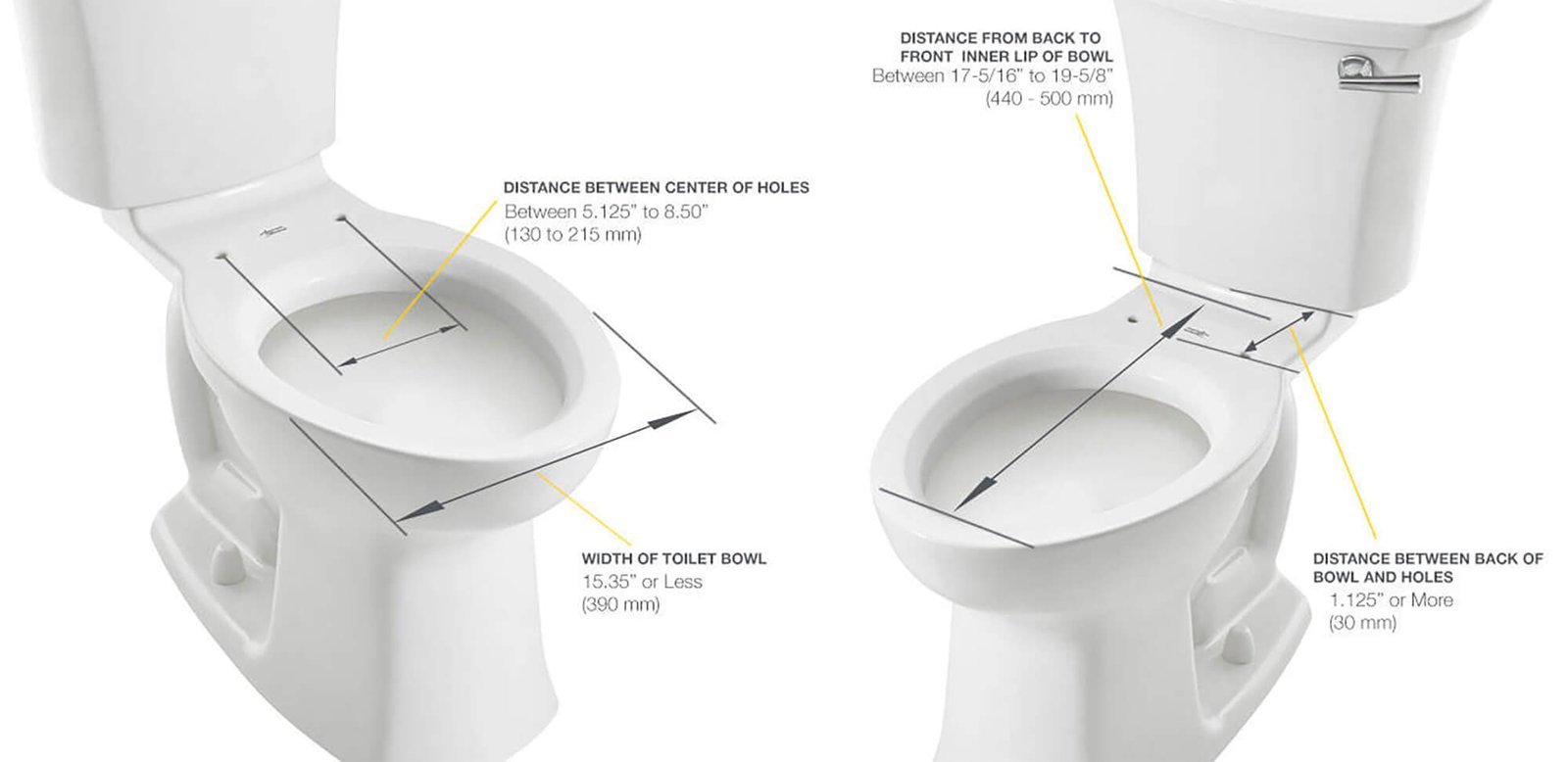
To find the right replacement, you must measure the distance between the two mounting bolt holes, the total length from the holes to the front of the bowl, and the width at the widest point, as how to measure toilet seat size relies entirely on these three specific dimensions. These measurements ensure your new seat fits securely without shifting or overhanging the rim.
Different manufacturers use unique molds, so you must measure your existing bowl rather than the old seat. If you have a round bowl, the length is usually 16.5 inches; for an elongated bowl, it’s typically 18.5 inches. Always check the label on the packaging of a potential replacement to confirm the seat matches your measured dimensions, as slight variations exist between brands.
Who needs to measure their toilet seat
This guide serves homeowners and renters who need to replace a broken or worn-out toilet seat and want to avoid the frustration of returning an item that doesn’t fit. It assumes you’re shopping for a standard residential toilet seat found in most homes. If you have a specialty wall-mounted, commercial, or smart toilet with integrated bidet functions, this guide may not apply, as those units often require proprietary parts from the original manufacturer.
The information here is best for someone standing in their bathroom with a tape measure, ready to buy a replacement today. It isn’t for people looking to install a completely new toilet system or those dealing with complex plumbing repairs. We assume you have a standard two-piece or one-piece gravity-flush toilet. If you’re uncertain about your bowl shape, the measurements provided will clarify it for you immediately. If you have a non-standard shape, such as a square or D-shaped bowl, you should contact the toilet manufacturer directly to identify your specific mounting requirements.
Key factors in seat selection
The shape of the bowl is the most important factor in your search. Most residential toilets are either round or elongated. A round bowl measures about 16.5 inches from the bolt holes to the front, while an elongated bowl is roughly 18.5 inches. If you buy the wrong shape, the seat will either be too short or stick out too far, which creates an uncomfortable and unstable experience.
The distance between the mounting bolts is the second factor. Most standard toilets use a distance of 5.5 inches between the centers of the two bolt holes. While this is the industry standard for residential units, some older or high-end models use different spacing. If your bolts are not 5.5 inches apart, a standard seat won’t fit, and you’ll need to look for a model with adjustable hinges or one made specifically for your brand.
The width of the bowl at its widest point matters for comfort. Most seats are designed to fit a width of about 14 to 14.5 inches. If your bowl is significantly wider or narrower, a standard seat might leave too much of the porcelain rim exposed or overhang the edges, which can lead to cracking the seat over time.
Finally, the hinge type is a common point of confusion. Some seats attach with top-fixing bolts, while others use traditional bottom-tightening nuts. If you can’t reach behind your toilet to tighten a nut, you must choose a top-fixing seat. A common mistake is buying a bottom-tightening seat for a toilet with a closed back, which makes installation impossible without removing the entire toilet bowl. Check your current hardware before you buy to ensure the new seat matches your existing access points.
How to measure toilet seat size: Step by step
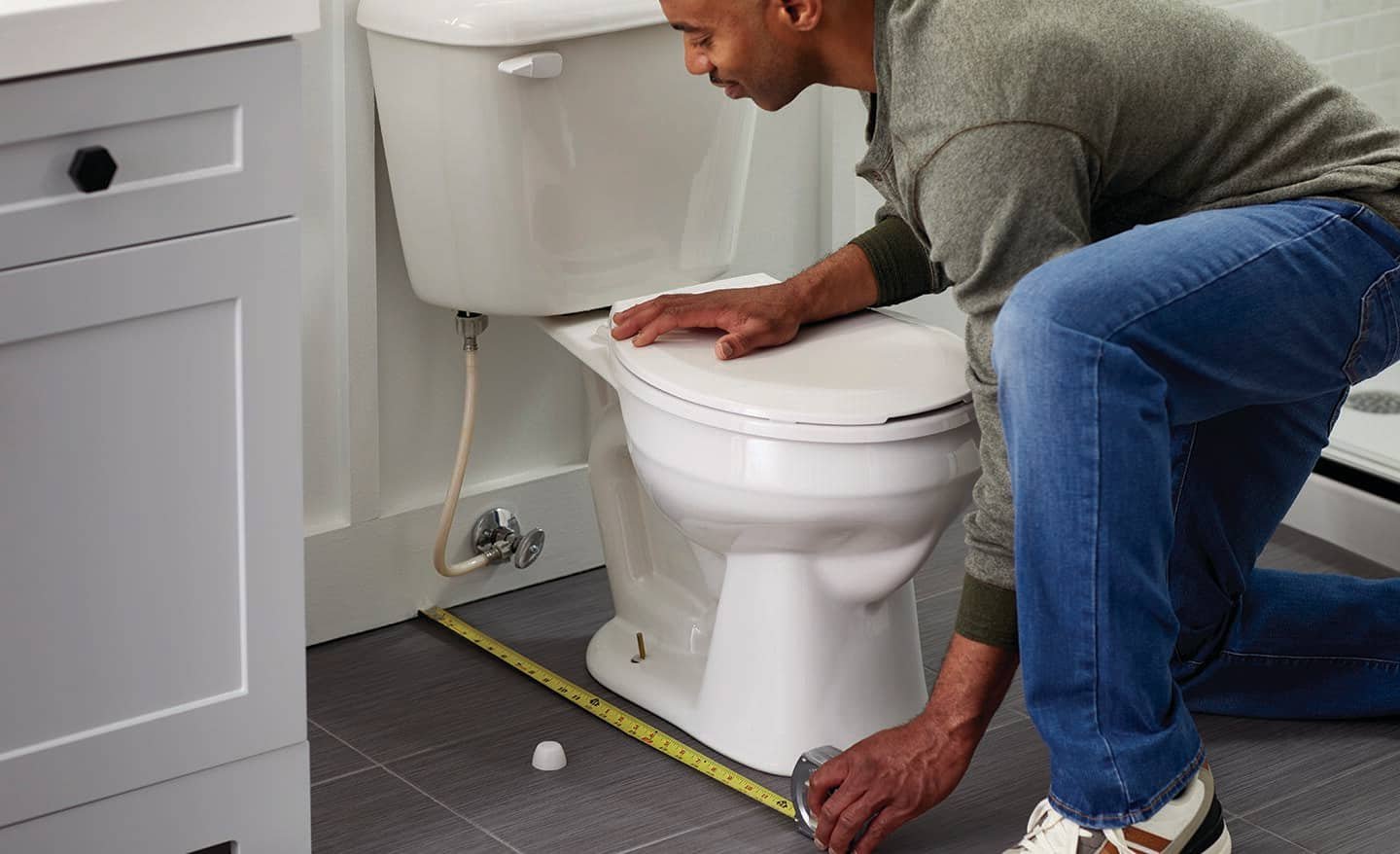
- Clear the area around the toilet to give yourself room to work with a steel tape measure.
- Locate the two bolt holes at the back of the toilet bowl where the seat is attached.
- Measure the distance between the center of the left hole and the center of the right hole. Note this down; it should be 5.5 inches for most standard toilets.
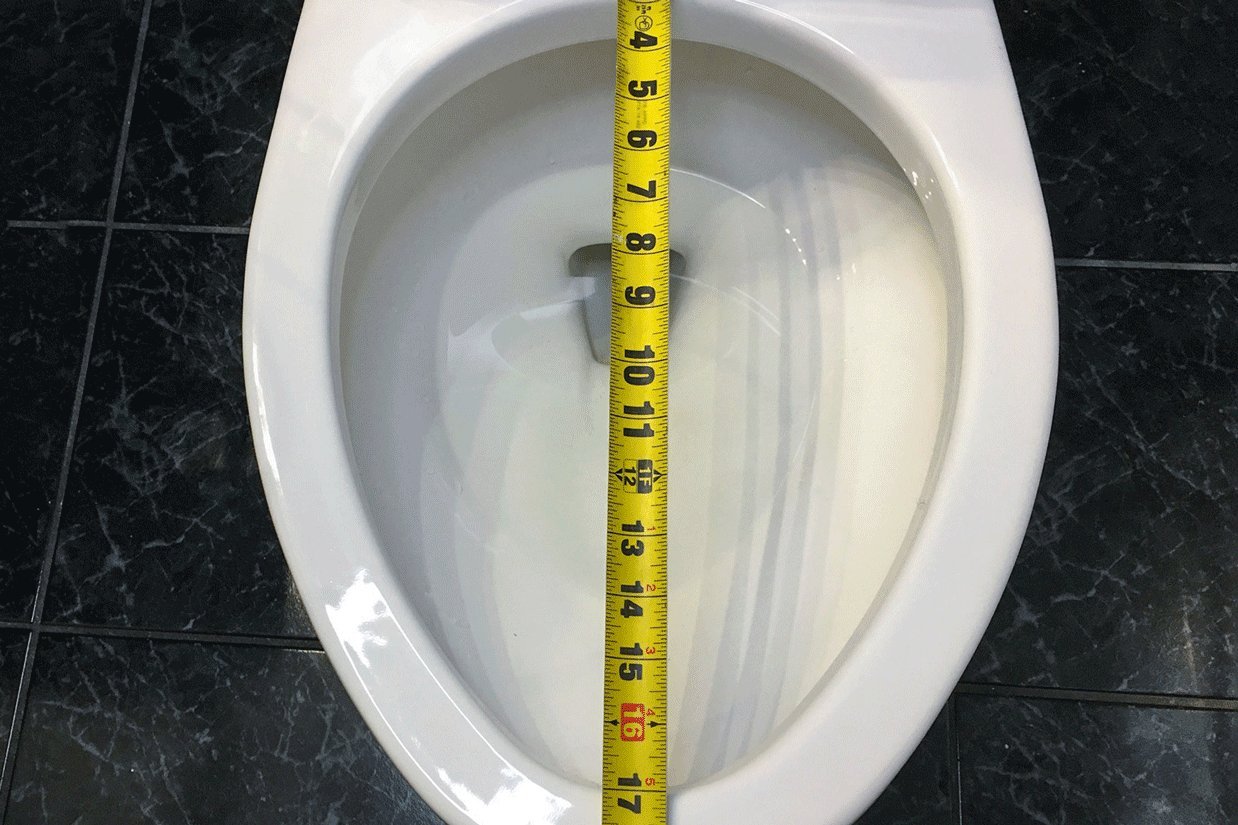
- Measure the length of the bowl by placing the end of your tape measure between the two bolt holes and extending it to the very front edge of the outer rim.
- Record this length measurement, noting whether it’s closer to 16.5 inches or 18.5 inches.
- Measure the width of the bowl at its widest point by stretching the tape across the middle of the bowl from one outer edge to the other.
- Compare these three numbers against the dimensions listed on the packaging of the new toilet seat.
- If the seat dimensions match your measurements within a quarter-inch, the seat is compatible with your bowl.
- Before finalizing the purchase, verify if your toilet requires a top-fixing or bottom-fixing hinge by looking at the underside of the current seat’s bolts.
The judgement call here is the hinge clearance. If your bolts are recessed or the bowl back is blocked, you must confirm the new seat includes the correct mounting hardware to match your specific access limitation.
The variations at a glance
The following table summarizes common bowl types and the measurements you should expect when shopping for a replacement.
| Situation | What to do | What it takes | What to watch for |
|---|---|---|---|
| Round bowl | Buy round seat | 5 minutes | 16.5 inch length |
| Elongated bowl | Buy elongated seat | 5 minutes | 18.5 inch length |
| Non-standard holes | Measure hole distance | 2 minutes | Adjustable hinges |
| Tight access | Check bolt type | 10 minutes | Top-fixing hardware |
| Wide rim | Check width | 2 minutes | Seat overhang |
Measure from the center of the seat bolt holes to the front edge of the bowl. If your measurement is 16.5 inches, you must choose a round seat to avoid an awkward, unsightly overhang.
Most people mistakenly assume all elongated seats fit all elongated bowls. This error forces a second trip to the store. Always verify the width at the widest point of the rim. If your bowl exceeds 14 inches in width, standard seats will leave exposed porcelain.
If you can’t reach behind the bowl to tighten nuts, you’re in a “tight access” scenario. In this case, buy a seat with top-fixing hardware. These kits allow you to secure the seat from above using a screwdriver rather than fumbling with a wrench in a cramped space.
What separates a good result from a poor one
Preparation and accuracy
Experienced installers always measure the bowl twice to ensure the numbers are correct. A common mistake is measuring the old seat instead of the bowl; the old seat may have sagged or stretched over time, leading to an incorrect size selection. Always use a rigid steel tape measure rather than a cloth one, as cloth tapes can stretch or twist, providing an inaccurate reading that costs you a return trip to the store.
Installation precision
The order of operations during installation determines how long the seat lasts. Proper installers place the hinges, align the seat with the front of the bowl, and then tighten the bolts until they’re snug but not forced. Overtightening is a common error that leads to cracked plastic or damaged porcelain. Once the seat is installed, check that it doesn’t shift when you put pressure on it; if it moves, the bolts need a minor adjustment to seat them properly in the holes.
What goes wrong, and what to do
| What you notice | What it usually means | What to do first | How to stop it happening again |
|---|---|---|---|
| Seat slides around | Loose bolts | Tighten the nuts | Use rubber washers |
| Seat is too short | Wrong size bought | Measure bowl again | Check label dimensions |
| Hinge won’t fit | Wrong bolt spacing | Buy adjustable hinges | Check hole distance |
| Bolts won’t reach | Access is blocked | Use top-fix kit | Verify access type |
| Seat cracks | Improper support | Check bowl width | Use padded bumpers |
Most users mistake a shifting seat for a broken hinge, but the culprit is almost always the lack of friction between the plastic nut and the ceramic bowl. If you tighten the bolt and it still slips after three days, the nut has likely stripped its threads. Replace the stripped hardware with a new set of manufacturer-recommended plastic bolts and gaskets.
If your seat cracks, you likely bought a model with a weight limit below your needs. Check the underside for the “static load” rating; if it’s under 300 pounds, it will fail under daily use. If you have a round bowl but bought an elongated seat, the lack of support under the seat causes the hinges to break or the seat to crack under weight. Always measure from the center of the bolt holes to the front edge of the bowl. If your measurement is 16.5 inches, buy a round seat. Anything over 18 inches requires an elongated model.
The rules that apply
Toilet seats must meet basic safety and material standards to ensure they don’t break under normal use. While there’s no single global law for seat sizes, manufacturers generally produce seats to fit common bowl dimensions, though they aren’t governed by a universal standard. These standards ensure that the bolt hole spacing and the general curvature of the bowl remain consistent across different brands. If you’re installing a seat in a commercial building, you must comply with the Americans with Disabilities Act (ADA) requirements regarding seat height and shape, which are available on the official ADA website. If you’re unsure about the safety compliance of your specific toilet model, consult the manufacturer’s installation manual provided with the original unit. Never attempt to modify the porcelain bowl to make a seat fit, as this can compromise the structural integrity of the fixture and lead to leaks or total failure.
What it costs you
The cost of this process is primarily your time and the price of the new seat. A standard plastic seat typically costs a modest amount, depending on features like slow-close hinges or quick-release buttons. The price increases if you choose materials like wood or heavy-duty resin. You can find current pricing at any local hardware store or the manufacturer’s website. If you buy the wrong size, the cost is the time spent returning the item and the potential for shipping fees if you purchased it online. To minimize costs, measure carefully before you leave the house and confirm the hinge type. If you choose a premium seat with a warranty, keep your receipt, as some brands offer replacements if the hinge mechanism fails within a specific timeframe. Always check the store’s return policy before opening the packaging, as many retailers refuse returns on toilet seats once the plastic seal is broken for hygiene reasons.
Keeping it right afterwards
Once the seat is installed, keep it clean to ensure the hinges continue to operate smoothly. Wipe the seat and the hinge area with a soft cloth and mild soap regularly to prevent mineral buildup and grime. Avoid using abrasive cleaners or harsh chemicals, as these can strip the finish and make the plastic brittle over time. If the seat begins to shift or wobble, check the bolts immediately; a loose seat puts uneven pressure on the hinges and will eventually cause them to snap. To fix a loose seat, simply lift the hinge covers, tighten the bolts with a screwdriver or wrench, and snap the covers back into place. If the seat makes a creaking noise, a small amount of silicone lubricant applied to the hinge pin can solve the problem. If you notice a crack in the plastic, replace the seat as soon as possible to avoid potential pinching or injury.
When this is the wrong approach
If your toilet has a unique shape, such as a square or a non-standard oval that doesn’t fit the 16.5 or 18.5-inch measurements, these instructions aren’t applicable to you. In this case, you must contact the manufacturer of your toilet directly to find a seat that matches your specific model number. You can usually find the model number stamped on the inside of the tank or on the back of the bowl. If you’re dealing with a wall-mounted toilet that has a hidden tank, don’t attempt to replace the seat yourself if it requires removing the bowl from the wall, as this involves complex plumbing and structural work. In such cases, contact a licensed plumber who specializes in wall-hung systems. Forcing a seat that doesn’t match the bowl’s geometry is a mistake that often leads to cracked porcelain, which is a costly repair that requires replacing the entire toilet.
Frequently asked questions
Can I use an elongated seat on a round bowl?
No, an elongated seat won’t fit a round bowl. It will stick out several inches past the front of the rim, which is unstable and will eventually cause the hinges to break or the seat to crack under weight. You must buy the specific size that matches your bowl.
How do I know if my toilet is round or elongated?
Measure the distance from the center of the mounting bolts to the front of the bowl rim. If the distance is about 16.5 inches, it’s a round bowl. If the distance is about 18.5 inches, it’s an elongated bowl.
Is it safe to change a toilet seat myself?
Yes, it’s safe for most homeowners to change a seat. You only need a screwdriver or a wrench. If the bolts are rusted or the mounting hardware is stuck, don’t force them, as you could crack the porcelain; use a penetrating oil and let it sit for ten minutes first.
What happens if I buy a seat with the wrong bolt spacing?
The seat won’t align with the holes on your toilet bowl. If the spacing is only off by a fraction of an inch, you might be able to use a seat with adjustable hinges, but if the difference is significant, the seat simply won’t attach to the fixture.
Does the seat material affect the measurement?
No, the material doesn’t change the measurements you need to take. Whether you choose plastic, wood, or resin, you must always measure your bowl’s length, width, and bolt spacing to ensure the new seat fits the dimensions of your specific toilet fixture.
How long does it take to replace a seat?
It usually takes about 15 to 20 minutes to remove an old seat and install a new one. This includes the time needed to clean the mounting area, which is important for ensuring the new seat sits level and stays secure after installation.
What to do next
Start by measuring your bowl to determine if you need a round or elongated seat. A round bowl typically measures 16.5 inches from the mounting holes to the front, while elongated models stretch to 18.5 inches.
Once you have those numbers, visit a local hardware store to compare them with the dimensions on the packaging of the seats you’re considering. Don’t rely on eye-balling the fit, as a mismatch causes the seat to shift and eventually crack under pressure.
If you encounter rusted bolts that won’t turn, stop immediately and apply a penetrating oil like WD-40 Specialist. Let the solution sit for fifteen minutes to dissolve the corrosion. Forcing a seized bolt often cracks the porcelain bowl, turning a simple repair into a complete toilet replacement.