
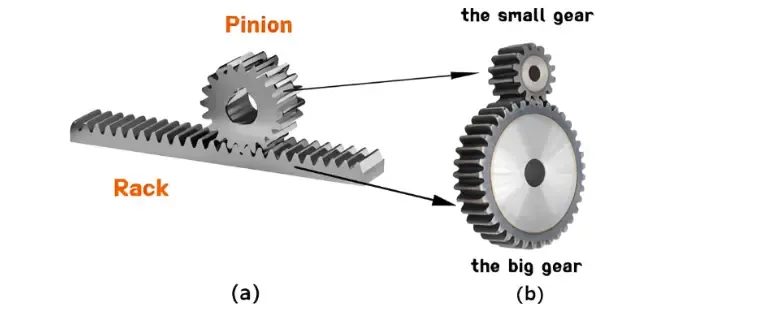
A pinion gear is the gear connected to the input or output shaft of a gear set, and it works by meshing with a larger or smaller gear to change speed or torque. Understanding the function of a pinion gear is straightforward because it always drives or is driven by its partner.
The thing that decides if this setup runs well is the gear ratio between the two parts. The ratio defines the small gear’s turns per single turn of the large one. A higher ratio means more turning power but less speed at the output shaft. Choose your ratio based on whether the machine needs force or speed.
Insufficient space between teeth causes immediate failure. Tight gaps cause rapid heating and edge wear. The teeth need enough room for oil to flow through and carry that heat away from the contact point.
Setting up a pinion and ring gear
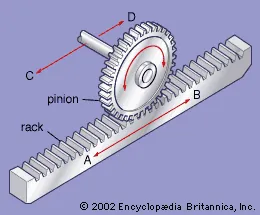
Alignment is critical. Follow these steps for quiet, durable gears.
- Mount the larger gear on its shaft first and tighten the bolts to the maker’s torque spec. This gives you a fixed target to aim the smaller gear at while keeping everything square.
- Slide the pinion into place until you feel light contact across the tooth faces. Don’t force it deep; start with a shallow mesh and adjust inward later.
- Check the backlash with a dial indicator placed flat against one tooth. Rock the larger gear back and forth while holding the small one still, and read the movement on the dial.
- Adjust the shims behind the bearings if that reading sits outside the manufacturer’s published range. Adding shims moves the gear out, and taking them away pushes it deeper into the mesh.
- Paint three or four teeth with marking compound and spin the set slowly by hand. Look at where the paint rubs off to see if the contact patch lands in the center of the face.
- Recheck the backlash after every shim change because moving the gear alters the gap. One adjustment always shifts the other, so you’re chasing both numbers together until they match.
Tip: If the paint mark sits near the top edge of the tooth, the gears are too far apart. Move the pinion closer before running it under power, or the tip will chip off under load.
Tip: Never stack old shims with new ones when setting depth. Mixed thicknesses compress unevenly and shift while the machine runs, ruining the pattern you just built.
If the pattern remains crooked after three shim changes, the housing bore may be flawed. Machining that bore requires a mill and proper measuring tools most people don’t have. At that point, take the assembly to a shop that rebuilds differentials or industrial gearboxes for a living.
How long pinion gear setup takes
Open gearboxes are faster to set up than sealed differentials. Ensure your dial indicator and marking compound are ready.
| Situation | How long | What changes it | What to watch for |
|---|---|---|---|
| Open industrial gearbox | 30 to 45 minutes | Number of shim swaps needed | Losing the spacer order during reassembly |
| Automotive rear differential | 2 to 4 hours | Bearing preload adjustments | Crush sleeve giving false torque readings |
| Steering rack replacement | 1 to 2 hours | Access to tie rod ends | Stripping the pinch bolt threads |
| Small electric motor gearbox | 15 to 20 minutes | Plastic housing flex | Cracking the case while pressing bearings |
These figures assume standard hand tools and a clean workspace. The differential setup instructions from Yukon Gear & Axle show the exact shim sequences their housings require, which saves time guessing at starting depths.
If the job takes twice as long as expected, measure the housing. Shimming can’t fix a warped case.
Signs the pinion gear mesh is right
You can’t trust a single number to tell you the setup is finished.
Check the marking compound after five slow turns. The contact patch must be centered, avoiding the edges.
Spin the shaft and listen closely. A smooth hum indicates clean sliding. A clicking or popping noise means something is still hitting too hard.
If the backlash reads correct but the paint mark is high and the sound is rough, trust the paint.
Errors that ruin a pinion gear setup
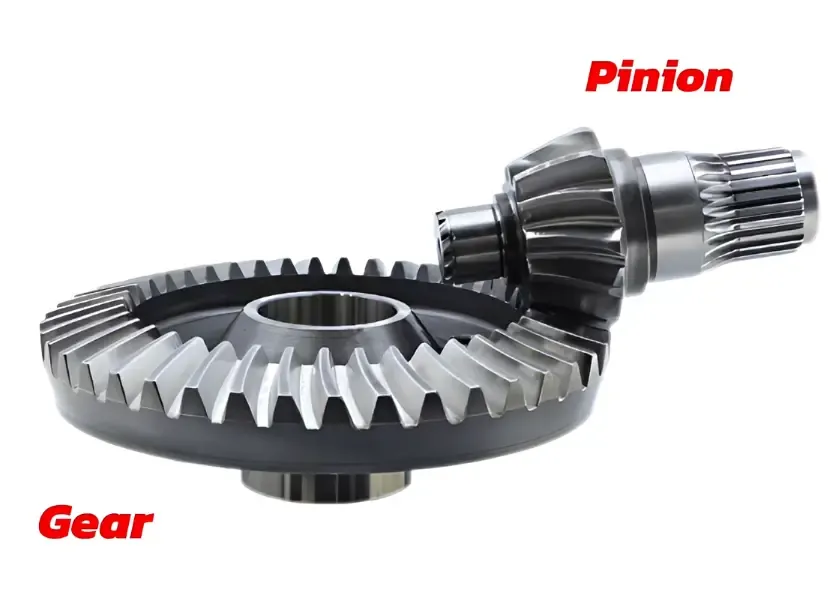
- Using the wrong backlash spec for your model. The gap that works for a truck differential destroys a small instrument gearbox. Always read the limit stamped in the manual for your exact part number, not a forum post about a similar one. Measure yours with a dial indicator instead of guessing by feel.
- Skipping the marking compound test. Numbers on a dial don’t show you where the teeth actually touch under pressure. Without that painted pattern, you won’t know the load hits the weak tip until it snaps off. Apply the paste, turn the gear five times, and read the mark before closing the case.
- Mixing old and new shims behind the bearing. Used shims compress over time, so stacking them with fresh ones creates an uneven base. That tilt shifts while the machine runs and ruins the pattern you spent hours building. Throw the old pack away and build a fresh stack from new stock.
- Overtightening the bearing preload to stop play. Crushing the spacer too hard stops the wobble, but it also traps heat inside the race. That heat breaks down the grease and scores the metal within a few miles. Set the drag with an inch-pound torque wrench to the maker’s number, never by feel.
- Running the gears dry to test them quickly. Bare metal on bare metal scuffs the surface finish in seconds, even without a heavy load. That rough spot catches dirt later and wears out the whole set faster. Coat the teeth in assembly lube or heavy gear oil before you turn the shaft even once.
Every machine has a point where the factory tolerances stack up badly, and no shim pack fixes it. Your own backlash reading is the only truth that matters, and you’ll find the safe window printed in the service guide for your specific model year.
Related guides
- Foosball Resources: Where to Find Tactics and Gear in 2026
- Best Ridgid Plumbing Tools: Essential Gear for Pro Results in 2026
- 10 Best Lubricant for Table Saw Gears Picks for Smooth Cuts in 2026
Frequently asked questions
Can a pinion gear be bigger than the mating gear?
Yes, it can. The word “pinion” refers to the gear connected to the input or output shaft, regardless of its relative size. In those setups, the roles flip, and the usual name follows the function rather than the physical size.
Why do pinion gears wear out faster?
They wear faster because every single tooth hits the larger gear more often in one minute. If the ratio is four to one, each small tooth takes four impacts for every one the big gear feels. That repeated stress removes material quicker unless the oil film stays thick.
How much backlash should a pinion gear have?
For most automotive differentials, the gap falls between 0.006 and 0.010 inches when measured at the ring gear teeth. Smaller instrument boxes need less, sometimes half that amount. Always check the specification sheet for your exact model, because the right number changes with the gear size and cut.
Is it safe to run mismatched gear brands together?
No, it isn’t safe for anything carrying real power. Different makers cut their tooth profiles with slightly different curves and angles. Those shapes won’t roll smoothly against each other, causing heavy vibration and fast chipping. Buy the matched set from one company to keep the geometry correct.
What happens if the backlash is too tight?
If the gap is too small, the oil gets squeezed out from between the teeth before it can cool them. The bare metal rubs together, generates extreme heat, and welds tiny spots that tear apart as they spin. You’ll hear a high whine right before the teeth start breaking off.
How long does a pinion gear last?
In a sealed, oiled car differential, the steel parts easily run for a long time without needing attention. In an open, dusty conveyor box, that same size might need replacing much sooner. The fluid condition and the load decide the lifespan, and you should consult the owner’s manual for specific service intervals based on your usage.
Does the pinion gear always connect to the motor?
It usually does, but not every time. In some steering racks or winch systems, the motor turns the large gear first, and the small one acts as the output driving the wheels or cable. The part connected to the power source is simply called the driver, regardless of its size.
Conclusion
The small gear in any pair sets the pace for the whole machine. Getting its depth and gap right keeps the teeth quiet and stops them from snapping under load. Take your time with the dial indicator and the marking paste, because rushing those checks costs you a ruined set and a torn-down housing.
