
An induced draft cooling tower removes heat from industrial processes by using a mechanical fan to pull cool air through internal structures. This system cools liquid by evaporating water to carry heat away, relying on a top-mounted fan to maintain a steady, controlled airflow.
Parts inside an induced draft cooling tower
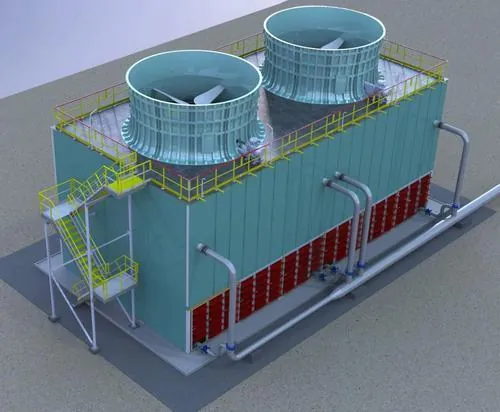
The effectiveness of your system depends on several key parts working together to manage heat transfer. If you notice the system isn’t cooling well, check these components first to see if they’re dirty or damaged. You can find specific maintenance requirements for your unit in the Environmental Protection Agency cooling tower guidance regarding water management and cleanliness.
Inspect the fill media by shining a flashlight through it from one side. If you can’t see light passing through the opposite face, mineral scale has closed the gaps. Film fills clog faster than splash fills when the water carries high dissolved solids.
Spray nozzles that drip instead of misting leave dry spots on the fill below them. Those dry patches force the fan to run longer to reject the same amount of heat.
Drift eliminators warped by UV exposure let droplets escape into the airstream. This wastes treated water and deposits minerals on nearby equipment.
| Part or input | What it does | What you notice when it goes wrong |
|---|---|---|
| Mechanical fan | Pulls air through unit | Increased noise or vibration |
| Fill media | Increases surface contact | Higher water temperature output |
| Water spray nozzles | Distributes hot water | Uneven cooling across surface |
| Drift eliminators | Traps water droplets | Excessive water loss outside |
| Air inlet louvers | Directs incoming air | Airflow restriction or debris |
Steps for the cooling process
- Hot water from your industrial process enters the tower through a distribution pipe. This happens continuously while the process is running, usually at a temperature between 95°F and 115°F.
- The water moves into the spray nozzles, which break the flow into a fine mist. This increases the surface area of the water for better heat exchange with the air.
- The mist falls over the fill media inside the tower. The fill acts like a maze to slow the water down, allowing it more time to release heat to the air.
- A large fan at the top of the tower pulls cool, outside air in through the side louvers. This airflow moves upward, directly against the falling warm water droplets.
- As the air passes the water, a small portion of the water evaporates. This evaporation consumes heat from the remaining water, significantly lowering its temperature before it reaches the basin.
- The cooled water gathers in the bottom basin. It’s then pumped back to your process equipment to repeat the cycle, typically returning at 80°F to 90°F.
Why mechanical failure impacts cooling efficiency
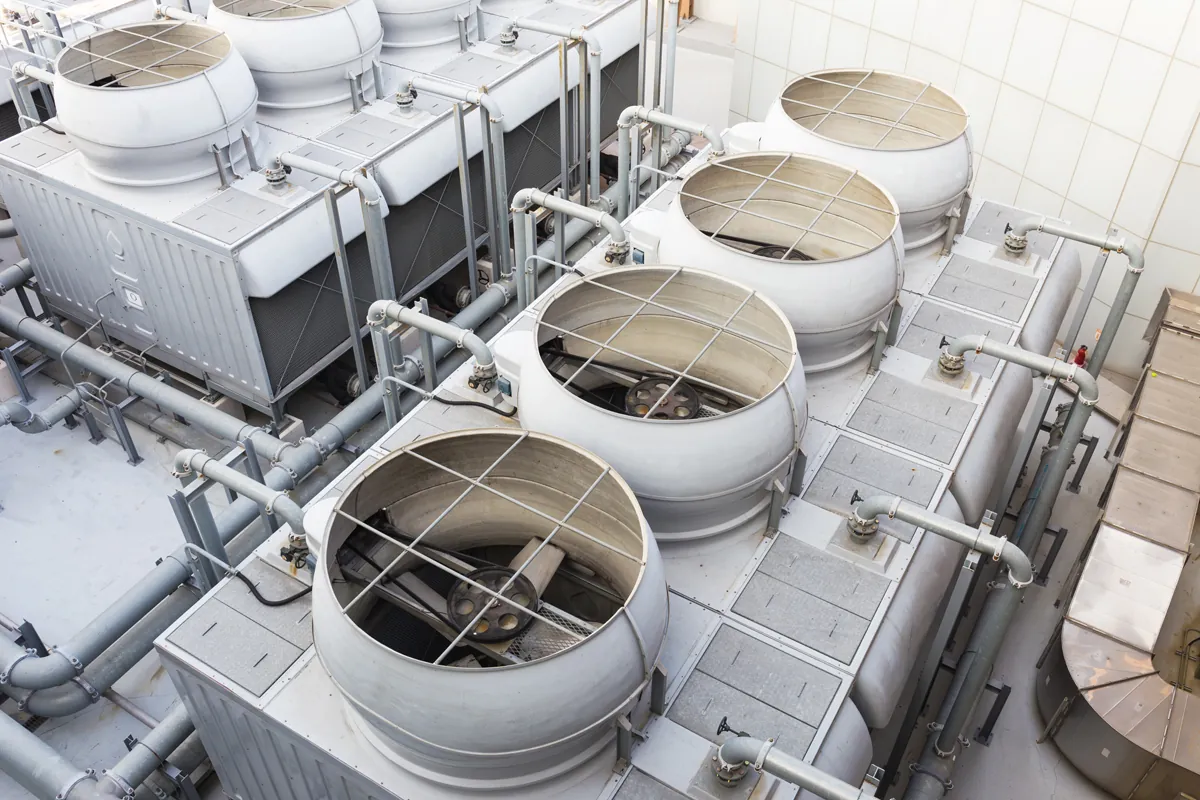
The mechanical fan is the heart of the system, and its performance directly dictates how much heat the tower can reject. If the fan speed drops or the motor begins to fail, the volume of air moving through the tower decreases. Without enough air, the evaporation rate slows down, which means the water returning to your equipment stays too hot to function properly. If you see high water temperatures, check the fan motor and the drive belts first.
The internal fill media is another critical point of failure. Over time, mineral deposits or algae can build up on the fill, blocking the path for both air and water. If the air can’t pass through the fill, the fan works harder but achieves less cooling, wasting electricity and risking equipment damage. If the fill is clogged, it often requires professional cleaning or replacement to restore flow.
Drift eliminators also play a vital role in system integrity. These parts catch water droplets before they exit the fan, preventing water loss and keeping the surrounding area dry. If you notice water pooling around the base of the tower, the drift eliminators might be broken or improperly installed. Replacing these prevents unnecessary water waste and keeps your system within local environmental regulations.
Adjustments and design limitations
What you control
- Fan speed settings for air volume.
- Water flow rates from the process.
- Chemical treatment levels in the basin.
- Frequency of scheduled cleaning intervals.
What is fixed by design
- Physical size and cooling capacity limits.
- The surface area of the fill media.
- The structural orientation of the louvers.
If you need to change the cooling capacity beyond the design limits, you must consult a qualified mechanical engineer to avoid structural failure or voided warranties. Don’t attempt to modify the fan assembly or the structural supports yourself, as these carry significant mechanical risks. Any electrical work must be performed by a licensed professional to ensure safety and compliance with local building codes.
Habits for better performance
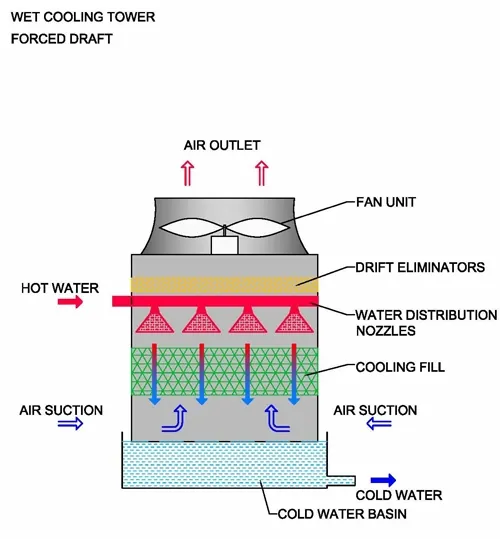
Maintaining a clean system is the most effective way to keep your cooling tower running efficiently. Inspect the basin for sludge or debris as needed based on your specific usage, referring to the owner’s manual for the recommended frequency, as buildup here can clog the pump intake and restrict water flow to your equipment. If you see visible dirt on the fill media, plan a deep cleaning session to prevent permanent blockages that reduce heat exchange surface area.
Monitor your water chemistry at least once a week to prevent scale and corrosion. High mineral content acts as an insulator, preventing heat from leaving the water, which forces your system to run harder. If your total dissolved solids exceed 2,000 ppm, increase your blowdown rate immediately to avoid rapid scaling.
Keep a log of your water temperature readings daily to spot trends. If the output temperature rises by more than 5°F over a week, investigate the airflow or nozzle spray pattern. A common mistake is ignoring minor temperature fluctuations, which often signal a failing fan belt or clogged spray nozzles before a total shutdown occurs.
Always follow the manufacturer’s manual for specific lubrication schedules on fan bearings to prevent motor burnout. If you hear a grinding noise during startup, grease the bearings immediately; silence is the only acceptable state for a healthy motor.
Related guides
- 8 Best Swamp Cooler Picks for Effective Home Cooling
- 9 Best Portable Air Conditioners for Garage Cooling Picks
- The Science of Boiling Heat Transfer: How It Cools Surfaces
Frequently asked questions
Can I run the tower without the fan?
No, the tower can’t achieve its design cooling capacity without the fan, because the evaporation process requires a consistent, forced airflow to carry heat away. Without the fan, the water will only cool through natural convection, which is far too slow for most industrial heat loads.
How often should I clean the basin?
You should clean the basin every 30 days to remove sediment and biological growth that can clog your pumps. If your facility is located in a dusty environment, you may need to inspect the basin every 14 days to ensure the water intake remains clear and free of debris.
Is it safe to be near the tower?
Yes, it’s safe to be near the tower if you follow standard safety protocols, but you must avoid opening access panels while the fan is spinning. Keep all guards and safety screens in place to prevent accidental contact with moving parts, and wear eye protection when performing water quality tests.
What happens if the water level is too low?
A low water level causes the pump to draw air, which leads to cavitation that can destroy your pump impeller in a matter of hours. Always check the automatic float valve to ensure the water level stays at the manufacturer’s recommended height to prevent permanent pump damage.
Does the outside temperature matter?
Yes, the outside air temperature directly affects the cooling limit, because the tower can only cool the water down to the ambient wet-bulb temperature. On hot and humid days, the tower will be less effective at removing heat compared to cool, dry days, so you may see higher process temperatures.
How long does the fill media last?
The fill media typically lasts for a period determined by the water quality and the frequency of your cleaning schedule. You can check the condition of the fill by looking for brittle sections or heavy mineral deposits that don’t wash away during your regular maintenance cycles.
Conclusion
Regular maintenance is essential to keep your system running smoothly and efficiently. You should schedule a professional inspection soon to check for mineral buildup or mechanical wear. Taking these simple precautions won’t just prevent unexpected breakdowns; it’ll also help you save on energy costs throughout the hottest months of the year.
