
As an Amazon Associate, we earn from qualifying purchases. This post contains affiliate links – if you buy through them, we may earn a commission at no extra cost to you.
Selecting a drone for real estate photography depends on whether you prioritize high resolution for luxury listings or portability for quick site visits. Capturing interior flow and exterior curb appeal requires a balance of stability, image quality, and ease of use. Your choice depends on whether you prefer a professional imaging system or a lightweight setup. The DJI Mavic 4 Pro is often the go-to for pros needing maximum detail, while the DJI Mini 5 Pro serves those who prioritize a compact, travel-ready build.
1. DJI Mavic 4 Pro Drone With DJI RC 2

Best for: Professionals capturing high-end luxury properties with demanding lighting and detail needs.
The Mavic 4 Pro is built for those who need to deliver top-tier visuals. Its 100MP Hasselblad camera and 6K video capabilities allow you to capture every detail of a property, ensuring textures and architectural features look their best. The 360° Infinity Gimbal provides the flexibility to get dynamic camera movement for cinematic shots.
This model is a heavy-duty tool designed for long shooting days. With 51 minutes of flight time, you can cover large estates without constantly landing to swap batteries. It isn’t intended for the casual hobbyist who wants a simple, pocket-sized device for quick snapshots.
Good if:
- You need maximum resolution for large-format prints.
- You frequently shoot during low-light conditions.
- You require a long-range transmission for expansive estates.
Skip it if:
- You want a drone that fits in a small pocket.
- You’re a beginner looking for a basic, low-setup device.
2. DJI Mini 5 Pro Fly More Combo Plus with DJI

Best for: Advanced creators who need a balance of high-quality imaging and extreme portability.
The Mini 5 Pro fits a 1-inch CMOS sensor into a compact frame. This allows you to capture 4K/60fps HDR video without carrying a massive kit. Its true vertical filming capability is a major advantage for real estate agents who need social-media-ready content for platforms like Instagram or TikTok.
The inclusion of three batteries in the Fly More Combo means you can stay in the air for over two hours of total flight time. This is perfect for touring multiple properties in one day. It isn’t designed for users who need the extreme zoom or raw sensor power found in larger, heavier professional drones.
Good if:
- You need vertical video for social media marketing.
- You travel between many different property locations daily.
- You want a high-quality sensor in a lightweight package.
Skip it if:
- You require the absolute highest zoom capabilities.
- You’re uncomfortable downloading apps directly from a manufacturer website.
3. DJI Air 3S Drone with RC 2 Fly More Combo

Best for: Creators who need to switch between wide-angle and telephoto views in a single flight.
The Air 3S features a dual-camera setup that makes it a versatile tool for real estate. You can quickly switch between a wide scenic shot of a backyard and a tighter, cinematic perspective of architectural details. The included Fly More Combo provides a comprehensive kit, including a landing pad and backpack, which is helpful for agents who are always on the move.
This drone is aimed at those who want a streamlined experience with less setup friction. It’s a reliable choice for professional real estate photography where efficiency is key. However, it isn’t for those who only need one fixed lens or who prioritize the absolute smallest drone footprint possible.
Good if:
- You want both wide and tight framing options.
- You need a complete, ready-to-go bundle for travel.
- You value a responsive and convenient controller setup.
Skip it if:
- You’re looking for a pocket-sized, ultra-light drone.
- You don’t need multiple camera lenses for your workflow.
4. DJI Avata 360 Fly More Combo (RC 2)

Best for: Capturing immersive, full-property views that standard drones can’t achieve.
The Avata 360 uses a 1-inch 8K sensor to capture everything around the drone in a single pass. This is a significant advantage for interior real estate tours where you want to provide a complete view of a room. You can reframe the footage in post-production, which allows you to create multiple different clips from one flight.
The integrated propeller guard adds another layer of safety. It’s a specialized tool for dynamic, creative shots. It isn’t the best choice for a standard, static exterior real estate shoot where a traditional camera gimbal would be more intuitive.
Good if:
- You want to create immersive 360-degree property tours.
- You need to fly safely in tighter, indoor spaces.
- You want to reframe footage after the shoot is finished.
Skip it if:
- You prefer a traditional, stable camera-drone workflow.
- You don’t want to spend time reframing footage in post.
5. K600PRO GPS Drone with EIS 4K Camera

Best for: Pilots who prefer an integrated screen and don’t want to use a phone.
The K600PRO stands out because the controller has a built-in 5.5-inch touchscreen. This means you don’t need to tether your phone to the remote, which simplifies your setup. The 3-axis gimbal and 4K camera provide the stability needed for professional-looking real estate footage.
With a 55-minute flight time, it’s designed for long, uninterrupted sessions. It includes beginner-friendly modes like auto-return and height lock, making it accessible for those new to aerial photography. It isn’t for those who prefer the interface and ecosystem of more established, major-label drone brands.
Good if:
- You want a controller with a built-in screen.
- You prefer to fly without relying on your smartphone.
- You need long flight times for large property inspections.
Skip it if:
- You prefer the software ecosystem of a major brand.
- You need the most advanced tracking software available.
6. SKYROVER X1 Drone with Camera Combo

Best for: Travel-ready professionals who need a balance of weight and performance.
The SKYROVER X1 weighs under 249g, which makes it very convenient for travel and reduces the need for certain complex registrations in some regions. Despite its small size, it features a 1/1.32″ sensor that captures 4K/60fps HDR video, ensuring high-quality results for your listings. Its 360-degree obstacle avoidance adds a layer of safety for flying in complex outdoor environments.
The AI-driven tracking modes are useful for capturing dynamic shots of cars or people moving through a property. It isn’t for those who need a large-sensor professional drone for high-end cinematic production or those who require advanced zoom capabilities.
Good if:
- You need a lightweight drone that avoids heavy regulations.
- You want 360-degree obstacle avoidance for safer flights.
- You need a travel-friendly kit with extended battery life.
Skip it if:
- You need a larger sensor for extreme low-light performance.
- You require a zoom lens for distant architectural detail.
7. Potensic Atom 2 Fly More Combo with RC PTD 1

Best for: Users who need long-range transmission and an integrated screen.
The Potensic Atom 2 features a bright 5.5-inch FHD touchscreen on the controller, providing excellent visibility even in direct sunlight. Its PixSync 4.0 technology allows for stable transmission over long distances, which is ideal for large, sprawling properties. The 3-axis gimbal ensures your 4K HDR footage stays level and shake-free.
The Atom 2 is designed for efficiency, with fast charging that gets your batteries ready for the next shoot quickly. It isn’t for users who want to use a phone-based app interface or those who need specific professional-grade raw shooting formats found in cinema-focused drones.
Good if:
- You need a bright, built-in screen for outdoor visibility.
- You require reliable, long-range signal transmission.
- You want fast battery charging for back-to-back shoots.
Skip it if:
- You prefer using your own phone as the display.
- You need the most advanced professional color-grading logs.
8. Bwine F7MINI 4K Video 8K Photo Drones with Camera

Best for: Entry-level real estate photography with a focus on stability.
The Bwine F7MINI offers a 3-axis gimbal, which is the most important feature for getting professional-quality, steady shots of a property. It’s lightweight and easy to carry, making it a great choice for quick farm patrols or villa tours. The wired digital transmission helps maintain a clear signal, reducing the frustration of lost feeds.
It’s a solid, straightforward tool for someone starting their real estate photography business. It isn’t intended for high-end cinema production or for those who need advanced AI flight-path automation.
Good if:
- You need a 3-axis gimbal for steady, professional video.
- You want a portable drone for quick property visits.
- You value a stable, wired signal connection.
Skip it if:
- You need advanced, automated flight-path modes.
- You’re looking for a top-tier cinematic camera sensor.
9. DCX Volo X EZ AI Drone
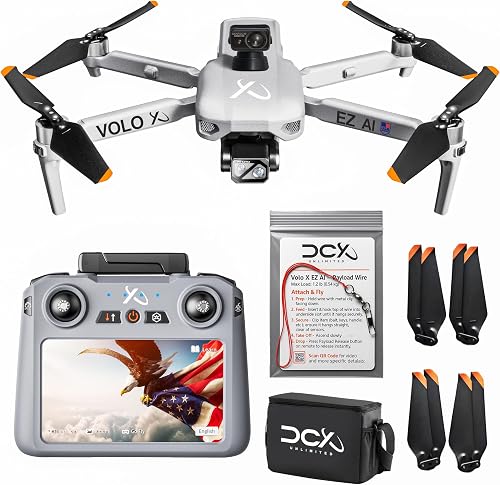
Best for: Beginners who want AI assistance to help capture better shots.
The Volo X EZ is designed to make flying easier with features like 360-degree obstacle avoidance and auto-return. These tools help prevent accidents in tight spaces, which is very useful when filming near trees or building eaves. The 3-axis gimbal supports the 4K camera.
This drone is a good middle ground for someone who wants professional results without a steep learning curve. It isn’t for experienced pilots who want full manual control over every aspect of the flight and camera settings.
Good if:
- You’re a beginner worried about crashing.
- You need obstacle avoidance for tight property spaces.
- You want an easy, automated return-to-home feature.
Skip it if:
- You want full manual control for complex cinematic shots.
- You’re an advanced pilot looking for professional-grade optics.
10. DJI Neo

Best for: Quick, casual content creation where a full drone setup is too much.
The DJI Neo is an ultra-compact, 135g drone that can take off right from your palm. It’s perfect for getting quick, creative shots of a property exterior or a neighborhood overview without the setup time of a larger drone. Because it’s so light, it’s very portable.
It isn’t a replacement for a professional real estate drone. If you need to shoot high-resolution, professional-grade architectural video with full manual camera settings, this isn’t the right tool.
Good if:
- You need a drone that can take off from your hand.
- You want an ultra-portable device for quick vlogs.
- You’re looking for a simple, controller-free experience.
Skip it if:
- You need professional-grade 4K video for listings.
- You need long-range flight capabilities.
How we picked the best real estate drone
In the world of real estate photography, many of these drones occupy a similar space, especially those with 3-axis gimbals and 4K cameras. The DJI Mini 5 Pro, SKYROVER X1, and Potensic Atom 2 all offer compact, lightweight designs that make them easy to transport between properties. For most real estate agents, the choice between these models will come down to software preference and whether you prefer an integrated screen on the controller or using your own smartphone.
The high-end flagship models and Air 3S are clearly separated from the smaller drones by their advanced sensor capabilities and dual-lens systems. These are for those who view real estate photography as a core part of their business, whereas the smaller, lighter drones are better suited for agents who want to supplement their listings with high-quality aerials without a heavy investment in gear.
Still Not Sure?
How often will I really use it?
If you’re shooting properties daily, you need a drone that’s reliable, has a long flight time, and offers quick battery swapping. This top-tier model is built for this level of intensity, offering the build quality and professional features required for high-volume work. If you only need to grab a few aerial shots once a month, a smaller, easier-to-store option like the DJI Mini 5 Pro would be a more practical choice.
What do I already own that this has to work with?
Think about your current mobile device and your comfort level with apps. If you already have a modern smartphone with a large, bright display, you might prefer a drone that uses that as your screen, like the DJI Air 3S. However, if you’re tired of your phone dying or don’t want to deal with app compatibility, a drone with an integrated screen on the controller, such as the Potensic Atom 2 or K600PRO, will save you a lot of frustration.
What am I most likely to regret choosing?
The most common regret is buying a drone that’s too difficult to fly or lacks the stability for professional video. If you’re a beginner, you might regret skipping obstacle avoidance or advanced GPS features found in the DCX Volo X EZ. Conversely, if you’re a professional, you might regret buying a “beginner” drone that lacks the image quality or lens versatility you need for high-end listings, in which case you should look at the DJI Air 3S.
Frequently Asked Questions
What does it take to keep the drone working week to week?
Maintenance is mostly about battery care and keeping the firmware updated. You must ensure that your lithium-polymer batteries are stored at a safe voltage and never left completely empty for long periods. The Federal Aviation Administration provides guidance on safe operation and registration requirements that every pilot should follow. Keeping your propellers clean and checking for any cracks before every flight will keep your drone performing reliably for many seasons.
What has to be replaced or renewed to keep it flying?
Propellers are the most common part that needs replacement, as they can get nicked or bent during landings or light contact with obstacles. You should always carry a spare set in your bag. Batteries also have a limited lifespan; after a few hundred charge cycles, you’ll notice the flight time decreasing. The listing doesn’t mention battery replacement schedules.
What happens when the drone is outgrown or used up?
Yes, you should upgrade your drone once your current model limits your creative potential. Advanced platforms offer larger sensors and superior optics, which are essential for professional-grade results. Keep your beginner drone as a backup for lighter shoots or sell it to a new pilot as you transition to more capable equipment.
Would the more capable drone have suited me better?
Yes, you should upgrade if you need better low-light performance or a tighter zoom for architectural details. Many pilots eventually require the dual-lens capabilities or raw sensor power found in professional-grade models. Transitioning to a more capable platform ensures your gear keeps pace with your growing technical requirements and specific project demands.
Conclusion
Choosing between these drones ultimately comes down to your primary goal: if you need a high-end tool for luxury listings, the most capable professional model is the clear choice. If you’re an agent who needs a portable, easy-to-use drone for quick social media content, the DJI Mini 5 Pro is the best fit.