
Finding the best drone for roof inspections depends on whether you need professional thermal data or a compact tool for visual checks. The Autel Robotics EVO Lite 640T is the top pick for professional thermal analysis, while the DJI Mini 4K offers the most straightforward experience for general visual assessments.
As an Amazon Associate, we earn from qualifying purchases. This post contains affiliate links – if you buy through them, we may earn a commission at no extra cost to you.
1. Autel Robotics EVO Lite 640T Enterprise Basic Combo
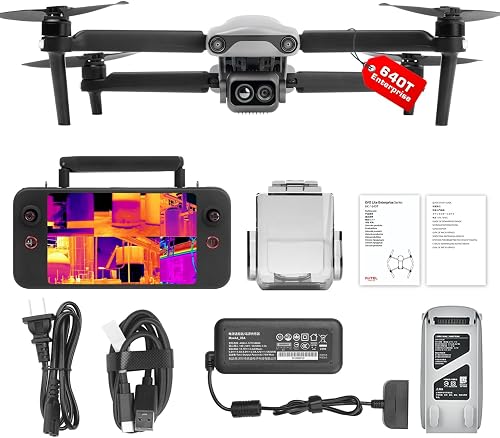
Best for: Professionals requiring high-resolution thermal imaging for deep roof diagnostics.
This drone is built for detailed inspection missions where visual data isn’t enough to identify hidden issues like water leaks or insulation failures. The 640×512 thermal sensor provides the precision needed to catch heat anomalies that could indicate structural problems. You can measure temperatures from -20°C to 550°C with an accuracy of ±3°C, ensuring reliable detection during critical operations.
Its 40-minute flight time allows for thorough scanning of large roofs without needing to land constantly for battery swaps. The compact foldable design, measuring 210×123×95mm, makes it easy to transport to different job sites. Because it supports Remote ID, it’s ready for professional environments where compliance is a necessity.
This isn’t for a hobbyist looking for a casual weekend flight, as the advanced thermal features and enterprise-grade software are tailored specifically for technical inspection work. Use the AI target recognition to streamline your workflow; it projects identified targets onto a digital map in real-time, supporting over 100 objects simultaneously.
Good if:
- You need to detect heat anomalies for building diagnostics.
- You require high-resolution thermal data at 30Hz.
- You need a long flight time for large-scale roof mapping.
Skip it if:
- You only need basic visual photos for simple roof maintenance.
- You have no experience with complex thermal imaging software.
2. DCX Volo X EZ AI Drone
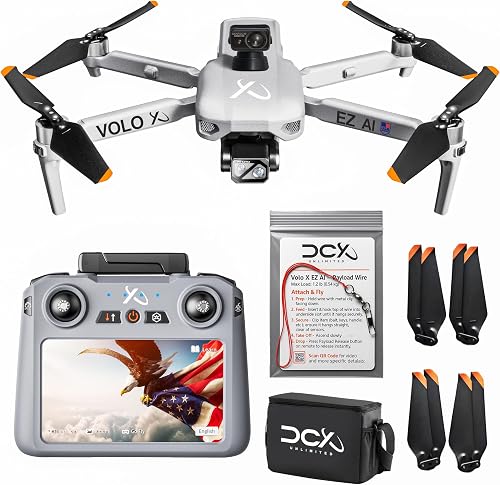
Best for: Users who want extra safety during inspections in tight or complex spaces.
Inspecting a roof often involves flying near chimneys, vents, or trees, which makes collision risk a concern. This drone uses 360° obstacle detection to help you fly with more confidence in tricky areas.
It features a 3-axis gimbal and a 4K camera to ensure your footage stays steady, which is vital when you’re looking for small details like shingle wear. Remember to remove the foam padding from under the camera before your first flight, or you might restrict the gimbal’s movement. This model isn’t intended for those who prefer the smallest possible equipment, as its focus is on heavy-duty safety sensors rather than ultra-portability.
Good if:
- You’re worried about flying in areas with many obstacles.
- You want a long flight time for extended roof sessions.
- You need 3-axis stabilization for steady, clear video.
Skip it if:
- You want the lightest possible drone for travel.
- You don’t need 360° obstacle avoidance for your work.
3. DJI Mini 4K Camera Drone Combo
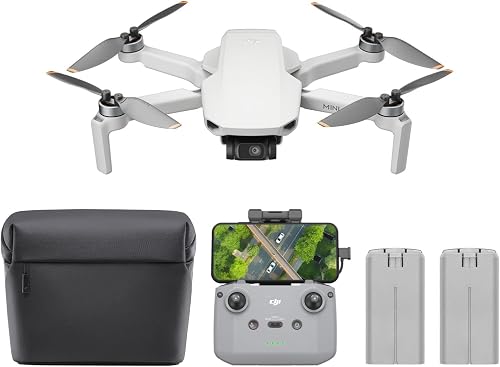
Best for: Beginners who need a simple, lightweight tool for quick visual roof checks.
If you just need to get a clear look at a roof without the complexity of a large, heavy drone, this is a practical choice. It weighs under 249g, which simplifies the registration process for many recreational users. Despite its small size, it handles Level 5 winds well, which is important when you’re hovering high above the ground to inspect gutters or shingles.
The 3-axis gimbal ensures your 4K video remains smooth even if the drone is buffeted by a breeze. It’s very beginner-friendly, featuring one-tap takeoff and landing, which saves time when you’re working alone. This isn’t the right choice if you need advanced mapping features or heavy-duty thermal sensors for professional building science inspections.
Good if:
- You want a lightweight drone that’s easy to carry.
- You need steady 4K footage for basic damage assessment.
- You want a simple, one-tap flight experience.
Skip it if:
- You need thermal imaging to find hidden leaks.
- You’re looking for advanced, automated mapping capabilities.
4. Potensic ATOM 4K GPS Drone

Best for: Users who value long mission times and fast battery charging.
This drone stands out for its endurance, offering up to 96 minutes of total flight time when using the included three-battery kit. For roof inspections, this means you can finish an entire job without waiting around for batteries to charge. The parallel charging hub is a helpful addition that gets you back in the air quickly.
The 3-axis gimbal and Sony CMOS sensor work together to provide clear, steady 4K video, making it easy to spot details on a roof. Its compact size means it’s easy to pack in a storage bag, though it isn’t as rugged as larger enterprise drones. If your inspection requires specialized sensors like infrared, this model will fall short of those specific technical needs.
Good if:
- You need to perform multiple inspections in one day.
- You want a fast-charging solution for your batteries.
- You require a stabilized mechanical mount for clear images.
Skip it if:
- You need advanced sensors beyond standard 4K visual video.
- You prefer a larger, more wind-resistant drone for high-altitude work.
5. Bwine F7GB2 Pro Drones with Camera

Best for: Operators who want a balance of stability and long-range control.
This drone is designed for stable flight, which is essential when you need to hover in one spot to inspect a specific roof section. With its 3-axis gimbal and 6-level wind resistance, it remains calm even when the air is thin or breezy at higher altitudes. It offers a 3000m range, which is more than enough for residential or small farm roof inspections.
The included 3-battery kit provides 75 minutes of flight time, giving you plenty of time to capture high-quality photos. It’s fully FAA Remote ID compliant, so you can fly with full confidence regarding regulations. This isn’t for someone who needs an ultra-compact drone that fits in a pocket, as it’s a more substantial piece of hardware.
Good if:
- You need a stable platform for high-altitude inspections.
- You want a drone that’s already FAA Remote ID compliant.
- You need an extended range for inspecting large estates.
Skip it if:
- You need something small enough to carry in a jacket pocket.
- You require thermal imaging sensors for your inspections.
6. Potensic ATOM SE GPS Drone with 4K EIS Camera

Best for: Pilots who need a compact, foldable drone with decent wind resistance.
The ATOM SE is a great middle-ground for those who want a lightweight drone that handles real-world conditions. It resists Level 5 winds, which is impressive for a craft weighing under 249g. Because it stays under this weight threshold, you avoid the need for FAA and Remote ID registration. The 4K EIS camera uses proprietary ShakeVanish technology to keep your shots smooth while you’re navigating.
It offers a 62-minute total flight time using two 2500mAh batteries. This is sufficient for most residential inspections. The PixSync 2.0 system provides a reliable connection up to 4km, ensuring you maintain a stable live view. If you lose signal or hit low battery, the GPS auto-return feature brings the drone back to the takeoff point.
This drone isn’t for those who need a professional mechanical stabilization system, as this model relies on electronic image stabilization. Use Sport Mode to reach speeds of 16m/s, but keep in mind this acceleration happens in just 2.8 seconds.
Good if:
- You want a highly portable, foldable drone.
- You need a drone that handles wind well for its size.
- You want a reliable 4km transmission range.
Skip it if:
- You require a mechanical stabilization system for the smoothest possible footage.
- You need professional-grade thermal or mapping sensors.
7. Holy Stone HS175D GPS Drone with 4K Camera

Best for: First-time users who want a low-stress entry into roof inspections.
This is a very approachable drone for someone who has never performed an inspection before. It includes helpful features like altitude hold and optical flow, which keep the drone steady without constant input. The 90° adjustable camera angle allows you to tilt the lens for a better view of roof slopes or gutters. Use the 110° wide-angle lens to capture more of the roof structure in a single frame.
The 46-minute flight time from two batteries is enough for a standard home inspection. It’s compact and folds up, making it easy to throw in a bag. However, it lacks the advanced stabilization and sensor capabilities found in professional-grade models. If you need to perform technical reporting, this drone may fall short. It’s best suited for quick visual checks.
Good if:
- You’re a beginner needing a simple, stable flight.
- You need a foldable design for easy travel.
Skip it if:
- You need professional-grade video stabilization.
- You require advanced sensors for detailed structural analysis.
- You’re working in high-wind conditions where the lightweight frame might struggle to maintain a steady hover for precise, detailed photography.
8. Ruko F11PRO 2 Drone with 6K Camera

Best for: Users who want high-resolution images and a long-range connection.
This drone features a 3-axis mechanical gimbal, which is a major advantage for getting professional-looking footage. The ability to capture 6K photos is a standout feature for users who need to zoom in on small details later. With a 10,000ft transmission range, you can easily inspect large roofs or estates without signal drops.
It’s designed for adults who want a straightforward experience, featuring beginner modes and simplified flight controls. The 70-minute flight time, provided by two intelligent batteries, is excellent for longer jobs. This drone isn’t for the person who needs a micro-drone, as its size is better suited for stable, serious photography.
If you’re flying in windy conditions, the mechanical gimbal is the decision rule for choosing this model over smaller, software-stabilized alternatives. Rely on the GPS Auto Return-to-Home feature if your battery hits a low threshold or you lose signal.
Good if:
- You need the highest resolution possible for spotting small defects.
- You require a 3-axis mechanical gimbal for steady video.
- You need a long transmission range for large properties.
Skip it if:
- You want the smallest, most portable drone available.
- You need specialized thermal or multispectral sensors.
9. Oddire Drones with Camera

Best for: Users who want automated flight modes to simplify their workflow.
This drone includes several smart features like waypoint flight and orbit fly, which can help you get consistent angles on a roof without manual piloting. The 4K camera is adjustable, and the brushless motor provides enough power to handle Level 5 winds. You get 48 minutes of flight time, which is solid for standard roof documentation.
It’s lightweight and doesn’t require FAA registration, making it easy to deploy for quick jobs. The 5G transmission module keeps your live feed stable while you’re flying up to 1640 feet away. This isn’t for those who need a heavy-duty professional drone with obstacle avoidance, as its focus is on automated flight rather than advanced safety sensors.
If you’re a beginner, use the GPS Follow and Route Planning modes to capture professional footage without needing complex manual control. Remember that you must provide your own SD card to store your 4K images and videos. If you don’t insert a card, you’ll have no local backup of your flight data.
Good if:
- You want automated flight paths to capture roof angles.
- You need a lightweight drone that’s easy to register.
- You want a stable 5G transmission for your live view.
Skip it if:
- You need heavy-duty obstacle avoidance sensors.
- You need professional-grade thermal imaging.
10. DJI Neo

Best for: Very close-range, casual roof inspections where a controller isn’t needed.
The DJI Neo is unique because it can be flown entirely without a controller, making it incredibly fast to deploy. At only 135g, it’s perfect for tossing in a bag and taking to a job site. It features subject tracking, which is useful if you’re trying to capture footage while moving around a site.
The propeller guards are a great safety feature for flying near houses or trees. Because of the built-in guards, you can navigate around branches or tight corners without the fear of damaging the unit.
However, because it’s so small and designed for simplicity, it doesn’t have the range or the advanced camera settings of larger drones. This isn’t for a professional inspector who needs to map an entire roof from a distance. If your work requires high-altitude mapping or long-range transmission, choose a more robust model.
Before your first flight, you must visit the DJI website to download the app. The Google Play store version is currently unavailable, so manual installation is required to activate the drone.
Good if:
- You want the fastest possible deployment time.
- You need a drone that’s safe to use near structures.
- You want a hands-free, controller-free flight experience.
Skip it if:
- You need a long-range drone for inspecting large roofs.
- You require professional-level camera controls and resolution.
How we picked the best roof inspection drones
Many of the drones listed here share a similar focus on 4K resolution and 3-axis stabilization, particularly the Potensic ATOM 4K, Bwine F7GB2 Pro, and Ruko F11PRO 2. These three are closely matched in their ability to deliver steady, professional-looking footage for visual inspections. If you’re choosing between these, the decision often comes down to secondary features like transmission range or the specific battery charging system.
Conversely, there’s a clear divide between the “compact” category—represented by the DJI Mini 4K and Potensic ATOM SE—and the “enterprise” or “heavy-duty” category like the Autel Robotics EVO Lite 640T. The compact models are ideal for quick, low-stakes visual checks, while the Autel is a specialized tool for structural diagnostics. The DCX Volo X EZ sits in its own space by prioritizing obstacle avoidance, which separates it from the others if safety in tight environments is your primary concern.
Still Not Sure?
How often will I really use it?
If you’re inspecting roofs weekly as part of your work, you need a durable, reliable drone with a long flight time and fast charging, such as the Potensic ATOM 4K. If you only plan to check your own roof once or twice a year, a simpler, more portable option like the DJI Mini 4K is likely more than enough. Don’t pay for professional enterprise features if you don’t plan to use them regularly.
What do I already own that this has to work with?
Think about your current smartphone and your ability to manage firmware updates. Some drones, like the DJI series, require specific apps that may need to be downloaded directly from the manufacturer’s website rather than an app store Federal Aviation Administration. If you prefer a “plug-and-play” experience without extra software hoops, look at the Potensic or Ruko models, which often have more straightforward app integration for casual users.
What am I most likely to regret choosing?
Most people regret choosing a drone that’s too difficult to fly or too bulky to carry. If you find yourself leaving the drone at home because it’s a hassle, you have the wrong one. For most users, the DJI Neo or the DJI Mini 4K are the least likely to be left behind due to their extreme portability. If you need professional diagnostics, however, you’ll regret choosing a hobbyist drone that lacks the necessary thermal sensors found in the Autel Robotics EVO Lite 640T.
For professional thermal inspections that require identifying hidden structural issues, the Autel Robotics EVO Lite 640T is the most capable tool. For those who prioritize a simple, reliable, and highly portable drone for routine visual assessments, the DJI Mini 4K is the best starting point. Assess your technical needs, then select the model that matches your daily flight routine.