
Slumping forward without back contact is how to properly sit in an office chair wrong, which strains your spine and leaves you with lower back pain by mid-afternoon. Solving this requires sitting fully against the backrest with your feet flat on the floor and your hips pushed all the way into the seat pan.
The wrong way and the right way
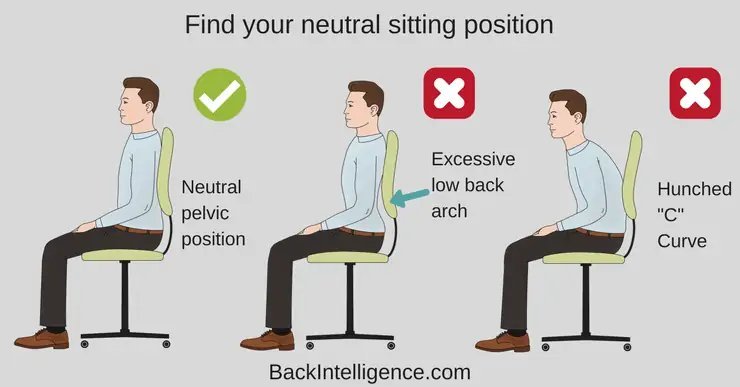 Photo: www.precisionlandscape-inc.com on Google
| What most people do | What to do instead | Why it matters |
|---|---|---|
| Perch on front edge | Push hips against backrest | Prevents lumbar spine fatigue |
| Tuck feet under seat | Keep feet flat on floor | Stops restricted leg blood flow |
| Sit straight at 90° | Recline between 100° and 110° | Lowers disc pressure significantly |
| Raise armrests too high | Lower until elbows match desk | Avoids trapezius shoulder strain |
| Leave thighs pressed tightly | Keep two fingers behind knees | Prevents pinched sciatic nerves |
| Cross legs while typing | Keep knees level with hips | Stops pelvic rotation and tilt |
Recline the backrest slightly past upright
Sitting at a strict 90-degree angle feels disciplined, but it actually increases the mechanical pressure on your lumbar discs. The OSHA computer workstations guidance explains that a backrest tilted backward between 100 and 110 degrees reduces spinal compression while supporting your body weight. When you sit completely upright, your back muscles work constantly to fight gravity. You get tired after thirty minutes, and your body naturally collapses into an unsupported slouch. Instead, unlock the tilt mechanism on your seat. Lean back until you feel the chair take the weight off your chest and abdomen, then lock the lever. If you work on detailed writing or data entry, stay close to 100 degrees; if you mostly read or join video calls, set it nearer to 110 degrees. You’ll instantly feel the lower back muscles go soft, which lets you work without tightness.
Keep space behind your knees
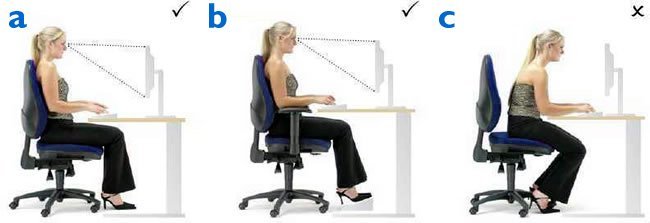 Photo: energijosklase.lt on Google
Sliding your hips completely back works only if your chair seat matches your leg length. If the seat pan touches the back of your calves, it cuts off circulation and forces you to slide forward again. You need a gap of two to three fingers—roughly one to two inches—between the front edge of the cushion and the back of your knees. This adjustment has a trade-off: sliding the seat pan forward increases thigh support, but it easily pushes you too far away from the lumbar curve. If your chair has a slider lever under the left side, pull it out and shift the cushion backward until your knees clear the edge freely. If your chair seat is fixed and too long, add a firm pillow behind your spine to bring your body forward without losing lumbar support.
Adjust chair height from the floor up
Setting chair height to match your desk height causes people to dangle their feet in the air. That mistake concentrates the entire weight of your legs onto the undersides of your thighs, which causes numbness over several hours. Always set your chair height by your legs first. Lower or raise the seat cylinder until your feet rest flat on the hard floor with your knees bent at a right angle. This guide isn’t for people using fixed, non-adjustable tall tables without extra equipment. If your desk is too high once your feet touch the floor, don’t raise the chair back up; place a sturdy footrest beneath your feet instead to close the gap.
Advice you can ignore
- Sitting on an exercise ball fixes bad posture. It lacks armrests and back support, which leads to heavy core exhaustion and slumping within forty minutes.
- You must sit straight at a perfect 90-degree angle. This increases spinal disc pressure compared to a supported, slight recline of 100 to 110 degrees.
- Kneeling chairs cure lower back pain. They shift your body weight directly onto your shins and kneecaps, which strains the patellar tendons during normal workdays.
- Lumbar support pillows should be as thick as possible. Oversized pillows push your mid-back away from the frame, flattening your spine’s natural curve.
The right way, start to finish
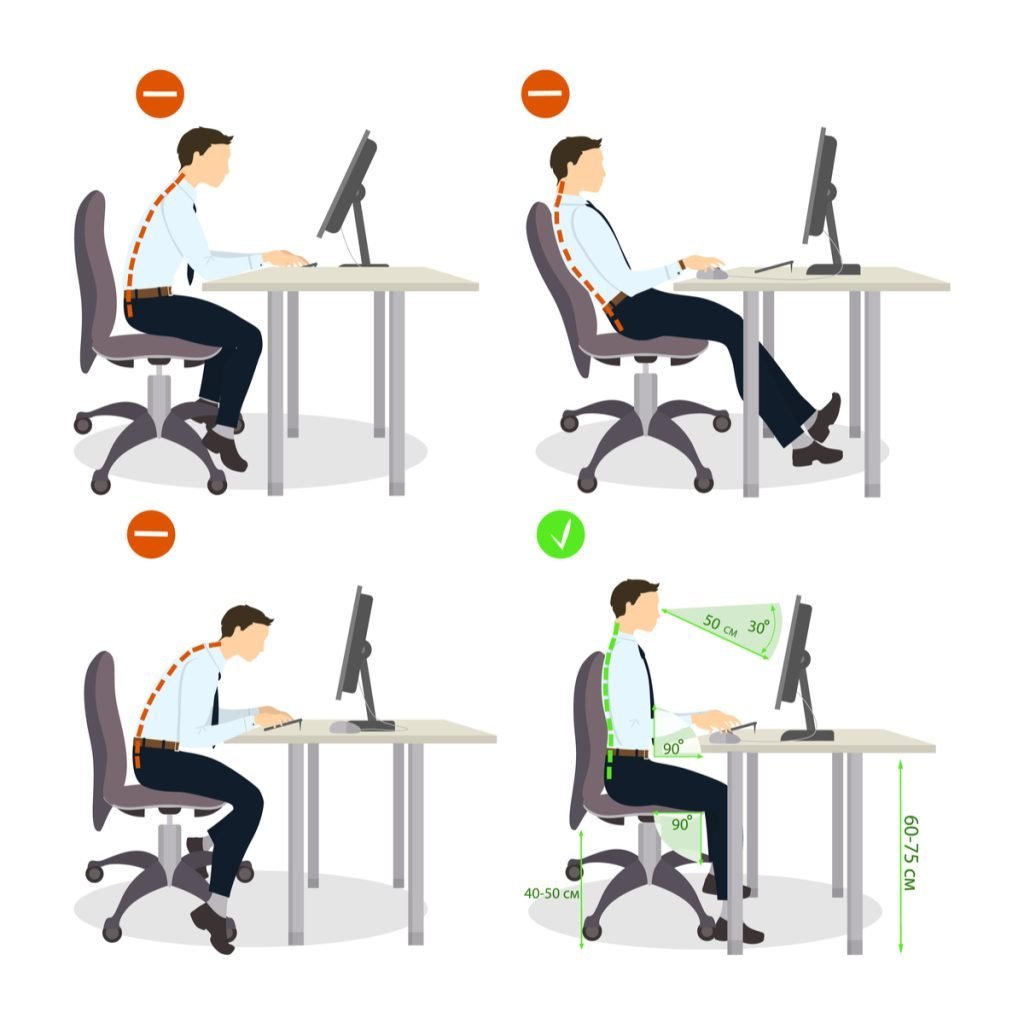 Photo: www.internationalcompetitionnetwork.org on Google
- Push your hips completely against the backrest so your sacrum contacts the bottom cushion firmly without any gap.
- Adjust the seat height until your feet rest flat on the floor, keeping your thighs parallel to the ground surface.
- Slide the seat depth lever to set a 2-inch gap between the front cushion edge and your calves.
- Unlock the backrest tilt and lean back between 100 and 110 degrees, then lock the recline tilt mechanism securely.
- Move the lumbar support up or down until the curved pad fills the inward hollow of your lower spine.
- Lower both armrests until your shoulders rest loose and your elbows rest comfortably at a 90-degree angle.
- Pull your chair close to the desk until your wrists rest flat without reaching forward past your elbow line.
Frequently asked questions
Can crossing your legs hurt your back?
Yes, crossing your legs twists your pelvis and forces your lower spine to curve sideways. This posture places uneven weight on your hip joints. Over two or three hours, it causes uneven muscle tension across your hips, leading directly to one-sided lower back ache.
Why do my legs fall asleep in my chair?
Your seat pan is either set too high or extends too far forward against your knee bends. The hard front edge presses directly against the blood vessels and nerves behind your thigh. Lower the chair height slightly or adjust the seat slider back to restore normal blood flow.
How long should you sit in an office chair continuously?
About 30 to 50 minutes at a time is the safest working limit. Even in an expensive chair, staying still stops muscle activity and slows your circulation. Stand up, walk for two minutes, or stretch your chest muscles before sitting back down to resume your work.
Is it safe to sit without using armrests?
Yes, working without armrests is completely safe if your desk supports your forearms comfortably. Armrests simply keep your shoulders from hanging under their own weight. If they block you from pulling close to your keyboard, remove them or lower them completely out of the way.
What happens if your chair has no lumbar support?
Your lower back muscles stay tense all day trying to keep your spine curved inward naturally. Without physical support from behind, those muscles eventually fatigue, causing your lower back to flatten. Roll up a small hand towel to roughly three inches thick and place it behind your waistband.
Does it matter if your feet don’t touch the floor?
Yes, dangling feet pull your pelvis forward and transfer your lower body’s weight straight onto the soft underside of your thighs. This pinches nerves and restricts circulation over short periods. Place a flat box, yoga block, or adjustable footrest underneath your shoes to solve this.
Related guides