
Are you struggling to connect Schedule 40 pipes to SDR 35 pipes? You’re not alone.
These two types of pipes have different wall thicknesses and sizes, making the connection tricky if you don’t know the right method. But don’t worry—this guide will show you exactly how to join them securely and efficiently. By the end, you’ll have the confidence to tackle this task without guesswork or frustration.
Keep reading to discover simple steps and expert tips that will save you time and avoid costly mistakes.

Credit: frenchdrainman.com
Differences Between Schedule 40 And Sdr 35
Schedule 40 and SDR 35 pipes look similar but have key differences. These differences affect how they connect and perform in projects. Understanding these variations helps in choosing the right pipe and connection method.
This section explores the main differences between Schedule 40 and SDR 35 pipes. It covers their material and thickness, and common uses in various applications.
Material And Thickness Variations
Schedule 40 and SDR 35 pipes use similar materials, mostly PVC or HDPE. The main difference lies in their wall thickness. Schedule 40 has a thicker wall than SDR 35. This makes Schedule 40 stronger and able to handle higher pressure. SDR 35 pipes have thinner walls but maintain consistent strength by design. The thinner wall means SDR 35 pipes are lighter and often easier to handle.
Common Applications
Schedule 40 pipes are common in water supply and irrigation systems. Their thicker walls make them suitable for pressure-heavy jobs. SDR 35 pipes often appear in drainage and sewer systems. They handle pressure well but focus more on flow efficiency. Choosing between the two depends on the pressure needs and application type.
Credit: www.homedepot.com
Tools And Materials Needed
Connecting Schedule 40 to SDR 35 pipe requires specific tools and materials. Choosing the right items ensures a strong and leak-free joint. Understanding what you need helps the task go smoothly.
Essential Tools
- Pipe cutter or saw for clean, straight cuts
- Deburring tool to smooth pipe edges
- Measuring tape for accurate pipe length
- Marker to mark cut points on pipes
- Cleaning cloth to wipe pipe ends
- Gloves to protect hands during work
Types Of Adhesives And Fittings
Use solvent cement made for PVC pipes. It bonds Schedule 40 and SDR 35 securely. Choose primer to clean pipe surfaces before cementing.
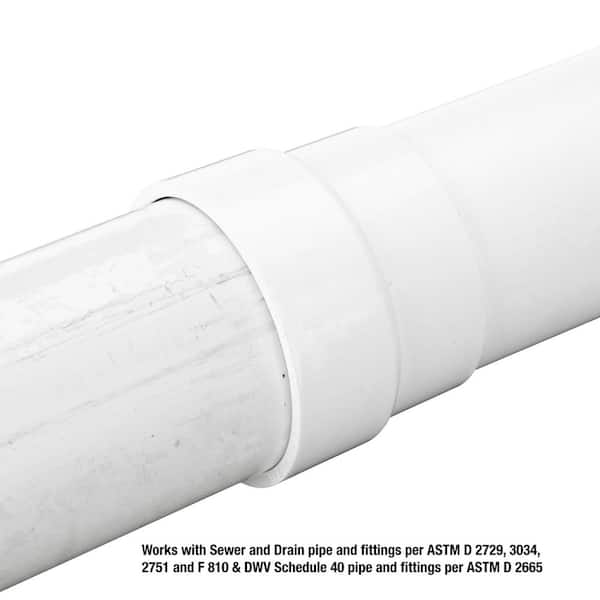
Fittings must fit both pipe types. Transition couplings work well to join different sizes. Check fittings for compatibility with Schedule 40 and SDR 35.
Preparing The Pipes For Connection
Preparing the pipes for connection is a key step in joining Schedule 40 to SDR 35 pipes. Proper preparation ensures a secure fit and prevents leaks. This process starts with accurate measuring and cutting. Then, cleaning and deburring make sure the pipe ends are smooth and ready for joining.
Measuring And Cutting
Measure each pipe carefully to match the required length. Use a tape measure for accuracy. Mark the cutting point with a pencil or marker. Cut the pipe straight using a pipe cutter or a fine-toothed saw. A clean, straight cut helps pipes fit tightly together. Avoid jagged or uneven edges. They can cause poor connections and leaks.
Cleaning And Deburring
Remove any dirt, grease, or debris from the pipe ends. Use a clean cloth or a pipe-cleaning brush. Next, deburr the cut edges to smooth rough spots. A deburring tool or sandpaper works well. Smooth edges help the pipes slide together easily. They also protect seals and fittings from damage. Proper cleaning and deburring improve the joint’s strength and durability.
Techniques For Joining Schedule 40 To Sdr 35
Joining Schedule 40 pipes to SDR 35 pipes requires careful choice of techniques. These two types have different wall thicknesses and sizes. This makes the connection tricky. The right method ensures a strong, leak-proof joint. Here are some easy ways to join these pipes.
Using Transition Couplings
Transition couplings are made to connect pipes with different sizes or materials. They fit perfectly between Schedule 40 and SDR 35 pipes. These couplings have rubber seals that prevent leaks. Installation is simple and fast. Just slide the pipe ends into the coupling and tighten the clamps. No special tools or glue needed.
Solvent Welding Method
Solvent welding creates a strong bond by softening pipe surfaces. Use a primer first to clean the pipe ends. Then apply solvent cement to both pipes. Quickly join and hold them tightly for a few seconds. This method works well if the SDR 35 pipe fits inside the Schedule 40 pipe or vice versa. Proper curing time is important before pressure testing.
Mechanical Fittings Approach
Mechanical fittings use threaded or compression designs to connect pipes. These fittings come in different sizes to match Schedule 40 and SDR 35. No glue or heat is required. Tighten the fitting to seal the connection. This method allows easy disassembly if needed. It suits systems where pipe flexibility and quick repairs are important.
Testing The Connection
Testing the connection between Schedule 40 and SDR 35 pipes ensures a secure and leak-free joint. Proper testing helps find any weak spots or mistakes early. It also confirms the connection can handle normal pressure and use.
Pressure Testing
Pressure testing checks if the connection holds steady under water pressure. Use a pump to fill the pipes with water. Slowly raise the pressure to the recommended level for your pipe type. Hold the pressure for at least 15 minutes. Watch for any drop in pressure, which signals a leak or weak spot.
Leak Inspection
Leak inspection means looking closely at the joint for water escaping. After pressure testing, dry the pipe surface. Check all around the connection for drips or wet spots. Use a flashlight to see small leaks better. Even tiny leaks can cause big problems over time.
Common Mistakes To Avoid
Connecting Schedule 40 pipe to SDR 35 pipe requires care and attention. Mistakes can cause leaks or weak joints. Avoiding common errors helps ensure a strong and lasting connection.
Incorrect Measurements
Measuring pipe diameter and length wrong leads to poor fits. Pipes may not align or seal properly. Always double-check measurements before cutting or joining. Use proper tools to get accurate sizes. A tight fit prevents leaks and ensures stability.
Using Incompatible Adhesives
Each pipe type needs a specific adhesive. Using the wrong glue weakens the joint. Some adhesives do not bond Schedule 40 and SDR 35 well together. Read product labels to confirm compatibility. Choose adhesives designed for both pipe types. Proper glue keeps the connection strong and leak-free.
Maintenance Tips For Long-lasting Joints
Maintaining joints between Schedule 40 and SDR 35 pipes extends their life and prevents leaks. Proper care reduces costly repairs and keeps systems running smoothly. Follow these simple tips to protect your pipe connections.
Regular Inspections
Check joints often for cracks or signs of wear. Look for leaks or moisture around connections. Early detection stops small problems from growing. Use a flashlight to spot hard-to-see damage. Tighten any loose fittings carefully to avoid breakage. Keep records of inspection dates and findings for future reference.
Handling Temperature And Pressure Changes
Sudden temperature shifts can stress pipe joints. Avoid exposing pipes to extreme heat or cold quickly. Use insulation to protect joints from weather changes. Pressure spikes can cause leaks or bursts. Install pressure regulators to keep pressure steady. Release trapped air inside pipes to reduce pressure build-up. Monitor system pressure regularly to catch problems early.
Credit: terrylove.com
Frequently Asked Questions
What Is Schedule 40 Pvc Pipe?
Schedule 40 PVC is a common type of plastic pipe used for water and drainage. It has a specific wall thickness and pressure rating. It is strong and widely available.
What Does Sdr 35 Mean In Pipes?
SDR 35 stands for Standard Dimension Ratio 35, showing pipe thickness. It means the pipe wall is thinner compared to Schedule 40. Used mostly for underground water lines.
Can Schedule 40 Connect Directly To Sdr 35?
No, Schedule 40 and SDR 35 pipes have different wall thicknesses. Direct connection is not possible without an adapter or special fitting. Proper fittings ensure a secure, leak-free joint.
What Fittings Work For Schedule 40 To Sdr 35?
Special transition couplings or adapters designed for these two pipe types work best. These fittings adjust for size and thickness differences. Using the right fitting prevents leaks.
How To Ensure A Leak-proof Connection Between Schedule 40 And Sdr 35?
Clean pipe ends and use proper primer and cement for PVC. Apply adhesive evenly on both pipe and fitting surfaces. Hold pipes firmly until cement sets.
Can I Use Standard Pvc Cement For Schedule 40 To Sdr 35?
Yes, standard PVC cement usually works for both Schedule 40 and SDR 35. Confirm the cement is compatible with both pipe materials. Follow manufacturer instructions for best results.
Why Connect Schedule 40 To Sdr 35 Pipes?
Connecting these pipes is common when joining above-ground and underground systems. Schedule 40 is stronger for above ground, SDR 35 is lighter for buried lines. Proper connection ensures system stability.
Conclusion
Connecting Schedule 40 to SDR 35 pipes is easier than you think. Use the right fittings and tools for a secure fit. Check measurements carefully to avoid leaks or damage. Take your time and follow each step closely. This way, your pipe system will work well and last longer.
Keep safety in mind and wear protective gear. With the right approach, you can handle this task confidently and safely.