
Choosing the best finish for a butcher block workbench depends on your maintenance habits and whether you prepare food directly on the wood. For maximum durability, use Waterlox Original Sealer; for a food-safe cutting board finish, choose Odie’s Curing Finish. These products differ primarily by whether they form a protective surface film or soak into the wood fibers.
As an Amazon Associate, we earn from qualifying purchases. This post contains affiliate links – if you buy through them, we may earn a commission at no extra cost to you.
1. Waterlox Original Sealer and Finish
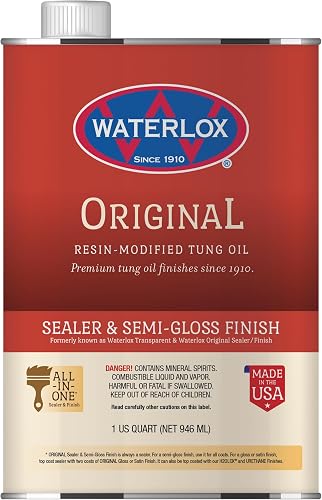
Best for: Someone who wants a tough, water-resistant film on a workbench.
This finish creates a protective barrier that stands up to spills and heavy foot traffic. Because it’s an elastic finish, it moves with the wood as it changes with the seasons. You can use it alone or with other Waterlox products to reach your desired sheen.
This product isn’t for someone who plans to cut food directly on the surface, as it creates a film rather than a pure penetrating oil finish. If you need a simple, quick-drying finish for a small board, this might be more than you need.
Good if:
- You want a medium sheen appearance.
- You need protection against common household spills.
- You prefer a versatile system that allows for multiple coats.
Skip it if:
- You want a finish that feels like raw wood.
- You’re looking for a quick, one-step application.
2. Osmo – TopOil – 3045 Clear Satin – 0.5 Liter

Best for: Someone who wants a durable hardwax oil for kitchen worktops.
This product is designed for high-use areas like tabletops and chopping boards. It’s rated for direct food contact, making it a safe choice for kitchen prep surfaces. You can perform spot repairs easily without needing to sand the entire board.
Good if:
- You want a satin finish that resists liquids.
- You need a product that’s food-safe.
- You want an easy way to fix small scratches.
Skip it if:
- You prefer a high-gloss, plastic-like finish.
- You want a product that dries in minutes.
3. Watco Butcher Block Clear Oil & Finish

Best for: Someone looking for a straightforward oil finish made in the USA.
This product is a classic penetrating oil designed specifically for butcher block surfaces. It helps maintain the wood’s natural look while providing a base level of protection. It’s a reliable choice for those who prefer traditional oiling methods.
Good if:
- You want a simple, penetrating oil.
- You prefer products manufactured in the United States.
- You’re treating a wooden butcher block or utensil.
Skip it if:
- You need a finish that cures into a hard, protective shell.
- You have a very high-traffic surface that needs constant defense.
4. Hope’s 100% Pure Tung Oil

Best for: Someone who prefers a natural, hand-rubbed finish.
This oil penetrates deep into the wood fibers and cures to a non-oily solid. It’s a popular choice for craftsmen because it becomes part of the wood rather than sitting on top. It offers resistance to moisture, alcohol, and everyday wear.
the listing doesn’t mention a specific drying or curing time. It requires patience as the oil needs time to cure at room temperature to reach its full potential.
Good if:
- You want a natural finish without solvents.
- You need a product safe for food contact surfaces.
- You’re working with fine woods or new, unfinished wood.
Skip it if:
- You’re in a rush to finish your project.
- You prefer a synthetic finish that builds a thick, high-gloss layer.
5. Emmet’s Good Stuff Wood Finish (Pint)

Best for: Someone who wants a food-safe urethane blend for easy application.
This finish is designed to be applied with a simple cloth, making it very user-friendly. It provides a clear satin finish that’s safe for food contact. The resealable can helps keep the product fresh for future touch-ups.
This product isn’t for someone looking for a natural oil feel, as it contains urethane. If you’re covering an area larger than 90 square feet, you’ll need more than one pint.
Good if:
- You want a non-toxic, food-safe finish.
- You prefer an easy wipe-on application.
- You want a satin look for your butcher block.
Skip it if:
- You want a 100% natural oil-only product.
- You have a massive surface area that requires bulk coverage.
6. Tried & True Original Wood Finish

Best for: Someone who wants a traditional blend of linseed oil and beeswax.
This finish uses polymerized linseed oil to achieve a rapid cure compared to standard boiled linseed products. It’s safe to apply indoors and doesn’t require protective gear. It creates a warm, soft appearance that’s ideal for heirlooms.
This finish isn’t for someone who wants a hard, waterproof sealant like polyurethane. It’s a softer finish that relies on the wax and oil blend for protection.
Good if:
- You want a natural finish with no toxic drying aids.
- You enjoy the process of burnishing wood with steel wool.
- You need a product safe for wooden toys and pet items.
Skip it if:
- You need a surface that will withstand standing water for long periods.
- You dislike the manual labor of buffing and burnishing.
7. General Finishes Butcher Block Oil

Best for: Someone who needs a professional-grade mineral oil for food contact.
This oil is a natural protectant that meets requirements for surfaces touching food. It’s straightforward to use on cutting boards and utensils. It’s a staple for those who want a simple, food-safe maintenance oil.
This product isn’t for someone looking for a finish that hardens or cures to form a long-lasting barrier. It’s a conditioning oil that will need to be replenished as the wood absorbs it.
Good if:
- You want a dedicated oil for food-prep surfaces.
- You’re looking for a professional-grade brand.
- You need to maintain butcher blocks or wooden bowls.
Skip it if:
- You’re looking for a finish that prevents scratches.
- You want a product that dries into a hard film.
8. Odie’s Industrial Strength Butcher Block Oil 9 oz Food Safe
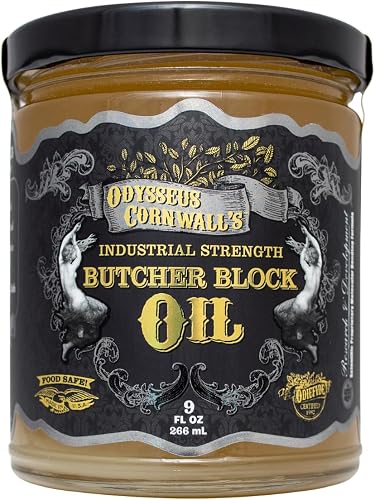
Best for: Someone wanting an industrial-strength finish that requires little product.
This formula creates a molecular bond within the wood, which provides long-lasting protection against water and stains. A little bit goes a long way, and it leaves a matte finish that isn’t greasy. It’s free from petroleum byproducts and solvents.
It’s a concentrated, high-performance finish that requires a specific wipe-on, wipe-off application technique.
Good if:
- You want a permanent molecular bond in the wood fibers.
- You need a non-toxic finish for food prep.
- You want a non-greasy matte finish.
Skip it if:
- You don’t want to follow specific application instructions.
9. Walrus Oil

Best for: Someone looking for a trusted oil for cutting boards.
This oil is formulated with FDA-compliant ingredients for food contact. It’s a favorite among professional woodworkers for keeping boards hydrated and protected. It’s a reliable, simple solution for regular maintenance.
This product isn’t for someone who needs a heavy-duty finish for a high-traffic desktop. It’s a conditioner that’s best suited for cutting boards and butcher block prep areas.
Good if:
- You want an oil trusted by professionals.
- You need a food-safe conditioner.
- You’re maintaining cutting boards or butcher blocks.
Skip it if:
- You need a finish that creates a hard, durable surface.
- You want a wax-based polish for extra shine.
10. Clark’s Cutting Board Wax

Best for: Someone who wants a 2-in-1 wax and oil conditioner.
This product combines mineral oil and beeswax to both condition and seal the wood. The addition of essential oils provides a pleasant scent. It’s an easy way to restore luster to dull or dry wooden surfaces.
This product isn’t for someone who wants a raw oil finish. The wax component will build up slightly on the surface, which some users may prefer for water resistance but others may find unnecessary.
Good if:
- You want to condition and seal in one step.
- You like the scent of orange and lemon.
- You need to revitalize an old, dull butcher block.
Skip it if:
- You want a pure oil finish without any wax.
- You’re looking for a deep-curing industrial wood finish.
Where These Overlap
Many of these products, like Walrus Oil, General Finishes Oil, and the various board waxes, are designed specifically for food-safe maintenance. They function similarly by hydrating the wood fibers and providing a basic level of water resistance. If your goal is simply to keep a cutting board from drying out, the differences between these oils are minor. However, products like Waterlox and Odie’s Curing Finish offer a different experience by creating a more permanent bond or a protective film. the listing doesn’t mention FDA guidelines.
Still Not Sure?
How often do I want to maintain it?
If you want to apply a finish once and leave it for a long time, look at Waterlox Original Sealer or Odie’s Curing Finish. These are designed to last much longer than standard mineral oils. If you don’t mind oiling your board every few weeks, Walrus Oil is an excellent choice.
What am I using the surface for?
If you’re chopping meat and vegetables directly on the wood, you need a food-safe oil like Clark’s Cutting Board Wax or General Finishes Oil. If the workbench is for projects, painting, or heavy desk use, Waterlox Original Sealer will provide the durability you need to prevent stains and scratches.
Am I worried about the look?
If you want a high-gloss finish, none of these are ideal, but Waterlox Original Sealer is the closest. If you prefer the natural, matte look of raw wood, Tried & True Finish or Hope’s Pure Tung Oil will preserve that character while still offering protection against daily use.
These products split into two groups: those that create a hard, protective barrier and those that simply condition the wood. For a heavy-use desk, choose Waterlox Original Sealer. For a kitchen cutting board, choose Odie’s Curing Finish. Check the product label for specific curing times before you start your project.
Related guides
- 5 Best Wood Finish for Charcuterie Board Picks and Advice in 2026
- 5 Best Finish for Teak Dining Table Options for Your Home in 2026
- 5 Best Finish for Teak Outdoor Furniture Picks and Reviews in 2026
Frequently Asked Questions
What does it mean for a finish to be food-safe?
A food-safe finish meets regulatory standards to ensure that no harmful chemicals leach into food items during preparation. According to the FDA, materials used on food-contact surfaces must be safe for their intended use. Always look for this designation on the label if you’re prepping food.
Do I have to reapply these finishes?
Most oil-based conditioners require periodic reapplication to keep the wood from drying out. Film-forming finishes like Waterlox Original Sealer last much longer but may eventually show wear in high-traffic spots. You’ll know it’s time to reapply when water stops beading on the surface.
Can I mix different finishes on my workbench?
Mixing finishes is generally not recommended unless the manufacturer specifically states they’re compatible. Applying a new finish over an old, unknown one can lead to poor adhesion or a sticky, uneven surface. It’s best to stick to one system or sand the wood back to bare fiber first.
What happens if I make a mistake during application?
Most of the oils, like Tried & True Finish, allow for easy touch-ups by simply sanding or cleaning the area and reapplying. For film-forming finishes, mistakes may require more effort, such as light sanding between coats. Always follow the specific instructions on the jar to avoid common application errors.
Final Thoughts
Once you’ve picked the right product, don’t rush the process. Give your wood plenty of time to cure properly before you start your first project. You’ll find that taking care of the surface now makes it much easier to keep your workspace looking great for years to come.