
Finding the best small drone depends on how much weight you want to carry and how you plan to fly. While many models share similar 4K camera quality, the real differences lie in stabilization technology, transmission range, and whether you want a controller-free experience. These factors define your flight safety and image clarity.
As an Amazon Associate, we earn from qualifying purchases. This post contains affiliate links – if you buy through them, we may earn a commission at no extra cost to you.
Best overall: DJI Mini 4K, which balances a reliable 3-axis gimbal with high-definition video transmission and easy-to-use intelligent flight modes for both novices and experienced pilots. Best for beginners: Holy Stone HS360S, which features a streamlined controller connection and beginner-specific flight modes that help new pilots practice without complex setup. Best for self-flying: DJI Neo, which prioritizes a lightweight, controller-free design that tracks the user automatically, making it ideal for casual vlogging and social sharing.
This guide is for anyone looking for a reliable, compact aerial camera.
How We Picked
We compared 48 different drone listings to identify the best options currently available. Each product had to clearly state its weight, camera resolution, and flight stabilization features to earn a spot in this article.
1. DJI Mini 4K Camera Drone Combo
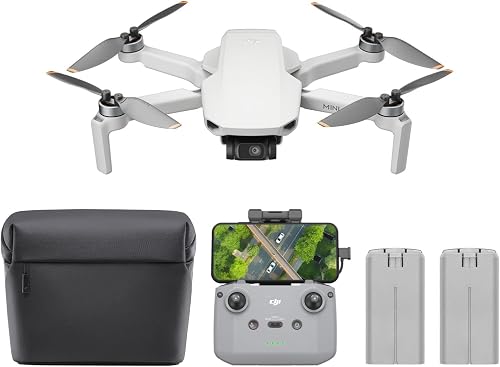
Best for: Pilots needing reliable, high-quality cinematic footage.
The DJI Mini 4K stands out for its 3-axis gimbal, which keeps video steady even when the drone moves through the air. This stabilization is essential for capturing smooth 4K footage that looks professional, regardless of the lighting conditions.
It’s very beginner-friendly, offering one-tap takeoff and landing along with GPS return-to-home features. Because the drone weighs under 249 grams, you don’t need FAA registration or Remote ID for recreational use.
However, users should note that the DJI Fly app must be downloaded directly from the official website, as it isn’t available on the Google Play store. If you’re flying in challenging conditions, the brushless motors allow for stable flight in Level 5 winds and altitudes up to 4,000 meters.
Pros
- 3-axis gimbal for steady video
- Stable in Level 5 winds
- Simple one-tap flight controls
- No registration needed
Cons
- App requires manual download
- No obstacle avoidance sensors
2. Potensic ATOM 4K GPS Drone

Best for: Long-range travel and exploration.
This drone uses PixSync 3.0 technology to provide a transmission range of up to 6km, which is impressive for a device of this size. The inclusion of a motorized stabilization system ensures that the 4K video remains clear and shake-free during flight.
The combo includes a charging hub that powers three batteries quickly, which is helpful for long days of shooting. It isn’t the right choice for someone who prefers a completely hands-off, self-flying experience, as it’s designed for manual control.
Pros
- Strong 6km transmission range
- Fast triple-battery charging hub
- Includes micro SD card
Cons
- Requires manual flight control
- Larger footprint than micro-drones
3. DJI Neo

Best for: Solo vloggers and social media creators.
The DJI Neo is unique because it’s designed to be flown without a controller, taking off and landing right from your palm. At just 135g, it’s lighter than most smartphones and bypasses the need for FAA registration or Remote ID. Full-coverage propeller guards provide safety when flying near people or trees.
While it’s great for following you during hikes or social events, it isn’t meant for long-distance landscape photography. The controller-free design makes it perfect for casual use, but it may feel limited for those wanting deep manual control. If you intend to fly, you must download the DJI Fly app directly from the official website, as it’s no longer available on the Google Play store.
Pros
- Extremely lightweight at 135g
- Palm takeoff and landing
- Built-in propeller guards
- Level-4 wind resistance
Cons
- Requires manual app download
- Best for short-range vlogging
- Limited range for long-distance shots
4. DJI Mini 3 With DJI RC

Best for: Capturing vertical content for social media.
The DJI Mini 3 features a true vertical shooting mode, making it an excellent choice for creators who share content on platforms that favor tall video formats. The mechanical 3-axis gimbal ensures that your footage remains stable even when the drone is tilted or moving quickly.
It provides a high level of confidence for beginners through precise hovering and auto-return features. If you fly for recreational purposes, the sub-249g weight means you avoid FAA registration and Remote ID requirements. However, be careful: if you upgrade to the Intelligent Flight Battery Plus to reach 51 minutes of flight time, the aircraft exceeds this weight limit and loses its registration exemption.
The drone handles high altitudes up to 4,000 meters and resists winds up to 38kph. While it lacks side obstacle sensors, its GPS-backed Return to Home and auto-takeoff functions simplify the learning curve for new pilots.
Pros
- True vertical shooting mode
- 3-axis mechanical gimbal
- Dual native ISO for shadows
Cons
- Battery plus adds significant weight
- No built-in obstacle sensors
5. Potensic ATOM SE GPS Drone with 4K EIS Camera

Best for: Pilots who prioritize extreme portability.
The ATOM SE uses electronic image stabilization (EIS) to smooth out your shots, which works well for general recreational use. Its fold-up design is so small that it can fit comfortably into a jacket pocket, making it a great companion for travel. Because it weighs less than 249g, you avoid the need for FAA and Remote ID registration.
The drone offers three distinct flight modes, allowing you to move from beginner settings to a sport mode that reaches speeds of 16m/s in 2.8 seconds. It isn’t ideal for professional-grade cinematic work that requires the absolute precision of a motorized stabilization system. If you need to update camera-related firmware, you must insert a micro SD card first, as the card isn’t included in the box.
Pros
- Fits in a jacket pocket
- Fast sport mode speed
- Two batteries included (62 minutes total)
Cons
- EIS instead of mechanical gimbal
- Requires SD card for updates
- No SD card included
6. Bwine F7MINI 4K Video 8K Photo Drones with Camera

Best for: Real estate and detailed inspections.
With a 48MP camera and motorized stabilization, the Bwine F7MINI excels at capturing high-resolution photos and steady video. It’s built to be a workhorse, capable of handling windy conditions during farm patrols or roof inspections. The 3-axis gimbal uses sensors to counteract movement in real-time, which is essential for professional-grade footage.
The package includes three batteries that provide a total flight time of up to 96 minutes. This setup is ideal for long tasks, as it eliminates range anxiety during travel. Note that one battery comes pre-installed, while the other two are packaged separately.
If you prioritize portability, this drone weighs under 249g, meaning it requires no FAA registration. However, it isn’t the best choice for a user who wants the simplest possible setup. The technical feature set, including a 120dB locator buzzer and smart return-to-home functions, is designed for those who need reliability during complex flights.
Pros
- High 48MP photo resolution
- Long 96-minute total flight
- Strong wind resistance
Cons
- Heavier feature set for beginners
- Wired transmission focus
7. Holy Stone GPS Drone with 4K UHD Camera

Best for: Novice pilots learning to fly.
The HS360S is designed to make the transition to drone flying as smooth as possible for beginners. It features a simplified controller connection that uses a single cable to stream video, removing the need for complex Wi-Fi setups. Because it weighs under 250g, you avoid the hassle of FAA or Remote ID registration in the States.
It includes intelligent flight modes like “Spiral Up” and “Catapult,” which handle complex maneuvers for you. Use the “Follow Me” or “Waypoint” modes to automate your shots. It isn’t the right pick for an advanced pilot looking for professional-level manual flight settings. If you need longer than 20 minutes of flight time, you’ll need to land and swap the modular battery.
Pros
- Simple single-cable controller connection
- Intelligent flight modes that activate with a single command
- Precise GPS positioning for safe return home
Cons
- Shorter 20-minute per-battery flight
- Basic sensor suite
- Not intended for advanced manual flight control
8. XT606 GPS Drone with Camera

Best for: Pilots who want a screen-integrated controller.
This drone stands out by including a 4.3-inch LCD screen right on the controller, so you don’t have to rely solely on your phone for a live view. The addition of 4-way obstacle avoidance gives new pilots an extra layer of security during their first few flights.
It’s a great travel companion because it’s foldable and weighs under 249g. Because it stays below that weight limit, you don’t need FAA or Remote ID registration in the US. It isn’t designed for high-speed professional cinematography, but it’s perfect for those who want a simple, all-in-one kit.
If you’re a beginner, practice in a windless indoor environment first. Keep your altitude under 6 meters and distance within 30 meters. When moving to outdoor flights, always ensure GPS positioning is enabled to utilize the automatic return-to-home feature.
Pros
- Controller has integrated display
- 4-way obstacle avoidance
- Portable foldable design
Cons
- Lower transmission range
9. Drone with 4K Camera

Best for: Quick, easy deployment.
The B16 uses both GPS and optical flow positioning to ensure the drone stays exactly where you want it, even if you aren’t an expert pilot. This dual-system approach makes it very stable for beginners.
You must remember that GPS functions require an open outdoor environment. If you attempt to fly indoors, the GPS won’t activate. In these cases, rely on the optical flow technology for stability.
The unit weighs less than 249g, meaning you don’t need to register it or obtain a pilot certificate. While a single battery lasts 20-25 minutes, the package includes a second battery to extend your total airtime to 50 minutes.
Pros
- Dual GPS and optical flow
- Includes business carrying bag
- Stable hovering ability
- No registration required
Cons
- GPS doesn’t work indoors
- Requires two batteries for full 50-minute flight time
10. Holy Stone HS175D GPS Drone with 4K Camera

Best for: Long-duration practice sessions.
The HS175D provides up to 46 minutes of flight time with its included two-battery set, giving you plenty of time to practice your flying skills. It uses 5GHz transmission for a smooth live feed, which helps you frame your shots accurately.
It’s a very travel-ready device that folds down for storage in its carrying case. It isn’t meant for users who need advanced obstacle avoidance, as it focuses more on core flight stability and ease of use.
Pros
- Long 46-minute total flight
- Smooth 5GHz live view
- Compact foldable design
Cons
- No advanced obstacle sensors
- Entry-level sensor technology
How to Choose the Best Small 4K Camera Drone
Does weight really matter for registration?
Weight is the deciding factor for FAA regulations in the United States. Drones weighing less than 249 grams generally don’t require FAA registration or Remote ID for recreational use. This weight threshold is critical; if your drone exceeds 249 grams, you must comply with federal registration requirements. Always check the official FAA website, as rules depend on your specific location and how you intend to use the device. Staying under this limit makes travel and casual use significantly easier for hobbyists.
Should I prioritize a mechanical gimbal or EIS?
A 3-axis mechanical gimbal is superior for high-quality video because it physically keeps the camera level regardless of the drone’s movement. Electronic Image Stabilization (EIS) crops the image to smooth out shakes, which can sometimes result in a loss of resolution or a “jelly” effect during fast motion. If your goal is professional-looking cinematic footage, choose a 3-axis mechanical gimbal. If you’re only shooting casual clips for social media, EIS is often sufficient and helps keep the drone’s weight lower.
What should I check before my first flight?
Before leaving the house, update the drone’s firmware and perform pre-flight calibration according to your manual. Many drones, such as the DJI series, require activation through an app before they will take off. Always verify battery levels and ensure your SD card is formatted and inserted; some firmware updates require the card to be present.
If you’re a beginner, practice in a large, open, and windless area. For the first session, limit your flight height to 6 meters and distance to 30 meters. When flying outdoors, always ensure GPS positioning is enabled to prevent accidental flyaways. If your drone includes a “Beginner Mode,” use it to practice control skills before attempting advanced maneuvers or sport modes. Always remove lens and screen protectors before takeoff to ensure optimal performance.
Related guides
Frequently Asked Questions
Can I fly these drones indoors safely?
Most GPS-enabled drones are intended for outdoor use and may struggle with stability or positioning in indoor environments. While some models like the DJI Neo or those with optical flow sensors can manage indoor flight, it’s generally risky for beginners due to the lack of space and potential for wall collisions. If you must fly indoors, ensure you have disabled GPS-reliant modes and have plenty of clearance.
What maintenance does a drone require after flying?
Basic maintenance involves checking your propellers for any chips or cracks, as even small damage can cause vibrations that ruin your video quality. Wiping down the body and the camera lens with a microfiber cloth after every flight helps prevent dust buildup. Check for firmware updates through the manufacturer’s app to ensure the latest flight stability and camera performance improvements.
What is the first thing that usually goes wrong?
Propeller damage is the most common issue for new pilots, so keeping a set of spares on hand is a necessity. If the drone is crashed, the gimbal motors are the next most delicate component. Always keep your drone in a protective case when not in use to prevent damage.
Is the simplest drone on the list enough for me?
A simpler drone is the best choice if you are starting out and want to avoid complex settings. Models like the Holy Stone HS360S offer essential features without overwhelming you with too many modes. Starting simple allows you to master the basics of flight and camera framing before upgrading.
Closing
For most users, the DJI Mini 4K remains the top choice due to its reliable 3-axis gimbal and balanced performance. If you need something that specializes in long-range transmission, the Potensic ATOM 4K is a strong alternative that keeps your video feed clear at a distance.
Before you head out, verify your registration status. While many of these drones weigh under 249g and don’t require FAA registration for recreational use, always check the official FAA website to confirm current requirements.
Additionally, ensure you have downloaded the correct app from the manufacturer’s website, as some apps are no longer available on standard app stores. Perform all pre-flight calibrations and check for firmware updates to ensure your drone is ready for the air. Taking these simple steps will help you get the best possible footage and keep your equipment flying safely for years to come.