
When you build a cutting board, the glue you choose is the most important part of the process. You want a bond that holds up to moisture and remains safe for food preparation. The best glue for making cutting boards depends on your specific needs, such as how long you want to wait for clamping or whether you need a waterproof finish. Titebond III Ultimate and Gorilla Ultimate Waterproof are the two favorites that split most builders, depending on whether they prioritize food safety certification or extreme weather resistance.
As an Amazon Associate, we earn from qualifying purchases. This post contains affiliate links – if you buy through them, we may earn a commission at no extra cost to you.
1. Titebond 1416 III Ultimate Wood Glue

Best for: Someone who wants a reliable, food-safe bond for kitchen boards.
This glue is a staple for woodworkers because it’s specifically designed for items that touch food. It’s FDA approved for indirect food contact, which makes it a safe choice when gluing together your butcher block. The formula is waterproof, so it holds up well when you wash your board in the sink.
It also sands down smoothly without getting gummy, which makes the final finishing steps much easier. You don’t need to worry about it reacting poorly with your oil or wax finishes. This isn’t for a user who needs an extremely fast set time, as other options on this list are built for speedier clamping.
Good if:
- You’re building wooden utensils or cutting boards.
- You need a waterproof bond for kitchen tools.
- You want a glue that sands easily after it dries.
Skip it if:
- You have a project that requires a specialized, non-PVA formula.
- You need a glue that cures in under 20 minutes.
2. Titebond 5003 II Premium Wood Glue

Best for: A builder looking for a strong, water-resistant bond for interior wood projects.
This glue provides excellent water resistance and a strong initial tack, which helps keep your wood pieces in place while you apply clamps. It’s a solid choice for general woodworking tasks where you need a reliable, long-lasting bond. The glue is manufactured in the United States and offers consistent quality for your shop projects.
Because it’s designed for water resistance, it works well on boards that might see occasional moisture. However, if you’re making a board that will be submerged or washed constantly, you might prefer a fully waterproof formula. It’s easy to sand once cured, leaving you with a clean surface for your final wood treatment.
Good if:
- You need a reliable, quick-setting glue for shop work.
- You’re working on interior wood projects or furniture.
- You prefer a product made in the United States.
Skip it if:
- Your project requires a fully waterproof, ANSI Type I rating.
- You’re working in extreme outdoor conditions.
3. Titebond Original Wood Glue 5063

Best for: Traditional joinery work where speed and strength are the main goals.
This is the classic choice for many woodworkers who focus on furniture repair and general assembly. It sets fast, which is great for keeping your workflow moving without waiting hours for the clamps to come off. The bond is often described as stronger than the wood itself, ensuring your joints stay tight as the glue cures.
It’s easy to clean up with water while wet, making it a very user-friendly option for beginners. Since it’s non-toxic, it’s a common choice for indoor projects. It isn’t designed for high-moisture environments, so it’s best kept for dry, indoor use.
Good if:
- You’re doing traditional furniture assembly or repairs.
- You need a fast set time to speed up your process.
- You prefer a non-toxic, easy-to-clean adhesive.
Skip it if:
- You’re building a cutting board that will be washed frequently.
- You need a glue that can handle high humidity or outdoor use.
4. Gorilla Ultimate Waterproof Wood Glue
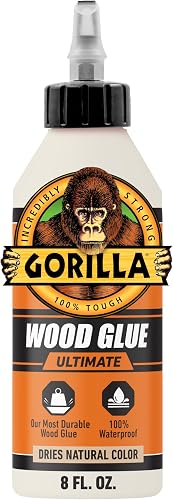
Best for: A project that demands maximum durability against water and temperature changes.
This glue is built to withstand harsh conditions, passing the ANSI/HPVA Type I water resistance standard. It gives you 15 minutes of working time, which is helpful if you’re dealing with a complex glue-up that has many parts. It dries to a natural tan color, so it blends in well with most hardwood tones.
You’ll find it easy to sand and paint once it has fully cured. It doesn’t foam up, which keeps your glue lines looking clean and professional. This is a very strong adhesive, but it’s best for those who prioritize extreme durability over the specific food-safety certifications found in other products.
Good if:
- You need a glue that passes Type I water resistance.
- You want a longer working time to align your pieces.
- You prefer a natural-colored bond line.
Skip it if:
- You’re solely focused on food-contact safety ratings.
- You prefer a faster set time for simple, two-piece joints.
5. Gorilla Wood Glue

Best for: Someone who wants to finish their projects on a tight schedule.
If you’re looking to get your clamps off quickly, this glue is a great fit. With a clamp time of only 20–30 minutes, you can move through your assembly steps much faster than with slower-setting glues. It’s water-resistant, making it a reliable choice for items that will see some moisture in the kitchen.
It’s versatile enough to work on both hardwoods and softwoods. The glue dries to a natural color and doesn’t foam, helping you keep your work area tidy. It’s a solid, general-purpose choice for a busy workshop, but it isn’t intended for long-term outdoor submersion.
Good if:
- You want to reduce your total clamping time significantly.
- You’re gluing common hardwoods or softwoods.
- You need a water-resistant bond for daily kitchen use.
Skip it if:
- You need a longer working time for large, complicated glue-ups.
- Your project requires a Type I waterproof rating.
Where These Overlap
Most of these glues are PVA-based, which means they behave similarly when it comes to application and cleanup. Titebond II Premium and Gorilla Wood Glue both offer excellent water resistance and quick set times, making them very close in performance for general shop use. Titebond Original and Titebond III Ultimate are the extremes of the Titebond line, with the former favoring fast indoor assembly and the latter favoring long-term moisture resistance. The choice often comes down to your specific brand preference and whether you prioritize the FDA food contact safety ratings often sought by those crafting boards for kitchen use.
Still Not Sure?
How often will I really use the board?
If you’re making a board for daily use, you want a glue that handles water well. Titebond III Ultimate is a common pick here because it’s waterproof and safe for food contact. If you only use your board occasionally, the standard Titebond Original might be enough for your needs.
What do I already own that this must work with?
Think about your current clamp setup and your wood types. If you have many clamps and prefer a long working time, look at Gorilla Ultimate Waterproof. If you have limited clamps and need to cycle through pieces quickly, Gorilla Wood Glue is the better choice to keep your project moving.
What am I most likely to regret choosing?
The most common regret is choosing a glue that isn’t water-resistant enough for a kitchen environment. To avoid this, stick to the Titebond III Ultimate or Gorilla Ultimate Waterproof for long-term reliability in the kitchen.
Frequently Asked Questions
What does the glue ask of me week to week?
Once your cutting board is fully cured and finished with food-safe oil, the glue requires no maintenance. You simply need to wash the board by hand and dry it thoroughly.
What happens when the board is used up?
When a board is heavily used, the wood fibers may eventually splinter or the surface may become too scarred from knife marks. At this point, you can sand the entire board down to a fresh layer of wood.
Would the more capable glue have suited me better?
If you chose a basic interior glue but find your board is exposed to lots of water, you might wish you had opted for a waterproof formula. While the more capable glues offer higher water resistance, they’re all designed to be durable. If your joints are tight and well-clamped, most of these glues will perform well.
Final Thoughts
Choosing the right adhesive doesn’t have to be complicated, so don’t let it stall your project. Once you’ve picked your bottle, grab some scrap wood to practice your clamping technique before you start the real thing. You’ll find that with a little patience, your board won’t just look great—it’ll last.