
Are you trying to choose the right disinfectant for your pool, water treatment, or cleaning needs? You’ve probably come across both calcium hypochlorite and sodium hypochlorite, but which one is best for you?
Understanding the key differences between these two powerful chemicals can save you time, money, and hassle. You’ll discover how each works, their pros and cons, and which one fits your specific situation perfectly. Keep reading to make an informed choice that keeps your water safe and clean.
Chemical Composition
Chemical composition helps us understand the difference between calcium hypochlorite and sodium hypochlorite. It tells us about their basic building blocks. Knowing this helps in choosing the right chemical for cleaning or disinfecting. Each has unique elements that affect how they work.
Below, we explore their molecular structure and active ingredients.
Molecular Structure
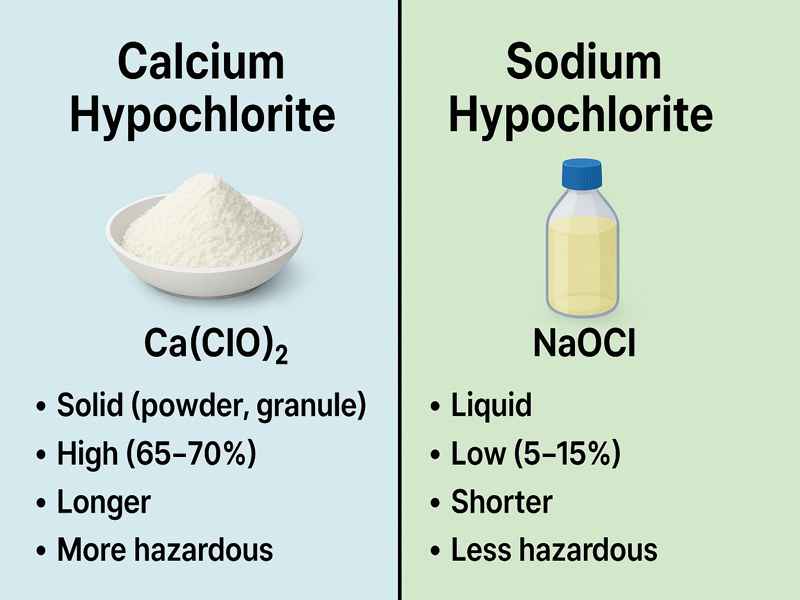
Calcium hypochlorite has the formula Ca(ClO)₂. It contains calcium ions and hypochlorite ions. This gives it a solid, powdery form. It looks like small white crystals.
Sodium hypochlorite is NaClO. It has sodium ions and hypochlorite ions. It is usually found as a liquid solution. The liquid is often pale green or yellow.
Active Ingredients
In calcium hypochlorite, the active ingredient is the hypochlorite ion. This ion releases chlorine when dissolved in water. The calcium acts as a stabilizer.
Sodium hypochlorite also has the hypochlorite ion as the active ingredient. It releases chlorine quickly in water. Sodium helps keep the solution stable and easy to use.
Physical Properties
Physical properties play a key role in choosing between calcium hypochlorite and sodium hypochlorite. These properties affect handling, storage, and use. Understanding their differences helps in making the right choice for water treatment or sanitation.
Appearance And Form
Calcium hypochlorite usually appears as a white solid. It comes in powder, granules, or tablet forms. This solid form makes it easy to store and transport.
Sodium hypochlorite is a liquid. It looks like a clear, pale yellow solution. This liquid form is common in household bleach and pool chemicals.
Stability And Shelf Life
Calcium hypochlorite is more stable. It can last longer if stored in a dry, cool place. Its solid form reduces the chance of breakdown over time.
Sodium hypochlorite breaks down faster. Heat and sunlight reduce its effectiveness. It needs to be stored in a cool, dark area and used within a few months.
Disinfection Power
Disinfection power is a key factor when choosing between calcium hypochlorite and sodium hypochlorite. Both chemicals kill germs and bacteria but work in different ways. Understanding their strengths helps pick the right one for cleaning and sanitizing.
Effectiveness Against Pathogens
Calcium hypochlorite kills germs quickly and is strong against many bacteria and viruses. It works well in water treatment and swimming pools. Sodium hypochlorite also kills pathogens but acts faster in liquid form. It is widely used in hospitals and homes for surface cleaning. Both can destroy harmful microbes, but calcium hypochlorite lasts longer in water.
Concentration Levels
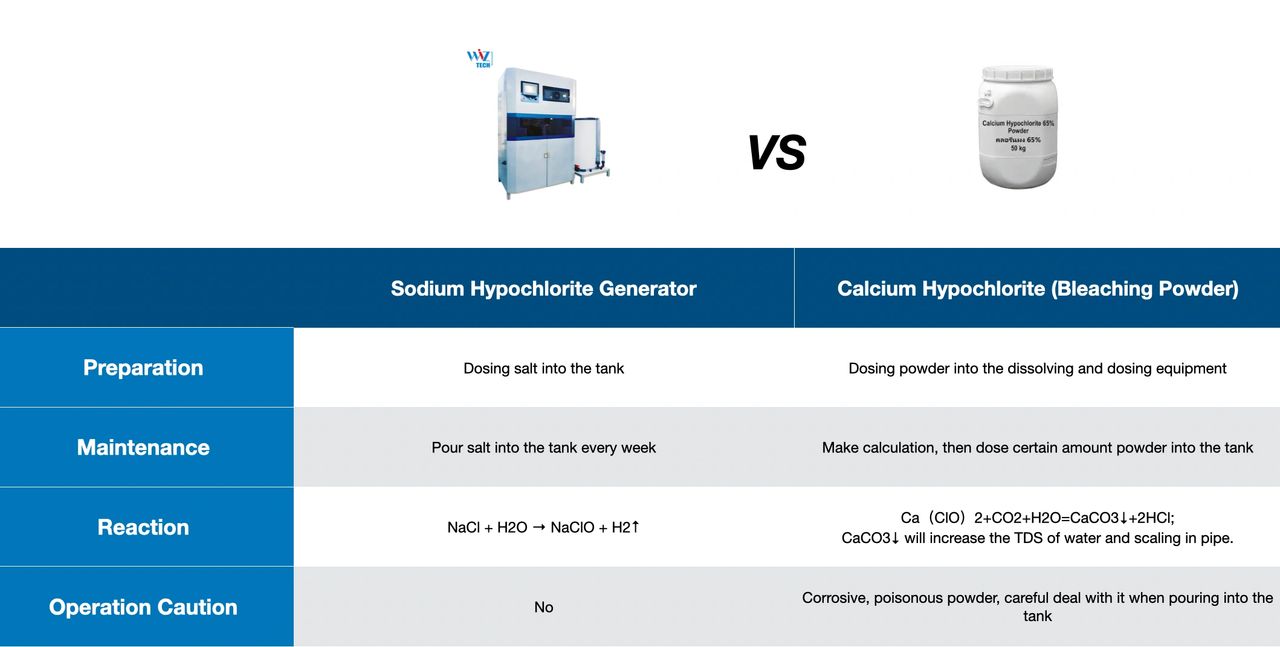
Calcium hypochlorite usually comes as a solid powder or tablet with 65-70% available chlorine. This high concentration makes it very powerful. Sodium hypochlorite is a liquid with 5-15% chlorine concentration. Lower concentration means it needs more volume for the same disinfection effect. The solid form of calcium hypochlorite also stores better without losing strength.
Credit: china-wiztech.com
Applications
Calcium hypochlorite and sodium hypochlorite are two common chemicals used for cleaning and disinfecting. Both have strong uses across different areas. They help keep water safe, clean industrial spaces, and maintain hygiene at home. Understanding their applications can help choose the right chemical for each need.
Water Treatment
Calcium hypochlorite is often used to treat drinking water and swimming pools. It dissolves slowly and releases chlorine to kill bacteria. Sodium hypochlorite is popular in municipal water treatment plants. It works quickly to disinfect large water supplies. Both chemicals help stop waterborne diseases by killing harmful germs.
Industrial Uses
Industries use these chemicals to clean equipment and surfaces. Calcium hypochlorite is common in food processing plants. It removes contaminants and keeps products safe. Sodium hypochlorite is used in paper and textile industries. It bleaches materials and controls bacteria growth. Both chemicals help maintain high hygiene standards in factories.
Household Cleaning
Households rely on sodium hypochlorite for everyday cleaning. It is found in many liquid bleach products. It disinfects kitchens, bathrooms, and laundry. Calcium hypochlorite is less common at home but used in pool cleaning. Both chemicals kill germs and keep homes healthy and fresh.
Handling And Storage
Handling and storing calcium hypochlorite and sodium hypochlorite need care. Both chemicals are used for water treatment and cleaning. They can be hazardous if not managed properly. Understanding their safety and storage rules helps prevent accidents and keeps them effective.
Safety Precautions
Wear gloves and eye protection when handling these chemicals. Avoid breathing in dust or fumes. Keep them away from skin and eyes. Do not mix with other chemicals, especially acids. Use in a well-ventilated area. Clean any spills immediately to avoid reactions. Keep away from children and pets.
Storage Conditions
Store calcium hypochlorite in a cool, dry place. Keep it away from heat and sunlight. Use airtight containers to prevent moisture contact. Sodium hypochlorite should be kept in a cool, dark place. Avoid storing near metals or organic materials. Regularly check containers for leaks or damage. Proper storage extends shelf life and prevents danger.

Credit: pediaa.com
Environmental Impact
Understanding the environmental impact of calcium hypochlorite and sodium hypochlorite is important. Both chemicals are widely used for water treatment and disinfection. Their effects on the environment vary due to their chemical properties and usage methods. This section explores how these substances affect ecosystems and what happens after their use.
Byproducts And Residues
Calcium hypochlorite often leaves solid residues after use. These residues can settle in water bodies and affect aquatic life. Sodium hypochlorite breaks down into water and salt but may produce chlorinated byproducts. These byproducts can harm fish and plants if not managed properly. Both chemicals require careful handling to reduce harmful residues in the environment.
Disposal Methods
Disposing of calcium hypochlorite requires neutralization before release. It should never be dumped directly into drains or water sources. Sodium hypochlorite solutions can degrade over time, but large amounts still need treatment. Proper disposal methods include dilution and chemical neutralization. Following guidelines helps protect soil and water from contamination.
Cost And Availability
Cost and availability are key factors when choosing between calcium hypochlorite and sodium hypochlorite. Both chemicals serve similar purposes but differ in price and ease of access. Understanding these differences helps in making the right choice for your needs.
Pricing Comparison
Calcium hypochlorite usually costs more per pound than sodium hypochlorite. It comes as a solid powder or tablets, which can be more expensive to produce. Sodium hypochlorite is a liquid and often cheaper because it is easier to manufacture in large quantities. Prices can vary based on location and supplier. Bulk purchases often lower the cost per unit for both chemicals.
Market Accessibility
Sodium hypochlorite is widely available in many stores and online. It is commonly used for water treatment and household cleaning. Calcium hypochlorite is less common but still accessible through specialty suppliers. Shipping calcium hypochlorite requires careful handling due to its solid form. Sodium hypochlorite’s liquid form makes it easier to transport and store. Accessibility depends on local regulations and supplier networks.
Credit: www.niranchemical.com
Frequently Asked Questions
What Is The Main Difference Between Calcium And Sodium Hypochlorite?
Calcium hypochlorite is a solid powder, while sodium hypochlorite is a liquid. Both release chlorine but differ in form and storage needs.
Which Chemical Is Safer For Household Water Disinfection?
Sodium hypochlorite is easier to handle and commonly used in homes. Calcium hypochlorite is stronger but requires careful storage.
How Do Calcium And Sodium Hypochlorite Compare In Chlorine Strength?
Calcium hypochlorite generally has a higher chlorine content than sodium hypochlorite. This means it can disinfect water more effectively in smaller amounts.
Can Both Chemicals Be Used For Swimming Pool Sanitation?
Yes, both are used to disinfect pools. Calcium hypochlorite is often preferred for its strong, long-lasting effect.
What Are The Storage Differences Between These Two Chemicals?
Calcium hypochlorite must be stored dry and away from heat. Sodium hypochlorite should be kept in a cool, dark place to maintain its strength.
Conclusion
Both calcium hypochlorite and sodium hypochlorite serve as strong disinfectants. Calcium hypochlorite is solid and lasts longer on shelves. Sodium hypochlorite is liquid and easier to use right away. Each has its own safety measures and storage needs. Choose based on your specific cleaning or water treatment needs.
Understanding these differences helps you make a smart choice. Clean water and safe surfaces depend on proper use. Keep safety first and follow instructions carefully.