
If you find that your garage door release cord broke, you must secure the door in its closed position immediately to prevent it from falling unexpectedly. You’re now in a situation where the emergency release mechanism is disconnected, which means the door could drop if the spring tension fails. Don’t attempt to operate the door using the wall button or remote until you have confirmed the door is manually locked or propped open safely. Treat the heavy door as a potential hazard until you fix the connection or replace the cord.
Steps to secure your garage door
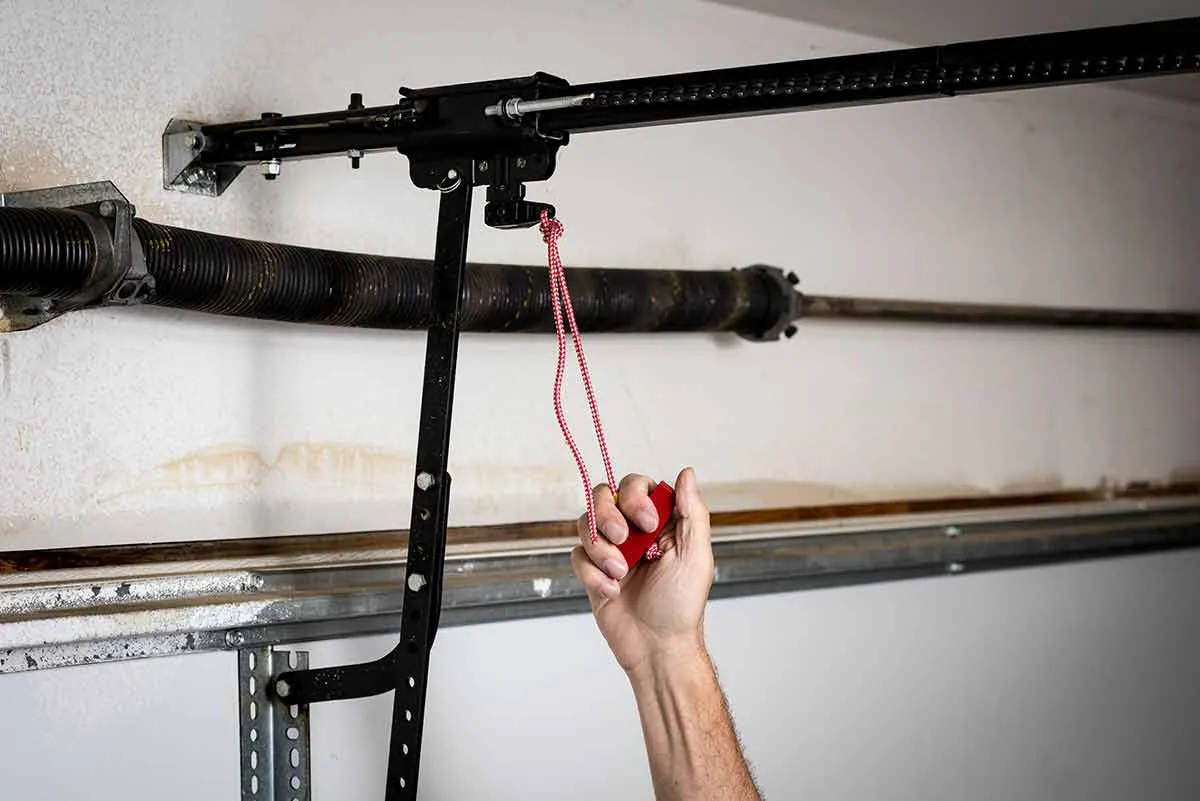
Ensure the garage door is fully closed and resting flat on the floor to remove tension from the lift cables. If the door hangs even an inch off the concrete, the spring tension remains dangerous. Always verify the bottom seal is compressed against the threshold before proceeding.
Unplug the garage door opener from the power outlet to prevent accidental activation while you’re working near the tracks. If your unit lacks an accessible plug, switch off the dedicated circuit breaker in your home’s main electrical panel.
Use a sturdy clamp or a locking pair of pliers on the track just above one of the door rollers to prevent the door from moving. Place this clamp on the track itself, not the door, to create a physical barrier that stops the rollers from ascending. This simple step prevents the door from sliding open if a spring snaps or a motor engages unexpectedly.
Check if the remaining cord is long enough to reach the release lever. If the cord hangs lower than six feet from the ground, trim it. A cord that dangles too low creates a snag hazard for tall vehicles or roof racks, which can inadvertently trigger the emergency release while you’re driving.
If the cord is missing or too short, use a piece of strong nylon rope to create a new pull loop that you can reach safely. Avoid using thin twine or wire, as these can cut into your hands during a manual override.
Ensure the loop is bright in color so it remains visible in the dim light of a closed garage. If you find the manual release lever is stiff, apply a light coat of silicone-based lubricant to the pivot point.
Why the release system fails
The emergency release cord is designed to disconnect the garage door opener carriage from the door, allowing you to move the door by hand during a power outage. This system relies on a spring-loaded lever that holds the carriage in place.
When you pull the cord, the lever pivots to release the trolley. Over time, the cord material degrades due to exposure to humidity, heat, and ultraviolet light inside the garage. This causes the fibers to weaken and snap under the repetitive force of pulling.
Most homeowners wait until the cord is visibly frayed before replacing it, which is a dangerous gamble. If the cord snaps while you’re pulling it, the sudden loss of resistance can cause you to lose your balance or strike the door. If the cord feels stiff or leaves residue on your fingers, the synthetic fibers have already lost their structural integrity.
The mechanism itself rarely breaks unless the metal lever is bent or the spring is rusted solid. If you can’t pull the lever by hand even after replacing the cord, the internal spring mechanism is likely seized. To test this, stand on a sturdy ladder and attempt to move the lever directly with a screwdriver. If it doesn’t pivot with minimal pressure, the entire carriage assembly requires lubrication with a silicone-based spray.
Distinguish between a cord failure and a mechanical failure by examining the lever’s position. If the lever is stuck in the engaged position despite a firm pull, the internal spring has lost its tension. If the lever moves but the door remains locked to the opener, the trolley teeth are stripped.
In either case, don’t force the lever, as this can snap the plastic housing. If you find yourself pulling with more than ten pounds of force to engage the release, the system is compromised and requires immediate professional inspection to prevent a door collapse.
Fixing a broken garage door release cord
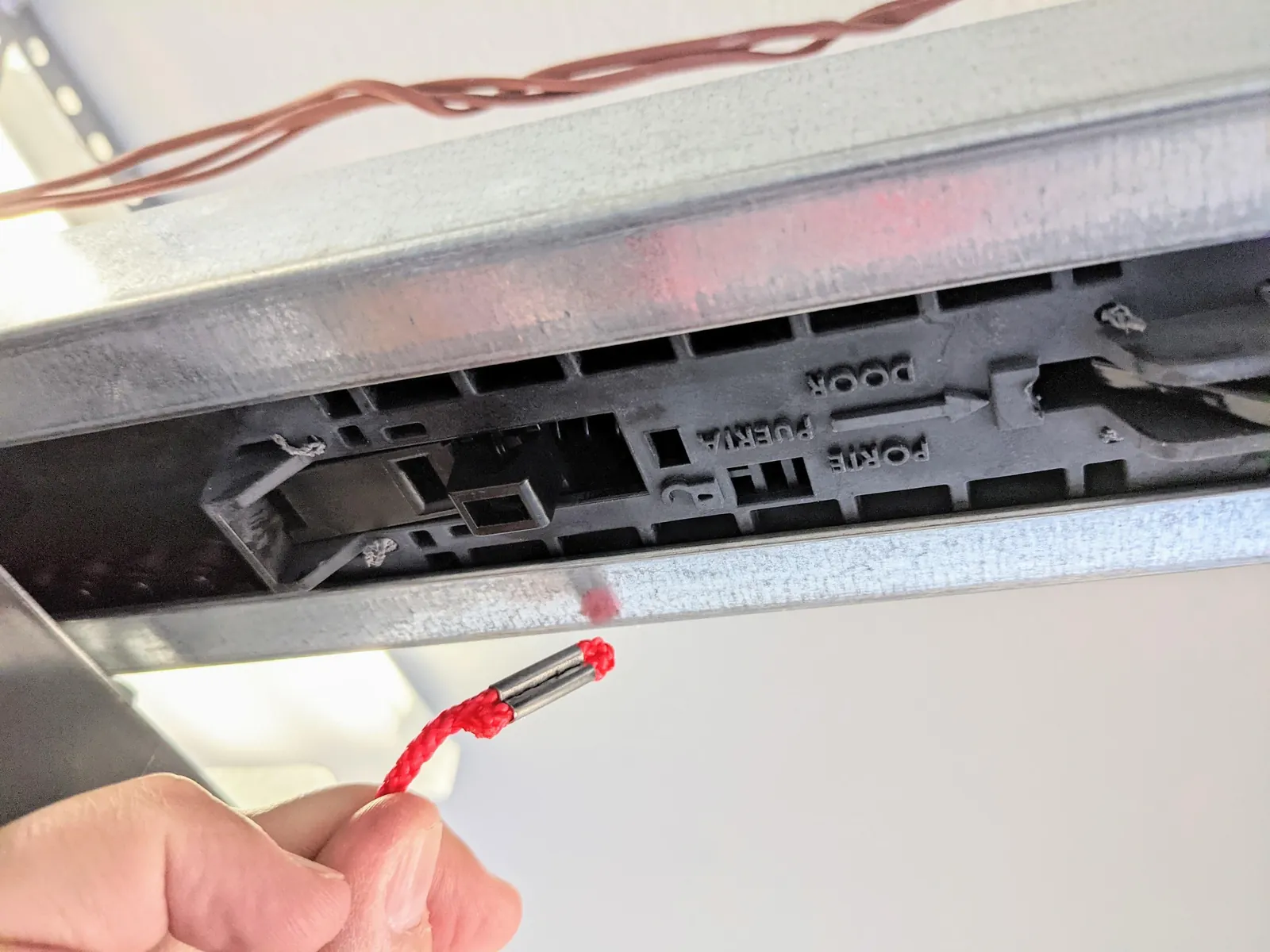
Inspect the trolley lever
Look at the metal lever where the cord attaches to the carriage. If the lever moves freely when you push it with a screwdriver, the mechanism is fine and you only need a new cord. If it feels stuck, apply a small amount of silicone-based lubricant to the pivot point.
Replace the nylon cord
Remove the old cord fragments from the hole in the lever. Thread a new piece of high-strength nylon rope, roughly 4 to 6 feet long, through the hole and tie a secure double knot. Ensure the loop hangs at a height that’s accessible to adults but out of reach of small children.
Test the release function
With the door closed and the opener unplugged, pull the new cord firmly toward the door. The carriage should click and disengage from the drive chain or belt. If it releases, plug the power back in and run the opener; it should automatically re-engage the carriage once it travels to the fully closed position.
Adjust the cord tension
If the cord is too loose, it may catch on the top of the door as it moves. Shorten the loop by tying a new knot closer to the lever. If it’s too tight, it might trigger the release accidentally during normal operation. Aim for a loop that sits just below the opener rail.
When to call a professional
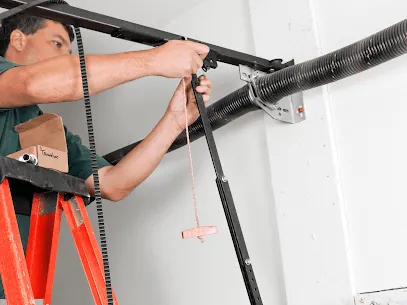
You should stop working if the trolley lever is physically broken, bent, or if the internal spring has snapped. These parts are under high tension and require specific tools to replace without causing injury. If you have tried lubricating the mechanism and it still refuses to move, don’t force it with a hammer or heavy tools.
A garage door technician has the correct replacement carriage assemblies and the experience to align the drive system properly. When you call them, tell them the brand and model of your opener so they can bring the exact part.
If your trolley moves but the door chatters or stalls, check the drive chain tension first. A chain that sags more than half an inch below the rail requires a simple adjustment of the turnbuckle rather than a service call.
However, if the motor hums while the trolley remains stationary, the internal drive gear has likely stripped. This requires a full teardown of the motor housing. Don’t attempt this repair if your unit is under warranty, as opening the casing voids the manufacturer’s coverage immediately.
Most homeowners mistake a failing logic board for a mechanical jam. If the trolley moves only a few inches before reversing, look at the safety sensors near the floor. If the LED lights on these sensors flicker or remain dark, the issue is electrical, not mechanical. Clean the lenses with a dry cloth before paying a professional to diagnose a perfectly functional motor.
Related guides
- Garage Door Cable Came Off Drum: How to Fix It Safely
- Chamberlain Garage Door Opener Troubleshooting: Easy Fixes
- LiftMaster vs Chamberlain: Which Garage Door Opener Is Best
Frequently asked questions
Is it safe to use the door without a release cord?
It isn’t safe to use the door without a functional release cord because you can’t disconnect the door manually in an emergency. If the power fails while the door is open, you’ll be trapped inside or unable to close the garage. Always replace the cord as soon as it breaks to ensure you retain control over the door’s operation.
How do I open the garage door if the cord is broken?
You can open the door manually by lifting it from the bottom, but only if the garage door opener is already disconnected or if the door is light enough to move against the motor’s resistance. If the opener is still engaged, don’t force the door. Use the emergency release lever directly with a long screwdriver to trip the mechanism if you can’t reach the cord.
Can I use any type of rope for the cord?
You should use a high-strength nylon or polypropylene rope that resists rot and moisture. Avoid thin twine or cotton strings, as they will snap quickly under the force required to release the trolley. The cord must be strong enough to withstand several pounds of pulling force without stretching or breaking during the release process.
Why does the release cord keep snapping?
The cord snaps because it’s exposed to harsh garage conditions like extreme temperature changes and moisture that make the material brittle. If you notice your cord is fraying, replace it before it breaks completely. Check the path of the cord to ensure it isn’t rubbing against sharp metal edges on the opener rail, which can cut the fibers over time.
How much weight does the release cord hold?
The release cord doesn’t hold the weight of the door, but it must withstand the force needed to overcome the spring-loaded lever. While the door itself weighs between 100 and 400 pounds, the force required to pull the release lever is usually only 5 to 10 pounds. If you find you need to pull much harder than that, the mechanism is likely dirty or rusted.
Does the color of the release cord matter?
The color of the release cord doesn’t matter, but safety standards require it to be a distinct, visible color so you can find it quickly. Most manufacturers use red to indicate it’s an emergency control. If you replace it with a different color, ensure it remains clearly visible against the ceiling and garage interior so you can locate it in the dark.
Conclusion
Replacing this cord isn’t a complex task, but it requires careful attention to detail to ensure your safety. Once you’ve installed the new rope, test the mechanism a few times while the door is closed. You’ll feel much better knowing your home’s main entrance is secure and ready for everyday use again.
