
Rubber is an electrical insulator, meaning it resists the flow of electric current rather than conducting it. Because its molecular structure lacks free electrons that can move easily between atoms, rubber blocks electricity from passing through it under normal conditions. This property makes it one of the most widely used materials for protecting people and equipment from electrical hazards in homes, workshops, and industrial facilities around the world.
Key Takeaways
- Rubber acts as a reliable electrical insulator because its tightly bound electrons prevent the flow of electric current.
- Electricians rely on rubber-insulated tools and gloves to prevent shock when working on live circuits.
- Extreme heat, physical damage, or chemical exposure can degrade rubber and compromise its insulating properties.
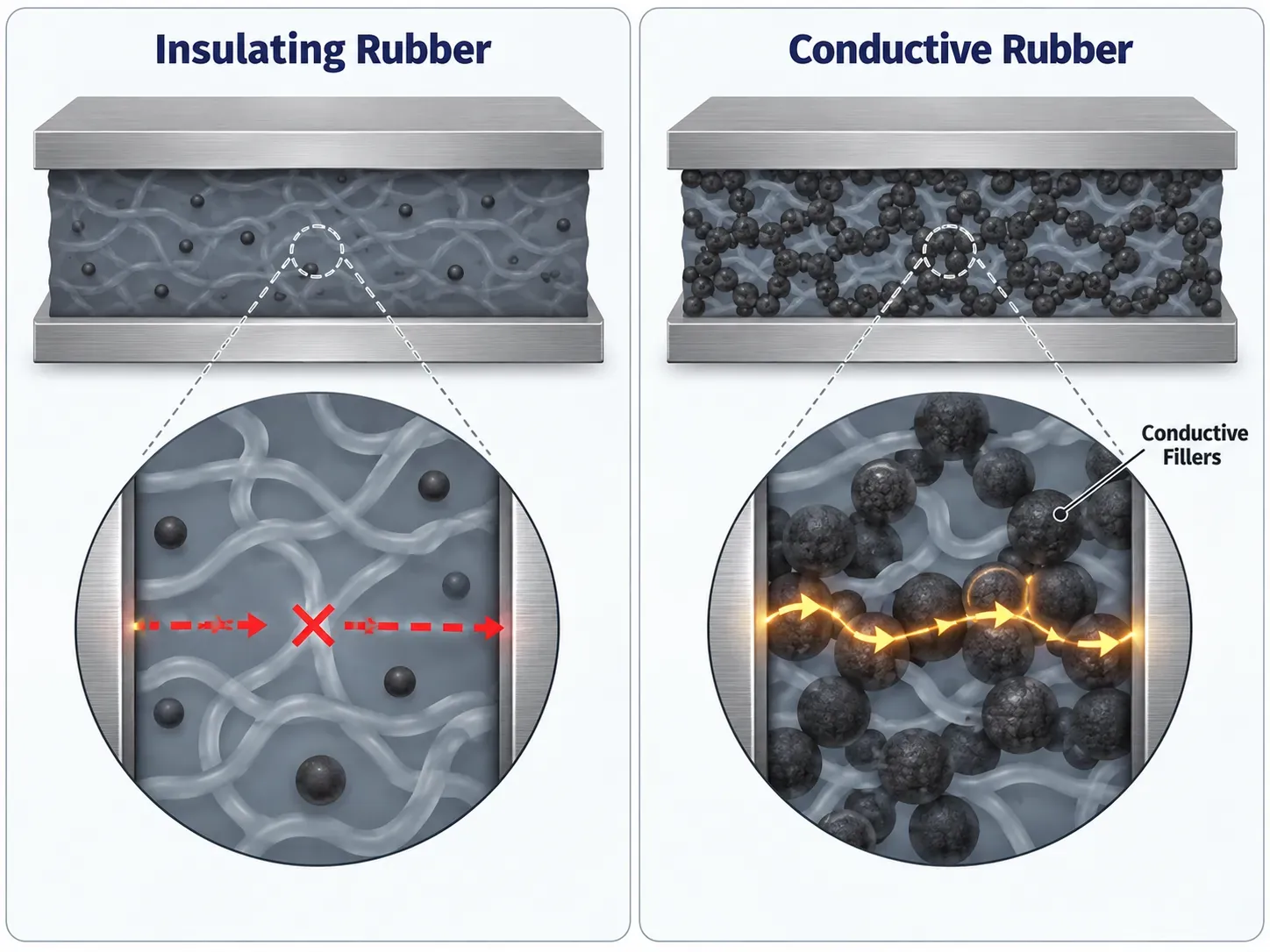
- Not all rubber compounds are identical; additives like carbon black can alter their electrical resistance significantly.
- Always check safety ratings before trusting any rubber product to protect you from high-voltage electricity.
Is Rubber a Conductor or Insulator?
Understanding why rubber blocks electricity requires looking at its atomic structure. In conductive materials like copper or aluminum, outer electrons detach easily from their parent atoms and drift freely, creating an electric current when voltage is applied. Rubber, a polymer made of long chains of carbon and hydrogen atoms, holds its electrons tightly within covalent bonds. Without these mobile charge carriers, current simply can’t flow.
This lack of conductivity gives rubber a very high electrical resistivity, typically measured in trillions of ohm-meters. For practical purposes, this means dry, intact rubber stops household and industrial currents completely. However, no insulator is perfect.
If the voltage applied across a piece of rubber becomes high enough, it will eventually force electrons through the material in a destructive event known as dielectric breakdown. For everyday applications, though, standard rubber provides more than enough protection against typical voltages found in residential wiring and commercial electronics.
Why Rubber Blocks Electrical Current
The secret lies in the chemical bonds. Natural rubber consists of polyisoprene, while synthetic varieties like silicone or neoprene use different polymer chains. Regardless of the specific type, these polymers share a common trait: they form wide band gaps between their valence bands (where electrons live) and conduction bands (where electrons must go to carry current).
In metals, these bands overlap, allowing effortless electron movement. In rubber, the gap is so large that normal voltages can’t push electrons across it. This fundamental physics principle is what keeps you safe when you grip a rubber-handled screwdriver. The material physically prevents your body from becoming part of the electrical circuit by maintaining a massive band gap that household electricity can’t bridge.
Common Uses for Rubber Insulation
Because it’s flexible, durable, and highly resistant to current, rubber is manufactured into countless safety products. You’ll find it wrapped around power cords, molded into protective mats, and shaped into heavy-duty gloves for utility workers.
| Application | Specific Product Examples | Primary Benefit |
|---|---|---|
| Hand Tools | Klein Tools insulated screwdrivers, Wiha pliers | Prevents shock during live circuit work |
| Personal Gear | Salisbury Class 00 gloves, Hubbell lineman boots | Protects workers from direct contact |
| Wiring | Southwire THHN jacketed cables, extension cords | Contains current safely inside the wire |
| Flooring | Wearwell anti-fatigue mats, electrostatic discharge mats | Isolates workers from grounded floors |
Manufacturers like 3M also produce rubber-based electrical tapes used to wrap splices and exposed connections. These tapes stretch tightly around irregular shapes, forming a continuous barrier that moisture and dust can’t easily penetrate. When selecting gear, always look for products tested to recognized standards, such as those established by ASTM International, which dictate how much voltage a specific rubber item can safely withstand.
Can Rubber Ever Conduct Electricity?

While pure rubber is strictly an insulator, modifying its chemical recipe can change its behavior entirely. Manufacturers frequently mix raw rubber with conductive fillers to create specialized materials for unique applications.
Carbon Black Additives
The most common way to make rubber conductive is by mixing in carbon black. This fine powder forms interconnected pathways through the polymer matrix, allowing electrons to hop from particle to particle. Tire manufacturers do this intentionally. As a car drives, friction generates static electricity. If the tires were perfectly insulating, that charge would build up until it sparked, potentially igniting fuel vapors. By adding carbon black, tires bleed static charge safely into the pavement.
Extreme Voltage Breakdown
Even without additives, every insulator has a breaking point. If you apply enough voltage, the electrical field will literally tear electrons away from their atoms, punching a hole through the rubber. Once this dielectric strength limit is exceeded, the rubber chars, melts, and permanently becomes a conductor along the damaged path. This is why high-voltage transmission lines use thick ceramic or glass insulators instead of thin rubber coatings.
How Moisture Affects Rubber Insulation
Dry rubber is an excellent insulator, but water changes the equation. Pure water is actually a poor conductor, but the water we encounter in real life contains dissolved minerals, salts, and impurities that make it highly conductive.
When rubber gets wet, a thin film of conductive water can form on its surface. While the current doesn’t travel through the rubber itself, it can travel across the wet exterior, bypassing the insulation entirely. This phenomenon is called surface tracking. Furthermore, if rubber develops microscopic cracks over time, water can seep inside, degrading the material from within and lowering its overall resistance. Keeping electrical rubber components clean and dry is essential for maintaining their protective qualities.
Warning: Never assume a wet rubber glove or mat will protect you from shock. Surface moisture creates a conductive bridge that allows current to flow around the insulation, directly exposing you to dangerous electrical energy.
Comparing Rubber to Other Insulators
Rubber isn’t the only insulating material available. Engineers choose between several options depending on the environment, temperature, and mechanical requirements of the project.
| Material | Dielectric Strength (kV/mm) | Flexibility | Best Use Case |
|---|---|---|---|
| Natural Rubber | 20–30 | High | Gloves, flexible cables |
| Silicone Rubber | 15–25 | Very High | High-temperature environments |
| PVC Plastic | 10–40 | Moderate | Standard building wire |
| Glass | 10–40 | None | Power line suspension insulators |
| Porcelain | 10–15 | None | Outdoor utility poles |
Silicone rubber stands out for extreme temperatures, remaining flexible where natural rubber would crack in freezing cold or melt in intense heat. Polyvinyl chloride (PVC) is cheaper and stiffer, making it ideal for permanent wiring inside walls where flexibility isn’t needed after installation. Choosing the right material depends heavily on whether you need bendability, thermal resistance, or sheer cost-effectiveness.
Testing Rubber for Electrical Safety
You can’t determine if rubber is still a safe insulator just by looking at it. Professional testing ensures that gloves, mats, and blankets haven’t degraded beyond safe limits.
Testing facilities use specialized equipment to apply increasing voltage to a rubber sample while measuring the tiny leakage current that passes through it. If the leakage exceeds the acceptable threshold defined by standards organizations, the item fails and must be destroyed. Visual inspections catch obvious tears or embedded metal shavings, but only electrical testing reveals invisible chemical degradation caused by ozone or ultraviolet light exposure.
Pro Tip: Always store rubber insulating gloves in their designated canvas bags away from direct sunlight. Ultraviolet rays break down polymer chains over time, silently reducing the glove’s dielectric strength long before visible cracking appears.
Maintaining Your Rubber Insulating Gear
Safety gear requires strict maintenance routines to remain effective. Before every single use, electricians perform an air test on their rubber gloves. They roll the cuff tightly to trap air inside, then squeeze the glove to pressurize it. If they feel air escaping or hear a hiss, the glove has a puncture and must be discarded immediately.
Cleaning is equally important. Dirt, grease, and metallic filings can embed themselves into the soft surface of rubber, creating localized weak spots where electricity might arc through. Wash rubber gear with mild soap and warm water, avoiding harsh solvents like acetone or gasoline that dissolve the polymers. After washing, allow items to air dry completely in a cool, dark place before storing them flat or hanging them without folds that could stress the material.
Related guides
- Foosball Table Brands Rene Pierre: The Verdict in 2026
- 5 Best Wooden Foosball Tables: Picks & Verdict in 2026
- Is Jandy a Good Pool Pump? The Verdict by Pool Type in 2026
Frequently Asked Questions
Is rubber a good conductor of electricity?
No, rubber is a very poor conductor. It’s classified as an electrical insulator because its molecular structure prevents electrons from flowing freely. This makes it highly effective at blocking electric current and protecting people from shocks.
Why do electricians wear rubber gloves?
Electricians wear rubber gloves because rubber’s high electrical resistance prevents current from traveling from live wires through the worker’s hands and body. Properly rated rubber gloves isolate the wearer from dangerous voltage levels.
Does wet rubber still insulate?
Wet rubber is significantly less safe. While the internal structure still resists current, water on the surface can conduct electricity around the outside of the rubber. Always keep insulating gear completely dry during use.
Can rubber melt and become conductive?
If rubber is subjected to extreme heat or excessive voltage, it undergoes dielectric breakdown. The material burns, chars, and loses its insulating properties, leaving behind a carbonized path that readily conducts electricity.
Are all rubber types equal for insulation?
No. Natural rubber, silicone, and EPDM have different dielectric strengths and temperature tolerances. Silicone handles heat better, while natural rubber offers superior flexibility. Always select the specific compound rated for your exact application.
Is hard rubber still an insulator?
Yes, hard rubber, often called ebonite, is an excellent insulator. The vulcanization process used to harden it doesn’t introduce free electrons. Historically, ebonite was used extensively in early electrical panels and battery casings for its reliable resistance.
Conclusion
Now that you understand how rubber functions as an insulator, inspect the power cords and hand tools in your workspace today. Look for cracks, stiffness, or worn spots in the rubber jackets, and replace any compromised items immediately to ensure your continued safety.
