
A closed circuit is an electrical path with no breaks, letting current flow continuously from the power source through the load and back. If you need a clear closed circuit definition uses and FAQs covered in one place, that single fact drives everything below. The wire must form a complete loop; if any gap opens, the current stops immediately.
Closed circuit basics

A closed circuit forms a complete loop so electricity flows without stopping. Current only moves when every wire, switch, and connection stays unbroken. Opening a switch creates a gap that instantly halts all electron movement.
Standard 120V household wiring assumes copper conductors and intact insulation for safe operation. If you find frayed shielding, replace the cable immediately to prevent a short circuit. A short occurs when current bypasses the intended load, causing heat to build rapidly.
You can check continuity with a multimeter set to the continuity mode, often indicated by a sound wave symbol. If the device beeps or shows near-zero resistance, the path is complete. If the screen reads “OL” or infinity, the circuit is open.
Battery-powered devices work on the same loop principle at lower voltages. Always verify your polarity before connecting, as reversing the leads can damage sensitive internal components.
Why current needs a complete loop
Electricity doesn’t jump across empty space under normal conditions. It needs a continuous material path to move from the power source, through the device doing the work, and back again. That return trip is what closes the loop. Without it, electrons pile up at the break and stop moving entirely.
Think of water flowing through a pipe system. If you clamp the pipe shut anywhere, the water stops everywhere. Electricity behaves the same way. The voltage pushes the electrons, but they won’t go anywhere unless the path circles back completely. This rule applies whether you’re powering a small LED or running a factory motor.
The physics behind this comes down to electric fields. When the loop is whole, the field extends through the entire conductor and keeps charges moving together. Break the loop, and the field collapses past the gap. No field means no force, so the current drops to zero right away.
That’s why switches work. Flipping a switch physically separates two metal contacts inside. The air between them acts as an insulator, blocking the flow. Flip it back, the metal touches again, and the path restores itself. You can read more about how these paths are designed safely in basic electrical circuit concepts from the US Department of Energy.
If your wires are too thin for the load, the resistance climbs and the circuit heats up instead of delivering power properly. Always match the wire gauge to the expected current.
Situations where a closed circuit changes
The basic idea stays the same, but real setups shift how the loop behaves.
When wiring in series, a single break stops everything because current follows one path. If your system requires uptime, wire devices in parallel so each branch remains independent. Size each branch for its specific load rather than the total circuit capacity.
High voltage systems introduce the risk of arcing, where current jumps across small gaps. Always use rated safety disconnects to prevent dangerous unintended connections. If you work with battery circuits, remember that voltage drops as cells drain. Measure the output before connecting sensitive loads to avoid equipment failure.
AC power presents unique challenges because the direction of current reverses constantly. Use only AC-rated components to handle these rapid polarity shifts. In wet environments, water acts as a conductor, bridging unintended gaps and creating short circuits. Install GFCI protection before anything else to cut power the moment a leak is detected.
If you’re unsure of your load, check the total amperage against your wire gauge. Using wire that’s too thin causes heat buildup, which eventually melts insulation and creates a fire hazard.
How to build and use a closed circuit
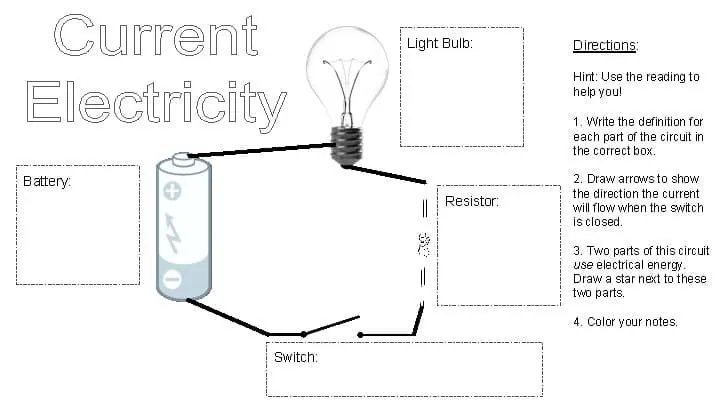
You don’t need expensive gear to make a working loop. Grab a AA battery, a small flashlight bulb, and two pieces of insulated copper wire stripped half an inch at each end.
- Connect one wire to the battery’s positive terminal using tape or a holder, then attach the other end to the metal base of the bulb.
- Take the second wire and touch one end to the bulb’s bottom contact point while leaving the other end free for now.
- Press the remaining bare wire end against the battery’s negative terminal to finish the loop and watch the bulb light up.
- Lift either wire off the battery to open the gap, which should turn the bulb off instantly every time you try it.
- If the bulb doesn’t light, check that both wire ends actually touch bare metal instead of sitting on plastic insulation.
- Swap in a fresh battery if connections look good but nothing happens, since dead cells won’t push enough voltage through.
This assumes a standard 1.5V AA cell and a matching low-voltage bulb. For a 9V battery, use a bulb rated for 9V or add a resistor, otherwise the filament burns out instantly.
Mistakes that kill the circuit
Leaving insulation over the wire tip prevents metal-to-metal contact. The loop stays broken even when everything looks connected. Strip back a full quarter inch of jacket before seating the wire.
Mixing up positive and negative on polarized components like LEDs stops current entirely. It can also crack the semiconductor die inside. Check the flat spot on the LED rim to find the cathode.
Using wire that’s too thin for the current causes it to heat up fast. The insulation melts and creates a fire risk. A motor pulling too much current requires a technician to determine the correct wire gauge.
Assuming a switch is closed just because it’s flipped leaves hidden corrosion unnoticed. Internal damage hides behind the plastic toggle. Touch your multimeter probes to both terminals in continuity mode.
Connecting mismatched batteries in series forces the weaker cell to reverse charge. This leaks acid and ruins the whole pack. Never mix brands or ages in a single battery holder.
Related guides
- GE Microwave Fan Keeps Running When Door Is Closed: Fix It
- Foosball Glossary: Key Terms and Definitions Explained in 2026
- 5 Best Air Compressors for Pool Closing: Our Top Picks in 2026
Frequently asked questions
Can a closed circuit shock you?
Yes, touching exposed conductors in a closed circuit lets current pass through your body. Anything above 50V AC or 120V DC carries real danger according to safety standards. Never work on live wires. Turn off the breaker first, then verify with a tester before touching anything.
Why does my circuit stop working suddenly?
A loose connection or blown fuse breaks the loop faster than you’d notice. Check every joint, especially where wires bend or enter terminals. Corrosion builds up over time in damp spots too. Clean contacts with fine sandpaper if they look dark or pitted.
How long does current flow in a closed circuit?
Current flows continuously as long as the power source holds charge and the path stays unbroken. A wired outlet supplies power indefinitely. A battery circuit lasts until the chemical energy depletes, which ranges from hours to months depending on the load’s draw.
Is it safe to leave a closed circuit on?
It’s safe only if the wiring, components, and power source are all rated for continuous use. Devices built for constant operation handle the heat fine. Leaving a temporary test setup powered overnight risks overheating. Match the duty cycle to what the manufacturer specifies.
What happens if I short a closed circuit?
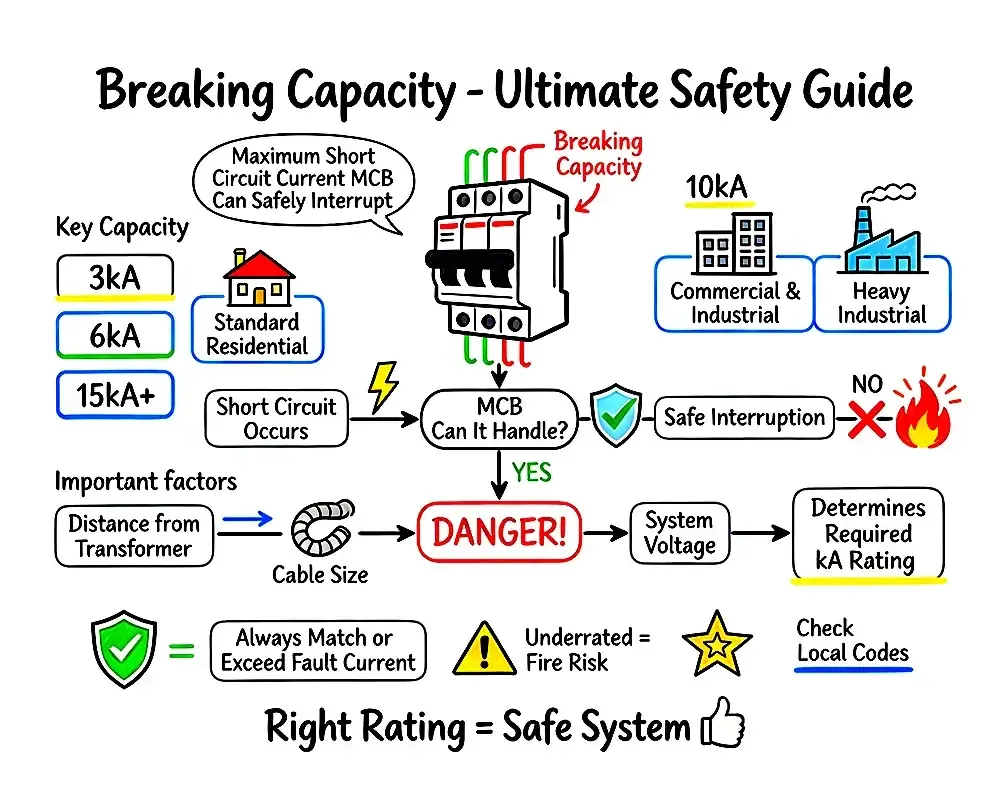
A short circuit bypasses the load, sending maximum current straight through the wires. Fuses blow or breakers trip within milliseconds to prevent fires. Without that protection, the wire glows red and melts its insulation quickly. Never skip fuses or oversize breakers.
Does wire length affect a closed circuit?
Longer wires add resistance, which drops the voltage reaching your device. For runs under 50 feet at low current, you won’t notice. Beyond that, step up the wire gauge. Calculate the total round-trip distance, not just the one-way run, when sizing conductors.
Can water close an open circuit?
Water containing dissolved minerals conducts electricity well enough to bridge gaps between exposed contacts. Pure distilled water doesn’t, but tap water and rain do. That’s why outdoor outlets require weatherproof covers and ground fault protection to prevent accidental paths through moisture.
Conclusion
Every setup has a limit you can’t guess from general advice alone. The actual current your specific circuit carries depends on your exact wire gauge, total length, and load, and you’ll read that number directly off your multimeter’s display when you measure it in series. Don’t assume your numbers match someone else’s guide. Double-check your own readings before trusting any connection with real power.
