
Transistors switch and amplify electrical signals using solid-state semiconductors instead of moving parts. That’s why they replaced vacuum tubes in nearly every electronic device. The advantages and disadvantages of transistors make the silicon MOSFET the clear winner for most circuits because it draws almost no power while sitting idle. The one exception is high-power radio broadcasting, where vacuum tubes still handle extreme voltages better.
Transistor types compared by use
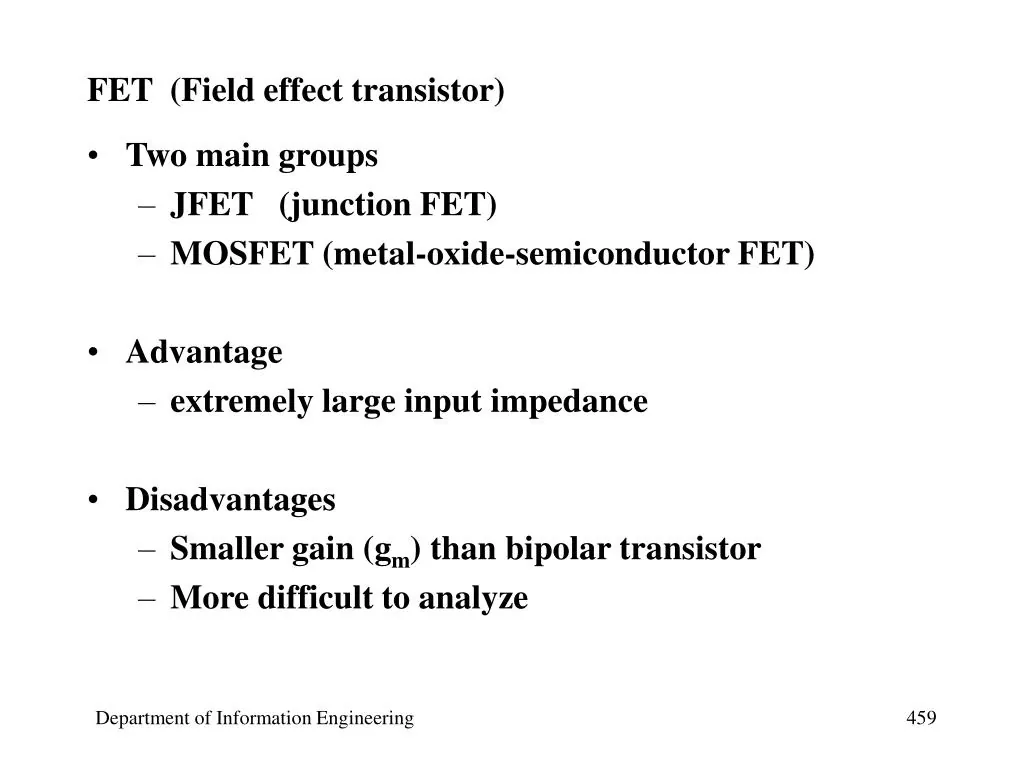
Four main transistor families cover almost every circuit you’ll build or repair. Each one trades speed, power handling, or simplicity against the others, so picking the right part means matching its strengths to your actual job.
| Method | How long it switches | Effort to drive | Cost | Best for |
|---|---|---|---|---|
| BJT (Bipolar) | Nanoseconds | Medium (needs base current) | Low | Analog amplifiers |
| MOSFET | Picoseconds | Low (voltage-driven gate) | Low to medium | Power switching, logic |
| IGBT | Microseconds | Low (voltage-driven gate) | Medium to high | Motor drives, heavy power |
| Vacuum tube | Microseconds | High (needs heater voltage) | High | High-power RF audio |
A BJT needs continuous current into its base pin to stay on, which burns extra power. A MOSFET only needs a brief voltage pulse at its gate, making it far more efficient for battery devices. An IGBT handles massive currents but switches slower than a MOSFET. You can check typical switching limits in any manufacturer’s datasheet from companies like Texas Instruments or Infineon.
Bipolar junction transistor basics
- Identify the three pins: collector, base, and emitter.
- Feed a small control current into the base pin. For a standard 2N2222 signal transistor, about 1 milliamp of base current lets roughly 100 milliamps flow from collector to emitter.
- Remove that base current to stop the larger flow completely.
- Add a resistor between your control signal and the base. Without it, too much current flows and burns out the junction in seconds.
- Place a flyback diode across any coil or motor you’re switching, or the voltage spike when it turns off will destroy the part.
BJTs give very clean, linear amplification for audio and radio signals. They’re also cheap and easy to find in any electronics shop.
The trade-off is that keeping them turned on wastes energy as heat through the base pin. This makes them a poor fit for battery-powered devices that need to run for days. If your circuit runs directly from mains power and handles dangerous voltages, leave the design to a qualified electrical engineer.
MOSFET switching method

- Find the gate, drain, and source pins on your specific part.
- Apply a voltage to the gate relative to the source. A technician should verify that a standard logic-level MOSFET like the IRLZ44N fully opens its channel at the correct level.
- Keep that voltage steady to let current flow freely from drain to source.
- Drop the gate voltage back to zero to block the current again.
- Use a dedicated gate driver chip if you’re switching heavy loads quickly. A technician should confirm the current rating, since driving a large gate directly from a microcontroller pin often causes slow switching, which overheats the part.
MOSFETs waste almost no power holding a state open since their gate acts like a tiny capacitor rather than a current drain. They also switch fast enough for modern computer processors.
Their weakness is fragility against static electricity before you solder them in. A shock you can’t even feel punctures the thin oxide layer inside. Static damage to semiconductors is documented by OSHA as a real hazard in manufacturing, and handling them requires grounded wrist straps or conductive mats.
IGBT for heavy loads
- Wire the gate, collector, and emitter terminals according to your schematic.
- A technician should apply the proper voltage to the gate to turn the device fully on. Standard industrial IGBTs usually need a specific higher voltage than what a logic-level MOSFET uses, and this must be verified by a professional.
- Let the current pass through the collector-emitter path. These parts routinely handle hundreds of amps in electric vehicles or solar inverters.
- A technician should pull the gate back to zero to shut off the flow.
IGBTs combine the easy voltage-drive of a MOSFET with the heavy current capacity of a bipolar transistor. They dominate in electric car motors, welding machines, and train engines.
They switch much slower than MOSFETs, so you can’t use them in high-frequency power supplies. Pushing an IGBT past its rated switching speed traps it half-on, generating enough heat to crack the silicon package. If your project involves wiring a home solar array to the grid, hire a licensed electrician rather than experimenting with these components yourself.
Vacuum tubes serve as a fourth option for audiophiles who want a specific warm distortion in guitar amplifiers, but they run extremely hot and burn out after a few thousand hours.
Picking the right transistor type
If you’re building something in a hurry, grab a MOSFET. It doesn’t need complex bias calculations, and you can drive it straight from a basic 5-volt microcontroller board without extra math.
If this is your first time soldering a circuit together, start with a BJT like the 2N3904. The physical rules governing its base current are easier to measure with a cheap multimeter, and mistakes usually just pop the part instead of ruining your whole board.
If you want the best possible result regardless of effort, match the exact topology to your load. Use an IGBT for spinning heavy motors, a MOSFET for fast digital switching, and a BJT for delicate analog audio.
Choosing speed over power handling means you’ll burn out parts under heavy loads. Choosing raw power over speed means your circuit will lag or overheat at high frequencies. You always trade one physical limit to gain another.
Rules for every transistor circuit
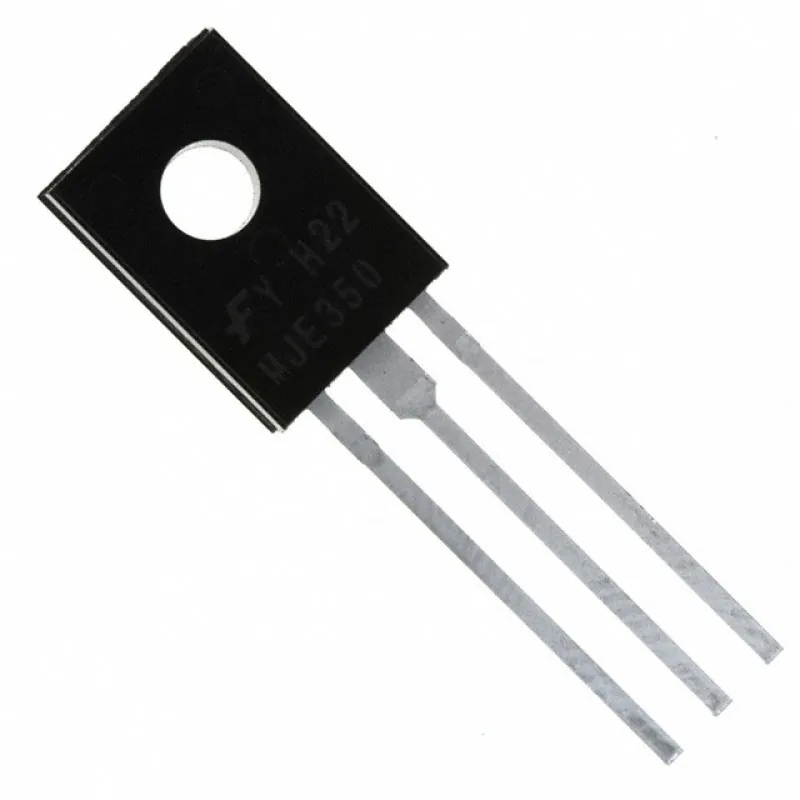
Every semiconductor has absolute maximum ratings printed in its datasheet, published by the manufacturer. Exceeding the voltage, current, or temperature limits destroys the silicon permanently. Always read those numbers before powering anything up.
Prepare your workspace by unplugging the circuit and discharging any large capacitors. A charged capacitor holds enough energy to melt a transistor instantly or shock you badly.
Check the temperature partway through your testing.
Finish by measuring the actual voltage drop across the component while it works. Compare that reading against the expected value in your schematic to confirm it isn’t wasting power. Working with mains-connected power supplies carries a lethal shock risk; leave that work to certified technicians.
Related guides
- What Is the Moment of Inertia Matrix: A Clear Guide
- 10 Best Phosphate Removers to Keep Your Pool Clear in 2026
- How Current Foldback Protects Power Supplies: A Clear Guide
Frequently asked questions
Why do transistors get hot?
Heat comes from electrical resistance when current flows through the semiconductor material. If a part gets too hot to touch, it’s either passing more current than it’s rated for or lacks a proper heat sink. Check the power dissipation rating in the manufacturer’s datasheet to find the safe limit for your specific model.
How long does a transistor last?
A solid-state transistor lasts decades when operated within its rated voltage and temperature limits. Unlike vacuum tubes, there’s no filament to burn out. Heat cycling eventually degrades the internal connections, so keeping the part cool is the single biggest factor in its lifespan.
Can a MOSFET replace a BJT directly?
No, you can’t swap them pin-for-pin without changing the surrounding circuit. A BJT needs continuous current at its base, while a MOSFET needs a voltage at its gate. Plugging a MOSFET into a BJT circuit leaves the gate floating, causing erratic switching and potential failure.
Is it safe to touch transistor pins?
Touching the metal pins with bare hands risks transferring static electricity that punctures the internal silicon layers, especially in MOSFETs. Always hold components by their plastic bodies. Work on an anti-static mat or wear a grounded wrist strap when handling sensitive parts outside their protective packaging.
What happens if you wire a transistor backwards?
Wiring the collector and emitter in reverse stops the part from amplifying or switching correctly. The internal doping levels differ between those two regions, so reversed current flow meets high resistance. It might act like a weak, broken switch or overheat rapidly depending on the applied voltage.
How many transistors are in a modern processor?
A current desktop CPU contains tens of billions of individual transistors etched onto a single silicon die. The exact count changes with every new architecture release from manufacturers like AMD or Intel. You can find the precise number for any specific chip model in the maker’s official technical specifications.
Why did transistors replace vacuum tubes?
Solid-state parts don’t need a heated filament to work, so they turn on instantly and draw far less power. They’re also physically smaller, immune to mechanical vibration, and don’t shatter if dropped. These traits allowed engineers to shrink room-sized computers down to devices that fit in your pocket.
Conclusion
Picking the right part comes down to matching the physics of the component to your actual load. A fast switch fails under heavy current, and a heavy lifter can’t keep up with rapid pulses. Read the manufacturer’s datasheet for your exact part number, respect the thermal limits, and your circuit will run reliably for years.
