
A chiller is a machine that removes heat from a liquid to work by using a vapor-compression or absorption refrigeration cycle. This cooled liquid then flows through pipes to lower the temperature of air or equipment in a building, serving as the primary way to move heat away from large spaces.
Understanding how a chiller works
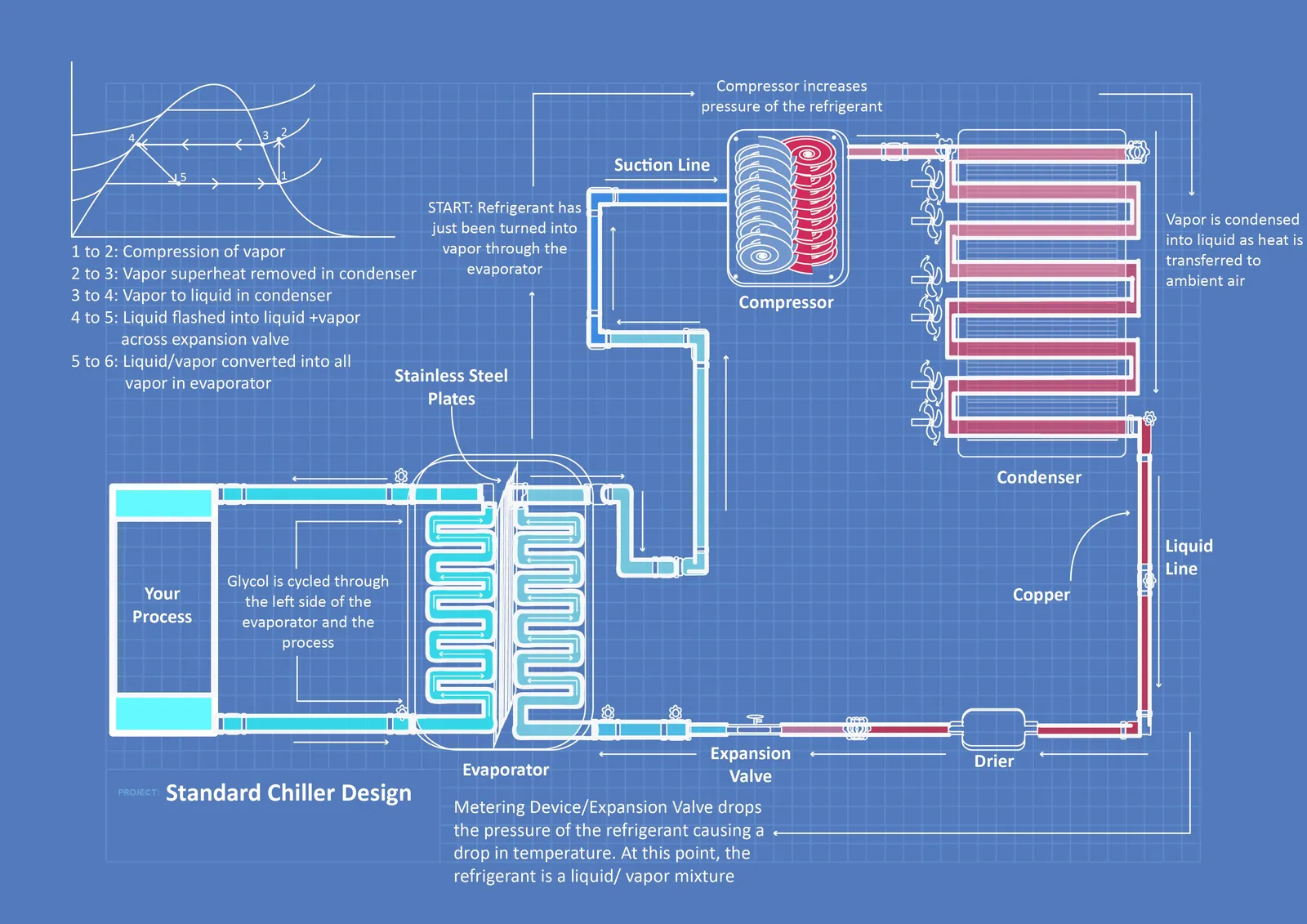
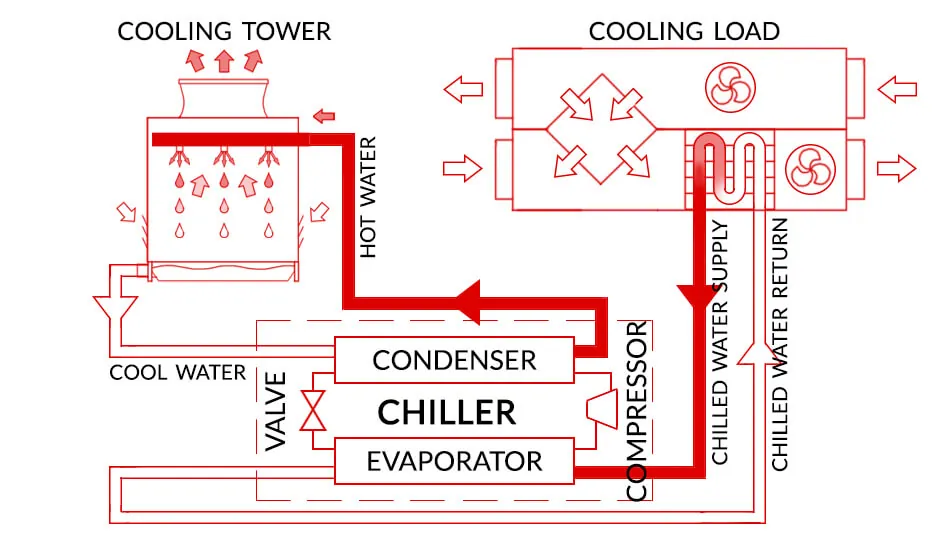
A chiller uses a closed-loop system to move heat from your process or building to the outside air. It creates a constant supply of chilled water that circulates through your facility’s cooling coils.
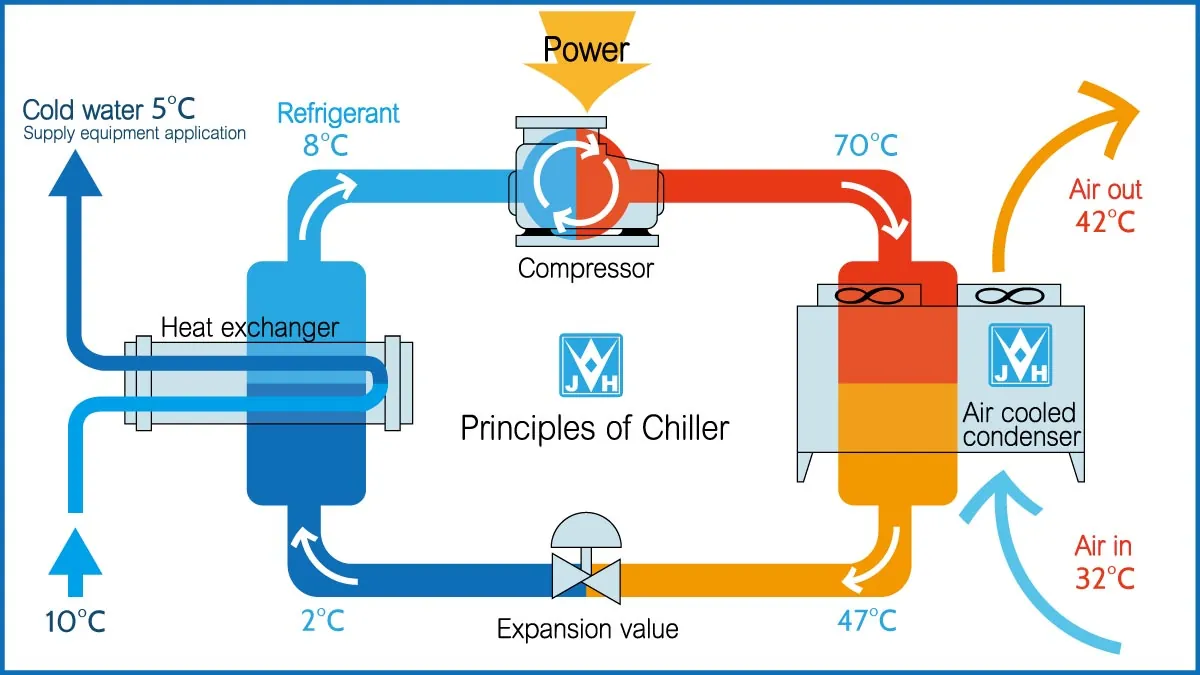
The refrigerant absorbs heat from the water inside the evaporator. The compressor raises the refrigerant pressure, which also increases its temperature. The condenser releases this heat into the surrounding air or water. The expansion valve lowers the pressure, cooling the refrigerant for the next cycle. This cycle repeats continuously to maintain your desired temperature set point.
The system capacity is measured in tons, where one ton equals 12,000 BTU per hour. If your heat load exceeds the rated tonnage, the water temperature will drift upward, causing your process to stall or overheat.
A common mistake is ignoring the ambient temperature limit. If the outside air exceeds the condenser’s design rating, the system will trip on high-pressure safety. Check your nameplate for the maximum ambient threshold before heat waves arrive.
Why chillers are necessary for cooling
The primary function of this machine is to provide reliable heat transfer for industrial processes or large commercial spaces. Without a constant flow of chilled fluid, heat would build up, leading to equipment failure or uncomfortable indoor conditions. The system works by manipulating the phase of a refrigerant, turning it from a liquid to a gas and back again to move thermal energy from one place to another.
According to the U.S. Department of Energy, proper maintenance of cooling systems is essential to ensure they run at peak efficiency. If you neglect cleaning the heat exchanger surfaces, the system must work harder to achieve the same cooling effect. This increased workload consumes more electricity and puts extra strain on the mechanical parts, such as the compressor and the pump.
You should always verify your equipment’s specific requirements before making adjustments. The manufacturer’s manual will detail the exact flow rates and pressure limits for your model. If you’re unsure about the health of your system, look for signs of high energy bills or inconsistent water temperatures.
These are often the first clues that the unit is struggling to move heat efficiently. If the temperature difference between the supply and return water is too small, the system might not be cooling the fluid as intended.
When the answer is different
High humidity demands more than standard cooling. If your dew point consistently exceeds 60 degrees Fahrenheit, standard coils will fail to strip enough moisture. Switch to desiccant wheels to chemically pull water vapor from the air before it reaches the cooling stage.
Compressor cycling is the silent killer of efficiency in low-load environments. If your system runs at less than 30 percent capacity for most of the day, install a variable frequency drive to modulate speed rather than cutting power entirely.
Outdoor heat often forces condensers to work against their own thermal limits. When ambient temperatures climb above 105 degrees, air-cooled systems lose their heat transfer effectiveness. Shift to water-cooled loops to maintain stable head pressures and prevent sudden system shutdowns.
How to operate a chiller correctly
-
Check the fluid levels in the reservoir to ensure the pump has enough liquid to circulate.
-
Set the desired temperature on the control panel, usually between 45°F and 55°F for comfort cooling. If you’re cooling sensitive electronics, keep the setpoint above 60°F to prevent condensation from forming on internal components.
-
Turn on the pump to start the flow, checking for any leaks at the pipe connections. Even a slow drip indicates a loose fitting that will eventually lead to air pockets in the lines.
-
Activate the compressor and wait for the system to reach the target temperature on the display.
-
Monitor the pressure gauges; they should stay within the manufacturer’s recommended operating range for your specific model. High pressure suggests a clogged filter, while low pressure points to a refrigerant leak.
-
Inspect the condenser coils weekly to remove dust or debris that might block airflow. Use a soft brush or compressed air; never use a pressure washer, as it bends the delicate fins and restricts heat exchange.
-
Record the daily operating temperature to spot performance drops before a total failure occurs. A steady climb in the return temperature often signals that the refrigerant charge is beginning to fail.
The mistakes that ruin it
Ignoring blocked condenser coils forces the compressor to overheat, leading to a total system failure that costs thousands to repair. Clean these fins as needed based on usage, following the specific guidelines provided in the owner’s manual to ensure proper airflow.
Running the system on low refrigerant causes the motor to cycle constantly, driving up electricity bills by nearly 20 percent. If the unit cycles on and off every few minutes, check for leaks immediately.
Neglecting water treatment allows calcium deposits to coat the internal heat exchanger. This mineral layer acts as an insulator, forcing the system to work twice as hard to reach the target temperature.
If the water temperature is set below 40 degrees Fahrenheit, the internal coils risk freezing. Keep the setting at 45 degrees to maintain efficiency.
Frequently asked questions
How long does a chiller last?
A well-maintained chiller typically lasts for a significant duration, assuming it receives regular service. The lifespan depends heavily on how often the compressor runs and whether the water chemistry is managed properly. If you don’t perform regular maintenance, internal parts will degrade much faster, often requiring major repairs within the first portion of operation.
Is it safe to run a chiller in winter?
It’s safe to run the system in winter if your unit includes a low-ambient control package or a free-cooling option. Without these features, the refrigerant pressure may drop too low, causing the compressor to shut down to prevent damage. Check your manual to see if your specific model supports cold-weather operation before turning it on during freezing conditions.
What happens if the water flow stops?
The system will trigger a flow switch alarm and shut down immediately to protect the evaporator from freezing. If the water stops moving while the compressor is active, the temperature inside the heat exchanger will plummet and could crack the metal tubing. Never bypass the flow switch, as it’s a critical safety device for your equipment.
Why does the chiller trip the breaker?
A tripped breaker usually indicates that the compressor motor is drawing too much current due to a mechanical overload or an electrical fault. If your unit draws more than the rated amperage listed on the nameplate, stop the machine immediately. You should contact a licensed HVAC technician to inspect the wiring and the compressor windings for damage.
Does the water quality matter?
Water quality is critical, as poor chemistry leads to scale, corrosion, and biological growth inside the pipes. You must keep the pH levels and mineral content within the ranges specified by the manufacturer to prevent pipe blockage. If you’re unsure about your water, have a professional test it and recommend the correct chemical treatment program for your facility.
How often should I change the filter?
You should change or clean the filters as needed based on usage, following the specific guidelines provided in the owner’s manual. If the filters are clogged, the machine will struggle to pull air through the condenser, leading to high head pressure. Check the filter surface regularly; if you can’t see light through the mesh, it’s time to clean it.
Conclusion
Regular care ensures your system remains reliable throughout its life. By monitoring the water temperature and keeping the coils clean, you avoid the most common causes of mechanical failure. If you notice persistent issues despite following these steps, contact a qualified technician to perform a full system diagnostic.
