
Deciding between the two most common methods for joining plumbing pipes is a fundamental task for any DIY home improvement project. When you compare compression fitting vs push to connect fitting, you’re essentially weighing the trade-offs between mechanical reliability, ease of installation, and long-term cost. While compression fittings rely on a physical nut and ferrule to create a watertight seal, push-to-connect fittings utilize internal O-rings and locking teeth for a rapid, tool-free assembly. Understanding these differences ensures that your plumbing repairs remain leak-free and code-compliant for years to come.
Key Takeaways
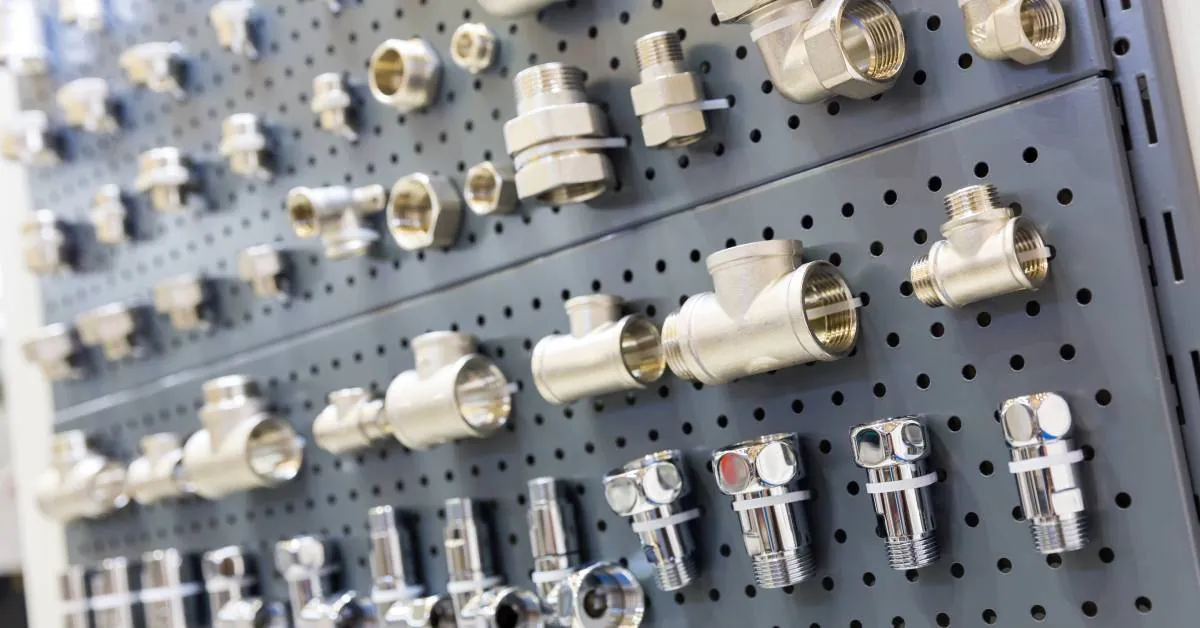
- Push-to-connect fittings allow for installation in seconds without the need for wrenches or soldering torches.
- Compression fittings provide a more permanent, vibration-resistant connection, making them ideal for areas behind walls or under cabinets.
- Total project costs for push-to-connect setups typically range from $8.00 to $25.00 per fitting, whereas compression fittings cost between $2.00 and $7.00 each.
- Always ensure your pipe ends are deburred and clean regardless of the fitting type to prevent immediate leaks.
- Push-to-connect fittings are generally not suitable for permanent, inaccessible locations according to most residential building codes.
What are the cost differences?
When budgeting for a plumbing repair, the price disparity between these two systems is significant. Compression fittings are widely considered the budget-friendly option, as the manufacturing process is less complex than the intricate internal mechanisms required for push-to-connect technology.
| Fitting Type | Price Range (Per Unit) | Tool Requirements |
|---|---|---|
| Compression | $2.00 – $7.00 | Adjustable wrenches, tube cutter |
| Push-to-Connect | $8.00 – $25.00 | Deburring tool, pipe cutter |
| Sweat/Solder | $0.50 – $3.00 | Torch, flux, solder, sandpaper |
The cost of compression fittings is low because they consist of three simple parts: the body, the nut, and the metal sleeve, known as a ferrule. Conversely, push-to-connect fittings, such as those manufactured by SharkBite or Apollo, contain high-grade stainless steel teeth and internal O-rings that increase the retail price. While you save money on the individual compression unit, remember to factor in the time required for assembly, as compression fittings take longer to install correctly.
How does compression fitting vs push to connect fitting installation compare?
Installing a compression fitting requires two wrenches—one to hold the body of the fitting steady and another to tighten the nut. As you tighten the nut, it compresses the brass ferrule against the pipe, creating a mechanical seal. This process is highly effective but requires a steady hand and enough clearance for your tools.
Push-to-connect installations are significantly faster. You simply cut the pipe square, remove any sharp edges with a deburring tool, and push the pipe into the fitting until it bottoms out. The internal teeth grip the pipe, while the O-ring seals against the surface.
Pro Tip: Always use a depth gauge or a permanent marker to mark the insertion depth on your pipe before installing a push-to-connect fitting. This confirms the pipe has passed the O-ring seal, preventing potential blowouts under pressure.
Which fitting is better for tight spaces?
In cramped quarters, such as under a bathroom vanity or behind a dishwasher, push-to-connect fittings are the clear winner. Because they don’t require wrenches to tighten, you can install them in spaces where you physically can’t rotate a tool. Compression fittings, by contrast, are notoriously difficult to install in tight spots because the torque required to create a proper seal usually demands a wide range of motion.
For these restricted areas, ensure you’re using a brand-name push-to-connect fitting that meets the NSF/ANSI 61 drinking water standard to ensure chemical safety and material longevity. Using inferior, uncertified connectors in a hidden location is a recipe for long-term water damage.
Are push-to-connect fittings permanent?
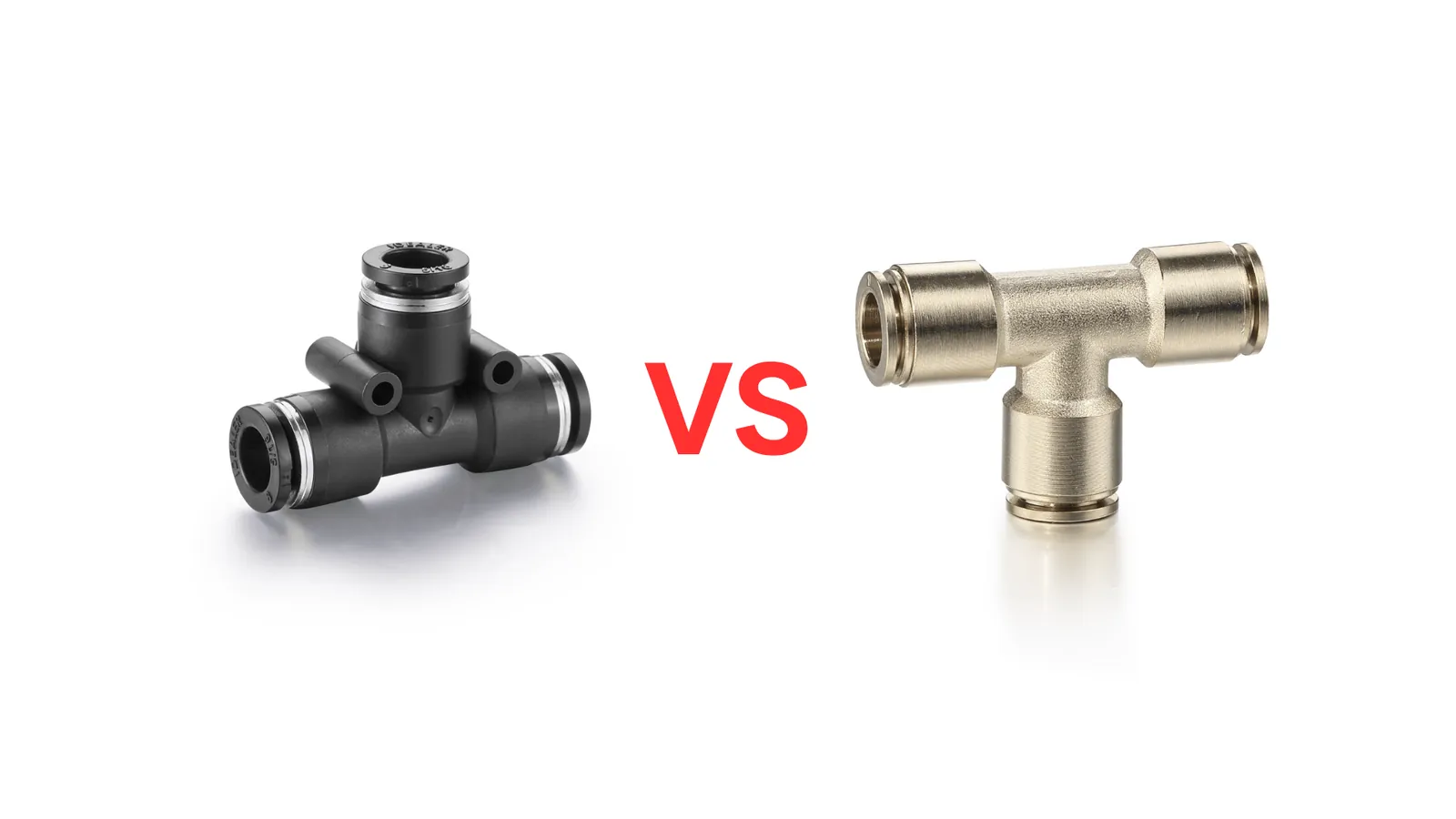
One of the most debated topics in plumbing is whether push-to-connect fittings are intended for permanent use. While manufacturers market them as permanent, many professional plumbers view them as temporary fixes or transition fittings. The internal O-ring is made of rubber, which can degrade over decades, whereas the metal-on-metal seal of a compression fitting is essentially a lifetime connection.
If you have a choice, use compression or soldered joints for permanent installations inside walls. Reserve push-to-connect fittings for accessible areas, such as under-sink shut-off valves or temporary water lines where you might need to change the configuration later.
Can you reuse these fittings?
Reusability is a major differentiator. Compression fittings are generally considered one-time use; once the ferrule is crushed onto the pipe, it’s nearly impossible to remove without cutting the pipe. If you attempt to reuse the fitting, the ferrule won’t seal in the same spot, leading to a high probability of a slow drip.
Push-to-connect fittings are designed to be removable and reusable. By using a specialized disconnect clip or tool, you can depress the internal collar and release the pipe. This makes them excellent for testing setups, temporary water supplies for construction sites, or situations where you might need to swap out a fixture without cutting the plumbing line shorter.
Which is more resistant to leaks?
Leak resistance depends heavily on the quality of the installation rather than the technology itself. A compression fitting that’s overtightened can crack the ferrule, while an undertightened one will leak immediately. Similarly, a push-to-connect fitting will leak if the pipe end is scratched, dirty, or cut at an angle.
Warning: Never use a hacksaw to cut copper pipe when using push-to-connect fittings. Hacksaws leave jagged edges that will shred the delicate O-ring inside the fitting, causing an instant, high-pressure leak that’s difficult to repair without replacing the entire connector.
Comparing material compatibility
Both fitting types are highly versatile, but they have specific limitations regarding the materials they can connect.
| Pipe Material | Compression | Push-to-Connect |
|---|---|---|
| PEX Tubing | Yes (with stiffener) | Yes |
| Copper Pipe | Yes | Yes |
| CPVC Pipe | No | Yes |
| Polybutylene | No | Yes (with adapter) |
When using a compression fitting on PEX tubing, you must insert a brass or plastic stiffener into the end of the PEX pipe. Without this insert, the PEX will collapse under the pressure of the ferrule, resulting in a loose connection. Push-to-connect fittings typically have a built-in stiffener or are specifically designed for the rigidity of PEX, making them much more user-friendly for modern piping systems.
Troubleshooting common connection issues
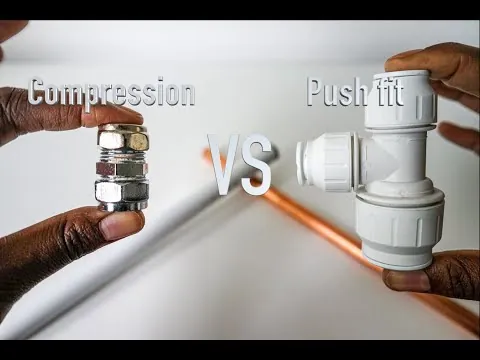
If you encounter a leak, don’t immediately assume the fitting is defective. Follow this diagnostic sequence:
- Inspect the cut: Is the pipe end square? If it’s slanted, the O-ring can’t maintain a uniform seal.
- Check for debris: Small metal shavings or grit can prevent the O-ring from sealing against the pipe wall.
- Verify depth: Did you push the pipe in far enough? A partially inserted pipe will leak under system pressure.
- Confirm pipe diameter: Are you using a 1/2-inch fitting on a 5/8-inch pipe? Even small deviations in pipe wall thickness can cause catastrophic failure.
- Check for scratches: If the exterior of the copper pipe is deeply scratched, the O-ring can’t fill the gap, and the connection will weep water.
Related guides
- Mini Pebble vs Pebble Tec: Which Pool Finish Wins in 2026
- Pleatco vs Unicel: Which Pool Filter Lasts Longer? in 2026
- Spa Frog vs Nature 2: Which Mineral Sanitizer Wins in 2026
Frequently Asked Questions
Can I use push-to-connect fittings behind a wall?
Most building codes discourage or prohibit the use of push-to-connect fittings in inaccessible, permanent locations like behind drywall. Because these fittings rely on O-rings that can potentially dry out or fail over many years, they’re intended for accessible areas where they can be monitored and replaced if a leak develops. Always check your local plumbing codes before sealing a wall.
Do I need to use thread sealant on compression fittings?
No, thread sealant or plumber’s tape shouldn’t be applied to the threads of a compression fitting. The seal is created by the ferrule being crushed against the pipe and the fitting body, not by the threads themselves. Adding tape to the threads can actually interfere with the torque required to seat the ferrule properly, potentially causing the fitting to leak under pressure.
How do I remove a compression fitting?
Removing a compression fitting often requires cutting the pipe just behind the nut. Because the ferrule is permanently crimped onto the pipe, it can’t be unscrewed or pulled off without damaging the copper tubing. If you have enough pipe length, cut off the old fitting and the crushed ferrule, clean the pipe with sandpaper, and install a new fitting on the fresh section of pipe.
Can I mix and match brands of push-to-connect fittings?
While the technology is similar across brands, it’s best practice to stick to one manufacturer for your entire system. Different brands may have slight variations in their O-ring dimensions or the tension of their internal teeth. Using consistent components ensures that the insertion depth and seal integrity remain uniform throughout your plumbing network, reducing the risk of installation errors and future leaks.
Are compression fittings safe for gas lines?
Compression fittings are frequently used for gas appliances, but they must be rated for gas use. You must use a brass ferrule specifically designed for gas, not the ones used for water. Furthermore, you must verify that your local jurisdiction allows mechanical fittings for gas, as many areas now require flared fittings or soldered joints to ensure the highest level of safety and prevent gas migration.
Conclusion
Taking the time to choose the right fitting for your specific application will save you hours of frustration and potential water damage. If you’re working on an accessible, temporary, or urgent repair, the speed of push-to-connect technology is unbeatable. For long-term, hidden, or cost-sensitive projects, stick to the time-tested reliability of compression fittings to ensure your home plumbing remains secure.