
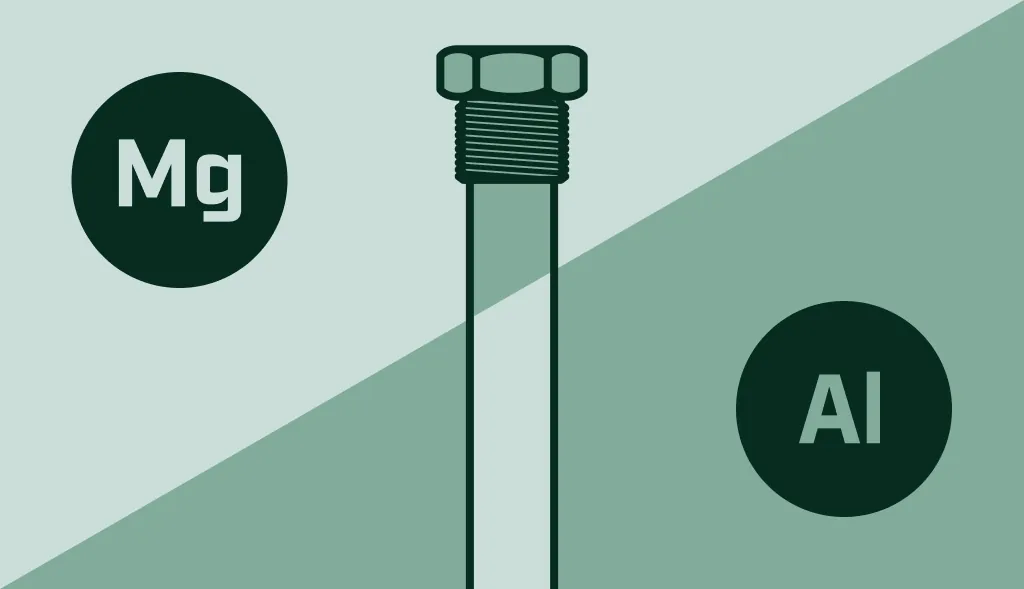
Magnesium, aluminum, and powered anode rods are the most effective components for protecting your water tank from corrosion. These rods sacrifice themselves to prevent the tank walls from rusting, which keeps your water clean and your system running longer. The primary difference between them lies in the metal composition and how they react to the chemistry of your specific water supply. While they all serve the same purpose, choosing the right material ensures the best water heater anode rods perform correctly in your home environment.
Water heater anode rod types
To find the right part, you must match the rod material to your local water quality. The following table provides a quick look at the options available for residential tanks.
| Rod Type | Best Used For | Common Example |
|---|---|---|
| Magnesium | Soft to neutral water | Standard factory-installed rod |
| Aluminum | Hard water conditions | Economical replacement rod |
| Aluminum/Zinc | Reducing rotten egg smell | Alloy-blended replacement rod |
| Powered | All water types | Electronic impressed current rod |
If your home uses a water softener, magnesium is the wrong choice. Softened water is highly conductive and will dissolve a magnesium rod in less than eighteen months, leaving your tank unprotected. In these systems, switch to an aluminum or powered rod to prevent premature tank failure.
Test your water for sulfur content if you notice a persistent, foul odor from your hot taps. If the smell is present, the bacteria in your tank are reacting with the magnesium. Replace your existing rod with an aluminum-zinc alloy. This specific blend inhibits the chemical reaction that produces hydrogen sulfide gas.
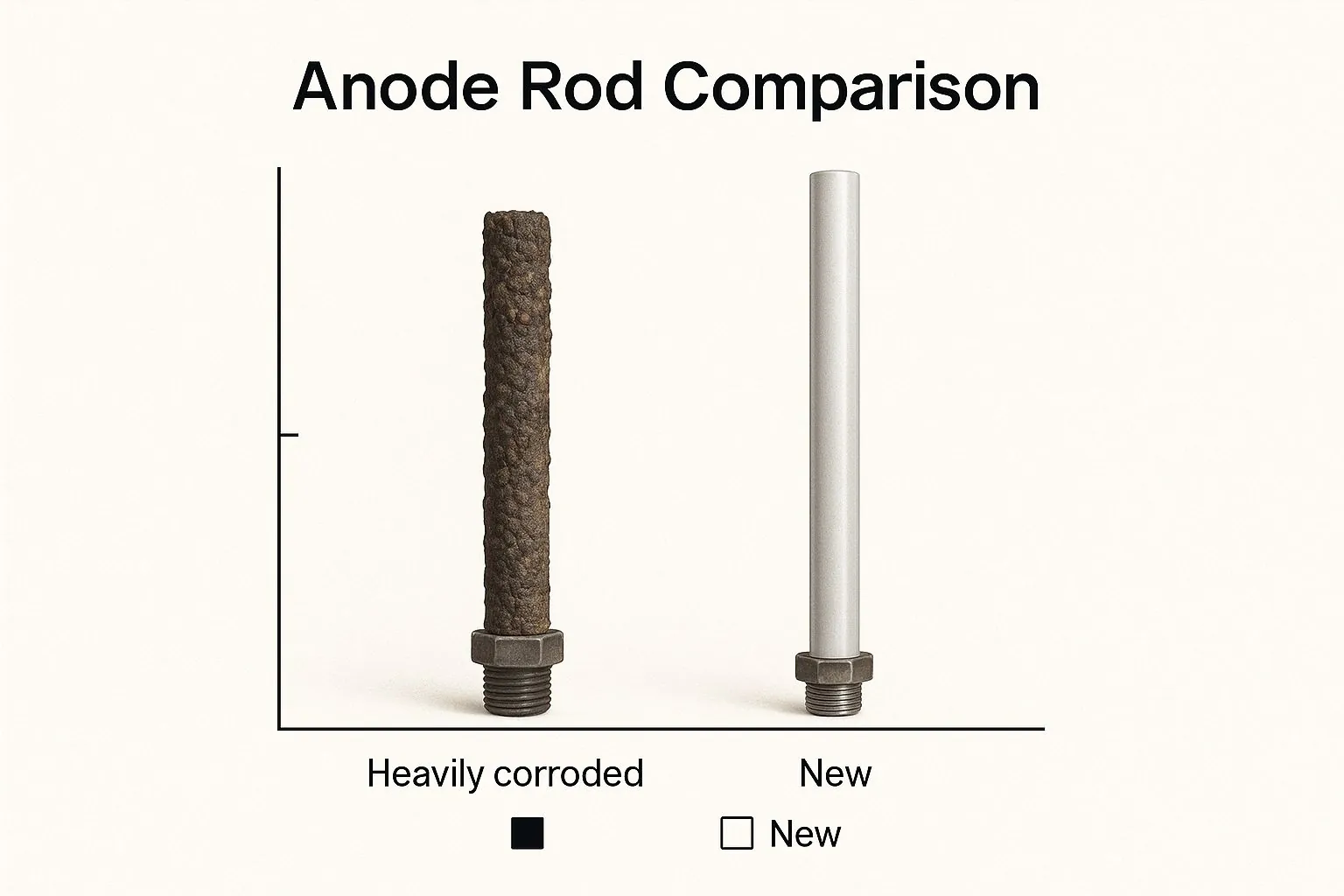
Watch for the “white flake” mistake, as calcium carbonate sediment in your aerators is a sign of hard water buildup rather than rod depletion. Check your rod based on your specific water usage and consult your owner’s manual for maintenance guidance. If more than six inches of the steel core wire is visible, the rod must be replaced.
Powered rods offer the most consistent protection. Unlike sacrificial metal rods, they don’t dissolve over time. They’re the best investment for homes with fluctuating water chemistry or those using well water.
Magnesium anode rods
Magnesium rods are the standard choice for most residential water heaters because they provide excellent protection in soft or neutral water. These rods work by corroding more easily than the steel tank, effectively acting as a lightning rod for rust. If you have soft water, this is usually the best material because it’s highly reactive and provides a strong defensive barrier.
They offer the highest level of protection against tank corrosion in low-mineral water. The material is safer to consume in trace amounts compared to other metal options. They last longer than aluminum in average water conditions but require annual checks.
If your water has a high mineral content or a high pH level, magnesium rods will degrade rapidly. In these conditions, the rod may dissolve entirely within 18 months, leaving your tank vulnerable to silent, rapid corrosion. If you notice a rotten egg smell coming from your hot water, the magnesium is reacting with sulfate-reducing bacteria. Switch to a powered anode rod or an aluminum-zinc alloy if the odor persists after flushing.
For a typical home with a 50-gallon tank, a standard 0.75-inch diameter magnesium rod is the most common fit. Always measure the clearance above your heater before buying a replacement. If you have less than 40 inches of vertical space between the top of the tank and the ceiling, you must purchase a segmented, flexible rod. A rigid rod will be impossible to install without cutting a hole in your drywall or ceiling.
Check your owner’s manual to confirm the specific rod diameter your model requires. When installing, use a long-handled breaker bar to loosen the factory-installed rod, as it’s often torqued to over 100 foot-pounds at the factory. Apply Teflon tape to the threads of the new rod to ensure a watertight seal.
If the rod comes out looking like a thin wire or is covered in thick, white sediment, your water chemistry is aggressive; replace it immediately to prevent a tank breach. Never skip the annual inspection, as the cost of a new rod is negligible compared to the price of a flooded basement.
Aluminum anode rods
Aluminum anode rods are designed for areas with hard water where magnesium would disappear too quickly. Because aluminum is less reactive than magnesium, it holds up better against the high mineral content found in many municipal water supplies. If you notice your rod is completely gone during a yearly inspection, switching to aluminum can extend the time between replacements.
- They provide a more durable, slower-corroding option for hard water environments.
- The lower cost makes them a budget-friendly choice for routine maintenance.
- They’re heavier and more rigid than magnesium, which can make installation easier in tight spaces.
If your water has a high pH, aluminum rods may produce small white flakes of aluminum hydroxide in your water. This is a sign that the rod is working, but it can be annoying if it clogs your faucet aerators. If you see this, you should switch back to magnesium or try a powered anode. Always check the rod length against your tank height; if the rod is too long, it will touch the bottom and fail to seat properly.
Powered anode rods
Powered anode rods, also known as impressed current anodes, use an external electrical source to protect the tank instead of relying on a sacrificial metal. These systems send a constant, low-voltage current through the water to stop the electrochemical reaction that causes rust. Because they don’t rely on metal consumption, they never need to be replaced, making them a permanent solution for any water type.
- They offer a permanent fix that eliminates the need for future rod replacements.
- The system is highly effective at stopping the “rotten egg” smell caused by sulfate-reducing bacteria.
- They work consistently regardless of whether your water is soft, hard, or chemically treated.
These rods are more expensive than metal options and require a nearby 120-volt power outlet to function. If you aren’t comfortable working with electrical components, you should hire a licensed plumber to install the unit. If you lose power to the device, the tank will immediately stop receiving protection, so ensure the indicator light stays green. This isn’t for homeowners who want a simple, “set-it-and-forget-it” mechanical part; it’s for those who want to end manual replacements entirely.
Aluminum/zinc alloy anode rods
Aluminum/zinc alloy rods are a specialized choice meant for homes experiencing a strong sulfur odor in their hot water. The addition of zinc to the aluminum base changes the electrochemical potential inside the tank, which inhibits the activity of the bacteria responsible for that unpleasant smell. These rods are slightly more reactive than pure aluminum but much more stable than pure magnesium.
If your water smells like rotten eggs, confirm the source by filling a glass from a cold tap first. If the cold water is odorless but the hot water reeks, the bacteria are thriving inside your heater tank, making this alloy rod the primary solution. If both taps smell, the issue lies in your well or supply lines, and a tank anode will offer no relief.
The zinc content provides an extra layer of protection against sulfate-reducing bacteria. These organisms thrive in the specific electrochemical environment of a standard water heater. By altering the potential of the tank, the zinc creates an inhospitable climate for these microbes, effectively starving the colony.
Avoid these rods if you use a water softener. Softened water increases the conductivity of the tank environment, which causes the alloy to corrode at an accelerated rate. This rapid consumption leads to premature rod failure and can result in sediment buildup that settles on the heating elements.
Always verify that your water heater warranty remains valid if you switch from the factory-installed magnesium rod to an alloy version. Some manufacturers consider a change in material a modification that voids the tank coverage. Check your manual for the specific alloy requirements or allowed substitutions before installation.
If the sulfur smell returns within six months, the bacteria have migrated into your home’s plumbing pipes. At this stage, the rod is performing correctly, but it can’t reach the colonies living in the showerheads or faucet aerators. You must flush the entire hot water system with a hydrogen peroxide solution to eliminate the remaining bacteria.
When installing, ensure the rod has a solid electrical connection to the tank head. Ensure the rod has a solid metal-to-metal connection to the tank head. Don’t use excessive thread sealant, as it can electrically isolate the rod and render it useless.
Other anode rod options
Flexible link rods consist of several short segments connected by a heavy-duty cable. These are essential if your water heater sits in a basement or closet with less than 30 inches of vertical clearance above the tank. Without this flexibility, you would have to tilt the tank dangerously or cut into your ceiling joists to extract the old rod.
Hex-head rods use a standard hexagonal nut integrated into the top plug. These are the industry standard for ease of maintenance. If your tank has at least 40 inches of overhead space, always choose this style. It allows you to use a standard 1-1/16 inch socket wrench to pull the rod in minutes. Using an impact driver on these nuts often saves time, but always hand-tighten the replacement to avoid stripping the tank threads.
Nipple-head rods are built directly into the hot water outlet nipple. You’ll find these on units where the manufacturer prioritized a compact footprint over serviceability. To inspect these, you must shut off the main water supply and disconnect the plumbing union. If you see a nipple-head rod, expect the inspection to take 45 minutes rather than ten.
If your water smells like rotten eggs, switch from a magnesium rod to a powered anode or a zinc-aluminum alloy. Magnesium rods react with certain bacteria to produce hydrogen sulfide gas. If you notice this odor, the alloy is the culprit, not the tank itself. Swapping the rod material helps prevent further gas production, but you must flush the tank to remove existing odors and bacteria.
How to choose the right anode rod

To decide which rod you need, start by testing your water hardness and checking your current rod’s condition. If your water is soft, choose magnesium to maintain the best protection without mineral buildup. If you have hard water and find that your rod dissolves in under two years, switch to aluminum for better longevity. If your primary concern is an unpleasant sulfur smell, an aluminum/zinc alloy rod is your best choice.
Most homeowners make the mistake of choosing based on price rather than chemistry. If you install a magnesium rod in a water softener system, the rod will deplete rapidly because the increased conductivity of the water accelerates the corrosion process. Check your rod based on your specific water usage and consult your owner’s manual for maintenance guidance.
If you want to stop replacing rods entirely and have a power outlet nearby, choose a powered anode rod. These systems use an external current to neutralize corrosive elements, lasting indefinitely regardless of water chemistry. If you don’t have space above your tank for a long, rigid rod, use a flexible link rod to ensure you can get it installed correctly.
These choices are generally mutually exclusive; you can only use one type of anode rod per tank at a time. Picking one means you must remove the old one, as leaving two different metals in the tank can create an electrical conflict that ruins the tank walls.
If you’re unsure of your water’s pH, test it first. If the pH is below 6.5, the water is acidic and will eat through any standard rod rapidly. In these specific cases, a powered rod is the only way to protect the tank lining from pinhole leaks.
Frequently asked questions
How often should I check my anode rod?
You should check your anode rod regularly to ensure it’s still protecting your tank. If you use a water softener, check it more frequently because softened water accelerates metal corrosion. If more than six inches of the steel core wire is exposed, the rod is no longer protecting your tank and requires immediate replacement.
Can I install an anode rod myself?
You can install an anode rod yourself using basic plumbing tools like a socket wrench and pipe wrench. First, turn off the water supply and the power or gas to the heater before draining a few gallons. If the rod is stuck, don’t force it, as you could crack the tank lining.
What happens if I don’t replace my anode rod?
If you don’t replace your anode rod, the water will eventually attack the steel tank, leading to rust and leaks. Once the tank begins to rust from the inside, it can’t be repaired and requires a full unit replacement. Replacing the rod is significantly cheaper than buying a new water heater.
Why does my water smell like rotten eggs?
Your water smells like rotten eggs because sulfate-reducing bacteria react with magnesium anode rods to produce hydrogen sulfide gas. Switching to an aluminum/zinc alloy or powered anode rod usually eliminates this smell by changing the internal chemistry. If the odor persists, the bacteria may be living in your home’s plumbing.
Does water temperature affect anode rod life?
Higher water temperatures speed up the corrosion of the anode rod significantly. Setting your heater above 140 degrees Fahrenheit causes the rod to disappear much faster than at standard settings. For most homes, setting the thermostat to at least 140 degrees Fahrenheit is recommended to inhibit bacterial growth, though this may increase the rate of anode rod consumption.
Is it safe to use an aluminum anode rod?
It’s safe to use an aluminum anode rod because the amount of metal released into the water remains well below levels considered harmful by health agencies. While some prefer magnesium, aluminum rods meet standard safety requirements for residential systems. If you remain concerned, a powered anode rod is an effective alternative.
Conclusion
Start by locating the anode rod nut on top of your water heater, which is usually found under a plastic cap near the cold water inlet. Use a socket wrench to loosen the nut and pull the old rod out to inspect the remaining metal. If the rod is mostly gone, replace it with a new one.