
Choosing the right water softening solution is essential for maintaining the longevity of your plumbing and appliances. If you’re searching for the best water softener salt, you’ll find that the options range from $5.00 to $15.00 per 40-pound bag, depending on the purity and the specific formulation you select. Navigating these choices requires understanding the differences between crystal, pellet, and block varieties to ensure your system runs efficiently without frequent maintenance issues.
Key Takeaways
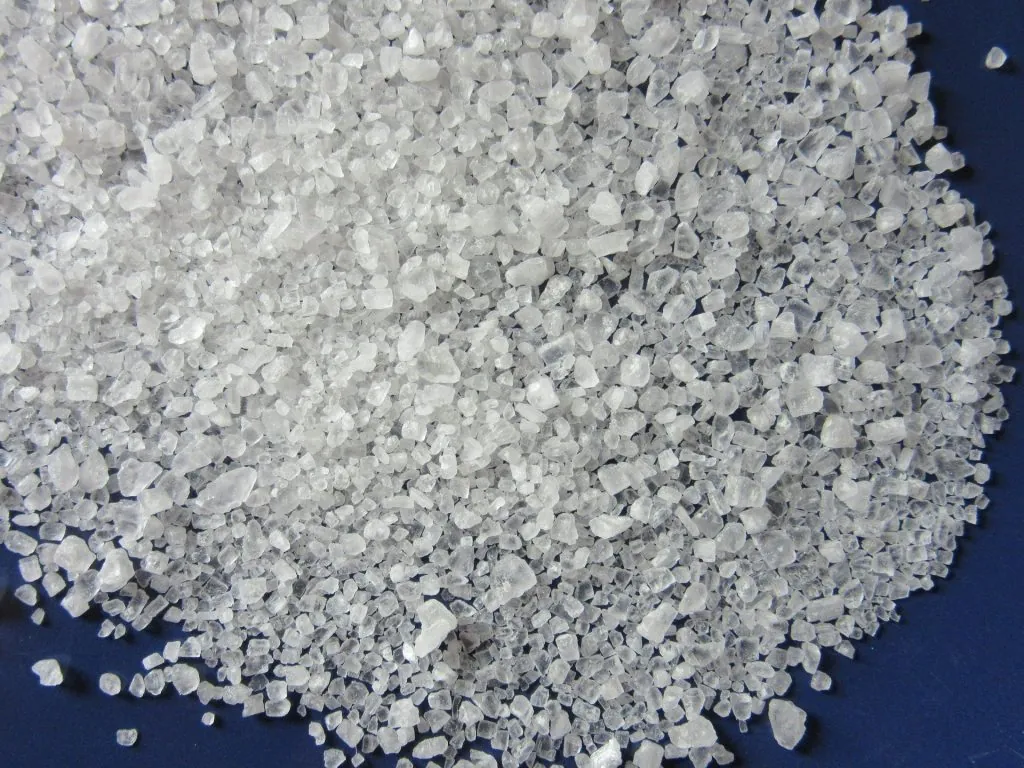
- Select the salt form (pellet, crystal, or block) that matches your specific water softener manufacturer’s recommendations.
- Prioritize high-purity salts to minimize the frequency of tank cleanings and prevent the formation of “salt bridges.”
- Check your brine tank levels monthly to ensure you’re never running on empty, which can cause hard water to bypass the system.
- Consider potassium chloride as a sodium-free alternative if you have dietary restrictions or specific environmental concerns regarding water discharge.
- Always store your salt bags in a cool, dry area to prevent moisture-induced clumping before you load them into the brine tank.
Understanding Your Water Softener Needs
The primary function of a water softener is to remove calcium and magnesium ions through an ion-exchange process. The salt you add serves as the “fuel” for this process, regenerating the resin beads inside your tank. If you choose a low-quality product, you risk impurity buildup. High-purity salts generally contain 99.6% to 99.9% sodium chloride, which is ideal for most residential systems.
When evaluating your needs, consider the hardness level of your local water supply. If you have extremely hard water, you may consume more salt than a household with moderate hardness. You must also account for the size of your household and the capacity of your brine tank. Manufacturers often provide a water quality and treatment guide that outlines the chemical requirements for effective filtration.
Comparing Salt Types for Performance
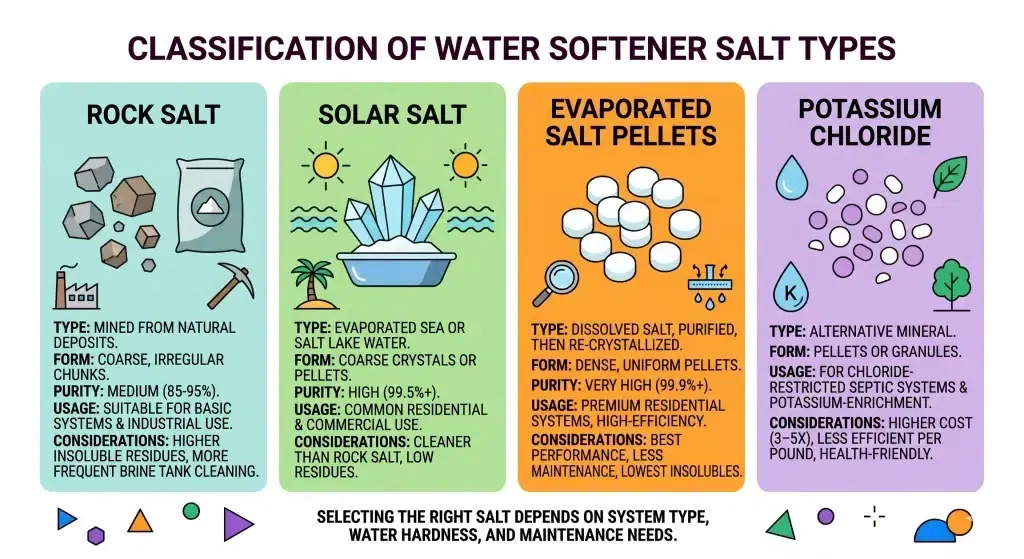
Not all salts are created equal. The physical shape of the salt impacts how it dissolves and how much residue it leaves behind in the brine tank.
| Salt Type | Best For | Pros | Cons |
|---|---|---|---|
| Solar Crystals | Low hardness | Natural, inexpensive | Can cause mushing |
| Evaporated Pellets | High hardness | High purity, clean | Higher price point |
| Block Salt | Low flow systems | Convenient, compact | Slow dissolution rate |
Solar crystals are produced through the evaporation of seawater. They’re generally effective for households with moderate water hardness. However, because they aren’t as pure as evaporated pellets, they can leave behind insoluble materials that require you to clean your brine tank more frequently.
Evaporated salt pellets are the gold standard for most modern demand-initiated water softeners. They’re processed to remove almost all impurities, making them highly soluble. This reduces the risk of “mushing,” a condition where salt dissolves into a sludge at the bottom of the tank, potentially clogging the injector or the brine line.
What Are the Best Salt Brands?
Several reputable manufacturers dominate the market, providing reliable products that meet the purity standards required for residential softening. Choosing a well-known brand ensures you’re getting a product with consistent grain size and minimal debris.
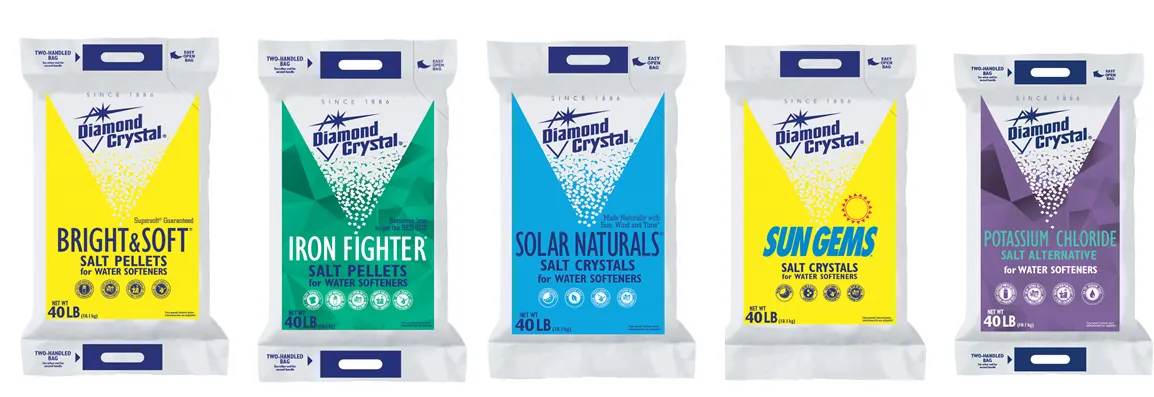
- Morton Salt: Widely available in both pellet and crystal forms, Morton is a staple in most hardware stores. Their “Clean and Protect” pellets are formulated to prevent the buildup of iron and minerals in the resin bed.
- Diamond Crystal: Known for high-purity evaporated pellets, this brand is often recommended by plumbers for its ability to dissolve evenly, which helps maintain the integrity of the brine tank over time.
- Cargill: This company produces a variety of salt products, including specialized iron-removal pellets that are useful if your water source has a high iron content, which often causes orange staining.
- Nature’s Own: This brand offers high-quality evaporated pellets that are designed for high-efficiency systems, ensuring that you use less salt over the course of a year.
Pro Tip: When switching brands or types of salt, clean your brine tank thoroughly first to avoid mixing different grades, which can sometimes lead to crystallization or clumping issues.
How to Choose for Your System
Selecting the right product isn’t just about the brand; it’s about matching the salt to your specific water softener model. Always consult your owner’s manual before making a purchase. Some high-efficiency systems are sensitive to the physical size of the salt, and using the wrong shape could trigger an error code or impede the brine draw cycle.
If you have a demand-initiated system, you should look for high-purity pellets. These systems are designed to regenerate based on actual water usage, and using high-purity salt ensures that the resin beads are cleaned effectively without leaving behind excess sediment. If you use a timer-based system, you might have more flexibility, but you should still prioritize cleanliness to keep the internal components free of debris.
The Role of Potassium Chloride
For many homeowners, sodium chloride isn’t the ideal choice. If you’re on a sodium-restricted diet or have concerns about the environmental impact of sodium discharge into local wastewater systems, potassium chloride serves as a viable alternative.
Potassium chloride functions similarly to sodium chloride in the ion-exchange process, but it’s typically more expensive. It’s also more sensitive to temperature; in very cold environments, it may not dissolve as efficiently. If you choose this route, you may need to increase the salt dosage setting on your softener control valve by approximately 10-15% to achieve the same level of water softness.
Troubleshooting Common Salt Problems
Even with the best salt, you may encounter issues within your brine tank. Recognizing these early can save you from a costly repair bill.
Dealing with Salt Bridges
A salt bridge occurs when a hard, crusty layer of salt forms in the middle of the brine tank, leaving a hollow space underneath. When this happens, the water can’t reach the salt to create the brine, and your water will remain hard.
- Identification: Tap the sides of the tank with a rubber mallet. If the sound is hollow in some areas and solid in others, you likely have a bridge.
- Fixing: Carefully break the crust with a long, blunt tool, such as a broom handle. Don’t use sharp objects that could puncture the tank liner.
Addressing Salt Mushing
Mushing happens when dissolved salt recrystallizes at the bottom of the tank, forming a thick, sludge-like layer. This is common with lower-quality solar crystals.
- Prevention: Use high-purity evaporated pellets and ensure your tank isn’t overfilled.
- Solution: You’ll need to drain the tank, scoop out the mush, and clean the bottom thoroughly before refilling it with fresh salt.
Maintaining Your Brine Tank Properly
Routine maintenance is the key to a long-lasting water softener. You should aim to check your brine tank levels at least once a month. Optimal salt levels should be kept at least three to four inches above the water level in the tank, but never fill it to the very top, as this can cause the salt to cake against the sides.
If you notice that the salt level isn’t dropping over several weeks, your system may not be cycling correctly. Check the timer or the water usage meter to see if the system is attempting a regeneration cycle. If it is, but the salt isn’t being consumed, you might have a clog in the brine line or a failure in the brine injector.
Cost Considerations for Salt Purchases
Budgeting for water softener salt involves looking at the frequency of use and the type of salt chosen. While pellets are generally more expensive than crystals, their higher purity often results in less frequent tank maintenance, which can lower your overall long-term costs.
| Purchase Method | Typical Price Range | Best For |
|---|---|---|
| Single 40lb Bag | $6.00 – $12.00 | Trial/Small Households |
| Bulk Pallet (40-60 bags) | $200.00 – $500.00 | Large Households |
| Subscription Services | $8.00 – $14.00 per bag | Convenience/Regularity |
Warning: Avoid buying salt that has been stored outdoors or in damp conditions. Moisture causes the salt to clump, which can lead to bridging in your tank. Always inspect the bag for tears and ensure the contents feel loose before purchasing.
Factors Influencing Salt Consumption
Several variables dictate how much salt your household will consume on a monthly basis. Understanding these factors will help you predict your costs and avoid running out of salt at an inconvenient time.
Household Water Usage
The more water your family uses, the more often the system will regenerate. Every regeneration cycle consumes a specific amount of salt. If you have guests staying over or if you increase your laundry frequency, expect your salt consumption to rise accordingly.
Incoming Water Hardness
If your municipal water or well water is extremely hard, the resin beads will become saturated with calcium and magnesium more quickly. This forces the system to regenerate more frequently. You can test your water hardness using a simple test kit to determine if your current settings are appropriate for your local conditions.
System Efficiency
Modern high-efficiency softeners use advanced sensors to determine exactly when regeneration is needed. Older, timer-based systems regenerate on a fixed schedule regardless of how much water you have actually used. If you’re looking to save money on salt, upgrading to a high-efficiency system is often the most effective long-term strategy.
Environmental and Health Impacts
While water softeners are excellent for plumbing, they do introduce minerals into the wastewater stream. Sodium chloride is the most common additive, but it’s important to consider the local regulations regarding water discharge. In some areas, there are specific guidelines about the amount of salt that can be released into septic systems or public sewer lines.
If you’re concerned about the environmental footprint, look for products that are certified by the Water Quality Association. These products have undergone rigorous testing to ensure they meet safety and performance standards. Additionally, maintaining a well-tuned system that only regenerates when necessary is the best way to minimize your environmental impact while still enjoying the benefits of soft water.
Frequently Asked Questions
Is there a difference between crystal and pellet salt?
Yes, the primary difference is purity and solubility. Evaporated pellets are highly refined and dissolve uniformly, making them ideal for most systems. Solar crystals contain more impurities and are better suited for specific, less-sensitive softener models. Pellets generally lead to less sludge buildup in the brine tank, which reduces the frequency of manual cleaning required for your system to function at its peak performance.
How often should I add salt to the tank?
You should check your salt levels at least once a month. A good rule of thumb is to keep the tank about half to two-thirds full. If the salt level drops to the point where the water is visible, it’s time to add more. Never let the tank run completely dry, as this can cause the system to cycle without enough salt to properly regenerate the resin.
Can I mix different brands of salt?
It’s generally safe to mix different brands as long as they’re the same type—for example, mixing two brands of evaporated pellets. However, you should avoid mixing different forms, such as pellets and crystals, as they have different dissolution rates. This can lead to uneven brine concentrations and increase the risk of salt bridging or mushing in the bottom of your brine tank.
What should I do if my water feels hard again?
If your water feels hard despite having salt in the tank, first check for a salt bridge by tapping the side of the tank. If no bridge exists, check your salt settings to ensure they haven’t been changed. If the settings are correct, you may have a mechanical issue with the softener’s valve or resin bed, and it may be time to consult a professional technician for a diagnostic check.
Is potassium chloride better than sodium chloride?
Potassium chloride is a great alternative for those on sodium-restricted diets or those concerned about environmental sodium discharge. It’s chemically effective at softening water but is significantly more expensive and less soluble in cold water. If you choose to switch to potassium, ensure your softener settings are adjusted to account for the slightly lower efficiency of potassium chloride compared to standard sodium chloride salt.
Conclusion
To ensure your system continues to provide soft, high-quality water for your home, start by checking your current brine tank levels today. If the salt is low or clumping, purchase a high-purity evaporated pellet product, clean out any existing sludge or bridge formations, and refill the tank to the recommended level to restore your system’s efficiency and performance.