
As an Amazon Associate, we earn from qualifying purchases. This post contains affiliate links – if you buy through them, we may earn a commission at no extra cost to you.
The best nutrition journals and food diaries stand out because they serve different goals — some focus on gut health, others on fitness progress, and a few make daily tracking simple and structured.
Best overall: Hello New Me Journal – A clear, no-frills tracker made for anyone starting their health journey, with space to log meals and activity over 90 days. Most versatile: DIETMINDER Journal – Works with any diet plan, so it suits low-carb, keto, intermittent fasting, or plant-based eaters without needing changes. Best for gut health: Food Diary & Symptom Log – Built to link food intake with digestive symptoms and bowel habits, ideal for those managing IBS or food sensitivities.
How We Picked
We focused on what the seller described: page layout, included trackers, durability, size, and special features like stickers or goal-setting sections.
We didn’t pick based on brand popularity or unverified claims about results.
1. Hello New Me Journal

Best for: First-time users
With 90 days of tracking, it gives you a clear window into your routine without feeling overwhelming.
That simplicity helps build the habit of tracking, which is often the hardest part.
Pros
- Easy to follow layout
- Covers 90 days of tracking
- Helps build daily habits
Cons
- No detailed nutrient breakdowns
- Fewer trackers than advanced options
2. DIETMINDER Journal

Best for: People on any diet plan
This journal is built to work no matter what eating plan you follow. Whether it’s keto, paleo, intermittent fasting, or calorie counting, the format stays useful without needing tweaks. The fill-in-the-blank structure doesn’t force you into a single method—instead, it adapts to how you eat today and how your goals shift tomorrow. The listing doesn’t mention adaptability across different phases of dieting.
No tiny boxes, no forced categories—just space to be honest and detailed.
Pros
- Works with all diet types
- Roomy writing space
- Simple, repeatable system
Cons
- Doesn’t include specific symptom tracking
- No guidance on how to use it long-term
3. Food Diary & Symptom Log

Best for: Gut health tracking
This journal is made for people dealing with IBS, food allergies, or digestive issues. It helps you connect what you eat with how your body reacts — especially in your gut.
It includes a bowel movement tracker with a printed stool chart, so you can monitor digestion easily. You also log water intake, mood, energy, sleep, and exercise — all factors that affect gut health.
With 120 pages for 60 days, it gives you two months of detailed logs. The A5 size fits in a bag, so you can use it at meals or when symptoms strike.
Writing down symptoms daily helps spot patterns fast. If bloating or fatigue follows certain foods, this journal makes those links visible.
Pros
- Tracks bowel movements and symptoms
- Logs mood, sleep, and water intake
- Compact and portable
Cons
- Only 60 days of tracking
- Not designed for fitness goals
4. Clever Fox Food Journal

Best for: Those who want a premium feel
This journal stands out with its eco-leather cover, thick paper, and smart extras like bookmarks and a pen loop. It feels like a high-quality notebook, not just a tracker.
It lasts six months and is undated, so you start anytime. The layout helps you plan meals, track calories, and build healthy habits step by step.
Stickers and a user guide help keep you motivated. The lay-flat binding makes writing easy, even when the book is open on a table.
If you like well-made tools that last, this one fits the bill. It’s built for people who value both form and function.
Pros
- Durable eco-leather cover
- Includes stickers and user guide
- Six-month undated tracker
Cons
- Focused more on general health than deep symptom tracking
- May be too detailed for casual users
5. Nextnoid Hardcover Fitness & Food Journal

Best for: Gym users who want toughness
This journal is built to survive the gym. The thick 120gsm paper resists sweat and smudging, and the cover is tear-proof — perfect for lifting sessions or outdoor workouts.
It tracks both food and workouts in one place, with space for sets, reps, and cardio. The fonts are large and clear, so you can read and write fast between sets.
The layout keeps you focused on goals, weekly plans, and progress. It’s simple but effective — no fluff, just tracking that works under pressure.
If you train hard and want a journal that won’t fall apart, this is a solid pick.
Pros
- Sweat and tear-resistant cover
- Thick, bleed-proof pages
- Clear, easy-to-read layout
Cons
- Not ideal for symptom or gut tracking
- Less visual appeal than premium designs
6. Food Journal – Women Weight

Best for: Simple, everyday tracking
This journal is straightforward and easy to use. It’s made for women focusing on weight loss, but works for anyone wanting to track calories, water, sleep, and activity. The undated layout means you can start anytime—no need to wait for a new month or year. Over six months of daily pages, you record weight, body fat, meals, exercise, water intake, and sleep time. At the end of each month, a review section helps you reflect on what worked, what didn’t, and how to adjust goals. This rhythm builds awareness without overwhelm.
The design supports consistency: ribbon bookmarks keep your place, an elastic band holds it closed, a pen holder keeps your pen handy, and an inner pocket stores notes or receipts. Colorful stickers add a small boost of motivation when you hit a milestone. While it doesn’t include meal planning templates or nutritional breakdowns, it gives space to write down what matters most—your choices, habits, and progress.
It’s not for tracking symptoms, medical conditions, or detailed macros. But if your goal is to notice patterns in how food affects energy, mood, and weight, this journal delivers exactly that. No fluff, no confusion—just a clean way to stay accountable day after day.
7. Nutrition Log Book

Best for: Compact daily logging
This small notebook is easy to carry. At 6×9 inches, it fits in a purse or backpack, making it good for on-the-go tracking. Its size means you can slip it into a pocket without adding bulk, so it’s always within reach when you’re dining out, at work, or traveling.
It has 105 pages to log meals, carbs, calories, fat, protein, sugar, and sodium. The layout is basic but functional — just lines and headers to keep you on track. Each day gets its own space, with clear labels for each nutrient, so you don’t have to guess what goes where.
Because it’s compact, it’s less overwhelming than bigger journals. You can use it quickly at meals without pulling out a large book. It’s ideal for people who want minimalism — just the essentials, nothing extra.
Pros
- Lightweight and portable
- Focuses on core nutrition facts
- Simple, no-distraction design
Cons
- No additional trackers like mood or sleep
- Smaller size means less writing space
8. Portage Food Diet Journal

Best for: Structured, field-ready logging
This journal has a tight, organized layout in a slim 8” x 4” size. It’s made to fit anywhere — desk, bag, or gym — without taking up space.
Each page gives you a clear template for tracking food and calories. The thick cover provides a stable surface, so you can write anywhere — even standing up.
With 140 pages per notebook and a pack of three, you get plenty of use. The paper is thick enough to prevent ink bleed.
It’s a no-nonsense choice for people who want order and portability in one.
Pros
- Slim, travel-friendly size
- Rigid cover for writing on the go
- Pack of three for long-term use
Cons
- Layout may feel too tight for big handwriting
- No added features like goal setting or reviews
9. Clever Fox Fitness & Food Journal
Best for: Full-body wellness tracking
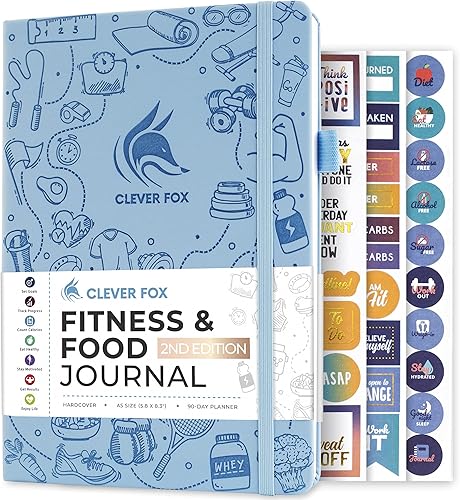
This journal offers the most complete daily tracking. Two full pages per day let you log both food and workouts in depth. You can track meals, calories, water intake, mood, energy levels, and exercise details like sets, reps, rest times, and equipment used. The structure supports consistent habits by guiding you through planning, achievement, reflection, and repetition over three months.
Each month includes goal-setting pages and a review section to assess progress, adjust strategies, and celebrate wins. This rhythm helps turn short-term actions into lasting change. The 3-month timeline is intentional—short enough to feel manageable, long enough to see real shifts in how you feel physically and mentally.
The A5 size (5.8″x8.3″) fits easily in bags or on desks. Lay-flat binding lets you write without closing the notebook, and the vegan leather cover resists wear. The 120gsm paper handles pens without bleeding. Three bookmarks help you jump between sections, and stickers add motivation.
It’s ideal if you want to understand how diet and movement affect your body and mind. But if you prefer minimal logging or only need a tracker for weeks, it may feel overwhelming. If you’re committed to deep self-tracking, this journal delivers more than just data—it guides transformation.
10. NewMe Fitness Journal
Best for: All-in-one fitness and nutrition logging
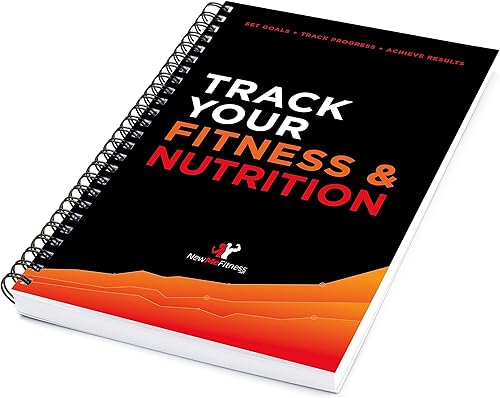
This journal combines food and workout tracking on one spread. No switching between apps or notebooks — everything goes in one place.
It has 66 daily pages, covering just over two months. That’s long enough to build real habits, short enough to stay fresh.
The spiral binding lies flat during workouts. Thick, bleed-resistant paper handles any pen. And the 5.5 x 8.5-inch size fits in any gym bag.
Goal-setting pages help define targets for weight loss or muscle gain. Daily mood and energy logs support tracking over time.
It works for beginners and pros alike. No tech needed — just pen and paper.
Pros
- All-in-one food and workout tracking
- Lay-flat spiral binding
- Durable, gym-ready build
Cons
- Only 66 days of tracking
- No undated start option
Also worth considering:
The Ceiba Journal Weight Loss Nutrition offers a large writing area and basic tracking for meals and exercise, though it lacks advanced features. The Food Journal is a simple spiral-bound diary with 52 sheets for tracking protein, calories, and water — good for short-term use. The Clever Fox Food Journal PRO promises deeper meal planning tools, but details are limited in the listing.
What to look for in nutrition journals and food diaries
Which journal is best for weight loss?
Start with Hello New Me Journal or Food Journal – Women Weight. Both give you daily space to log meals, water, and activity — the core habits that drive weight loss. They include monthly reviews so you can see progress and stay on track. If you want something undated and longer-lasting, go for the Clever Fox Food Journal, which covers six months and includes tools to build lasting habits. Avoid overly complex journals if you’re just starting — simplicity wins when building consistency.
Do I need a journal with symptom tracking?
Yes, if you have IBS, food sensitivities, or unexplained digestive issues. The Food Diary & Symptom Log links meals with symptoms, bowel movements, mood, and energy levels. This helps identify triggers like dairy or gluten that cause bloating or fatigue. For general health or fitness, symptom tracking isn’t necessary.
Can I use these journals for fitness and muscle gain?
Yes, especially NewMe Fitness Journal and Clever Fox Fitness & Food. Both give you space to log sets, reps, rest times, and progressive overload — key for building muscle. The Nextnoid Hardcover Journal also works well in the gym, with thick pages and a tough cover. Look for journals with dedicated workout sections and enough room to write details. If you only care about calories and protein, simpler journals will do. But if you lift weights seriously, choose one designed to handle comprehensive training records.
Related guides
- How Do I Defrost Food in the Oven Safely and Quickly in 2026
- How to Label Food in Office Freezer: A Simple 30-Second Guide
- Heating Food in Microwave Side Effects: The Scientific Truth in 2026
Frequently Asked Questions
What should a good nutrition journal include?
A good nutrition journal logs meals, snacks, water, and macros like protein and carbs. Tracking sleep, mood, and energy can reveal patterns affecting eating habits. Some include bowel movement tracking for gut health; choose based on your needs.
How often should I write in my food diary?
Track daily, ideally after meals or at day’s end. Consistency beats perfection — just restart if you miss a day. Tools like Clever Fox and NewMe simplify logging, helping spot habits like late-night snacking or low hydration.
What usually goes wrong with food journals?
People abandon journals that are bulky, slow to fill, or poorly laid out. The 66-day NewMe Fitness Journal may feel too short. Pick one that fits your routine: portable for travel, simple for busy days, durable for gym use.
Is the simplest journal enough for results?
Yes, consistent use helps. Writing down food increases awareness, leading to better choices. Basic journals like Hello New Me work well — no extras needed. Add features like mood trackers only if they boost motivation. Use what you’ll actually keep using.
Conclusion
With the right journal or app, tracking your food becomes less of a chore and more of a helpful habit. Try picking one that fits your lifestyle—whether it’s a simple daily log or a detailed nutrition tracker—and stick with it for a few weeks to see what works best. You’ll start noticing patterns and feel more in control of your health.