
The difference between mustard algae and pollen comes down to one simple test: brush it with your hand. Pollen floats away in a cloud and doesn’t come back right away, while mustard algae clings to the wall, feels slimy, and returns within 24 hours after you brush it off. Only algae survives chlorine at normal pool levels.
What that yellow dust on your pool walls really is
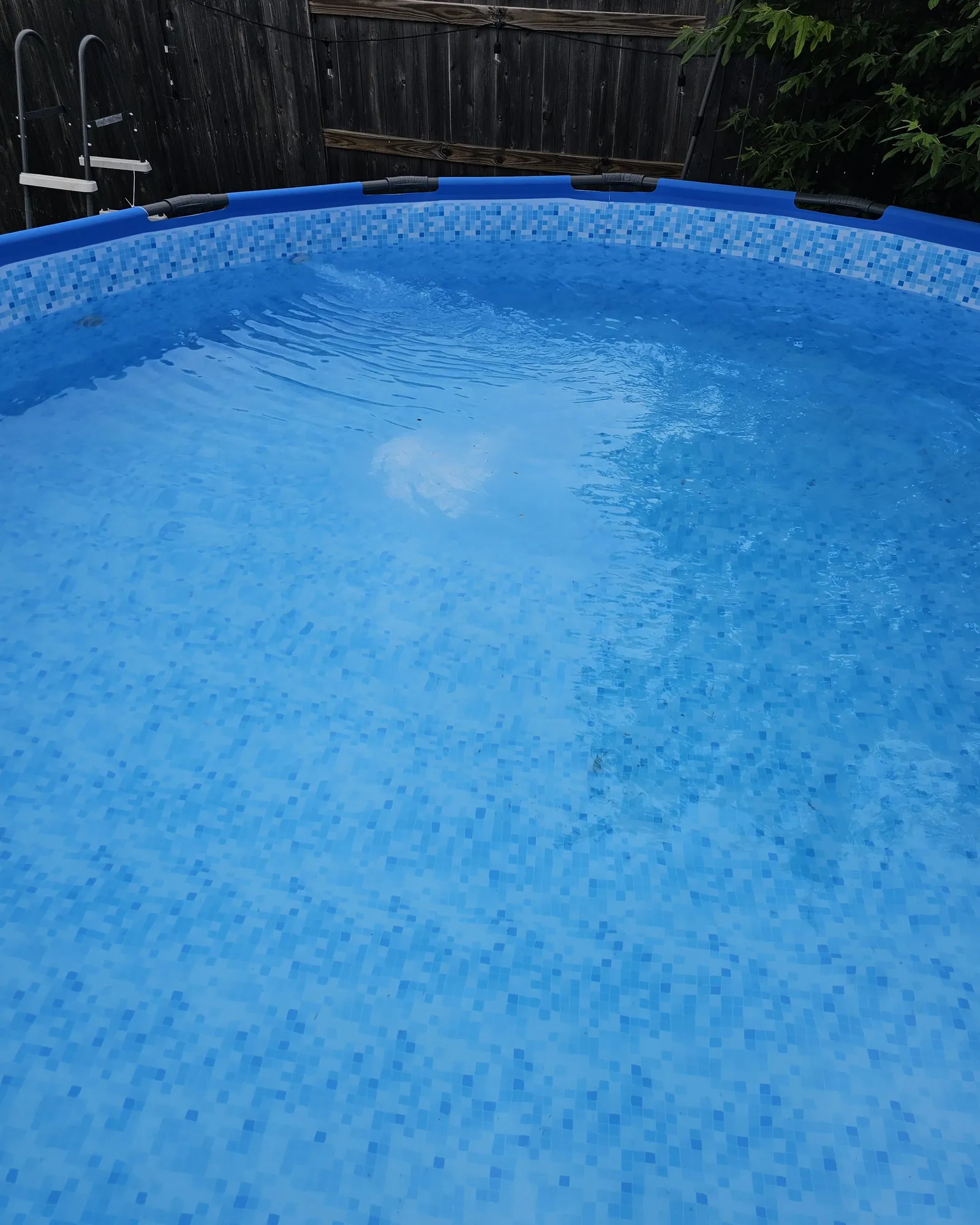
Pool owners see yellow-green powder settle on steps and walls every spring and assume the worst. That powder is usually tree or grass pollen blown in by wind. It’s harmless to swimmers, but it clogs filters fast and makes water look dirty. Mustard algae is different. It’s a living organism — a chlorine-resistant strain of green algae (Chlorophyta) that bonds itself to plaster, vinyl, and fiberglass surfaces. It thrives in shaded spots where water circulation is weak.
The one thing people get wrong is treating pollen like an infection. They dump shock chemicals into perfectly balanced water because they don’t know the difference. Pollen isn’t alive. It doesn’t grow, spread, or resist sanitizers. It just sits there until water moves it. Algae is alive. It anchors itself with tiny root-like structures that hold it against the wall even when your pump runs at full speed.
Here’s the mechanism: mustard algae produces a protective slime layer that blocks free chlorine from reaching its cells. Standard pool chlorine (1–3 ppm) can’t break through that barrier. You need much higher levels sustained over time to kill it. Pollen has no such defense. Water flow alone removes it.
If your pool sits under oak trees or near open fields, expect heavy pollen loads from March through May. If the yellow patches appear only on the shady side of the pool, near ladders or behind return jets, suspect algae instead. Check your local agricultural extension office for regional pollen calendars if you aren’t sure what season brings the heaviest load to your area.
How to tell pollen from mustard algae step by step
You don’t need a lab kit to figure this out. You need a pool brush, a white bucket, and about ten minutes. Follow these steps in order, because skipping the first one leads straight to wasted chemicals.
- Turn off the pump. Let the water go completely still for 30 minutes. Moving water hides the truth. You need everything settled so you can see exactly where the yellow material is sitting and how thick the layer is.
- Brush a small patch. Use a nylon-bristle pool brush on plaster or vinyl. Scrub a 12-inch square of the yellow deposit firmly. Don’t use a wire brush on vinyl liners — it tears them, and a liner replacement costs thousands.
- Watch what happens next. If the yellow dust puffs up into the water and drifts away like smoke, it’s pollen. If it smears against the wall, feels slippery under the bristles, and barely moves, it’s mustard algae.
- Wait 24 hours with the pump running. Turn the filter back on. Come back the next day. Pollen won’t return to the same spot unless more blows in. Mustard algae will be visibly growing back in that exact brushed square.
- Scoop a sample into a white bucket. Dip slowly. Look at the texture. Pollen grains are fine, dry-looking, and separate easily in water. Algae clumps together in wet, stringy masses that stick to the bucket sides.
- Test your free chlorine level. Use DPD test drops or strips — not OTO liquid, which can’t measure above 5 ppm accurately. If your free chlorine reads 2–3 ppm and the yellow stuff is still growing, it’s almost certainly algae. Pollen doesn’t care about chlorine levels at all.
- Check the shady spots specifically. Run your hand along the wall behind the ladder, under the skimmer lip, and on the north-facing side. Algae picks these low-flow, low-light areas first. Pollen lands everywhere equally, including the sunny shallow end.
The single judgment call that separates a clean pool from a recurring mess is deciding whether to shock before or after brushing. If it’s pollen, vacuum it out first, then run the filter. Shocking pollen just wastes chlorine. If it’s algae, you must brush every inch of it loose before adding any sanitizer. Unbrushed algae hides under its own slime layer, and the chlorine never touches the living cells beneath it.
Mustard algae vs pollen settings at a glance
These numbers assume a standard 10,000-gallon residential pool with a cartridge or sand filter running 8 hours a day. For larger pools, scale the chemical amounts proportionally by volume. Always check your test kit’s instructions for exact dosing based on your pool’s gallon count.
| Situation | What to use | How long | What to watch for |
|---|---|---|---|
| Light pollen on surface | Skimmer net + pump run | 4–6 hours of filtering | Filter pressure rising 5 psi above clean reading |
| Heavy pollen covering floor | Manual vacuum to waste | 30–45 minutes per pass | Cloud returning after pump restart means more passes needed |
| Suspected mustard algae, early stage | Brush + raise FC to 10 ppm | Hold 10 ppm for 48 hours | Yellow patches reappearing in same spots after treatment ends |
| Confirmed mustard algae, established | Brush + sodium bromide + shock to 20+ ppm | 5–7 days continuous treatment | Slimy feel gone, water clears, no regrowth after 1 week |
| Unsure which one it is | Brush test + 24-hour wait | 1 day observation | Regrowth = algae; no regrowth = pollen or dead organic matter |
| After pollen removal | Normal chlorination 1–3 ppm | Ongoing daily maintenance | pH drifting above 7.8 reduces chlorine effectiveness |
| After algae treatment | Enzyme-based clarifier + normal FC | 2 weeks post-treatment | Filter clogging again means dead algae wasn’t fully vacuumed |
Keep this table handy during spring. The difference between holding 3 ppm chlorine and holding 20 ppm is the difference between wasting a weekend and solving the problem once. Your specific cyanuric acid level changes how much chlorine you actually need. At 30 ppm CYA, 10 ppm free chlorine handles early algae. At 80 ppm CYA, that same 10 ppm does almost nothing. Test your stabilizer level before choosing your target.
Why the brush test matters more than chemicals
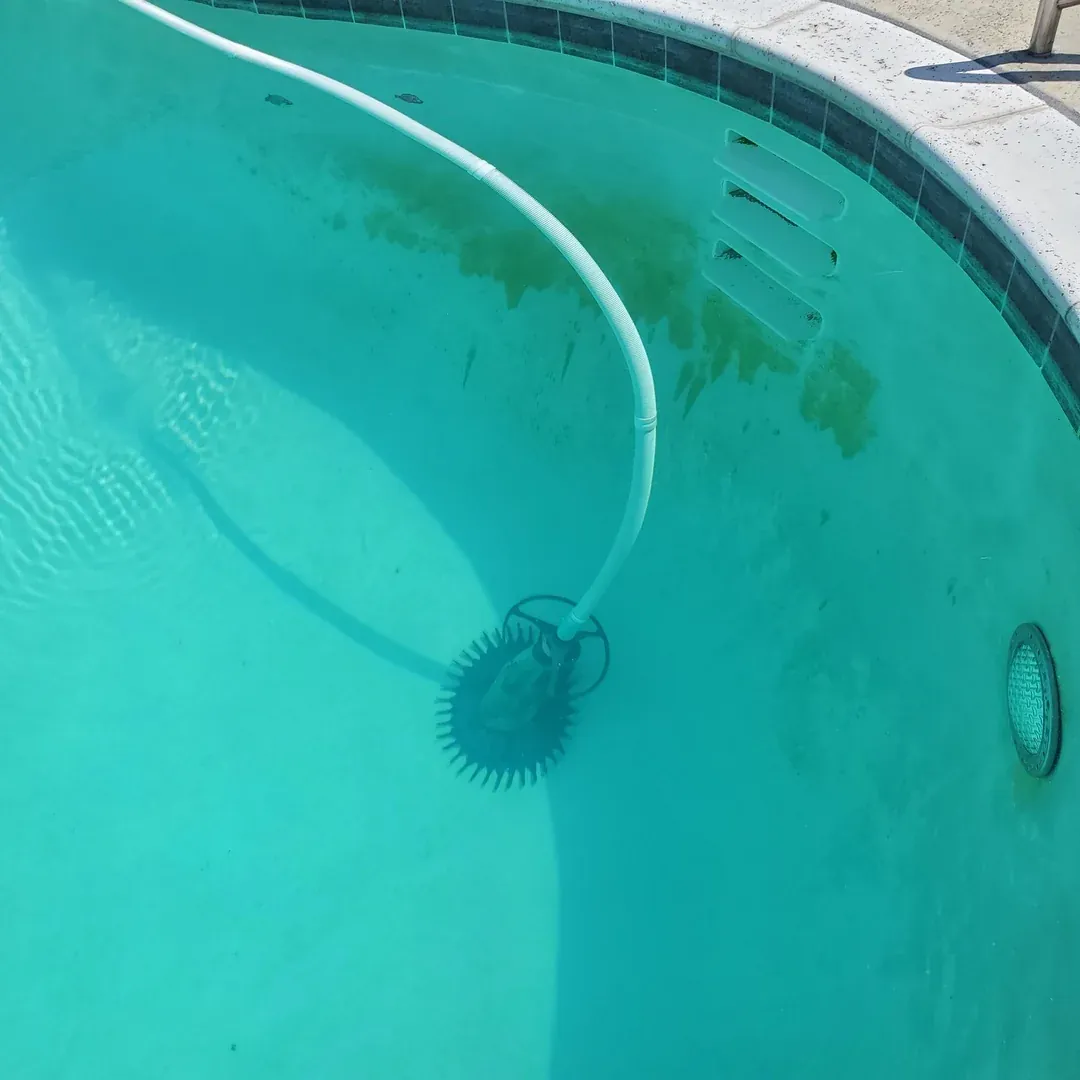
Getting the diagnosis wrong costs real money and real time. If you shock a pollen-filled pool to 20 ppm, you haven’t killed anything. You’ve just burned through an inexpensive amount of calcium hypochlorite compared to what proper treatment requires, raised your calcium hardness unnecessarily, and irritated your skin for no reason. Worse, high chlorine degrades vinyl liners and fades pool paint faster than normal levels do.
The trade-off is patience versus speed. Brushing and waiting 24 hours feels slow when your pool looks terrible. But applying the right treatment once beats guessing three times. Experienced pool techs always brush first, observe second, and dose third. They don’t pour chemicals at a problem they haven’t identified yet.
Preparation determines the outcome. Before you start, make sure your filter is clean. A dirty filter recirculates both pollen and dead algae right back into the pool. Backwash a sand filter or rinse cartridge elements until the water runs clear. Then turn the pump off and let debris settle fully before brushing.
Work in sections. Start at the deep end and move toward the shallow end. This pushes suspended material toward the main drain where the pump pulls it out most efficiently when you restart. Don’t brush randomly across the whole pool — you’ll stir everything into a uniform cloud and lose track of which spots were growing back.
Halfway through treatment, test your chlorine again. Mustard algae consumes sanitizer rapidly. If you shocked to 20 ppm at noon and it reads 5 ppm by evening, the algae is still alive and eating your chlorine. Add more. Don’t wait until morning. The concentration must stay above the kill threshold continuously, or the surviving cells rebuild their protective layer overnight.
Leave the water chemistry alone otherwise. Don’t adjust pH, alkalinity, or calcium while you’re fighting active algae. Chasing multiple numbers at once makes it impossible to tell which change fixed the problem. Handle the algae first. Balance everything else after the water stays clear for 48 hours straight.
One limit you should know: your required free chlorine level depends entirely on your cyanuric acid reading, and you’ll find your exact target on the CDC’s pool disinfection guidance, which lists the ratios for safe sanitation.
Rules that govern pool sanitation
Pool water isn’t unregulated. Public health agencies set minimum standards because poorly sanitized water spreads illness. The U.S. Centers for Disease Control and Prevention recommends maintaining free chlorine between 1 and 3 ppm for standard residential pools, with pH kept between 7.2 and 7.8. These ranges ensure chlorine works effectively without irritating eyes or skin.
When dealing with confirmed algae outbreaks, those baseline numbers aren’t enough. However, raising chlorine beyond standard limits introduces risks. Calcium hypochlorite adds calcium to your water. If your calcium hardness already sits above 400 ppm, repeated shocking causes scale buildup on tiles and inside heater elements. Sodium hypochlorite raises pH significantly, requiring acid additions afterward.
For commercial or public pools, state and local health departments enforce stricter rules. Many require continuous automated monitoring and documented logs. If you manage a shared community pool, check your county health department’s published codes before attempting any algae remediation yourself. Some jurisdictions require licensed operators to handle chemical treatments above standard maintenance doses.
Handling concentrated pool chemicals carries real danger. Mixing chlorine products with acid creates toxic chlorine gas. Never store liquid acid next to granular shock. Never add water to dry chlorine — always add chlorine to water. If you aren’t comfortable measuring and handling bulk sanitizers safely, hire a certified pool operator. The National Swimming Pool Foundation offers CPO certification, and their directory lists qualified professionals by zip code.
Don’t guess at legal thresholds for discharge either. Draining heavily chlorinated water into storm drains violates municipal codes in most U.S. cities. Dechlorinate first, or drain to a sanitary sewer connection if your local utility permits it.
Keeping your pool clear after treatment
Once the yellow is gone, your job shifts from killing to preventing. Rinse your filter thoroughly after any algae treatment. Dead algae cells clog cartridge pleats and pack into sand beds, reducing flow rate and creating hiding spots for surviving spores.
Run your pump long enough each day to turn over the entire pool volume at least once. For a 10,000-gallon pool with a 50-gallon-per-minute pump, that’s roughly 3.5 hours minimum. In pollen season, extend runtime to 6–8 hours. More circulation means less settling.
Keep your free chlorine steady at 2–3 ppm and your pH between 7.4 and 7.6. Chlorine works best in that narrow pH window. Above 7.8, nearly half your free chlorine becomes inactive hypochlorite ion instead of the killing form, hypochlorous acid.
Empty skimmer baskets daily during heavy pollen weeks. A full basket restricts surface suction, letting pollen sink to the bottom where it decays and feeds phosphate levels. High phosphates don’t cause algae directly, but they give surviving spores the nutrients to bounce back faster after treatment.
Cover the pool when it’s not in use during peak pollen months. A solid cover blocks airborne particles entirely. Mesh safety covers let pollen through, so they help with leaves but won’t stop the yellow dust.
There’s no universal calendar for when pollen stops or algae returns. Watch your water. If you see a faint yellow haze forming on the shady wall again, brush it immediately and test your chlorine. Catching it on day one takes a few minutes. Ignoring it for a week means another full shock cycle.
When this method won’t work for you
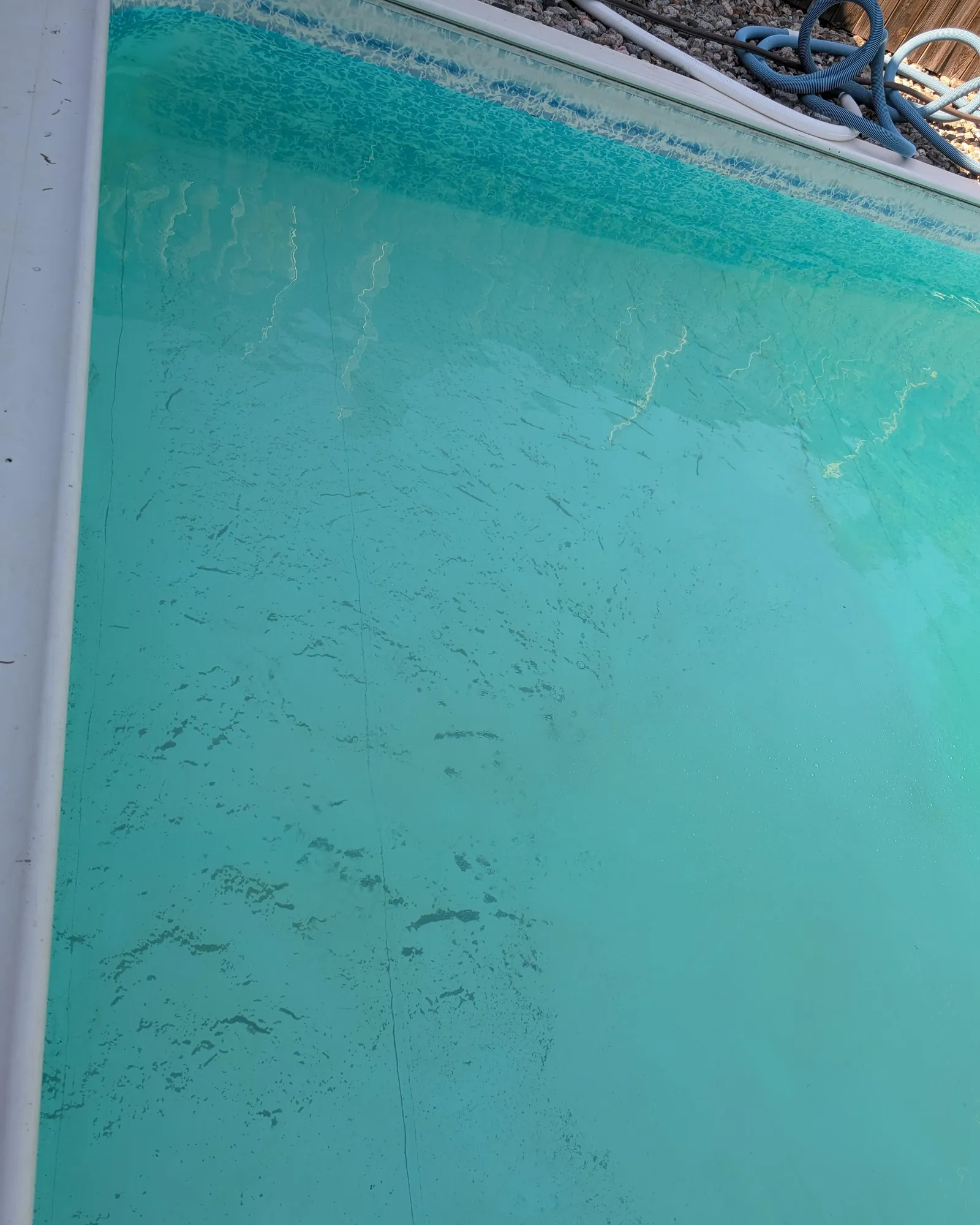
This brush-and-observe approach assumes you have a functioning pump, a reachable pool floor, and standard residential equipment. It fails in specific situations where the conditions change the rules entirely.
If your pool is a saltwater system with a failing chlorine generator, raising free chlorine manually fights a losing battle. The cell can’t maintain the level you set, and the algae outpaces your dosing. Get the generator inspected or replaced first. Treating algae while your primary sanitizer is broken just delays the inevitable.
If the yellow deposit is inside a spa or hot tub, the volume-to-surface ratio is completely different. Spas run hotter, and heat accelerates both pollen breakdown and algae growth. Chemical doses for a 10,000-gallon pool will overdose a 400-gallon spa dangerously. Use spa-specific testing and dosing charts, not pool math scaled down.
If you rent your home and aren’t responsible for pool maintenance, don’t add chemicals yourself. Unauthorized treatment can void lease agreements or damage equipment you don’t own. Report the discoloration to your landlord or property manager and let their contracted service handle diagnosis and treatment.
Finally, if the substance is black rather than yellow-green, you aren’t looking at pollen or mustard algae. Black algae forms hard nodules that penetrate plaster deeply. Brushing barely scratches the surface. It requires specialized metal scrapers, targeted application of granular chlorine directly onto the spots, and often professional intervention. Don’t waste a week running mustard algae protocols on a problem that demands a completely different toolkit.
Frequently asked questions
Can pollen turn into algae in my pool?
No. Pollen is dead plant material. It can’t transform into a living organism. However, decaying pollen releases phosphates and nitrates into the water. Those compounds act as fertilizer for algae spores already present in your pool. So while pollen doesn’t become algae, leaving it to rot creates the exact nutrient-rich environment where mustard algae thrives. Remove pollen promptly to cut off that food source.
Why does mustard algae come back after I shock it?
It returns because the free chlorine level dropped below the kill threshold before every cell died. Mustard algae hides in porous plaster, behind light fixtures, and inside hollow ladder rails. If you didn’t physically brush those hidden spots, the sanitizer never reached them. Surviving colonies rebuild within days. You must brush every surface, remove accessories, and hold elevated chlorine continuously for the full treatment period.
How long does it take to clear mustard algae?
Expect 5 to 7 days for a moderate infestation in a 10,000-gallon pool, assuming you maintain 20 ppm free chlorine continuously after thorough brushing. Lighter cases caught on day one may clear in 48 hours at 10 ppm. Heavier cases covering large wall areas can take two weeks. The timeline depends entirely on how much surface area is colonized and whether you sustain the required chlorine level without interruption.
Is it safe to swim with pollen in the pool?
Yes. Pool pollen is an irritant at worst, not a pathogen. It might trigger sneezing or mild eye irritation for allergy sufferers, but it doesn’t cause recreational water illnesses. Still, swimming in a cloudy, pollen-heavy pool isn’t pleasant. Run your filter and skim the surface before getting in. If you’ve added extra chlorine trying to “kill” the pollen, wait until levels drop back below 5 ppm before swimming.
What happens if I treat pollen like algae?
You waste money and potentially damage your pool. Unnecessary high-dose chlorine shocks degrade vinyl liners, fade painted surfaces, and corrode metal fixtures like ladders and light rings. You also spike your combined chlorine if organic pollen reacts with excess sanitizer, creating strong chloramine odors. The water smells worse, feels harsher, and gains nothing — because pollen was never alive to begin with.
How often should I brush my pool walls in spring?
Brush once a week during peak pollen season as preventive maintenance. This dislodges settling pollen before it decays and disrupts any early algae attachment before it establishes roots. Focus on shaded corners, behind ladders, and along tile lines where flow is weakest. If you notice yellow dust accumulating faster than weekly brushing removes it, increase frequency to twice a week until the local pollen count drops.
Can my robot pool cleaner remove mustard algae?
No. Robotic cleaners pick up loose debris and scrub smooth surfaces lightly, but they lack the downward pressure needed to detach anchored mustard algae. Their brushes spin too fast and press too softly to break the slime layer. You must use a manual pole brush with stiff nylon bristles and apply physical force. Run the robot afterward to vacuum up the dislodged material your manual brushing freed.
Conclusion
Knowing what’s on your pool wall saves you from pouring expensive chemicals at the wrong target. Grab your brush, run the test, and read the water before you open a single jug. The yellow dust tells you exactly what it is — you just have to touch it and wait a day to hear the answer.