
You can buy a foosball table at major online retailers like Amazon and Walmart, or at dedicated game stores such as GameOn. These options offer the widest selection of sizes and brands for most buyers. However, if you need to see the build quality in person before purchasing, your best move is visiting a local big-box sporting goods store or a specialty arcade supplier. This allows you to check the rod stability and table weight directly.
Where to find a foosball table
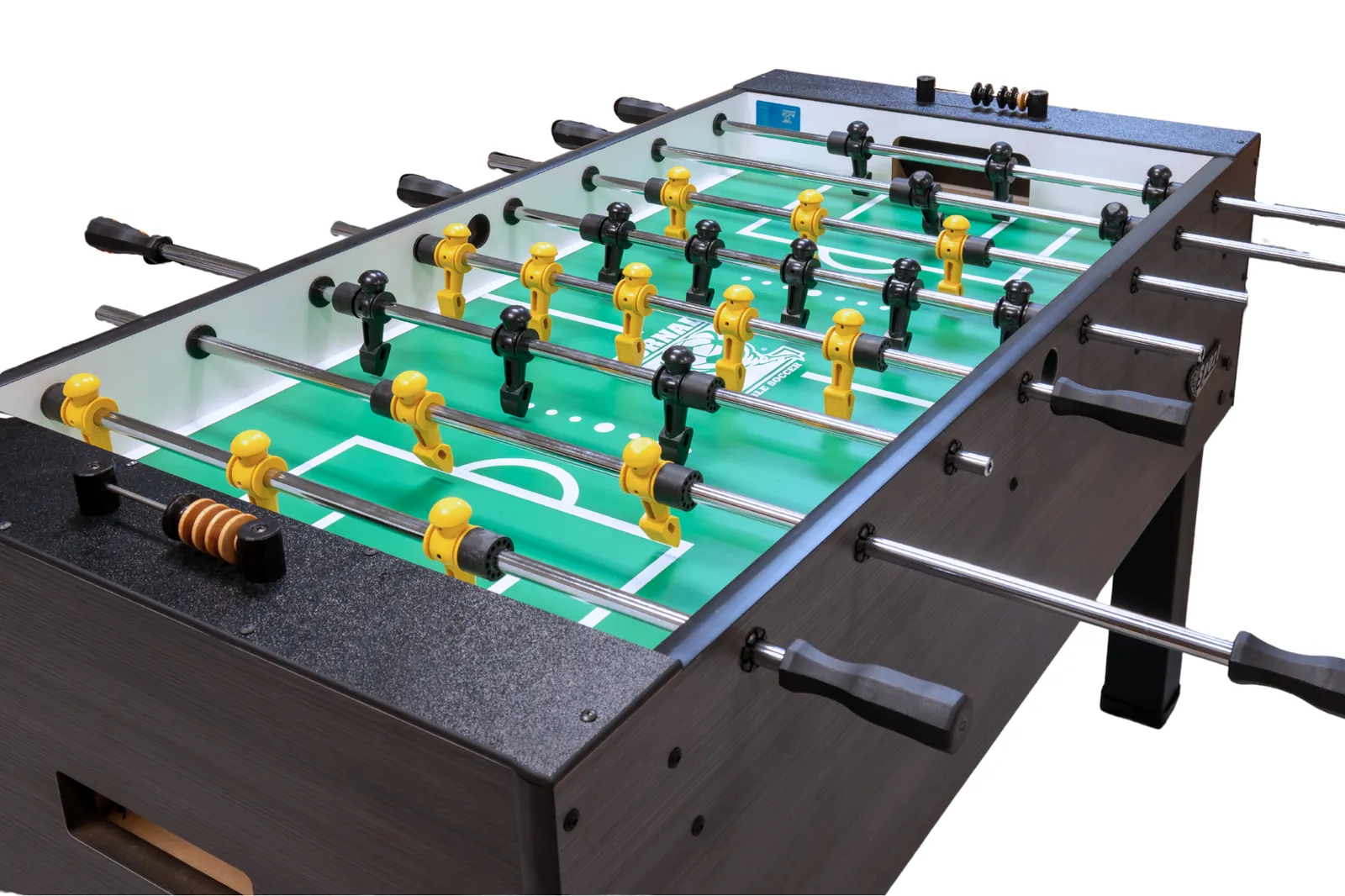
Amazon dominates the volume game. You’ll find everything from plastic toy tables to heavy steel machines. Prime shipping cuts wait times to two days for many items. But speed comes with a trade-off. You can’t feel the weight of the rod or test the spin of the ball before paying.
This is fine for beginners who just want noise and action. It’s risky for serious players who need precision. Check the return policy carefully. Some sellers charge restocking fees on opened boxes. Read reviews that mention warping. Cheap wood swells in humid basements. If you live in Florida, avoid the lightest models unless you have climate control.
Walmart bridges the gap between online convenience and physical inspection. This saves on delivery fees that often exceed fifty dollars for heavy units.
GameOn serves the other end of the spectrum. They cater to bars and serious collectors. Their inventory includes brands like Bally and Goldline. These tables weigh over three hundred pounds. Shipping requires a freight carrier. You must be present to sign for the crate.
Inspect it immediately for cracked wood or bent rods. Any damage means an instant rejection. GameOn’s staff knows the difference between a replica and a restoration. Ask about part availability. Old tables break down. If you can’t buy replacement gears locally, you’re stuck with a paperweight.
Local stores let you judge quality by eye. At Dick’s, you might find a mid-range option. Lift the side rails. Heavy steel feels solid. Light aluminum feels cheap. Spin the player rods. They should turn freely without grinding. If they stick, walk away.
Salespeople there rarely know technical specs. They sell what moves off the shelf. Use their showroom as a testing ground, then buy online if the price is lower. Never pay full retail at a big-box store if you can avoid it.
Specialty shops hold the secrets. Bonzini and Garlando tables cost thousands. They’re made in Europe with exacting standards. You won’t find them on Amazon. A local shop might display one in the window. Sit at it. Play a few games. Notice how the ball tracks. On premium tables, it goes straight.
On cheap ones, it curves unpredictably. This difference matters when you’re trying to bank shots. These shops also offer maintenance services. They can resurface playing fields and replace worn bearings. Mass retailers do not. If you plan to keep a table for decades, buy from someone who fixes them.
Why buying location matters
The place you choose changes what you get. Online giants give you choice. Local stores give you touch. A cheap table bought online might arrive damaged. You have to fight with customer service to fix it. A local store lets you roll the table home yourself. You avoid heavy shipping fees. You also get immediate help if a part is missing.
The experience shifts from digital to physical. Your risk changes too. Online prices drop fast during sales. Local prices stay steady but include tax. You trade convenience for certainty. Some players want a specific brand only sold by specialists. Others just want something fun for the basement. Knowing your priority helps you pick the right shop.
When the simple answer fails
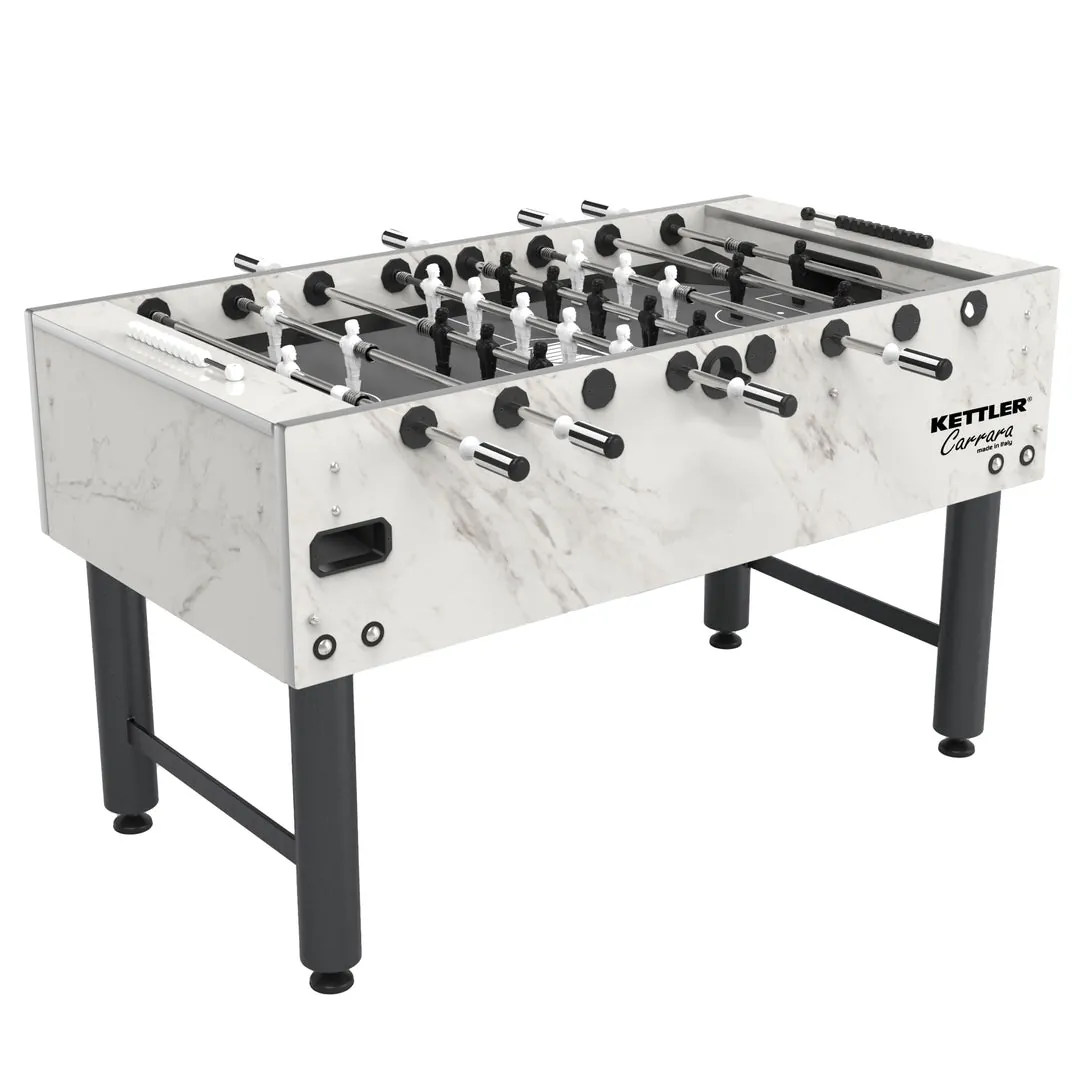
When you need the machine running today, shipping timelines become a liability. Retailers stock entry-level cabinets that arrive quickly but lack durability. These units often feature plastic components that crack under heavy use. If your venue opens tomorrow, drive to a local arcade supply shop. You’ll pay a premium for immediate availability, but the game starts now. This trade-off is necessary when downtime costs more than the markup.
Professional venues require consistent performance. Big-box stores sell consumer-grade tables designed for occasional play. They lack the reinforced chassis and industrial coin mechanisms needed for daily traffic. Specialized dealers offer commercial-grade hardware with replaceable parts and longer warranties. Inspect the cabinet’s frame thickness and the quality of the joystick bearings. Cheap feel indicates cheap internals. Invest in equipment built for thousands of hours of operation.
Space constraints often dictate purchasing decisions. Standard arcade tables occupy significant floor area. Measure your room precisely, including clearance for players to stand comfortably. Compact or wall-mounted alternatives exist for tighter environments. Verify height and depth specifications before buying. A poorly fitted table disrupts foot traffic flow and creates safety hazards. Custom solutions may be required for irregular spaces.
High-volume usage accelerates wear. Home-use machines aren’t engineered for constant activation. Commercial units feature robust switches and durable displays. Check the manufacturer’s duty cycle rating. Low ratings indicate designs meant for casual entertainment. Heavy usage demands equipment rated for continuous operation. Ignoring this distinction leads to frequent repairs and lost revenue.
Tight budgets force difficult choices. New commercial tables exceed many startup allocations. The used market offers viable alternatives. Inspect every component thoroughly before purchase. Test all inputs and verify screen integrity. Avoid units with known repair histories. Negotiate prices based on visible wear. Properly maintained used equipment can perform like new at a fraction of the cost.
How to pick the right table
- Measure your room carefully. Leave three feet around the table for swinging rods. A tight space ruins gameplay and risks damage to walls.
- Decide on playing style. Casual players prefer plastic rods. Serious players need steel rods for better control and durability over time.
- Check the table height. Standard tables are thirty inches tall. Ensure your ceiling is high enough so players don’t hit their heads while shooting.
- Verify the goal mechanism. Some tables use spring-loaded goals. Others have fixed nets. Spring-loaded goals feel more realistic but cost more upfront.
- Read recent customer reviews. Focus on comments about assembly difficulty and long-term durability. Ignore generic five-star ratings that lack detail.
- Compare total costs including tax. Online prices look lower until shipping adds up. Local prices include tax but save you delivery fees and wait times.
The mistakes that ruin it
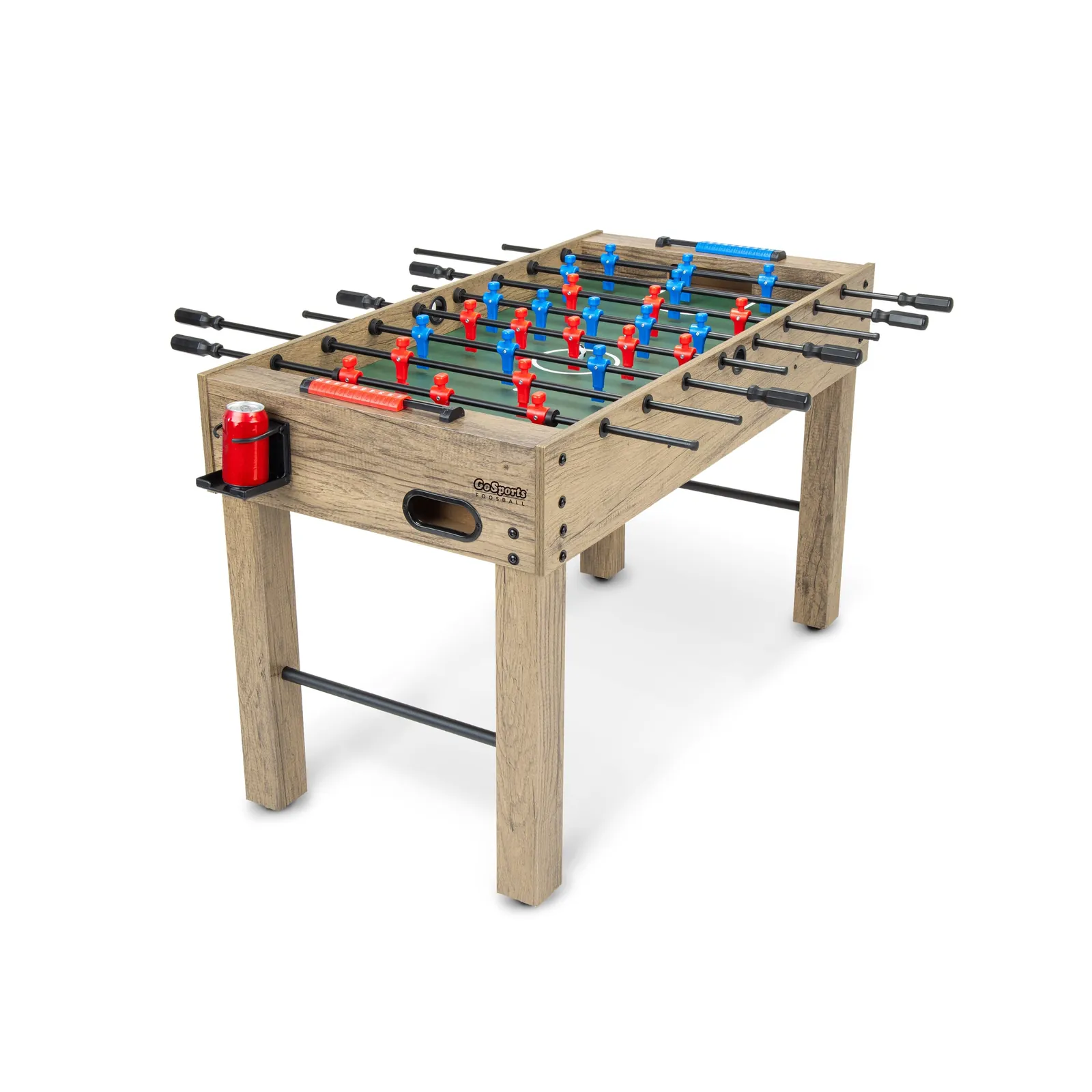
- Ignoring room dimensions leads to cramped play. Players will constantly bump into walls or furniture, stopping the game and frustrating everyone involved.
- Buying the cheapest model often means poor balance. Cheap tables wobble during hard shots, making accurate scoring nearly impossible for any player.
- Skipping assembly instructions causes structural issues. Forcing parts together incorrectly can crack the wood or strip screws, ruining the table’s integrity.
- Not checking rod material affects longevity. Plastic rods bend under pressure. Steel rods last longer but cost more. Choosing wrong wastes money early.
- Overlooking warranty terms creates future headaches. Some warranties cover only manufacturing defects. Others include shipping damage. Read the fine print carefully.
Related guides
- Best Foosball Tables Under 500: Top 5 Picks in 2026
- How to Paint a Glass Table Top: A Step by Step Guide
- How to Dispose of Large Glass Table Top Panels Safely
Frequently asked questions
Can i buy a foosball table at walmart?
Yes, Walmart sells foosball tables both online and in many physical stores. They typically carry entry-level and mid-range models from brands like Hathaway and Playcraft. Stock varies by location, so check their website for availability near you. In-store purchases let you verify the box condition before paying. Online orders ship directly to your door, often with free standard shipping. This option suits buyers who want convenience and a wide selection without traveling.
Why do some tables cost more than others?
Price differences come from materials and build quality. Steel rods provide better spin than plastic alternatives.
How long does shipping take for online orders?
Shipping times depend on the retailer and your location. Standard shipping usually takes several business days.
Is it safe to assemble a foosball table myself?
Assembly is generally safe if you follow instructions carefully. Two people make the process easier and safer.
What happens if my table arrives damaged?
If your table arrives damaged, contact the seller immediately. Most reputable retailers offer replacements for shipping damage.
Does it matter if i buy used or new?
Buying used saves money but carries risks. New tables come with warranties and pristine conditions.
Where can i buy a foosball table that fits in small apartments?
Compact foosball tables designed for small spaces are available at major online retailers. Look for models labeled “compact” or “mini.”