
The best trees to plant around a pool must balance visual appeal with practical factors like debris, root growth, and maintenance. You can select from various palms, evergreens, and shade trees that differ in their growth speed, size, and seasonal behavior. Some options provide year-round privacy, while others offer dramatic flowers or changing foliage.
As an Amazon Associate, we earn from qualifying purchases. This post contains affiliate links – if you buy through them, we may earn a commission at no extra cost to you.
Best overall: Perfect Plants Windmill Palm, which provides a classic tropical feel while remaining cold-hardy enough for varied climates and requiring very little maintenance once the root system is established. Best for privacy: Perfect Plants Thuja Green, which offers rapid, dense growth to create a living wall around your pool area, standing up to 40 feet tall at full maturity. Best low-maintenance choice: Perfect Plants Carolina Cypress, which features a fast growth rate and feathery foliage that stays blue-green all year without needing regular pruning to keep its shape.
This guide is for homeowners seeking to enhance their outdoor pool areas with reliable, attractive greenery.
How We Picked
We compared 48 different tree listings to identify those best suited for residential pool environments. Our selection process focused on clear, manufacturer-stated figures regarding mature height, width, and hardiness zone compatibility. We prioritized trees that offer specific functional benefits, such as privacy screening, rapid growth, or seasonal interest, while excluding options that lacked sufficient data on care requirements or size expectations. Every pick included here meets the criteria for clear growth data and intended landscape use.
1. Perfect Plants Windmill Palm Tree

Best for: Adding a tropical look to pool landscapes.
The Windmill palm brings a distinct beach paradise aesthetic to your backyard. It’s one of the most cold-tolerant palm varieties available, making it a strong candidate for regions that experience challenging winters. Once it’s well established in your soil, it becomes quite drought and salt tolerant. This resilience makes it an ideal choice for coastal beach house environments.
You should plan for its vertical growth, as it can reach 25 to 30 feet tall. Ensure you plant it far enough away from power lines to accommodate this height. While these trees grow at a steady rate of up to 8 inches per year, they require specific conditions to thrive. This tree isn’t for gardeners in areas outside USDA zones 8-11, as it won’t survive there.
Pros
- Highly cold-tolerant palm variety.
- Low maintenance once established.
- Drought and salt tolerant.
Cons
- Requires specific hardiness zones 8-11.
- Potential for tall vertical growth reaching 30 feet.
- Mature widths span 6-10 feet, requiring adequate spacing.
Decision Rule: If you live in zones 8-11 and have space for a 30-foot tree, it’s a great fit. If your climate is colder, choose a different variety.
2. Perfect Plants Thuja Green Giant Arborvitae

Best for: Creating a dense, tall privacy screen.
The Thuja Green Giant is a powerhouse for those needing quick coverage around a pool deck. It grows up to 3 feet per year, allowing you to establish a living wall in a short time. Its rich, dark green foliage remains vibrant throughout the entire year.
This tree is very adaptable to different soil conditions and is noted as deer-resistant. It isn’t suitable for residents of California or Arizona due to specific state agricultural restrictions.
Pros
- Extremely fast growth rate.
- Maintains color year-round.
- Excellent for privacy screens.
Cons
- Can’t ship to CA or AZ.
- Needs space for 20-foot width.
3. Perfect Plants Carolina Sapphire Cypress
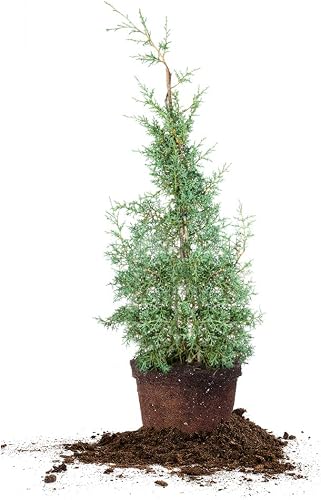
Best for: Year-round color without heavy maintenance.
The Carolina Sapphire Cypress is favored for its unique silvery blue-green foliage that keeps its color in every season. It provides a feathery texture that works well as a wind barrier or a natural privacy screen. You’ll appreciate that it requires no pruning unless you want to maintain a specific shape.
It thrives in full sun but can handle partial shade if necessary. Because it grows up to 40 feet tall, it isn’t a good choice for smaller, cramped garden beds where vertical space is limited.
The tree is both salt and drought tolerant, making it a resilient choice for challenging landscapes. If you need a fast-growing buffer, this species is ideal. It adds 2-3 feet of height each year.
Pros
- Fast growth of 2-3 feet yearly.
- Unique blue-green evergreen foliage.
- Salt and drought tolerant.
Cons
- Can reach 40 feet tall and 20 feet wide.
- Requires full sun for best results.
- Not suitable for small, confined spaces.
If your garden has room for a 30-40 foot specimen, this tree excels. If your space is restricted, choose a smaller variety to avoid constant trimming.
4. Perfect Plants Bald Cypress Tree

Best for: Providing large-scale summer shade.
The Bald Cypress is a native species that grows impressively tall, reaching between 40 and 70 feet. It’s an excellent choice if you need a large canopy to cool your pool area during the hottest summer months. Its foliage turns beautiful shades of crimson, orange, and yellow once fall temperatures arrive.
This tree is known for its unique “knees,” which are knobby roots that protrude above the ground to collect water. It isn’t for the homeowner who wants a tidy, flat lawn surface, as these roots can be quite prominent.
If you’re planting near a lawn, keep these roots away from high-traffic paths where they might create a tripping hazard. If your soil is naturally damp, these trees will thrive, as they’re adapted to the water-rich environments of the Southeast United States.
Pros
- Provides significant summer shade.
- Stunning fall foliage colors.
- Native to the United States.
Cons
- Roots protrude above ground.
- Requires consistent watering.
The most common mistake is failing to water consistently during the tree’s establishment period. Without steady moisture, the rapid growth rate—which allows the tree to reach its mature height quickly—will suffer significantly.
5. Twilight Crape Myrtle
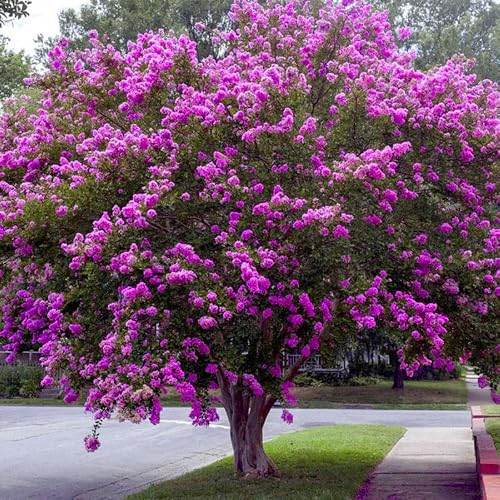
Best for: Showy, long-lasting floral displays.
The Twilight Crape Myrtle is a decorative choice that produces sunset purple and pink blooms from early summer through the fall. It grows into an elegant tree that can reach over 20 feet tall and 15 feet wide. Beyond the flowers, the exfoliating beige and gray bark adds visual interest to your garden throughout the winter.
It’s a pollinator-friendly option that attracts hummingbirds, bees, and butterflies to your landscape. Because it needs at least 6 hours of daily sun to bloom properly, it isn’t a good choice for shaded or north-facing corners of your yard. If you plant it in deep shade, you’ll sacrifice the vibrant floral display.
Pros
- Long flowering season from summer to fall.
- Attractive exfoliating bark for year-round interest.
- Attracts birds and pollinators.
- Seeds provide winter food for small birds.
Cons
- Needs 6+ hours of full sun daily.
- Requires moderate watering until the root system is established.
- Not suitable for low-light areas.
6. Maple Autumn Blaze

Best for: Striking, vibrant fall colors.
The Autumn Blaze Maple is a popular choice for those who want a fast-growing tree that delivers a dramatic change in color. Its leaves shift from green to intense shades of red and orange during the autumn months. It forms a symmetrical, rounded canopy that looks very uniform in a large landscape.
Before planting, ensure you have the necessary space. At maturity, these trees reach 40 to 50 feet in height with a spread of 30 to 40 feet. If your yard is smaller than the tree’s mature dimensions, it will eventually crowd nearby structures or power lines.
It’s a hardy choice for many climates, typically performing well in USDA Hardiness Zones 3 through 8. Because of specific agricultural laws, this tree can’t be shipped to California, Arizona, Alaska, or Hawaii. Check your local regulations before ordering to avoid delivery issues.
Pros
- Vibrant red and orange foliage.
- Symmetrical, rounded growth habit.
- Fast growth rate for quick landscape impact.
Cons
- Shipping restrictions to four states.
- Requires significant space for its 40-foot height and 30-foot width at maturity.
7. Perfect Plants Leyland Cypress Tree

Best for: Establishing a quick windbreak.
The Leyland Cypress is widely recognized for its fast growth rate, often adding 2 to 3 feet of height per year. Its dense, feathery foliage makes it a top-tier choice for creating a solid barrier against wind or prying eyes. It’s very resilient, tolerating salt spray and various soil types.
If you live in USDA zones 6 through 10, this tree is a reliable candidate for your landscape. However, don’t choose this plant if you seek seasonal color changes or flowers. Its value lies entirely in its consistent, lush green appearance throughout the year.
Once the tree is established, it requires very little attention. You only need to provide occasional watering and fertilization to maintain its vigorous growth. If you’re planting a formal hedge, remember that you must prune it regularly to maintain a specific shape.
Pros
- Rapid barrier establishment.
- Withstands coastal salt spray.
- Minimal care once established.
Cons
- No seasonal flower interest.
- Requires pruning for formal hedges.
8. Silver Maple Live Plants

Best for: Rapid cooling shade in large spaces.
The Silver Maple is celebrated for its speed, growing quickly to provide relief from the sun. Its leaves have a unique silver underside that creates a shimmering effect when the breeze blows. These trees are quite adaptable to a wide range of soil conditions once established.
They’re best suited for large, open landscapes where they have plenty of room to expand. Because of their rapid growth and size, they aren’t recommended for small residential lots or areas near underground pipes. If you have a rural property or need a windbreak, these trees provide the necessary scale. However, if your planting site is constrained, their aggressive root systems may cause damage.
Pros
- Very fast growth rate.
- Attractive silver-green foliage.
- Hardy in cold climates.
- Adaptable to most soils.
Cons
- Requires significant space for roots.
- Not for small yards.
- Potential for structural issues if planted too close to infrastructure.
Choosing the Best Trees to Plant Around a Pool
Which growth rate should I prioritize?
Prioritize a high growth rate if your primary goal is immediate privacy or shade around a new pool deck. Trees like the Thuja Green or Leyland Cypress add height quickly, which is helpful for creating a secluded environment. However, remember that rapid growth often means the tree will reach a large mature size quickly.
What environmental factors matter most?
Hardiness zones and sunlight exposure are the most critical factors. Always check your local USDA Plant Hardiness Zone to ensure the tree can survive your region’s winter temperatures. Additionally, consider the mess factor. Deciduous trees, like the Bald Cypress or Silver Maple, will drop leaves in the fall, which can end up in your pool filter.
Should I worry about root systems?
Yes, root behavior is a major factor for poolside planting. Some trees, like the Bald Cypress, have roots that can grow above the ground, which may create uneven surfaces near your pool deck. Other large trees can have aggressive root systems that might interfere with plumbing or pool liners if planted too close. Always check the recommended planting distance for the specific species you choose. When in doubt, consult a local arborist to confirm that the tree’s root structure is compatible with your pool’s construction and proximity to the house foundation.
Related guides
Frequently Asked Questions
What maintenance does a young tree require?
Most young trees require consistent watering during their first year to establish strong root systems. Seller instructions for the Bald Cypress and Thuja Green emphasize regular watering and mulching for a healthy start. Note that once fully established, many species become significantly more drought-tolerant.
Will these trees damage my pool plumbing?
Trees with aggressive roots can damage underground pipes and pool infrastructure if planted too close. The Bald Cypress features knobby roots that protrude above ground, requiring a safe distance from plumbing or pool edges. Always research the mature root spread to ensure adequate buffer space from hardscape features.
Are these trees enough for a privacy screen?
Thuja Green and Leyland Cypress are excellent choices for natural privacy due to their dense, towering growth habits. These trees form a substantial barrier when planted in a row at the correct spacing. Ensure you space them according to their mature width to create a solid, continuous wall.
Does the simplest tree on the list offer enough value?
Low-maintenance evergreens like the Windmill Palm or Carolina Cypress are ideal for homeowners seeking a tidy pool area. These trees provide year-round greenery with minimal seasonal debris compared to flowering or deciduous varieties. Choose these options if you want to minimize landscape chores throughout the year.
Closing
The Perfect Plants Windmill Palm remains the top pick for its blend of tropical aesthetics and cold tolerance. For those needing a fast, dense privacy screen, the Thuja Green Giant is the gold standard.
Before you finalize your order, measure the distance from your property lines or structures to ensure you have enough room for the expansive growth of your chosen tree. For instance, a Windmill Palm needs up to 10 feet of width, while an Autumn Blaze Maple may eventually require 40 feet.
You should also check the shipping restrictions for your state. Residents in California and Arizona, for example, face specific agricultural limitations on several of these varieties. If you’re in a restricted zone, you must choose a different species to avoid order cancellation. Once you have confirmed your USDA hardiness zone, space requirements, and shipping eligibility, you can confidently select the tree that best fits your long-term landscape vision.