
As an Amazon Associate, we earn from qualifying purchases. This post contains affiliate links – if you buy through them, we may earn a commission at no extra cost to you.
Finding the best cleaners for pool tile depends on what is actually on your tiles. You might be dealing with hard calcium deposits, oily scum lines, or general grime. These products vary by their chemical strength and how they interact with different pool surfaces like vinyl, glass, or natural stone. Your choice rests on whether you prefer a chemical soak to avoid scrubbing or a physical tool to remove stubborn buildup manually. If you want a chemical solution for heavy mineral deposits, look at LayorCare Heavy Calcium Releaser; if you need a physical tool for thick, hardened scale, Poolmaster Extra Large Pumice is an option.
1. LayorCare Heavy Calcium Releaser

Best for: Owners of natural stone features with significant, stubborn calcium buildup.
This product is designed for heavy-duty tasks where standard cleaners fail. It’s a full-strength formula, meaning you don’t need to dilute it before use. This is critical when you’re facing thick, established mineral deposits that have sat on your tile for a long time. One quart of this formula covers up to 75 square feet, providing enough power to tackle extensive outdoor surfaces.
Because it’s a powerful remover, you must be careful with your application. Always test a small, hidden spot first to ensure it doesn’t etch your specific tile finish. It’s safe for most surfaces and won’t alter water pH, but since it’s a concentrated chemical, following the proper process is essential.
To get the best results, you must scrub the surface to break up scum, apply the remover, let it sit, scrub again, and rinse thoroughly. Repeat this cycle as needed for the toughest deposits.
Good if:
- You have heavy calcium buildup on natural stone.
- You prefer a professional-strength formula without dilution.
- You need to clean decks or rock water features too.
Skip it if:
- You aren’t prepared to scrub the surface multiple times.
- You prefer a ready-to-use spray that requires no manual prep.
- You’re dealing with light, manageable mineral films that don’t require a heavy-duty, full-strength solution.
2. Calcium Releaser Trigger Spray

Best for: Sensitive tile finishes that require a gentle but effective mineral remover.
Maintaining pool tile requires a balance between cleaning power and surface safety. This 32-fluid-ounce spray is developed specifically to remove calcium and efflorescence without using mineral acids. This composition makes it safer for delicate materials like glass, porcelain, and ceramic.
The trigger spray design allows for targeted application. By focusing the spray directly on the mineral deposits, you avoid wasting product on clean areas. This tool is built for routine maintenance. It works best when you stay on top of your pool cleaning schedule rather than waiting for years of heavy buildup to accumulate.
Good if: * You have delicate glass or porcelain pool tiles. * You want a formula that’s free of mineral acids. * You need to remove white efflorescence stains.
Skip it if: * You’re dealing with decades of thick, rock-hard calcium. * You want a product that cleans oily scum rather than minerals.
The decision rule is simple: if you’re performing regular maintenance on standard pool materials, use this spray to prevent long-term damage. If you have neglected the pool for years and face extreme mineral crusting, this gentle formula will likely be insufficient. Always verify that your primary issue is mineral-based, as this cleaner is formulated specifically for calcium and efflorescence, not organic grime or oils. Using it on the wrong type of buildup will lead to poor results and wasted time.
3. Guardian Pool Tile Cleaner
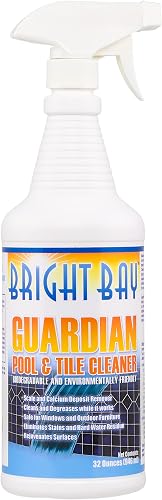
Best for: Users who want to avoid the risks of pumice stone scratching.
This cleaner is a non-abrasive alternative to mechanical scrubbing. By using a chemical formula to break down deposits, it avoids the need for stones or pads on glass or chrome fixtures.
The formula is non-corrosive and free of harsh acids, which helps keep your pool water chemistry stable during the cleaning process. Because it contains no phosphates or brighteners, it meets Federal BioPreferred standards.
However, note the critical decision rule: this product isn’t for use on natural stone or cement tile. If your pool features these materials, this cleaner isn’t the right fit. Using it on those surfaces risks damage that the non-abrasive formula is specifically designed to avoid on other materials.
For stubborn, embedded calcium, a single application may not suffice. If you face heavy deposits, plan for repeat applications until the buildup is fully dissolved.
Good if:
- You want to avoid scratching chrome or glass tiles.
- You need a ready-to-use spray for weekly maintenance.
- You’re concerned about pool water chemistry balance.
Skip it if:
- You have natural stone or cement pool tiles.
- You’re looking for a heavy-duty acid-based cleaner.
4. In The Swim Super Cleaner

Best for: A versatile cleaner that handles both vinyl liners and pool tiles.
This cleaner uses an alkaline-based formula to degrease surfaces. It works effectively on waterline rings and oily buildup, which are common issues in most swimming pools. Because it’s a degreaser, it leaves no sticky residue behind, helping your pool look clean and refreshed.
The application is straightforward: apply it to a damp surface and wipe it away. It’s specifically formulated to work on vinyl, making it a choice for those who have vinyl components in their pool area.
You should use this product whenever you notice visible scum or grime accumulating. It penetrates deep to break down dirt quickly. Unlike some harsh alternatives, this formula doesn’t produce toxic fumes during the cleaning process.
It isn’t intended for heavy mineral scale removal. If you see thick, crusty deposits, this cleaner won’t be strong enough to dissolve them. You must use a dedicated descaler for that task.
Good if: * You need one product for both tile and vinyl liners. * You struggle with oily scum lines and grease. * You want a simple wipe-on, wipe-off application process.
Skip it if: * You’re primarily trying to remove thick calcium scale. * You need a specialized stone cleaner.
5. SeaKlear Thick Tile & Vinyl Cleaner
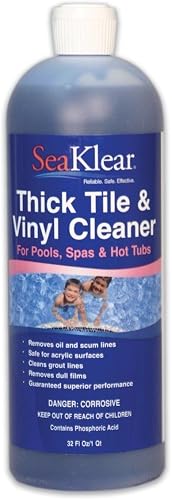
Best for: Cleaning vertical surfaces where a thin liquid would run off too quickly.
The thickened formula of this cleaner is its main advantage. Because it’s viscous, it clings to vertical tiles, allowing the active ingredients to stay in contact with the grime and oil for longer. This reduces the amount of scrubbing you need to do.
It’s safe for acrylic surfaces and grout lines, making it a good all-around maintenance product. You apply it with a brush, soft cloth, or sponge. Let the cleaner work for one to two minutes, and then rinse thoroughly with water.
The decision rule is simple: if you see dull films or scum lines, use this product weekly or as needed. If you’re dealing with heavy mineral buildup, this isn’t the right tool. Using it for the wrong task wastes your time and fails to remove stubborn deposits.
Good if: * You have vertical tiles where liquid cleaners drip off. * You want to clean grout lines effectively. * You prefer a product that requires less scrubbing effort.
Skip it if: * You’re looking for a heavy-duty calcium descaler. * You need a spray-on product for large flat areas.
This cleaner is made in the United States. It’s sold in a 1-quart bottle. Because it’s designed to cling, it’s ideal for precise application on stubborn oil and scum lines that accumulate on your pool or spa walls.
6. STAR BRITE Home Pool Waterline Cleaner Scum Remover

Best for: Removing oily residues and sunscreen buildup at the waterline.
If your pool waterline looks dull because of sunscreen, body oils, and floating dirt, this cleaner is designed to handle it. It’s a fast-acting spray that works in about 30 seconds. To use it, spray the area, let it soak for 30 seconds, wipe with a scrub pad or mitt, and rinse. It’s safe for most pool materials, including tile, vinyl, plaster, fiberglass, and plastic.
There’s a significant limit to its use: it’s acid-free and doesn’t remove calcium or hard water deposits. For those stubborn mineral issues, you must use an acid-based cleaner instead. Furthermore, it isn’t for use on printed or painted surfaces. This includes printed vinyl liners, faux tile patterns, wraps, or decals. Using it here can permanently damage or remove the design.
Always test a small, inconspicuous area first to ensure your liner is compatible. If you’re unsure about your specific material, consult the manufacturer’s care instructions or your dealer before applying the product.
Good if:
- Your waterline is covered in oily scum and sunscreen.
- You have fiberglass or plastic steps and shelves.
- You want a very fast cleaning process.
Skip it if:
- You have calcium or hard water scale.
- Your pool liner has printed patterns or faux tile designs.
7. Poolmaster Extra Large Pumice Stone
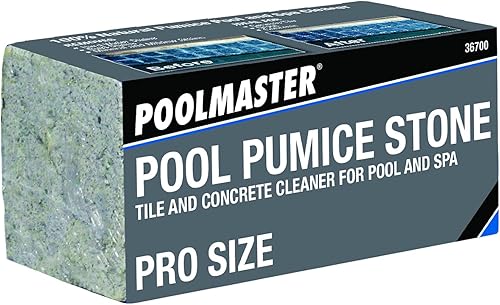
Best for: Large, manual cleaning jobs on hard, non-delicate surfaces.
This is a physical tool rather than a liquid cleaner. The extra-large size is great for covering significant surface area quickly, and you can cut it into smaller pieces to reach into tight corners or detailed grout lines. It works by mechanically grinding away the mineral deposits.
It is 100% natural and chemically neutral, so it won’t affect your water chemistry. However, you must be careful where you use it. Don’t use this on vinyl liners, fiberglass, or glass, as the abrasive nature of the stone will cause permanent scratches.
The decision rule is simple: if the surface is ceramic tile, grout, or concrete, the stone is safe. If the material is delicate, such as porcelain or glass, the stone will damage the finish. A common mistake is using the stone dry; always ensure the surface is wet to minimize the risk of scratching.
Good if:
- You prefer a chemical-free, mechanical cleaning method.
- You have hard ceramic tile, grout, or concrete.
- You need to reach into tight, detailed spaces.
Skip it if:
- You have vinyl, fiberglass, or glass surfaces.
- You prefer a chemical cleaner that requires no scrubbing.
- You’re cleaning delicate finishes that can’t withstand abrasion.
8. COMPAC Home Magic Stone Pool Cleaner to Easily Remove Dirt

Best for: Eco-conscious buyers needing a hygienic, abrasive cleaning block.
This stone is made from recycled glass and is designed to wear down as you use it, similar to a pumice stone. It’s effective at removing algae, lime, and dirt from pool surfaces. Because it’s made of recycled glass, it’s considered more hygienic than traditional natural stones.
It requires light pressure to remove stains, making it relatively easy to use on tough spots. Like other abrasive blocks, it’s meant for hard surfaces. It isn’t suitable for delicate materials.
The decision rule is simple: use this block for stubborn, mineral-based buildup on durable outdoor aquatic features. If you’re cleaning a soft liner or a sensitive surface, avoid this tool to prevent permanent abrasion damage.
Good if:
- You prefer a recycled, green cleaning product.
- You need to remove algae and lime stains.
- You want a hygienic, odor-free cleaning tool.
Skip it if:
- You have delicate surfaces like vinyl or fiberglass.
- You’re looking for a liquid cleaning solution.
The most common mistake is applying too much force. Because the block wears down during use, you only need light pressure to lift stains. Pressing too hard wastes the stone’s material and risks scratching the pool surface unnecessarily.
Where These Overlap
Many of the products here fall into two distinct camps: chemical cleaners and abrasive tools. The liquid cleaners, such as LayorCare Heavy Calcium Releaser, Guardian Pool Tile Cleaner, and In The Swim Super Cleaner, are designed to dissolve buildup, but they differ in chemical makeup. LayorCare is formulated for the toughest mineral deposits, while In The Swim Super Cleaner is better suited for general degreasing.
The abrasive tools, specifically Poolmaster Extra Large Pumice and Compac Home Magic Stone, are close enough in function that the choice is mostly about preference for material—natural pumice versus recycled glass. Choosing between them often comes down to which brand is available or which size feels better in your hand.
The decision rule is simple: if your tiles are made of materials that scratch easily, such as glass, vinyl, or fiberglass, you must avoid abrasive blocks entirely and stick to liquid cleaners. Conversely, if you’re battling stubborn mineral scale on ceramic or concrete, an abrasive stone will often work faster than a liquid.
The primary split among all these options is whether your problem is mineral scale or oily scum. For example, Star Brite Waterline Cleaner is excellent for oily residues but won’t remove hard calcium deposits. If you have heavy calcium, you need an acid-based or heavy-duty chemical releaser. Always test in a hidden area first, as even non-toxic cleaners can react differently depending on the specific surface material.
Still Not Sure?
How often will I really use it?
If you plan to clean your pool once a week, a ready-to-use spray like Guardian Pool Tile Cleaner is usually enough to keep buildup from becoming a major issue. These sprays break down scum lines chemically, allowing you to skip hours of manual scrubbing. One quart of such a concentrated releaser covers up to 75 square feet, making it ideal for heavy buildup. Choose based on your actual maintenance habits rather than your best intentions.
What do I already own that this has to work with?
Check your pool finish carefully before buying. If you have vinyl or printed liners, avoid abrasive tools like the Poolmaster Extra Large Pumice stone, as they will cause permanent damage to your finish. Pumice and recycled glass stones are intended for hard surfaces only, such as ceramic tile, grout, and concrete. They should never be used on delicate finishes like glass, porcelain, or painted surfaces. If your pool is made of standard ceramic tile, you have more flexibility. Always test in a hidden, inconspicuous area first before applying any chemical or abrasive tool to the entire surface to ensure the product doesn’t etch or damage the material.
What am I most likely to regret choosing?
The most common regret is choosing a product that doesn’t match the type of buildup you have. Buying a degreaser like Star Brite Waterline Cleaner to fix heavy calcium will lead to frustration, as it’s chemically unable to dissolve minerals. It’s designed specifically for oily residues, dirt, and sunscreen buildup. Similarly, using an abrasive stone on a delicate glass or painted surface will cause damage that can’t be reversed. Always identify the buildup—oily scum versus hard mineral scale—before selecting your cleaner.
LayorCare Heavy Calcium Releaser targets thick mineral deposits on hard tile, while Star Brite Waterline Cleaner manages weekly oily scum lines. Always test a small area first and follow application instructions to protect your pool finish. For best results, plan to reapply the cleaner weekly until the buildup is fully dissolved.
Related guides